You might think a cast iron skillet needs a flat bottom, but you’d be wrong. A three-legged version actually lifts your pan above hot coals, letting air circulate and heat distribute evenly. That design alone changes your campfire cooking game. But which one should you throw in your pack?
| 12 Qt Cast Iron Dutch Oven Skillet Lid 3-Leg Campfire Pot Pre-Seasoned |  | Best for Large Groups | Capacity: 12 quarts | Lid Function: Dual-use flat lid as griddle/skillet | Legs: 3 legs | VIEW LATEST PRICE | Read Our Analysis |
| Cast Iron Camp Dutch Oven 4.5 Quart | Best for Small Families | Capacity: 4.5 quarts | Lid Function: Dual-purpose lid as coal hold or skillet | Legs: 3 legs | VIEW LATEST PRICE | Read Our Analysis | |
| Pre-Seasoned Cast Iron Cauldron Potjie Pot | 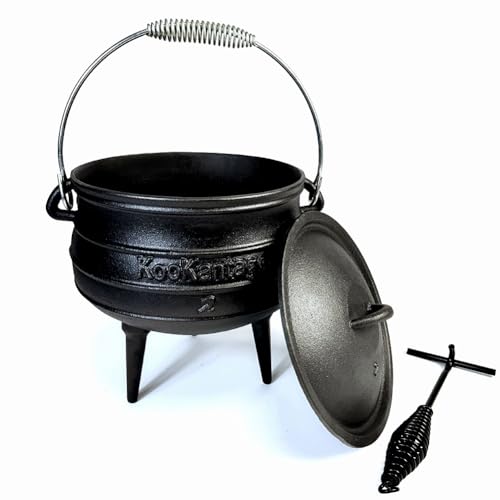 | Best Versatile Mid-Size | Capacity: 6 quarts | Lid Function: Lid doubles as skillet | Legs: 3 legs | VIEW LATEST PRICE | Read Our Analysis |
More Details on Our Top Picks
12 Qt Cast Iron Dutch Oven Skillet Lid 3-Leg Campfire Pot Pre-Seasoned
If you’re cooking for a crowd at a campsite or over an open fire, this 12-quart Dutch oven is a powerhouse. It’s a deep, 12-inch diameter pot that handles soups, stews, chili, or roasts for a large group. And here’s the clever part: its flat lid doubles as a skillet or griddle. So you can fry bacon, eggs, or cornbread while a stew simmers below. Those three legs lift the pot above coals for stable, even heat. It’s pre-seasoned with food-grade oil, ready to cook right out of the box. Heavy duty, weighing about 31.5 pounds, it’s built to last through countless campfire meals.
- Capacity:12 quarts
- Lid Function:Dual-use flat lid as griddle/skillet
- Legs:3 legs
- Pre-Seasoned:Yes, with food-grade oil
- Material:Heavy-duty cast iron
- Cooking Compatibility:Ovens, fireplaces, open flames
- Additional Feature:31.5 pounds heavy-duty
- Additional Feature:12-quart large gathering size
- Additional Feature:Dual-use flat lid
Cast Iron Camp Dutch Oven 4.5 Quart
This 4.5-quart camp oven fits small families perfectly. You’ll get generous space for stews, roasts, or even baking bread for three to four people. Its three-leg base keeps it stable over campfire coals, and the dual-purpose lid works as both a coal holder and a skillet. That lid lifter isn’t just a gimmick; you’ll need it when things get hot. Heat spreads evenly and stays put, so your braises turn out tender every time. And you can use this on stovetops, ovens, or grills without any fuss.
For cleanup, just hand wash with mild soap, dry it immediately, and rub a light coat of vegetable oil while it’s still warm. Stuck-on food? Heat water inside over your heat source, scrub gently, and it’s done. This cast iron will last for generations.
- Capacity:4.5 quarts
- Lid Function:Dual-purpose lid as coal hold or skillet
- Legs:3 legs
- Pre-Seasoned:Yes, pre-seasoned
- Material:High-quality cast iron
- Cooking Compatibility:Campfire, grill, stovetop, oven
- Additional Feature:Includes lid lifter
- Additional Feature:Multiple size options available
- Additional Feature:Compatible with propane stoves
Pre-Seasoned Cast Iron Cauldron Potjie Pot
You need a versatile mid-size option for campfire cooking, and the Pre-Seasoned Cast Iron Cauldron Potjie Pot from Kookantage fits the bill. Its 6-quart capacity handles soups, stews, and braised meals with even heat distribution, locking in moisture for tender results. But here’s the real trick: the lid doubles as a skillet, so you can sear meat or fry veggies without extra gear. The three sturdy legs keep it stable over flames, perfect for camping or backyard fire pits. Pre-seasoned and low-maintenance, it’s a compact workhorse for one-pot rustic meals.
- Capacity:6 quarts
- Lid Function:Lid doubles as skillet
- Legs:3 legs
- Pre-Seasoned:Yes, pre-seasoned
- Material:Durable cast iron
- Cooking Compatibility:Campfire, grill, outdoor fire cooking
- Additional Feature:Compact for cookware sets
- Additional Feature:Suitable for tailgating
- Additional Feature:Locks in moisture
Factors to Consider When Choosing a Cast Iron Skillet With 3 Legs
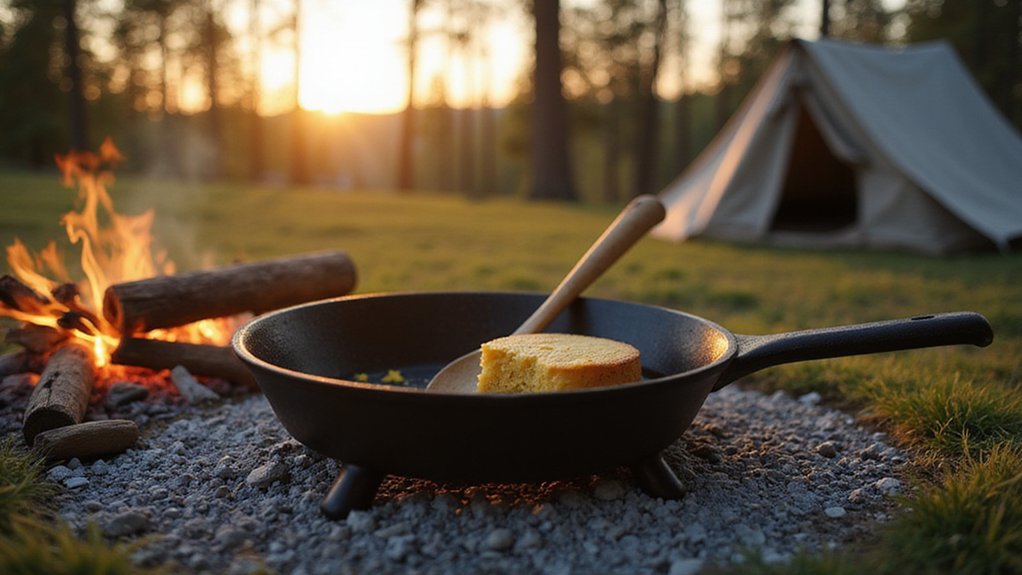
Before you buy a three-legged skillet, you’ll want to think about size and capacity, since that directly affects how many people you can cook for over the fire. Lid versatility matters too, especially if you plan to use it as a Dutch oven or a deep fryer. And don’t overlook material quality and weight, because a heavier skillet distributes heat more evenly but can be a real hassle to carry on a camping trip.
Size and Capacity
When picking a cast iron skillet with 3 legs, size and capacity are the first things to nail down, since they directly affect how much food you can cook at once. You’ll find options ranging from compact 4.5-quart models to hefty 12-quart beasts. A 4.5-quart skillet works perfectly for small groups of 3 to 4 people, ideal for chili or a batch of cornbread. But if you’re feeding a crowd, a 12-quart version handles big stews or whole chickens without breaking a sweat.
Lid Versatility
Why settle for a lid that just sits there when it could double as a second cooking surface? That’s the beauty of a versatile lid. You get a cover that traps heat and a griddle or frying pan in one. This means you can sear steaks while your stew simmers below, no extra cookware needed. A lid that holds coals transforms your setup for campfire baking, giving you top-down heat for perfect biscuits or cornbread. And since it’s a dedicated cooking surface, you enjoy even heat retention without swapping gear. Look for a lid with a flat, usable interior and a sturdy handle. This single feature multiplies your recipes: from pancakes to grilled vegetables. You’ll cook smarter, not harder, with one piece doing double duty.
Material Quality
Since material quality determines whether your skillet lasts a lifetime or cracks on the first campfire, you’ll want to pay close attention to what you’re getting. Look for pure, smooth cast iron that’s evenly seasoned. That seasoning isn’t just for show; it gives you non-stick cooking and rust resistance, making cleanup a breeze. Check for any cracks or casting flaws, because those wreck heat retention and structural integrity fast. You need a skillet built tough, able to handle high oven temperatures and outdoor abuse without warping. A quality piece feels substantial, with thick walls that distribute heat evenly across the cooking surface. So, choose a three-legged skillet that’s flawlessly seasoned and solidly constructed. It’s the difference between a campfire essential and a wasted investment!
Weight and Portability
You’ve nailed down the need for a flawlessly seasoned, solidly built skillet, but now you’re facing a more practical question: can you actually carry the thing without throwing your back out? Let’s be real: three-legged versions are heavier than flat-bottomed pans, often tipping the scales between 15 and 35 pounds. That weight depends on size and thickness, directly affecting maneuverability. Sure, heavier cast iron gives you excellent heat retention, but it demands more effort to haul and set up, especially for campfire meals.
Heat Distribution
Because cast iron naturally holds heat like a thermal bank account, a three-legged skillet’s real trick is how evenly it spreads that stored energy across the cooking surface. You’re looking for uniform browning, not a burnt center and raw edges. The skillet’s thickness plays a huge role here; a heavier base disperses heat more consistently, preventing those irritating hot spots. Plus, the three-leg design isn’t just for stability. It elevates the pan above direct flames, letting coals or fire wash heat evenly underneath. This promotes steady, all-around conduction. So when you’re scanning options, consider the iron’s quality and thickness. A well-constructed skillet won’t warp or scorch your food. And that means every pancake, fried egg, or stew you make turns out just right, from edge to edge.
Pre-Seasoning Quality
Now that you’ve got a handle on how heat spreads across a well-built skillet, let’s talk about the surface you’ll actually cook on: the pre-seasoning. This isn’t just a cosmetic finish. High-quality pre-seasoning uses multiple, even layers of food-grade oil baked into the iron. That’s what gives you serious non-stick capabilities and rust resistance right out of the box. You’ll notice easier cleaning and less need to re-season before your first campfire meal. But not all pre-seasoning lasts forever. Over time, even the best layers can chip or wear thin, depending on how the manufacturer applied the oil. Some skillets might need a touch up after heavy use. Don’t worry, though. A simple home seasoning routine will keep that surface slick and reliable for years.
Leg Stability
What makes a three-legged skillet truly stable? It’s all about how those legs distribute weight. You need a design that keeps your skillet level, especially on uneven campfire ground or grill grates. Look for legs that are securely attached, not wobbly; they must withstand high heat and movement without shifting. Leg height and spacing matter too. Ideally, legs should be:
- Evenly spaced to prevent tipping.
- Properly angled for a wide, sturdy base.
- Consistent in height so your skillet sits flat over coals.
This three-leg setup elevates the pan, promoting even heat circulation and cutting spill risks. It also gives you a safer, easier grip when moving hot cookware. So, check for solid leg construction, and you’ll get a reliable base for every campfire meal!