Ceramic Dutch ovens mimic the steam filled chambers of professional hearths, trapping moisture to create that crackling crust you chase. But not all pots bake the same. You need thick walls for steady heat, a tight lid for zero steam escape, and an easy clean glazed interior. Here are four that actually deliver.
| Nuovva Enamelled Cast Iron Dutch Oven (Blue 6QT) |  | Best Overall | Capacity: 6 quarts | Material: Enamelled cast iron | Oven Safe Temperature: Not specified | VIEW LATEST PRICE | Read Our Analysis |
| LE TAUCI 3 QT Ceramic Bread Baker |  | Best for Small Batches | Capacity: 3 quarts | Material: Glazed stoneware | Oven Safe Temperature: Up to 500°F | VIEW LATEST PRICE | Read Our Analysis |
| Gotham Steel 5 Qt Ceramic Dutch Oven |  | Lightweight Champion | Capacity: 5 quarts | Material: Cast aluminum with ceramic coating | Oven Safe Temperature: Up to 500°F | VIEW LATEST PRICE | Read Our Analysis |
| EDGING CASTING Enameled Dutch Oven 6 Quart |  | Best Value | Capacity: 6 quarts | Material: Enameled cast iron | Oven Safe Temperature: Up to 500°F | VIEW LATEST PRICE | Read Our Analysis |
More Details on Our Top Picks
Nuovva Enamelled Cast Iron Dutch Oven (Blue 6QT)
If you’re after total control over your bake, the Nuovva Enamelled Cast Iron Dutch Oven (Blue, 6QT) is the one you’ll reach for again and again. Its high-quality cast iron body delivers superior heat retention, so your bread gets that even, golden crust every time. The tight lid traps steam, creating a humid environment perfect for a moist crumb. And cleanup? A breeze. The smooth, non-reactive enamel resists rust and scratches. At 6 quarts, it handles family sized loaves or a hearty stew. Plus, that elegant Light Blue finish means it’s gorgeous enough to go straight from oven to table.
- Capacity:6 quarts
- Material:Enamelled cast iron
- Oven Safe Temperature:Not specified
- Weight:Not specified
- Color:Light Blue
- Bread Baking Suitability:Ideal for sourdough bread baking
- Additional Feature:Excellent heat retention
- Additional Feature:Resistant to rust/scratching
- Additional Feature:Oven-to-table serving piece
LE TAUCI 3 QT Ceramic Bread Baker
The LE TAUCI 3 QT Ceramic Bread Baker is your best bet for small batches. Its midnight blue glazed stoneware and domed lid trap steam perfectly, giving you that crisp crust and airy crumb you crave. You don’t need extra steam pans here. The high fired walls ensure even heat, mimicking a traditional Dutch oven. And it’s versatile: use it for casseroles, soups, or roasted veggies too. Safe up to 500°F, it handles repeated preheating with ease. Plus, the included black silicone bread sling makes removing your finished loaf a breeze. No fuss, just perfect bread for your small household!
- Capacity:3 quarts
- Material:Glazed stoneware
- Oven Safe Temperature:Up to 500°F
- Weight:Not specified
- Color:Midnight Blue
- Bread Baking Suitability:Ideal for sourdough and artisan breads
- Additional Feature:Includes reusable bread sling
- Additional Feature:Oven safe up to 500°F
- Additional Feature:High-fired even heat walls
Gotham Steel 5 Qt Ceramic Dutch Oven
Are you searching for a Dutch oven that won’t strain your wrists? The Gotham Steel 5 Qt is your answer. It weighs 75% less than cast iron, just 3.5 lbs with the lid. That lightweight cast aluminum body is coated three times with a diamond-reinforced, ultra-nonstick ceramic. You’ll release food effortlessly, often without oils. The self-basting lid locks in moisture for perfect sourdough bread. And it’s oven safe to 500°F, so you can bake, roast, or stew. Plus, it’s dishwasher safe, free from PFOA and lead, and backed by a 10 year guarantee.
- Capacity:5 quarts
- Material:Cast aluminum with ceramic coating
- Oven Safe Temperature:Up to 500°F
- Weight:2.5 lbs (without lid)
- Color:Baby Blue
- Bread Baking Suitability:Ideal for sourdough bread baking
- Additional Feature:75% lighter than cast iron
- Additional Feature:Diamond-reinforced nonstick coating
- Additional Feature:10-year limited guarantee
EDGING CASTING Enameled Dutch Oven 6 Quart
You want a Dutch oven that delivers great bread without the steep price tag. The EDGING CASTING Enameled 6 Quart model is your answer, clocking in at a manageable 12 pounds. Its dome lid gives your sourdough ample room to rise, while the glossy enamel exterior (that pistachio green is a stunner) elevates your kitchen style. The interior enamel prevents sticking, making cleanup a breeze. You can use it on gas, induction, or electric stoves, and it’s oven safe up to 500°F. Plus, the stainless steel knob adds a refined touch. For bakery worthy results on a budget, this is your pick.
- Capacity:6 quarts
- Material:Enameled cast iron
- Oven Safe Temperature:Up to 500°F
- Weight:Approximately 12 pounds
- Color:Pistachio Green
- Bread Baking Suitability:Specifically designed for bread baking
- Additional Feature:Stainless steel pot button
- Additional Feature:Comfortable round handle grip
- Additional Feature:Dome lid for dough rise
Factors to Consider When Choosing a Ceramic Dutch Oven for Bread
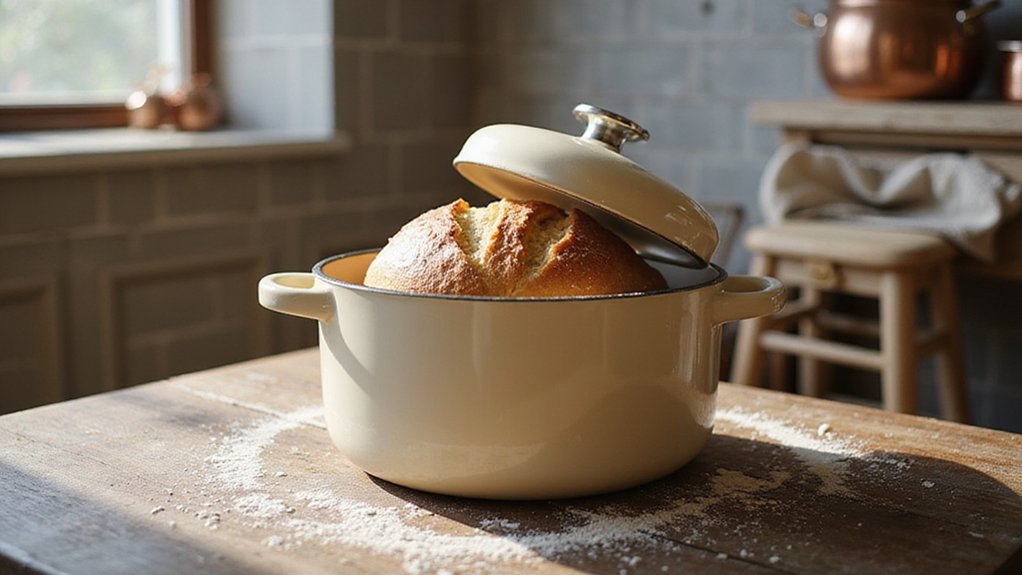
You’ll want to start by examining the material build quality and how evenly it retains heat, since that directly impacts your crust and crumb. Size and capacity matter too; a 5 to 7 quart pot gives you room for a standard boule, while larger loaves need more space. And don’t overlook oven temperature limits and the lid’s steam trapping ability, because a pot that can’t handle 500°F or trap moisture will ruin your bake.
Material Build Quality
Since material build quality directly determines how well your ceramic Dutch oven retains and distributes heat, it’s the backbone of consistent bread results. You want ceramic that’s free of PFOA, PFOS, and other harmful chemicals, so your baking stays safe. Durability matters, too: a well fired, thick wall resists chipping, cracking, and thermal shock, even at 500°F or more. Look for a glazed exterior, which prevents dough from sticking and makes cleanup a breeze. That glaze also protects the surface, extending its lifespan through repeated use. For example, a quality piece will survive sudden temperature swings without fracturing. And remember, a smoother, denser ceramic translates to fewer weak points. So when you’re selecting your pot, prioritize these build traits. They’re what turn a good loaf into your best one.
Heat Retention Evenness
Why does even heat matter so much? Because it’s the difference between a bakery worthy loaf and a burnt uneven mess. A ceramic Dutch oven shines here: its thick walls absorb heat slowly, then release it steadily, eliminating those cruel hot spots that scorch your crust. You’ll want a properly glazed surface, too. That smooth finish ensures uniform temperature transfer, so your dough rises evenly without any raw patches. The lid’s fit is just as critical. A snug seal locks in steam, which circulates heat around the loaf, promoting that glossy, crackling crust you crave. And don’t underestimate insulation. A well insulated pot won’t fluctuate wildly in temperature, giving you consistent results every bake. Ultimately, even heat retention turns your oven into a predictable, reliable bread baking partner.
Size and Capacity
What size should you choose for your ceramic Dutch oven? It’s all about matching capacity to your baking habits. A 3-quart model works perfectly for small households or individual loaves, giving dough just enough room to rise without overflow. For larger families or baking multiple loaves, jump to a 6-quart size; it offers versatility for stews and roasts, too.
But don’t stop at quarts. Consider height and diameter to accommodate different bread shapes, like round or oblong loaves. A wider pot suits freeform boules, while taller sides help trap steam for a crisp crust.
Ultimately, align capacity with your typical batch size to avoid overcrowding or wasted space. You’ll get consistent results and bakery worthy bread every time.
Oven Temperature Limits
How hot can your ceramic Dutch oven go? You need a pot rated for at least 500°F. That’s the sweet spot for high-temperature bread baking and mimicking a baking stone’s heat. Always check the manufacturer’s max temperature before you crank your oven. Exceed it, and you’re risking cracked glaze or internal damage over time.
But here’s the key: high temperature limits support better oven spring and a crackling crust. Just follow the guidelines on gradual preheating to avoid thermal shock. No one wants a shattered pot mid-bake.
Stick to the limit, and you’ll get bakery worthy results. Push past it, and you’re gambling with your cookware. Simple as that.
Lid Steam Trapping
If your lid doesn’t seal tightly, all that precious steam escapes before it can work its magic. You need a domed ceramic lid—flat ones just don’t cut it. A dome promotes better steam retention, giving you that bakery-style oven spring and crackling crust. High-quality ceramics with precise construction prevent leaks, so moisture stays locked in throughout the bake. This means even distribution of humidity, which avoids dry spots or uneven crumb. For artisan loaves and sourdough, steam trapping is nonnegotiable. It’s what transforms a good loaf into a professional one. So, don’t settle for a loose fit; your crust and crumb depend on it.
Weight and Handling
Since you’ll be maneuvering that hot ceramic Dutch oven in and out of the oven, weight matters more than you might think. Lighter options, like those using cast aluminum, cut down on handling fatigue without sacrificing performance. You don’t want a workout every time you bake bread.
Look for a secure grip on both the lid and handles. A balanced design prevents sudden drops or spills when you move it from oven to table. The overall size and weight should align with your strength, especially if you’ll frequently shift it around.
Remember these points:
- Heavier models can strain your wrists and make quick moves risky.
- Lightweight materials ease the lift but still trap steam effectively.
- Check that handles stay cool enough to hold safely with mitts.
Choose wisely, and you’ll handle each loaf with confidence and ease!
Ease of Cleaning
After you’ve mastered lifting that Dutch oven safely, the next make or break factor is how easy it is to clean up after baking. Ceramic Dutch ovens shine here. Their glazed, non-porous interiors wipe clean quickly, so you’re not scraping off burnt dough. Most are dishwasher safe, letting you skip manual scrubbing entirely. Plus, that enameled surface resists stains and odors, keeping your pot looking fresh bake after bake.
But don’t reach for abrasive scrubbers. They’ll ruin that slick nonstick quality. Stick to gentle sponges; it’s a small habit that pays off. You’ll spend less time cleaning, more time enjoying your crusty loaves.