You’ll select butane soldering tips based on your project’s demands—conical tips for SMD work, chisel tips for cables, and knife tips for tight spaces. You’ll control heat between 250°C and 450°C by adjusting the fuel valve, relying on a ceramic catalyst grid for temperature consistency. You’ll maintain peak performance by cleaning tips after each use and replacing worn ones showing pitting or poor wetting. Understanding tip compatibility, fuel requirements, and safety protocols guarantees you’ll achieve reliable joints across diverse applications.
Types and Design of Butane Soldering Tips
Five primary tip shapes dominate butane soldering applications, each engineered for specific tasks. Conical tips deliver focused heat on small areas, making them ideal for SMD circuits and precise work. Chisel tips offer broad surface contact for uniform heat distribution, excelling at cable soldering and desoldering. Knife tips feature slanted edges designed for point soldering and hard-to-reach cavities. Beveled tips hold more solder, accommodating drag soldering across multiple pins. Miniwave tips specialize in large joint operations.
You’ll find tip materials critically influence performance. Copper core tips facilitate rapid heat transfer, while nickel-iron plating provides durability and corrosion resistance. Iron plating protects against solder erosion, extending tip lifespan. Specialized designs include isolated tips for electrical protection and hot knife tips for multi-functionality, allowing you to switch rapidly between tasks.

A MUST-HAVE BUTANE TORCH KIT FOR PROFESSIONALS: 13-Piece accessory set to use in a wide range of applications with self-igniting trigger and a flame locking button.

Iroda Solderpro 50K Spare Soldering Tips Set For Butane Soldering Iron Includes Conical Tip, Chisel Tip, Hot Knife tip, Heat Blower, Deflector
Operational Characteristics and Heat Control
While tip geometry and materials establish the foundation for effective soldering, you’ll find that operational characteristics and heat control systems determine how well your butane torch performs during actual use. You’ll control heat delivery by adjusting the fuel valve, which modulates gas output between 20W and 75W equivalent. Your temperature calibration adjusts the ceramic catalyst grid, which glows orange and requires one to two minutes for ideal heat transfer. This flame stability derives from the internal catalytic combustion process—your torch maintains consistent temperatures between 250°C and 450°C without dangerous open flames. You’ll activate the piezoelectric ignition system with a simple button press, generating spark without external power. Precise fuel regulation guarantees sustained, controllable heat throughout your soldering operations.
Compatibility and Refilling Considerations
How do you guarantee your butane soldering tip works seamlessly with your specific iron model? You’ll need to verify thread compatibility first—the tip threads must match your iron’s tip holder exactly for secure attachment and proper function. Beyond threads, you must confirm catalyst matching, as some tips fit the threading but won’t work with the catalyst head. Check the manufacturer’s specifications before purchasing to avoid compatibility issues.
When refilling butane gas, use only refills designed for soldering irons in well-ventilated areas away from flames. Ascertain your iron is cool before refilling, and remember to purge excess air from the torch’s fuel tank prior to refilling to prevent malfunction. Follow manufacturer instructions precisely, avoiding overfilling. Select high-purity butane (99% or higher) to prevent clogging and ascertain consistent performance. Additionally, avoid using butane in propane torches as it can lead to safety hazards and poor performance. Premium brands often specify soldering iron compatibility, optimizing your equipment’s efficiency and tip lifespan.

Butane Gas Not Included – Easy Local Purchase This gas welding torch comes completely empty of butane fuel. Due to hazardous goods shipping restrictions, we cannot ship any flammable butane canisters together with the unit. You can easily find compatible butane fuel at local hardware stores, convenience shops, home improvement centers or offline gas supply retailers nearby.
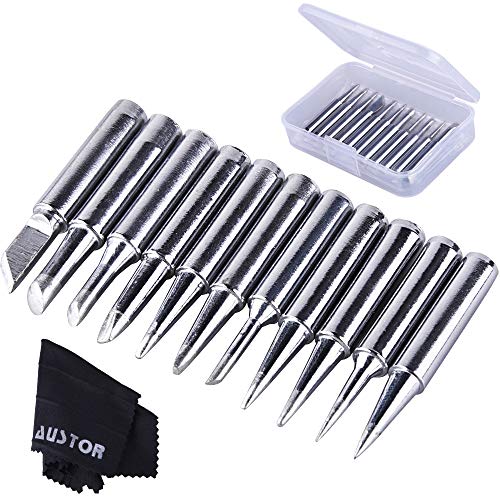
Package include - 11 pieces soldering iron tips in different shapes 900M-T-B, 900M-T-I, 900M-T-K, 900M-T-0.8D, 900M-T-1.2D, 900M-T-1.6D, 900M-T-2.4D, 900M-T-3.2D, 900M-T-2C, 900M-T-3C and 900M-T-4C, 1 piece cleaning cloth
Advantages and Limitations of Butane Soldering Tips
Once you’ve secured the right tip and refill strategy for your butane soldering iron, you’ll want to evaluate whether this tool actually meets your project requirements. Butane soldering tips offer significant portability advantages—you’ll work cordlessly in remote locations without electrical dependency, and rapid heat-up times enhance efficiency for on-the-go tasks. However, they present notable limitations. You’ll experience less precise temperature control than electric irons, compromising heat stability for sensitive electronics. The flame adjustment mechanism lacks accuracy, risking uneven heating and poor solder joint quality. Additionally, you’ll face ongoing fuel dependency and maintenance demands. Regularly checking for O-ring wear can help minimize leaks during operation. Carbon buildup requires frequent cleaning, particularly with lower-quality butane. Furthermore, due to the butane torch’s lower maximum temperature, it is best suited for lighter soldering tasks. Weigh these trade-offs carefully: cordless convenience versus temperature precision and consistency for your specific applications.

Interchangeable Standard Tip for LEXIVON Butane Torches - The LX-770 Soldering Iron and the LX-771 Soldering Torch.

[ Professional Butane Torch Kit ] The brazing torch kit is made of high-quality metal, sturdy and stable. Black diamond non-slip leather case, ergonomic handle provides a comfortable grip. The wide copper base offers stability and keeps your hands free. 100% metal refillable fuel tank and accessory heads have a longer service life and are more corrosion-resistant and drop-resistant.

Applications and Material Suitability
Because butane soldering tips deliver portability and rapid heat without electrical infrastructure, you’ll find them indispensable across diverse industries and repair scenarios. You can employ these tools on circuit boards, automotive wiring, and plumbing joints with equal effectiveness. Different material types require specific soldering techniques—soft solder for electronics and plumbing, while harder metals demand higher temperatures. You’ll appreciate the interchangeable tip designs that adapt to various tasks: needle-point tips for precision work, drag tips for multiple connections, and knife-edge tips for plastic manipulation. The adjustable flame lets you control heat intensity precisely, whether you’re working delicate thermoplastics or dense metal assemblies. You can tackle encaustic painting, pyrography, and mixed-media art using identical equipment, making butane soldering tips genuinely versatile across professional and creative applications. However, it’s important to note that butane torches lack high heat output and may not be suitable for certain advanced glassworking tasks.

A MUST-HAVE BUTANE TORCH FOR YOUR MASTERPIECES: Use the LEXIVON 12-piece butane powered soldering set in a wide range of different applications, from wood burning to wire soldering.

【High Performance】This mini torch can work with propane, acetylene, hydrogen, propylene, natural gas etc to finish jewelry repair work.Two connectors mix the oxygen and acetylene ( gas), to get high performance welding flame. The green one connect with oxygen and red connect gas (Acetylene/Butane/Propane)

YOUR DETAIL-WORK SIDEKICK: This torch kit is ideal for electrical soldering, jewelry repairs, heat shrinking, and detailed work on metal, wood, foam, and other materials
Safety and Operational Best Practices
While butane soldering tips offer remarkable versatility across professional and creative fields, their portability and open flame design introduce significant risks that demand your strict adherence to safety protocols. You must operate in well-ventilated areas and remove all flammable materials from your workspace. Always use a fireproof work surface like ceramic tiles or soldering blocks. Wear safety goggles and heat-resistant gloves to protect yourself from sparks and burns. Before use, inspect your torch for damage and adjust flame intensity appropriately for your solder joint. It’s important to note that butane torches are prohibited on flights due to safety hazards, so plan accordingly. Point the flame away from yourself and others, directing it toward the tip’s hottest cone for efficient heat transfer. Additionally, follow proper torch maintenance procedures to ensure safe and effective use. Allow your torch to cool completely before refueling, and keep fire extinguishers accessible nearby.
Choosing the Right Tip for Your Project
Selecting the appropriate tip fundamentally determines your soldering success, as different tip geometries and temperature capabilities directly affect joint quality and work efficiency. Your tip selection must align with specific project requirements. For fine, precision work on smaller components, conical tips deliver focused heat to intricate areas. Chisel tips handle general-purpose soldering efficiently across medium-sized applications. Webbed flame tips distribute heat evenly across larger surfaces for soft soldering or brazing on medium-sized pipes.
Consider your wire gauge and material thickness when evaluating project requirements. Heavier than 16 AWG wire projects benefit from butane tools’ higher temperature capabilities, while smaller AWG projects require precision control. Copper pipes exceeding ¾” diameter demand MAP-Pro fuel or butane alternatives for adequate heat delivery. Match your tip choice to these specifications for ideal results.

【Ultra-Refined Purity】TBTeek butane fuel undergoes triple filtration to remove 99.9% impurities, ensuring a clean burn for butane torch and kitchen blow torch devices. Prevents clogging, misfires, and residue buildup, extending the lifespan of your devices.

Refillable and Adjustable Flame: The butane torch lighter is refillable and compatible with most butane gas refills (Gas is not included in the lighter).Please fill the lighter with butane before using. Ensure that the Switch button is off while filling.
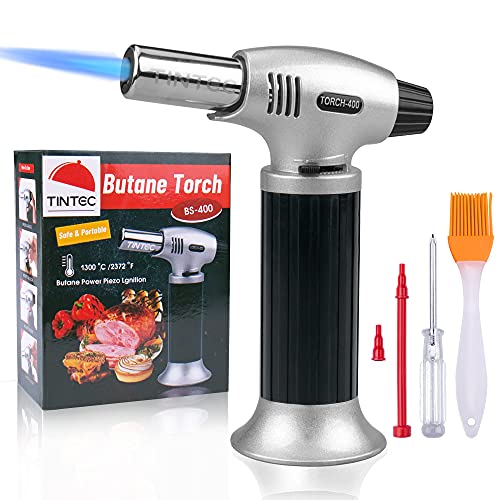
★PROFESSIONAL FOR COOKING: Adopt super lightweight Aluminum Alloy shell covered with ABS plastic handle and high-temperature resistant muzzle, ensuring long lifespan; Coming with a Silicone Basting, heat resistance up to 446⁰F / 230⁰C and can be used in the kitchen, the grill and on non-stick pans
Maintenance and Longevity of Soldering Tips
Once you’ve matched your tip to your project requirements, maintaining it properly directly impacts how long it’ll serve you and how well it performs. You’ll extend your tip’s lifespan by establishing consistent maintenance routines.
Start with tip cleaning after every use—wipe away solder and flux residue using a damp sponge or brass wire cleaner. For oxidized tips, apply tip tinning compound and remove excess material. Follow up with fresh solder application to create a protective layer that prevents oxidation.
Store your iron in a designated holder, never resting it on its side. Operate at the lowest effective temperature; high temperatures reduce tip lifespan by up to 50%. Inspect regularly for pitting, cracks, or poor solder wetting. Replace tips showing these signs to maintain soldering quality.