

You can use a meat thermometer for milk temperature monitoring if it meets dairy processing requirements. Look for models with ±0.5°F accuracy and ranges covering 43–203°F for yogurt making and pasteurization tasks. Instant-read thermometers like the Thermapen ONE work well, offering 2–4 second response times. However, you’ll need stainless steel SS304 probes and must sanitize thoroughly between uses to prevent cross-contamination. Proper calibration before each session guarantees reliable measurements that directly impact product safety and quality—details worth exploring further.
Understanding Meat Thermometer Specifications and Range
Before you can determine whether a meat thermometer works for milk, you’ll need to understand what ranges and capabilities these devices actually offer. Most meat thermometers measure between -58°F and 900°F, easily covering milk’s typical temperature range. Popular models like the Thermapen ONE and Typhur InstaProbe span -58°F to 572°F with excellent sensor accuracy of ±0.5°F in the milk range. Standard models offer ±1.8°F accuracy, while readings outside ideal ranges may drop to ±2% accuracy. High-end options like the Predictive Thermometer Gen2 reach 900°F, providing reliable low-temperature readings despite their extreme upper limits. NIST-certified models guarantee traceable calibration, ensuring consistent performance for milk temperature monitoring.

Fast and Accurate Reading: Kitchen thermometer for cooking features a 1 second readout speed and high accuracy of +/-0.9 degrees Fahrenheit, ensuring you receive the most delicious results every time

Completely Waterproof: IPX6 waterproof rating means you can wash this cooking thermometer under running water without fear. This food thermometer for cooking ensures cleanup is ultra-fast

FOOD SAFETY: Thermometer displays true oven temperature instantly to ensure safe food preparation
Temperature Requirements for Milk Processing and Yogurt Making
Several distinct temperature protocols govern milk processing, each designed to achieve specific safety and quality outcomes. You’ll encounter three primary milk pasteurization methods: HTST requires 72°C (161°F) for 15 seconds, vat pasteurization demands 63°C (145°F) for 30 minutes, and UHT processing heats milk to 135–150°C (275–302°F) for 2–8 seconds.
For yogurt fermentation temperatures, you must heat milk to 85–95°C (185–203°F) before cooling to 43–46°C (110–115°F) for culture inoculation. You’ll maintain this fermentation temperature for 4–8 hours to achieve desired acidity and texture. Each temperature range directly impacts microbial safety, shelf life, and product quality, making precise measurement critical throughout processing.
Key Features to Look for in a Thermometer for Milk Measurement
Since milk processing demands precise temperature control across multiple critical ranges—from pasteurization at 63–150°C to yogurt fermentation at 43–46°C—you’ll need a thermometer with specifications that surpass those of general-purpose meat thermometers. Look for models offering ±0.5°C accuracy with response times between 2–4 seconds, enabling real-time monitoring during steaming operations. Prioritize stainless steel SS304 probes with 76mm immersion depth to guarantee reliable readings while maintaining durability in hot milk environments. Select displays featuring dual Celsius/Fahrenheit capability with colored zone indicators marking best steaming ranges for immediate visual reference. An ergonomic design with clip systems fitted for standard milk jugs enhances workflow integration. These specifications assure accurate readings essential for consistent beverage quality and regulatory compliance.
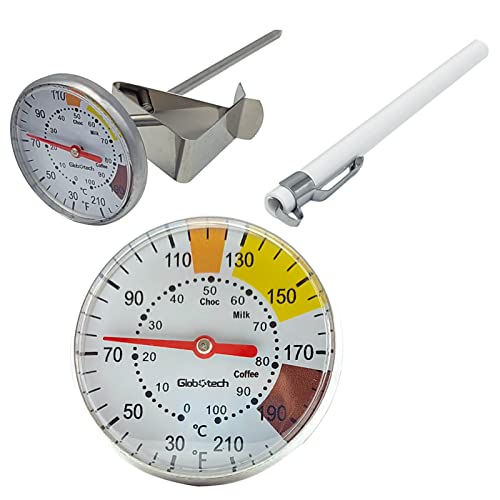
MILK FROTHING THERMOMETER – This stainless-steel thermometer is designed for milk frothing, steaming and making cappuccino, measure the temperature of milk, chocolate and coffee. A professional Barista tool to ensure every milk frothing a success. You can enjoy your cappuccino, latte art at home with it as well.

10 110 temperature range indicator between 10 110 , ideal for home or coffee shop use. milk temperature thermometer for frothing milk when making coffee, latte, cappuccino, etc. It accurately measures the temperature when heating milk or coffee for frothing.

Safety, Hygiene, and Cross-Contamination Prevention
You’ll need rigorous thermometer hygiene protocols if you use meat thermometers for dairy. Clean and sanitize probes before and after each use with food-safe sanitizers or boiling water. Avoid touching probe tips with bare hands post-cleaning. Cross contamination risks diminish considerably when you designate separate thermometers for meat and dairy products, clearly labeled for their specific uses. This practice guarantees compliance with CDC and FDA food safety standards while protecting your health.

Powerful Sanitizing Performance - LEXX RTU Food Contact Surface Sanitizer & Cleaner is an EPA-registered, NSF-listed Category A1, D2 sanitizer that meets the highest safety standards for professional environments. It kills 99.999% of harmful bacteria such as E. coli, Salmonella, Listeria, and Staph aureus on hard, non-porous food contact surfaces in just one minute.

Massive 2000 Pack Value Set: this bulk package contains 2000 individually wrapped probe cleaning wipes, offering exceptional value for high volume users; The thermometer wipes supply is ideal for busy restaurants, commercial kitchens, catering services

【High Accuracy & Fast Reading】Digital candy thermometer get precise temperature readings in just 1 second with accuracy ±0.9°F, making it a smart choice for candy making and deep frying
Practical Applications and Best Practices for Milk Temperature Monitoring
Meat thermometers can effectively monitor milk temperature across multiple processing stages—heating, cooling, and incubation—because their typical range of -58°F to 572°F encompasses the critical temperatures required for dairy applications, particularly the 180°F threshold needed to denature proteins during yogurt making. You’ll achieve accurate readings by positioning the probe at mid-depth within your container, avoiding contact with sides or bottom surfaces. Before use, perform thermometer calibration using ice water (32°F) or boiling water (212°F) to guarantee reliability. Digital instant-read models provide feedback within 4-6 seconds, enabling timely temperature adjustments and maintaining proper milk consistency throughout fermentation. Regularly calibrate your device before each session, and allow the probe sufficient equilibration time for precise measurements essential to successful dairy processing. Additionally, it’s important to note that instant-read thermometers are not meant to remain in the milk while heating.


