You’ll master cast iron grill pan cooking by leveraging its superior heat retention across every meal. Start with breakfast—sauté Yukon gold potatoes and eggs in high heat. Progress to seared steaks at 500°F using grapeseed oil for precision results. For dinner, grill salmon flesh-side down and marinate shrimp in garlic and lemon. Don’t overlook vegetable sides: toss zucchini and asparagus with olive oil and fresh herbs. Slow-cooked braises transform tough cuts into tender masterpieces. Uncover how proper seasoning and technique elevate each dish.
Breakfast Dishes to Start Your Day
Because cast iron conducts heat evenly and retains it exceptionally well, you’ll achieve superior results when preparing breakfast skillets that demand crispy potatoes and perfectly cooked eggs. Start by sautéing diced Yukon gold potatoes with breakfast meats like bacon or sausage until golden brown. Create wells in the mixture, then crack eggs directly into them, allowing the yolks to cook to your preference. To ensure optimal cooking, consider using oil with a high smoke point, which is ideal for achieving the perfect sear. Sprinkle cheddar cheese on top and finish cooking until melted.
You can also prepare hearty frittatas by scrambling eggs with sautéed vegetables—bell peppers, onions, and garlic—then adding cheese before baking at 400°F until set. For savory omelets, fold eggs around your protein and vegetable fillings, letting the cast iron’s retained heat melt the cheese perfectly without additional cooking. Investing in a natural non-stick surface will enhance both the cooking experience and flavor over time.
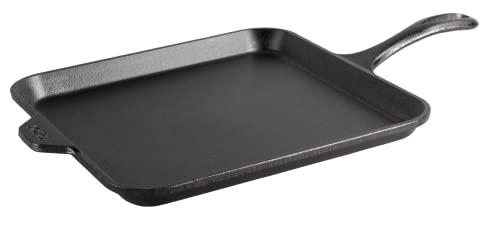
Versatile Square Cast Iron: The Lodge Seasoned Cast Iron Square Griddle Pan is ideal for perfectly cooked pancakes, eggs, and tortillas in any location

Package Includes: you will get 4 cast iron pans, which is an ideal kitchen companion whether you're simmering, sauteing, frying, or even baking; Discover the joy of creative cuisine with our cast iron skillet
Seared Steaks and Meat Recipes
When you’re ready to elevate your cast iron cooking, seared steaks demand precision and proper technique. Start by preheating your cast iron to 500°F and selecting high smoke-point oils like grapeseed or avocado oil. The unique ability of cast iron to retain heat is crucial for achieving that perfect sear.
Season your steak variations with kosher salt and coarse black pepper, then allow them to reach room temperature for even cooking. Press the steak firmly onto the pan’s surface immediately to maximize crust development through Maillard browning.
Sear for 2–3 minutes per side on 1-inch steaks, rotating 90° halfway through each side for professional grill marks. Finish thick cuts in a 375°F oven for 4–10 minutes.
Enhance flavor using marinade techniques with herb butter, garlic, and fresh thyme during basting. Rest your steak for 10 minutes to redistribute juices and preserve moisture before serving. The natural seasoning of cast iron skillets contributes to a superior crust, making them ideal for steak preparation.

Exceptional Heat Retention: Enjoy perfectly cooked meals with cast iron skillets that provide even heat distribution, ideal for searing, frying, and baking in a 12 inch frying pan.

Superior Heat Retention: The Cast Iron Skillet distributes heat evenly across the surface for perfect cooking results. Ideal for searing, sautéing, frying, baking, and more.

Steakhouse Sear At Home: The Lodge Square Cast Iron Grill Pan delivers high-heat searing and bold grill marks while channeling excess grease away
Seafood Options for Elevated Dinners
As you shift from meat-centric cast iron cooking, seafood presents equally sophisticated opportunities for developing restaurant-quality results. Grilled salmon delivers exceptional flavor when you sear it flesh-side down over high heat, creating distinctive grill marks while maintaining tender, moist flesh. For a more elaborate presentation, you’ll find seafood paella combines shrimp, saffron rice, and aromatic seasonings simmered directly in your cast iron skillet, achieving authentic depth. This dish can benefit from a rich broth base similar to what is used in hearty beef stew recipes, enhancing its flavor profile. You should marinate calamari and shrimp in garlic, lemon zest, olive oil, and fresh dill for approximately one hour before grilling. Cook shrimp just 1-2 minutes per side and calamari only 30 seconds per side to preserve tenderness. Maintain proper spacing throughout cooking to encourage caramelization rather than steaming, elevating your dinner experience considerably. Additionally, it’s important to let baked goods cool slightly in the pan before serving to ensure easy removal.

LONG LASTING CAST IRON GRILL: Perfect for both cooking and serving, this heirloom quality cast iron cookware by Outset can handle up to 22 jumbo grilled shrimp at once!

Sear 22 Jumbo Shrimp: With 22 dedicated slots, this cast iron shrimp pan ensures every shrimp is evenly cooked, locking in flavor and moisture for restaurant-quality results.

Double Burner Configuration: The Lodge Double Play Reversible Cast Iron Grill/Griddle covers two burners, offering a generous breakfast grill plate for family breakfasts or meal prep with ease
Vegetable Sides and Main Dishes
How can you elevate your cast iron grilling beyond proteins? You’ll uncover that vegetable sides deliver remarkable depth when properly prepared. Start by preheating your cast iron skillet to medium-high heat, then toss your vegetables—grilled zucchini, bell peppers, and cherry tomatoes—in olive oil with salt and garlic.
Marinated asparagus benefits from balsamic vinegar and rosemary infusions applied 1+ hours before cooking. Slice zucchini and eggplant ½ to 1-inch thick for ideal char development. Grill for 15–20 minutes, stirring occasionally, until you achieve tender-crisp texture with caramelized edges. The even heat distribution of the cast iron guarantees uniform cooking while imparting distinctive smokiness. Remember to season your skillet regularly to maintain its excellent non-stick properties. Layer marinades combining lemon juice, apple cider vinegar, and fresh herbs to enhance natural flavors without excess fat. These nutrient-dense sides complement any protein beautifully.

YOUR NEW GO-TO GRILLING PAN: The Lodge Cast Iron Grilling Pan is perfect for shrimp, veggies, fish, and more! The grid design protects food from falling through the grate and infuses your dish with that wonderful grill flavor. This lightweight grilling pan can handle the heat and the dual handle design makes it easy to maneuver as you cook.
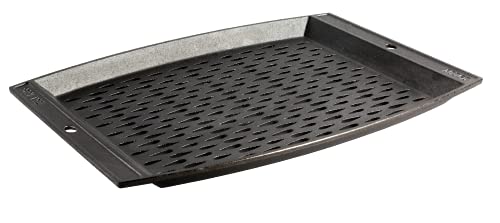
YOUR GO TO GRILL TOPPER: The Lodge Cast Iron Grill Topper is perfect for shrimp, veggies, fish, and more! The grid design protects food from falling through the grate and infuses your dish with that wonderful grill flavor. This lightweight grilling pan can handle the heat and the dual handle design makes it easy to maneuver as you cook.

【15"x12" Grill Basket for Outdoor Grill】Designed for delicate foods and small pieces that will fall into the grill: vegetables, fish, kebabs, onions, broccoli, asparagus, potatoes, diced mushrooms, veggies, diced meat, sausage, shrimp and other foods!
Slow-Cooked Comfort Food
While cast iron skillets excel at high-heat searing and vegetable charring, they’re equally suited for slow-cooked braises that transform tough cuts into fork-tender masterpieces. Your cast iron’s superior heat retention makes it ideal for braised meats like lamb shoulder and pork shanks, which benefit from extended, even cooking at low temperatures. Additionally, using a rich gravy in your recipe will enhance the overall flavor profile and provide that comforting touch we all love.
You’ll find that slow cooked stews develop deeper, more complex flavors when prepared in seasoned cast iron. The material’s thermal properties break down connective tissue efficiently while concentrating rich, savory sauces. Layer root vegetables beneath your protein—carrots, potatoes, and onions—to create flavor-rich foundations. The result is a deliciously hearty dish that rivals traditional Dutch Oven Beef Stew in flavor and comfort.
Whether you’re preparing Dutch oven pot roast or milk-braised pork chops, your cast iron becomes an essential tool. The vessel’s durability withstands hours of gentle simmering, delivering consistently tender results that justify the investment in quality cookware.

Moisture-Locking Lid: The Lodge Essential Enamel Braiser features a moisture-locking design ideal for broiling, braising, baking, or roasting
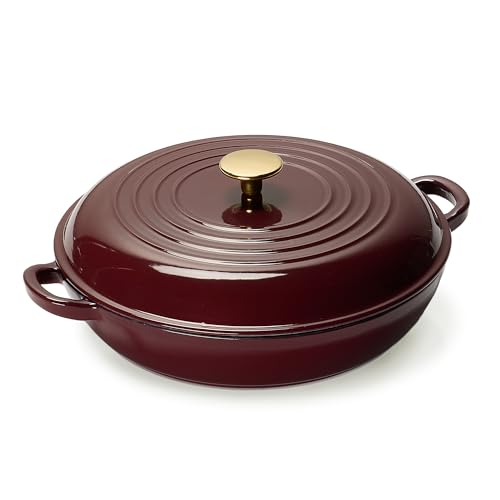
Enhanced Cooking Experience: Carote enameled cast iron braiser pan delivers exceptional heat conduction and heat retention. Crafted from heavy-duty enameled cast iron and featuring a condensation design on the inner lid, it ensures a perfect cooking experience, locking in the flavors of your ingredients. Whether you're searing, roasting, or braising, the Carote enameled cast iron shallow casserole is your ultimate choice.

The original slow cooker distributes and retains heat evenly and has generous sized handles
Cast Iron Pan Care Between Meals
Proper maintenance between cooking sessions determines whether your cast iron develops a superior nonstick patina or succumbs to rust and degradation. Your cleaning techniques directly impact longevity and performance.
After each use, rinse your pan with hot water and scrub away food residue immediately. Apply a thin oil layer—about 1/4 teaspoon of vegetable oil—using a paper towel, then warm it on medium heat until it bonds lightly. Avoid soaking the skillet or leaving it wet, as this can lead to rust.
For rust prevention, store your pan in a dry, well-ventilated area away from moisture. Never stack pans without separating them with paper towels to absorb residual dampness. Periodically inspect your stored cookware and re-oil the surface as needed to maintain that protective barrier against oxidation and rust development. Additionally, be cautious when using cast iron on glass cooktops as improper handling can lead to scratches on the surface.