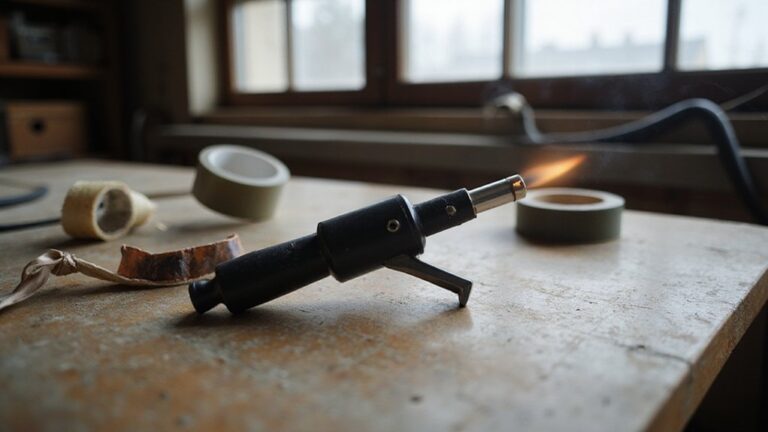
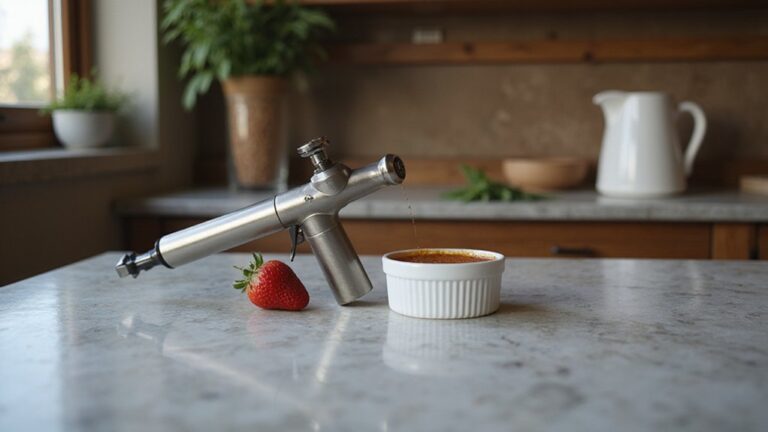
Yes, you’ll create perfect crème brûlée using a butane torch by mastering three critical elements. You’ll select white granulated sugar for even melting, hold the torch 2-3 inches from the surface at medium flame, and execute constant circular motions for uniform caramelization. You’ll prepare a smooth custard base by tempering egg yolks and straining the mixture. You’ll allow 5 minutes for hardening before serving. Understanding proper technique, safety protocols, and troubleshooting common mistakes will elevate your results considerably.
Why Butane Torches Are Ideal for Creme Brulee
When you’re caramelizing sugar on crème brûlée, a butane torch delivers superior control and consistency compared to alternative methods. The compact design and angled nozzle keep your hands safely positioned away from the flame while enabling precise application to individual servings. This flame control proves essential—you’ll achieve an evenly caramelized surface without the risk of burnt spots or undercooked sections that makeshift approaches like hot spoons produce. Additionally, the butane torch allows for two-step caramelization, which enhances the thickness and crunchiness of the sugar crust.
Butane benefits extend beyond performance. Quality torches feature copper construction that dissipates heat efficiently, preventing thermal damage during extended use. The steady, hot flame generates consistent caramelization results, producing that signature golden crust that shatters satisfyingly under your spoon. These technical advantages make butane torches the methodologically sound choice for achieving reproducible, professional-quality results at home. Additionally, propane torches can be used for a similar purpose, but require more caution in flame control for even results.

[Portable Torch Lighter Gun] ravs cooking torch baking tools are made of quality metal material, which is more sturdy than plastic butane torches on the market. With an ergonomic design handle, the micro torch offers a great grip and and comfort. (Note: Pls use quality and pure refillable butane for torch refill)

【Effortless One-Handed Operation】With the flame regulator and flame lock button easily in reach of your thumb, adjust and lock the flame with just one hand. Never again do you need to free up the other hand to assist.
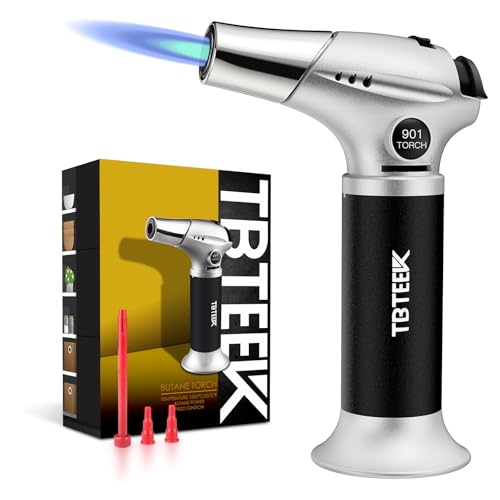
Safe and Sturdy Creme Brulee Torch: The safety lock could prevent accidental ignition. Also the ergonomic design provides comfort to your hand and keep away from the flame; the aluminum alloy material adopted makes it more resistant and sturdy, ensuring the longevity (Note: After each use, please turn the flame adjustment valve to the lowest level(OFF Position), and engaging the safety lock for indicent ignition)
Selecting the Right Sugar and Applying It Correctly
Your butane torch’s precision means nothing if you’re working with the wrong sugar. White granulated sugar remains your best choice—its fine crystals melt uniformly and quickly, producing the signature crisp crust. Turbinado or raw sugar creates thicker, textured layers with deeper flavor complexity, though they demand greater torching skill to avoid burning.
For application techniques, sprinkle sugar in a thin, even layer across your custard’s surface. Tap the ramekin gently to level the distribution, or sift for ultra-fine evenness. Apply immediately before torching, as premature application allows sugar to absorb moisture from the chilled custard. Additionally, understanding your specific stove type can enhance your overall torching experience.
Avoid brown and powdered sugars entirely—their moisture content and fine texture produce sticky, clumping results rather than the crisp shell you’re seeking. Additionally, using gentle cleaning methods will help ensure your torching tools remain in optimal condition for achieving that perfect creme brulee.
Essential Safety Guidelines for Torch Operation
Before you ignite your torch, you’ll need to establish a workspace that prioritizes both safety and control. Clear your preparation area of all flammable materials, including paper and oils, and position yourself at a stable, heat-resistant surface.
Wear appropriate protective equipment: safety goggles, heat-resistant gloves, and long sleeves to shield against thermal exposure. Maintain fire safety by keeping extinguishers accessible and ensuring adequate ventilation to prevent butane vapor accumulation. It’s also important to remember that some types of lighters are regulated or restricted in certain environments, ensuring you’re following all relevant guidelines. Always check to ensure you are using refined culinary butane fuel before igniting the torch.
Inspect your torch thoroughly before operation, checking for leaks or damage. Grip the device firmly, directing the flame away from yourself and others using measured sweeping motions. Maintain proper distance from your dessert to avoid scorching.
Allow fifteen to thirty minutes cool-down time before storage in a designated case, away from heat sources.
Mastering the Caramelization Technique
Once you’ve prepared your custard and applied the sugar layer, precise torch control becomes essential for achieving the signature crème brûlée texture. Hold your butane torch 2 to 3 inches from the sugar surface, maintaining a medium flame setting for ideal control. Execute constant circular motions to prevent localized burning while ensuring uniform heat distribution. Prioritize caramelization timing by working from the outer edges inward, completing the center last. It’s important to choose the right caramelization technique to avoid uneven results. Monitor sugar melting carefully—all crystals must fully dissolve before caramelization concludes. Watch for visual wisps of smoke and a slightly darker-than-amber coloration as your completion indicators. The middle area’ll naturally appear slightly darker than edges, which is acceptable. Allow approximately 5 minutes cooling time for the hardened caramel layer to set properly before serving. Using a butane torch enhances the precision browning process by providing quick, targeted heat that allows for optimal control during caramelization.

【Effortless One-Hand Operation & Hands-Free Continuous Flame Mode】This premium butane lighter features an ergonomic grip and extended heat-resistant nozzle for one-handed ignition. Simply ignite the flame first, then press the lock button to activate continuous flame mode—freeing your hands for prolonged tasks like caramelizing desserts, soldering jewelry, or searing meats. No extra hands needed, making kitchen work and DIY projects more efficient and hassle-free.

Gas Type Compatibility: Can be used for butane fuel only with short nozzles (canister with snap joint only). For secure delivery, this does not include butane gas

One-Handed Operation & Ergonomic Design: Featuring a single-handed operation design and a long-reach torch nozzle, the ergonomic design makes this lightweight torch easy to hold and ensures safe, time-saving cooking. It's the must-have helper for efficiently creating delicious meals in your own kitchen after a busy day. Makes cooking easier and safer
Preparing Your Custard for Perfect Results
Since a crème brûlée’s success hinges on achieving a silky, custard foundation, you’ll need to master the infusion and tempering techniques that distinguish exceptional results from mediocre ones. Begin by heating heavy cream with vanilla bean over medium-low heat for ten minutes, then rest for thirty minutes to extract maximum flavor. Meanwhile, whisk egg yolks with sugar until pale—this incorporates air that’ll lighten your custard texture. Egg quality directly impacts richness and structure, so use fresh, high-grade yolks. Gradually temper eggs by pouring warm cream while whisking constantly, preventing scrambling. Strain the mixture through fine mesh to eliminate lumps and guarantee smoothness. This methodical approach produces the pristine custard foundation essential for flawless caramelization.
Troubleshooting Common Torching Mistakes
Even with meticulous custard preparation, your crème brûlée can fall short if torch-related issues derail the caramelization process. A weak flame indicates air pockets trapped in your tank—press a pen into the valve to expel excess gas. Verify your nipple adapter fits correctly; improper seating causes significant fuel loss during filling.
Flame control and flame height demand constant attention. Hold your torch at a consistent distance from the sugar surface, maintaining steady hand positioning as you swirl the ramekin. Pull away immediately when sugar begins bubbling to prevent burning. Monitor your torch’s output continuously; sputtering signals clogging from low-quality butane or incomplete filling. It’s crucial to note that butane torches are classified as hazardous materials, which is why they are not allowed in airplane luggage.
Each butane brand features different nipple styles, so confirm compatibility before purchasing refills. Dedicated cooking torches are generally more effective than general-purpose models, ensuring methodical adjustments guarantee consistent, properly caramelized results.
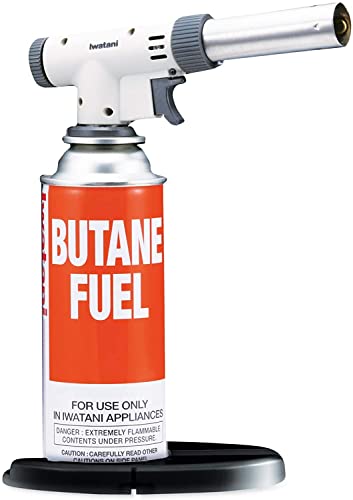
Iwatani top quality butane torch is backed by a 1-year manufacturer (butane not included)

Safe and Sturdy Creme Brulee Torch: The safety lock could prevent accidental ignition. Also the ergonomic design provides comfort to your hand and keep away from the flame; the aluminum alloy material adopted makes it more resistant and sturdy, ensuring the longevity

Well-made and Safety: Industrial style, sturdy metal body design. Long-angled nozzle keeps your hand safely away from the flame. The wide metal base provides excellent support and anti-tipping to the butane torch lighter body. The ergonomic anti-slip handle offers a great grip and stays cool.
Using a Broiler as Your Backup Method
If your butane torch fails or you’d rather avoid open flames, your oven’s broiler delivers equally effective results. Position your oven rack 4 to 6 inches from the broiler element and preheat on high for 10 minutes. After chilling your crème brûlée overnight, remove it from refrigeration 10 minutes before broiling. Apply a thin, even layer of Demerara sugar across the custard surface, ensuring consistent thickness for uniform browning.
Additionally, using a high-quality seasoning oil can help enhance the flavor profile of your custard when combined with the caramelized sugar. Place ramekins on a sheet pan and broil for 5 to 10 minutes, rotating occasionally for even caramelization. Monitor closely—sugar caramelization occurs rapidly. The broiler technique produces the same crunchy texture as torch methods. Allow the sugar topping to cool and harden for at least 5 minutes before serving, achieving ideal temperature contrast and texture. For best results, similar to seasoning cast iron, use a thin layer of sugar that can withstand high temperatures without breaking down.

1:1 REPLACEMENT FOR PLAIN PROCESSED SUGAR: Our all natural infused cane sugars are gourmet replacements and upgrades to plain processed sugar. Bake-in extra flavor, decorate with flavors and colors that pop, use as drink rimmers for your beverages of choice, and make sweet treats extra special.

Country of origin is United States

Pack of twelve, 3.7-ounce boxes (total of 44.4 ounce)