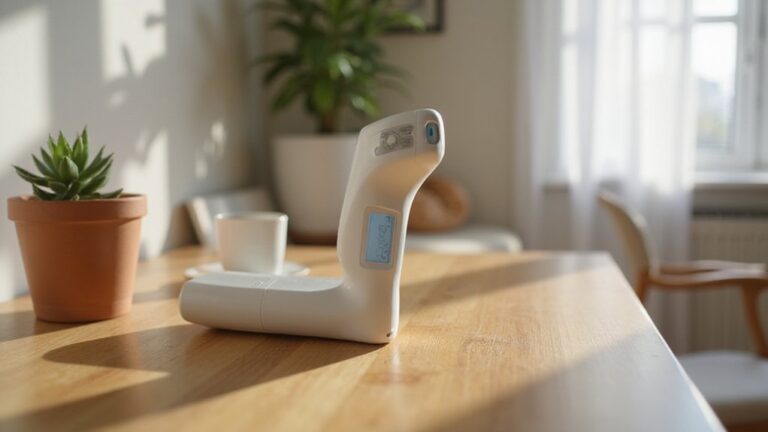
You can safely cook meat with a leave-in thermometer inside—they’re built with stainless steel probes and hermetic seals rated for high heat. However, don’t use instant-read thermometers this way; their sensitive components can’t withstand prolonged cooking and may malfunction. Leave-in models feature waterproof displays and heat-resistant cables designed for ovens and grills. Always verify your thermometer’s oven-safe rating before inserting it. Understanding the specific differences between thermometer types will help you avoid costly mistakes.
Understanding Leave-In Thermometers and Their Design
Because you’ll want reliable temperature monitoring without repeatedly opening your oven or grill, leave-in thermometers are specifically engineered to remain embedded in meat throughout cooking. These devices feature stainless steel probes rated for temperatures up to 716°F, delivering material durability essential for sustained heat exposure. Their design features include hermetic seals protecting against moisture infiltration and heat damage, while cables and connectors withstand demanding oven, grill, and smoker environments. Digital models incorporate waterproof displays with rapid refresh rates—as quick as two seconds—enabling real-time temperature tracking. Analog versions utilize USDA-calibrated dials for immediate reference. This construction approach eliminates guesswork regarding doneness while minimizing cross-contamination risk through reduced handling. You’ll achieve precise cooking outcomes by leveraging these purposefully designed instruments built specifically for continuous, uninterrupted monitoring. Additionally, deep fry thermometers are tailored for oil temperatures and may not provide the accurate readings necessary for meat cooking.

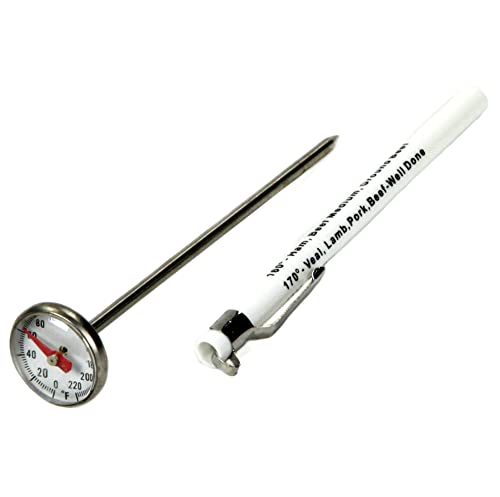
STAYS IN THE MEAT WHILE IT COOKS, NO BATTERY EVER: Push the 4.5-inch stainless steel probe into the roast, close the oven door and read the 2.5-inch dial through the glass. Bimetal mechanics: nothing to charge, nothing to replace, nothing to set up.


Temperature Range: 140° to 190°F / 60° to 87°C. Probe Length: 4.75-inches Dial Diameter: 2.375-inches
Why Instant-Read Thermometers Should Not Be Left Inside Meat
Unlike leave-in thermometers engineered for sustained heat exposure, instant-read models won’t survive prolonged cooking temperatures due to their heat-sensitive electronic components and plastic or rubber parts that can melt or degrade. You’ll risk device malfunction if you leave your instant-read thermometer inside meat during cooking. The internal circuitry can’t withstand continuous high heat, and moisture from cooking will seep into sensitive areas, causing short circuits or corrosion. Additionally, heat exposure compromises temperature accuracy—the sensor may drift, producing false readings or failing to stabilize properly. Extended contact also conducts heat through the metal stem, inflating readings above actual internal temperatures. Manufacturers explicitly recommend against this practice. You should use instant-read thermometers only for spot checks near cooking’s end, not continuous monitoring.

【Fast & Accurate】Our meat thermometer digital delivers accurate readings within ±1°F in just 1–2 seconds, with a wide temperature range of -58°F to 572°F (-50°C to 300°C). No more waiting over the heat - know your food's exact temperature instantly.

【8X Faster + 4X More Precise】: Upgraded with an industrial-leading professional thermocouple sensor, Themomonster meat thermometer digital with NIST certified ±0.5℉ precision provides you the accurate temperature of your food in just 0.5 Seconds.
Reads in both Fahrenheit and Celsius
The Science Behind Proper Temperature Monitoring
Now that you understand why instant-read thermometers demand careful handling, you’re ready to explore what makes temperature monitoring accurate in the first place.
You’ll find that accurate measurement depends critically on proper probe placement—inserting the thermometer into the thickest part of meat at multiple locations reveals actual temperature variability. Your thermometer’s temperature sensitivity directly impacts reliability; thermocouples respond faster and deliver superior precision compared to thermistors, though they require investment. It’s also crucial to ensure that chicken is safely cooked at 165°F (74°C) to prevent foodborne illness, while robust cooking techniques like pot roast preparation ensure optimal flavor and tenderness.
Thermometer calibration remains essential for accuracy. You must regularly verify your device using ice-point methods or manufacturer protocols to guarantee readings remain trustworthy. Without proper calibration, even premium equipment produces unreliable data. Additionally, you should measure internal temperature exclusively—surface readings and visual cues prove inadequate for determining doneness safely.
Safe Internal Temperature Guidelines for Different Meat Types
With proper probe placement and calibration verified, you’re prepared to apply precise temperature targets that eliminate foodborne pathogens while maintaining meat quality. Whole beef cuts require 145°F (63°C) with a 3-minute rest, while ground beef demands 160°F (71°C) for safety. Fresh pork reaches safety at 145°F (63°C), though ground pork needs 160°F (71°C). Poultry demands your strictest attention: all chicken, turkey, and ground poultry must reach 165°F (74°C), including stuffing cavities. This temperature is critical because it kills harmful bacteria like Salmonella and Campylobacter, preventing serious foodborne illnesses. Additionally, using a thermometer that is oven-safe allows for more accurate internal readings, ensuring that the meat is cooked to the correct temperature without risk of damage from high heat. Fish and shellfish require 145°F (63°C) until flesh turns opaque. Egg-containing dishes need 160°F (63°C) to prevent Salmonella risk. Your temperature safety protocol guarantees effective pathogen elimination across all meat preparation types, protecting vulnerable populations while preserving culinary quality.
How to Correctly Insert a Thermometer for Accurate Readings
Even with a properly calibrated thermometer, improper insertion undermines your food safety efforts and can yield dangerously misleading readings. You must target the thickest part of meat while avoiding bones, fat, and gristle that distort temperature accuracy. To achieve a perfectly cooked dish, consider how the chicken pot pie filling benefits from reaching a safe internal temperature of at least 165 degrees Fahrenheit, as this ensures that the meat is fully cooked.
For proper insertion, you’ll need ideal depth of approximately one inch into dense muscle tissue for thicker cuts. Position your probe until the depth marker fully penetrates the meat’s interior. With poultry, insert into the inner thigh; for turkey breast and pork chops, use side insertion into the deepest section.
Allow your reading to stabilize for at least ten seconds before removal. You should take multiple readings at the same location to validate consistency and confirm you’ve achieved accurate thermal center measurement. Additionally, vacuum sealing meats before cooking can enhance flavor and moisture retention in the finished dish.

The Only Meat Smoking Guide Magnet You'll Ever Need: Unlike single-page magnets, this 4-side set includes smoking temps, cook times, meat temperature chart, pellet grill wood pairings, and a simple step-by-step How-To guide-all organized for quick use at the smoker. Everything you need, nothing you don't.

Smoking Guide: Easy to understand and allows you to cook meat perfectly and safely every time. Using this turkey temperature chart ,You will be able to create perfectly cooked meat through careful monitoring of temperature.

FOOD SAFETY: Thermometer displays true oven temperature instantly to ensure safe food preparation
Smart Thermometers: Remote Monitoring While Cooking
How can you monitor your meat’s temperature from across the yard or inside your home? Smart thermometers deliver remote capabilities through Wi-Fi and Bluetooth connectivity, enabling real-time temperature tracking from your smartphone or tablet. Devices like CHEF iQ Sense, The MeatStick, and Combustion Inc’s Predictive Thermometer transmit data wirelessly with unlimited range via Smart Hub integration. This allows you to easily track core temperature without being tied to the kitchen.
App integration provides critical functionality you’ll rely on during cooking. Your dedicated app displays preset temperatures, sends alerts when target temperatures are reached, and notifies you if readings fall outside safe ranges. Cloud storage preserves cook data and alert records accessible across multiple devices. Wireless meat thermometers offer advanced features that enhance your cooking experience and provide peace of mind.
This remote monitoring eliminates guesswork and reduces food safety risks by keeping you informed throughout extended cooking sessions.

Smart Display Base with Control: The ThermoMaven G1 wireless meat thermometer features a versatile smart display base that offers real-time temperature readings and allows you to set temperatures directly on the device—no app required. With our user-friendly one-click setup, you can connect the probe, pair it with the base, and start cooking in seconds—no complicated setup needed!

Bluetooth Monitor Remotely: Govee Bluetooth meat thermometer lets you check the temperature of your grill, smoker, or oven from your phone. With this smart BBQ thermometer, you can multitask while grilling.
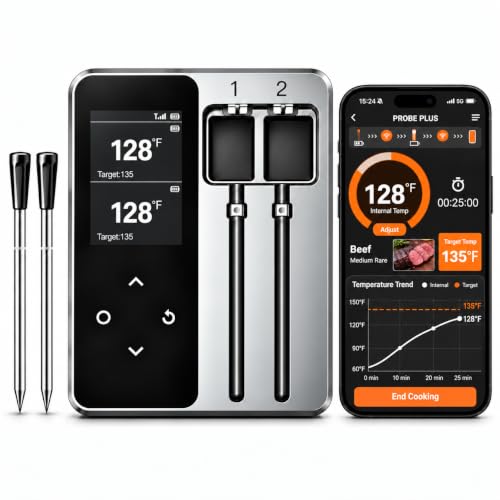
Smart Display Base : Keep essential cooking controls right at your fingertips. View real-time temperatures, set targets and adjust alerts directly on the large-screen base without using your phone. For added flexibility, connect to the Bluetooth app whenever you prefer phone-based monitoring
Key Benefits of Using Leave-In Thermometers During Cooking
Leave-in thermometers transform meat cooking by eliminating the guesswork that leads to undercooked or overcooked results. You’ll achieve superior cooking accuracy by monitoring internal temperatures continuously throughout the process. Temperature consistency becomes effortless—you’ll maintain stable oven conditions without repeatedly opening doors, which causes heat loss and extends cooking time. Additionally, some modern leave-in thermometers feature ambient temperature sensors that help track the cooking environment’s changes, further enhancing your cooking precision.
You’ll gain immediate alerts when your target temperature’s reached, freeing you to manage other meal components. This approach prevents foodborne illness risks by ensuring meat reaches USDA-recommended safe temperatures for poultry, beef, and pork. You’ll reduce energy consumption since you’re not constantly checking progress, and you’ll spend less time on extended cook times for large cuts. Additionally, using a thermometer can prevent the growth of molds, yeasts, and bacteria, enhancing overall food safety during the cooking process.
Leave-in thermometers ultimately deliver reliable doneness levels while enhancing kitchen safety.

【Dual Safe Probes for Multi-Use】Vuwwey meat thermometer probe is great for meat, liquids, oil frying, baking, candy making, kitchen & outdoors. The wired probe is ideal for monitoring air fryers, ovens, grills, BBQ, smokers. It's your hands-free assistant: set the alarm, stick it on, and step away from the heat
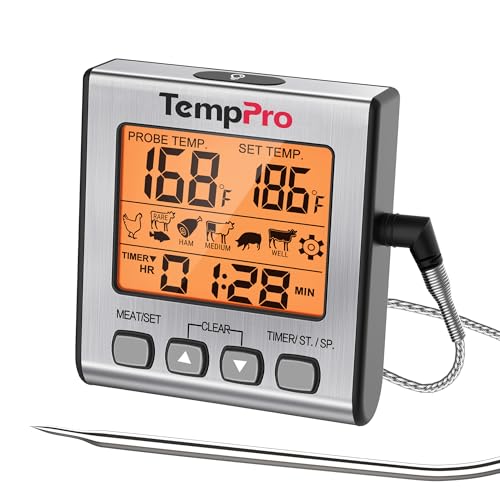
Precision Cooking, Perfect Results: Never overcook again! This digital meat thermometer features a food-safe probe with ±1.8°F accuracy and a 40" heat-resistant cable, continuously monitoring your BBQ, oven, or smoker from 14°F to 572°F for perfectly cooked meals every time

BBQ HI/LOW temp range alarm: Set your desired food temp and HI/LOW temp range for your grill or smoker to know when to add more fuel smoker thermometer will flash and beep to remind you if the temperature ever goes out your set range; HI/LOW temp range alarm is specifically designed for usage with smokers, grills and BBQs
Common Mistakes That Lead to Inaccurate Temperature Measurements
While leave-in thermometers eliminate guesswork, they’re only effective when you use them correctly—and common measurement errors can quickly undermine their benefits and compromise food safety. Thermometer placement is critical: inserting your probe near bones or edges produces artificially high readings since these areas cook faster than the meat’s center. Position your thermometer in the thickest portion instead. Temperature timing matters equally—relying on visual cues like browning delays checks until meat’s already overcooked. Check temperatures early and frequently, especially with large cuts. Additionally, guarantee adequate probe depth of at least ½-inch to reach interior temperatures rather than surface readings. Finally, calibrate your thermometer regularly using ice bath and boiling water methods, as even minor inaccuracies compromise results and food safety. It’s also essential to avoid using cast iron pans that might scratch your cooking surface while you monitor temperatures.
Maintenance and Cleaning Your Meat Thermometer Properly
Because thermometer accuracy directly impacts food safety, you’ll need to establish consistent cleaning practices that prevent sensor degradation and bacterial contamination. Clean your probe immediately after each use with warm soapy water and a soft cloth, removing meat juices and grease thoroughly. Rinse completely under running water, then air dry before storing.
Your cleaning methods should avoid harsh chemicals or abrasive tools that damage sensors. For sanitizing, use mild soap, food-safe sanitizers, or vinegar-baking soda solutions. Never submerge electronic handles or chargers—only fully waterproof probes tolerate submersion. Proper calibration methods, such as the ice point method, should also be followed to ensure accuracy in measurement.
Thermometer durability depends on proper storage in clean, dry conditions with probe covers protecting against contamination. Inspect regularly for discoloration or buildup. Prevent grease accumulation on charging contacts. Follow manufacturer instructions closely to maintain warranty coverage and guarantee peak performance throughout your thermometer’s lifespan. Additionally, proper care helps ensure that the sensor’s accuracy is preserved over time.
Potential Risks and How to Avoid Them When Using Leave-In Thermometers
To guarantee food safety and thermometer longevity, you’ll need to understand the specific hazards associated with leave-in thermometers. Non-oven-safe devices can melt or crack, causing food contamination through plastic fragments. Metal stems conduct heat, producing falsely elevated temperature readings that compromise cooking accuracy. Using a meat thermometer eliminates guesswork and ensures the steak reaches the desired level of doneness safely and consistently.
You must use only thermometer safety equipment labeled oven-safe or leave-in rated. Check manufacturer temperature limits before use. Position probes at least two inches deep into meat’s thickest section, avoiding bones and fat. Keep cables away from direct flames during grilling to prevent burnout.
Prevent food contamination by cleaning probes thoroughly between raw and cooked foods. Never substitute instant-read thermometers for leave-in models, as this damages the device and risks safety. Remove thermometers before broiling if unrated for that environment. Additionally, utilizing meat thermometers in baking can enhance your culinary precision when ensuring baked goods reach the ideal internal temperature.