You’ll need 100% cotton worsted weight yarn and a G, I, or J hook, depending on your strand thickness. Start with a foundation chain matching your skillet handle length plus seam allowance, then work single crochet stitches in continuous rounds for even coverage. Cotton yarn prevents melting risks that acrylic presents. Hand-wash your finished cover in cool soapy water and air-dry completely. One yarn ball yields approximately three covers, making this an economical project. Uncover specific construction techniques and customization options that’ll enhance both your safety and kitchen style.
Materials You’ll Need
You’ll want to gather several essential supplies before starting your skillet handle cover, beginning with 100% cotton yarn in worsted weight (#4)—acrylic won’t work because it’ll melt when exposed to heat from your skillet. Consider brands like Peaches and Creme or Sugar and Creme for reliable yarn selection.
Your hook size depends on strand thickness. You’ll use a G (4mm) hook for single or double strands, an I (5.5mm) for double strand cotton, or a J (6mm) for double thick covers. Always check your specific pattern for recommendations since hook sizes may vary.
You’ll also need a tapestry needle for weaving in ends, scissors for cutting yarn, and pins for holding pieces. One ball of worsted weight cotton yields approximately three covers, so plan your yarn quantities accordingly.

Content: 100% mercerized cotton, Care: This yarn for knitting, crocheting, amigurumi and craft projects is easy to care for, simply machine wash and tumble dry all crafted items at low heat.

COTTON YARN FOR EVERYDAY MAKES: 24/7 Cotton is a smooth, 100% cotton yarn available in a wide range of vibrant, lasting colors. Ideal for crochet and knit kitchen sets, reusable bags, summer hats, and home décor projects that need clean stitches and durability.

Content: 100% mercerized cotton, Care: This yarn for knitting, crocheting, amigurumi and craft projects is easy to care for, simply machine wash and tumble dry all crafted items at low heat.
Basic Construction Method
With your materials gathered, it’s time to start building your skillet handle cover. Begin by working basic crochet techniques like single crochet and double crochet stitches to establish your foundation chain. The length should match your skillet handle measurement plus seam allowance.
Work in rows or rounds, depending on your chosen pattern structure. Maintain consistent tension throughout to guarantee even coverage and proper fit. As you build, you’ll naturally shape the cover to hug your handle’s contours.
Incorporate handle cover aesthetics by selecting stitch patterns that complement your kitchen style. Consider textured stitches for visual interest or simple patterns for timeless appeal. This foundation work determines both the cover’s functionality and its finished appearance, so work deliberately and carefully.

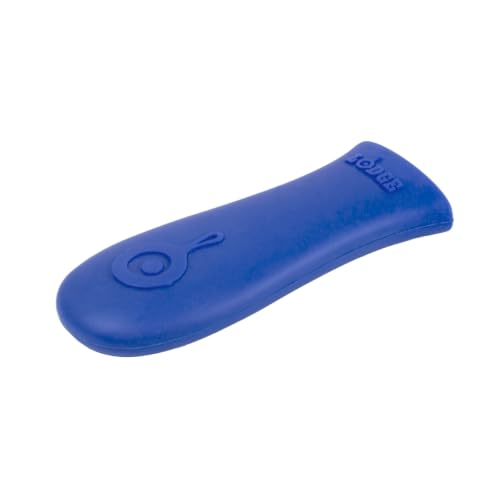
Reliable Heat Resistance: Designed for skillets 9 inches and larger, the Lodge Silicone Hot Handle Holder delivers a secure grip on hot cookware with heat resistance up to 500°F

Safety and Usage Guidelines
Because your crochet handle cover directly protects your hands from heat, understanding its limitations is essential before you use it with hot cookware.
Your cover isn’t designed for open flames, grilling, or oven use—it’s strictly for stovetop handles. Never rely on it as a substitute for oven mitts or pot holders. Keep it away from direct burner heat and don’t leave pans unattended while wearing covers.
Key safety tips include checking your yarn’s heat rating before use and inspecting the cover regularly for wear or damage. Replace it immediately if you notice fraying, holes, or weakened areas. Additionally, be cautious when using it with cookware that may reach high temperatures to prevent any heat-related accidents.
Usage precautions also mean ensuring the cover fits snugly to prevent slipping. Don’t extend it beyond handle ends to avoid flame contact. Always use additional protection when handling extremely hot cookware, and follow both manufacturer guidelines for your cover and your cookware specifications.
Pattern Complexity and Skill Level
Now that you’ve learned how to keep your hands safe while using the cover, understanding the pattern’s skill requirements will help you determine if this project suits your crochet experience.
This pattern uses beginner techniques exclusively—primarily single crochet stitches worked continuously in rounds. You’ll master fundamental skills without tackling complex shaping or stitch variations. The magic ring or chain foundation simplifies your starting method, while straightforward rounds build your confidence quickly. Additionally, you can enjoy making a delicious pizookie as a warm dessert to complement your crochet sessions.
Project adaptations accommodate different skill levels. If you’re newer to crochet, tight tension takes priority, so consider dropping your hook size. Experienced crocheters can breeze through completion in one sitting. The approximately 16 rounds structure remains simple regardless of your proficiency, making this an ideal entry project for learning round work or an efficient gift option for seasoned crafters.
Customization and Variation Options
One of the most rewarding aspects of this project is how easily you can adapt it to match your preferences and skill level. You’ll uncover endless possibilities through color combinations—pair contrasting shades like pink and green for visual interest, or choose tan and cream for neutral aesthetics. Experiment with texture effects by using double or triple strand techniques to create Monet-inspired watercolor patterns that showcase your creativity. In addition, using a cast iron skillet provides excellent heat retention, which can enhance the cooking process for various recipes.
Adjust your hook size based on your yarn thickness to achieve your desired fit and protection level. Add decorative stem details using dk weight yarn for botanical flair, or incorporate two-color striping by alternating yarn colors across rounds. Modify stitch counts to accommodate different handle diameters, ensuring your cover fits perfectly. These variations let you personalize every aspect while maintaining the pattern’s integrity. Additionally, be mindful that when cooking with cast iron, using it for acidic foods can damage the seasoning and affect flavor.
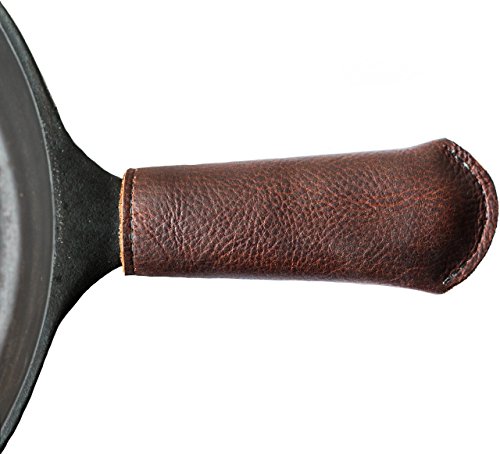
Double layered 4oz. oil-tanned full-grain leather is comfortable to hold in your hand, with the smooth curve of the leather fitting comfortably in your palm.

Reliable Heat Resistance: Designed for skillets 9 inches and larger, the Lodge Silicone Hot Handle Holder delivers a secure grip on hot cookware with heat resistance up to 500°F

YOUR NEW GO-TO ASSIST HANDLE HOLDER: The Lodge Assist Handle Holder is specifically designed for Lodge cast iron dual handle products only. This durable assist handle holder adds a pop of color and style to your kitchen while protecting your hands from heat up to 450°.
Practical Applications and Benefits
While your crocheted skillet handle cover serves as a beautiful accessory, its primary value lies in the real-world protection and comfort it provides during everyday cooking. This benefits overview reveals how your handmade cover transforms cast iron handling. You’ll experience reduced burn risk when moving hot skillets from stovetop to serving surfaces. The custom-fitted design minimizes hand fatigue during extended cooking sessions, allowing you to maneuver heavy cookware with confidence. Your practical uses expand across multiple kitchen workflows—whether you’re plating meals, transferring pans between surfaces, or managing frequent cast iron use. The secure, non-slip grip prevents accidental slips that could cause spills or injuries. Whether you’re a home cook or professional chef, your crocheted cover delivers essential hand protection without interfering with active cooking processes.

YOUR NEW GO-TO HOT HANDLE HOLDER: The Lodge Fabric Hot Handle Holder is specifically designed for traditional Lodge cast-iron products only. This durable hot handle holder protects your hands from heat up to 350°.

HIGH HEAT RESISTANCE - Cast iron skillet handle covers are made of heat-resistant silicone, which can withstand temperature ranges from -40 to 230 Celsius degree, to 40 Degrees F/500 Degrees C. High-quality, heat-resistant silicone creates an insulating layer of protection.

YOUR NEW GO-TO HOT HANDLE HOLDER: The Lodge Silicone Hot Handle Holder is specifically designed for Lodge cast iron skillets 8 inches or smaller with the keyhole handles only. This durable hot handle holder adds a pop of color to your kitchen while protecting your hands from heat up to 500°.
Step-by-Step Instructions
You’re ready to transform those materials into a functional handle cover by following a methodical construction process. Start with the magic ring foundation, working six single crochet stitches into the ring. Chain and slip stitch to secure it, then begin expanding your handle cover design by increasing stitches across 12-15 rounds. Maintain consistent stitch count during middle rounds for uniform coverage.
Around round 10, execute single crochet decreases to shift from 18 stitches down to 12, creating a snug fit. Your yarn color choice adds personalization while the double-thickness cotton provides essential heat protection.
Finish by weaving in all ends using your tapestry needle, closing the magic circle hole, and slip stitching the remaining stitches to complete the cylindrical structure securely.

Gauge: 4 - med Worsted, 100% USA Grown Cotton

3D Double-Layer Organza Ruffle: Features an exquisite outer flounce and delicate interior tier, creating graceful volume and visual dimension that frames the ankle beautifully.

Gauge: 4 - med Worsted, 100% USA Grown Cotton
Care and Maintenance Tips
Since your crocheted skillet handle cover protects your hands from heat, it’ll need proper care to maintain its functionality and appearance.
Develop simple cleaning techniques by hand-washing your cover in cool, soapy water after each use. Gently squeeze out excess moisture and air-dry completely before storing. Never machine wash or place it in the dishwasher, as harsh detergents and heat damage the yarn fibers. Proper cast iron skillet care is essential for overall kitchen safety.
Store your cover separately from your cast iron skillet to allow proper airflow. This separation supports rust prevention by preventing moisture accumulation beneath the cover. Keep both items in a dry location away from humidity.
Periodically inspect your cover for wear or loose stitches. Minor repairs now prevent unraveling later. Additionally, ensure that you apply a light coat of oil to your skillet before storage to help maintain its quality. With consistent care, your handmade cover will protect your hands reliably for years.