Wondering if a 3-quart Dutch oven is big enough for baking bread?
The answer depends on your recipe and how much bread you want to make.
While you can bake small loaves in this size, you’ll need to adjust ingredients carefully to avoid overfilling or flattening the dough.
Keep reading for tips to get the best results in a smaller pot.
How Much Dough Fits in a 3 Qt Dutch Oven?
A 3-quart Dutch oven can hold between 500g and 900g of dough comfortably. This size is ideal for baking round loaves using 250–350g of flour, providing enough space for the dough to rise without overflowing. You’ll need roughly 8 inches in diameter and at least 3.5 inches of depth, which this capacity offers. The cast iron construction ensures even heat retention, helping you achieve a good crust. This ceramic alternative offers the same steam retention benefits as cast iron, thanks to its domed lid that traps moisture for optimal crust development. To prevent pitting, you should avoid letting vinegar solution sit on the surface for longer than 30 minutes during cleaning. The same principles that allow a vacuum sealer to force marinade deeper into meat can also be applied to proofing dough under controlled conditions to speed fermentation. To avoid thermal shock, always heat the Dutch oven gradually and never place it empty on a high setting.
Pay attention to handle placement because wide handles might reduce interior clearance. Check that your banneton has at least an inch of space around it, especially if you’re working with a 750g boule, which leaves little slack. Keep in mind that this size is best suited for round loaves rather than oblong batards. If you plan to bake a batch with 500g of flour, a slightly larger 4- to 5-quart Dutch oven might be more comfortable. Overall, a 3-quart Dutch oven is a suitable minimum size for small to medium doughs.
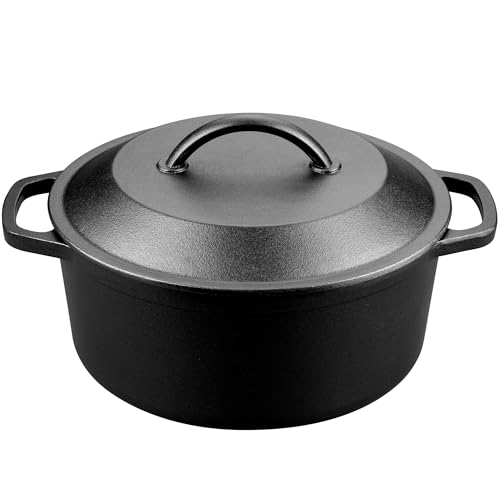
VERSATILE USE: The bread dutch oven with lid is perfect for baking sourdough and homemade sandwich loaves with crispy crusts and soft interior; beyond baking bread, this cast iron bread pan is also perfect for slow-cooking, simmering, braising, baking, Boiling, or roasting a wide range of recipes.

Introducing Alathote Enamel Dutch Oven, the ultimate cooking companion for culinary enthusiasts and home chefs. With its exceptional quality and versatile design, this Dutch oven is built to deliver outstanding cooking performance and elevate your kitchen experience to new heights.
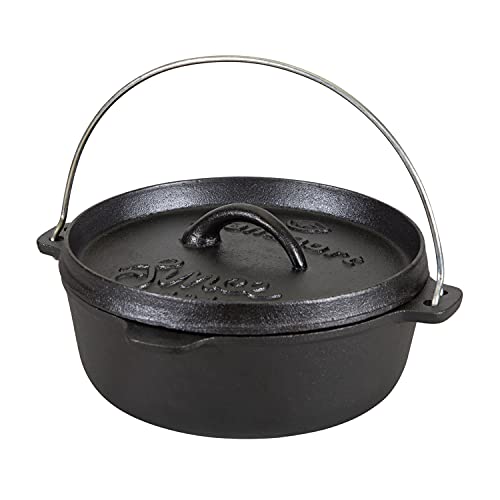
DURABLE CAST IRON CONSTRUCTION - Our cast iron dutch oven with lid is made to last. Crafted with high-quality cast iron, this dutch oven can withstand high heat and is perfect for cooking a variety of dishes.
Why Your 3 Qt Pot Needs Smaller Batches (and Less Hydration)
A 3-quart Dutch oven is too small for standard or high-hydration bread recipes. While it can hold enough dough for small loaves, its limited interior space quickly becomes a problem. To prevent the dough from hitting the lid and squishing the loaf, you need to scale your dough down to about 14 ounces, which typically includes 300 to 400 grams of flour. High-moisture dough expands rapidly in a confined space, so reducing hydration is essential. Lowering the water content slows the rise, allowing the dough to fit comfortably without overflowing or cracking the lid.
Consider alternative baking methods to work around volume constraints. Using a baking stone with steam creates a high-heat environment that accommodates larger loaves without the need for a large Dutch oven. Ingredient substitutions like incorporating whole grains can also naturally slow fermentation and expansion, giving you more control over the rise and preventing overflow in a smaller pot.
What Happens When the Dough Hits the Lid?
When the dough hits the lid of a small Dutch oven, it can cause significant issues for your bread’s rise and crust. This contact often happens if there isn’t enough clearance between the dough and the lid during the “bloom” phase. As you place the risen dough into the hot pot, the steam generated immediately escapes at high pressure. If the lid is too close or makes contact, it flattens the top of the dough prematurely, restricting its vertical expansion. This results in a denser crumb because the dough can’t fully rise and develop its airy structure. For the initial rise, you should cover the dough with a clean kitchen towel and let it rest in a draft-free area for 18-24 hours. Using an infrared thermometer to check pot temperature beforehand helps ensure accurate temperature readings for even baking, as the guide warns that reflective surfaces like enameled cast iron can distort readings. The direct contact with the lid also speeds up crust formation on the top, leading to uneven browning or scorching spots. The intense heat from the lid accelerates crust development before the interior is properly set, which can cause a tough crust and undercooked middle. A key technique from cast iron cooking is preheating the skillet to distribute heat evenly, which applies equally to Dutch ovens for consistent baking results. A similar principle is used in Dutch oven pot pie recipes, where maintaining consistent heat throughout cooking prevents the filling from being too runny or too thick. To avoid these problems, you need to ensure your Dutch oven provides enough space so the dough doesn’t touch the lid during the initial oven spring. Keeping that clearance allows the dough to expand upward freely and develop a crust that is evenly browned and crisply textured.
How to Adjust Your Recipe for a 3 Qt Dutch Oven
For a 3-quart Dutch oven, aim for a final dough weight of around 30 ounces (850 grams). This helps prevent the dough from hitting the lid during baking. To achieve this, reduce your flour to about 3 cups (360 grams) and water to roughly 1 cup (210 to 225 milliliters), ensuring your hydration stays between 60 and 65 percent. Because a smaller cast iron pot insulates less and slows heat transfer, cut back the yeast to 1 teaspoon to avoid overproofing or gaps in the bread.
Extend the fermentation time to 18–24 hours at room temperature if you’re making a no-knead style dough. This allows the gluten structure to develop without high tension. After shaping, let the dough proof for about 30 minutes on parchment paper. Keep the dough loose and relaxed; a high-hydration, floppy dough handles better in the compact space of a 3-quart pot than a stiff one. Preheat your oven to 450°F and place the empty Dutch oven inside for 45 minutes before baking. This ensures the heat is evenly distributed and your loaf bakes with good oven spring.

2-IN-1 DUTCH OVEN + SKILLET — The combo lid on this 3-quart cast iron pot doubles as a full 8-inch frying pan, giving you two pieces of fully functional cast iron cookware in one kit. Use the Dutch oven for soups, stews, braises, and bread — then flip the lid over and cook eggs, sear steaks, or fry chicken in the skillet.
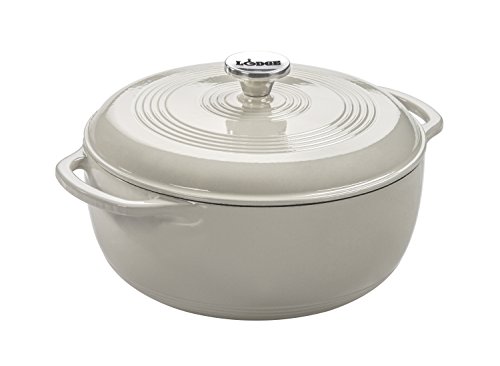
YOUR NEW GO-TO DUTCH OVEN: A flawless pairing of form and function that doesn't quit. The Lodge Dutch Oven not only makes your kitchen look good but is an enameled cast iron classic great for preparing and serving memorable meals. Broil, braise, bake or roast your favorite meals in the oven up to 500 Degree F.
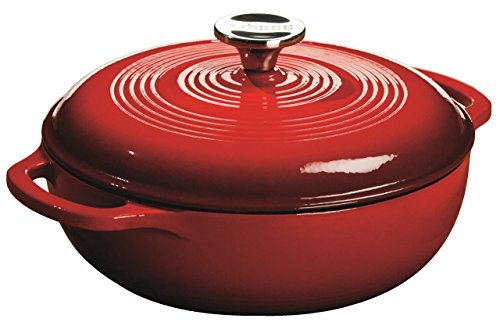
YOUR GO-TO DUTCH OVEN: A flawless pairing of form and function that doesn't quit. The Lodge Dutch Oven not only makes your kitchen look good but is an enameled cast iron classic great for preparing and serving memorable meals. Broil, braise, bake or roast your favorite meals in the oven up to 500 Degree F.
Should You Upgrade to a 5.5 Quart Dutch Oven Instead?
A 5.5-quart Dutch oven is the ideal upgrade if you want to bake larger loaves and improve your baking results. This size easily fits a standard 500-gram flour recipe, preventing dough from hitting the lid and expanding fully. The larger capacity creates ideal steam retention, which helps develop a crisp crust and good oven spring. It also offers versatility for baking different bread shapes, like boules, batards, or bread bowls.
Compared to smaller Dutch ovens, the 5.5-quart model provides more room without being cumbersome. It’s perfect for families of 3 to 5, ensuring everyone gets a slice with consistent results. While you may need to adjust baking times slightly since it holds heat differently, the benefits—better crust, larger loaves, and more baking options—make it a favorite among home bakers. For those considering alternative cookware like roasting pans, sticking with this size Dutch oven offers proven success and ease of use.

IDEAL FOR FAMILY MEALS - Perfectly sized for families of 3–5 people, this 5.5QT Dutch oven handles everything from hearty soups and stews to one-pot dinners, pasta dishes, and Sunday pot roasts. Spacious enough for a whole chicken yet practical for everyday cooking, it delivers the ideal balance between daily family meals and weekend entertaining. Also well-sized for artisan bread bakers who want one pot for both family dinners and sourdough baking.

【BAKERY-STYLE SOURDOUGH AT HOME】Crafted from premium enameled cast iron, this 5.5QT Dutch oven delivers exceptional heat retention and even heat distribution for bakery-style sourdough bread with crispy crust and airy interior. The heavy lid helps trap steam during baking, supporting better oven spring and more consistent artisan bread results at home.

IDEAL FOR FAMILY MEALS - Perfectly sized for families of 3–5 people, this 5.5QT Dutch oven handles everything from hearty soups and stews to one-pot dinners, pasta dishes, and Sunday pot roasts. Spacious enough for a whole chicken yet practical for everyday cooking, it delivers the ideal balance between daily family meals and weekend entertaining. Also well-sized for artisan bread bakers who want one pot for both family dinners and sourdough baking.