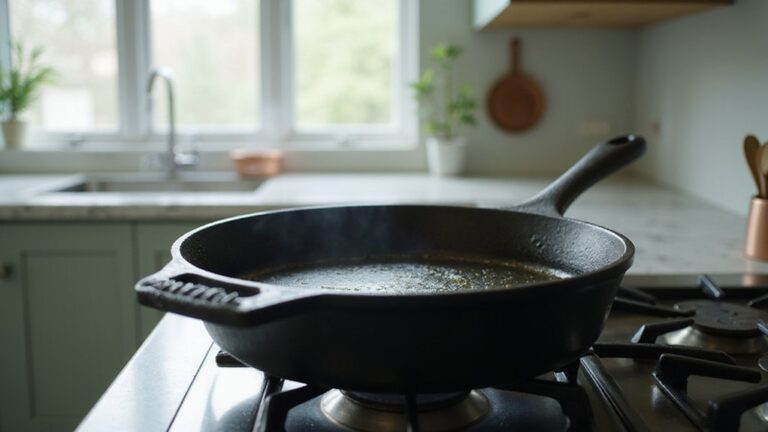
You’ll remove surface rust by scrubbing with steel wool using a vinegar and water solution for about ten minutes. Next, degrade stubborn spots with coarse salt paste or fine steel wool. Rinse thoroughly and dry immediately with lint-free cloths. Then you’ll apply thin oil layers, bake at 450-500°F for one hour, and repeat this cycle six times minimum. The specifics of maintaining your restored skillet’s seasoning layer require closer attention.
Removing Surface Rust
Before you tackle heavier corrosion, address surface rust with a straightforward vinegar and water solution that penetrates oxidation effectively. Mix equal parts vinegar and hot water, then apply it to your skillet’s affected areas. Allow the liquid several minutes to soften loose rust flakes, enabling easier removal.
Next, use steel wool to scrub both interior and exterior surfaces for approximately ten minutes. The coarser grades prove most effective for thorough cleaning. Tactile inspection during scrubbing helps you identify any missed rust spots that require additional attention. thorough cleaning also ensures that you are ready to continue maintaining your skillet for future use.
This surface cleaning method works best for minimal rust and establishes foundational rust prevention by removing oxidation before it deepens. You’ll notice rust particles lifting away as you work, revealing the cast iron beneath. Complete coverage guarantees your skillet’s restoration. Additionally, remember that using modern dish soaps can be safe and effective for cleaning, especially when dealing with stubborn residues.

PROFESSIONAL HARD WATER STAIN REMOVER: Get the powerful industrial and commercial strength that takes stains, spots, and rust out! Remove years of unwanted hard minerals

Goodbye Rust: Prevent rust and hard water stains inside your toilet bowl with a long-standing rust preventer. The unique cleaning tablet prevents new rust stains with every flush for up to 45 days.

TOUGH ON THE TOUGHEST RUST STAINS: Easy to use to remove iron & rust stains on white sinks, toilet bowls, colorfast fabrics and carpets
Degreasing and Cleaning Before Seasoning
After you’ve removed the rust, you’ll need to thoroughly degrease and clean your skillet before applying a fresh seasoning layer. Use warm, soapy water and employ non-abrasive cleaning tools like nylon brushes or soft sponges to eliminate all grease and food residue. Dish soap is safe for cast iron and won’t compromise the metal. For stubborn grease, apply coarse salt mixed with oil, scrubbing in circular motions with a kitchen towel. Rinse thoroughly to remove soap residue. Once clean, dry your skillet immediately using lint-free cloths or paper towels, then place it on low heat for several minutes to evaporate any remaining moisture. Ascertain all areas—handle, underside, and crevices—are completely dry before seasoning. To enhance the cleaning process, consider using coarse salt and a potato as a natural method to scrub away grime without damaging the skillet’s seasoning. This method can effectively help maintain the skillet’s natural non-stick properties over time.
The Seasoning Process
Once your skillet’s completely dry, you’re ready to apply the seasoning that’ll transform it into a durable, non-stick cooking surface. Dispel seasoning myths—you don’t need excessive oil. Instead, apply thin layers with a lint-free cloth, wiping away excess until only a minimal coating remains. Flaxseed oil delivers superior seasoning benefits compared to alternatives like coconut oil or canola. It’s worth noting that lard is an effective option for seasoning, especially for those who use their pans frequently. Beef tallow’s high smoke point makes it a great choice for creating a protective layer during the seasoning process.
Cover both the cooking surface and exterior. Position your skillet upside down on the center oven rack with foil beneath to catch drips. Bake at 450-500°F for one hour. Cool completely in the oven for at least two hours without opening the door—this allows polymerization to harden the protective layer.
Repeat this oil-bake-cool cycle minimum six times to build a durable non-stick base.
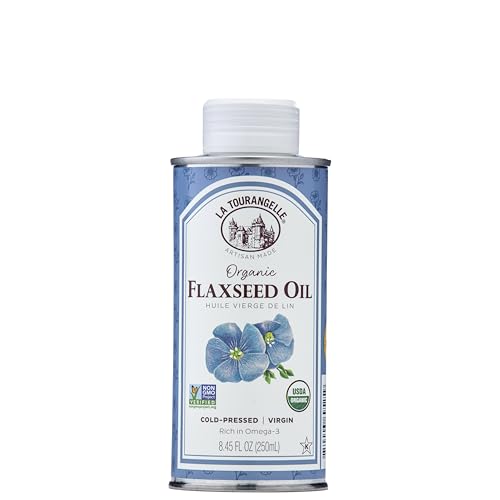
Organic Flaxseed Oil: This oil provides over 7 grams of plant based Omega-3, making it the ideal ingredient to add to your smoothies, oatmeal, or salad dressings.

PURE, ORGANIC AND UNREFINED: Barlean's organic flax oil is cold pressed without the use of heat or solvents. Each drop is protected from damaging heat and light from seed to bottle, offering a potent and healthy balance of Omegas 3, 6, and 9 and a pleasant and mild nutty flavor.

Velona USDA Certified Organic Flaxseed Oil: 100% Pure and Natural Carrier Oil. Unrefined. Cold Pressed. Not Diluted, Non-GMO, No Additives, No Fragrance, Alcohol Free.
Post-Seasoning Care and Maintenance
Your skillet’s durability depends entirely on the maintenance practices you establish after seasoning. Implement consistent post-cleaning oiling by applying a thin, neutral oil coat to your skillet’s entire surface after each use. This reinforces the seasoning layer and prevents moisture penetration. Wipe away excess oil, leaving only a light protective film.
For storage practices, keep your skillet in a dry environment away from humid areas like sinks or dishwashers. If stacking multiple pans, place cloth separators between them to absorb residual moisture and prevent seasoning damage. Never seal lids tightly; allow airflow to circulate inside the skillet. Additionally, be cautious when using your skillet on glass cooktops as improper handling can lead to scratches.
Inspect your skillet regularly for rust or seasoning degradation. Address problems promptly before they require extensive resurfacing. This disciplined approach preserves your skillet’s non-stick properties and extends its functional lifespan considerably. Regular use helps build and maintain the skillet’s natural nonstick seasoning, ensuring it remains effective for years to come.

YOUR NEW GO-TO SEASONING SPRAY: The Lodge Seasoning Spray is the perfect seasoning spray to maintain your cast iron cookware. It is made of 100% canola oil - no additives or propellants, to protect your cookware and enhance its finish.
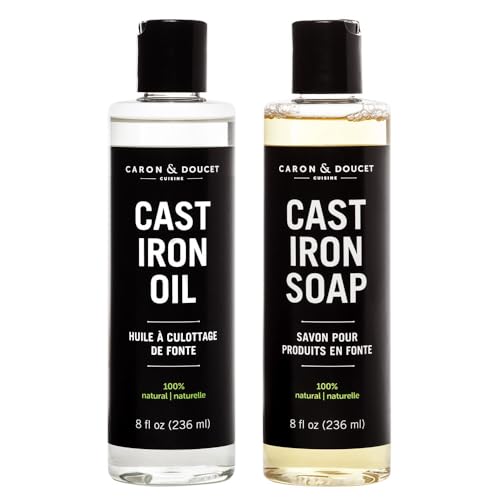
CLEANS CAST IRON | Includes our Cast Iron Soap unlike detergent based soaps, this soap is formulated with 100% natural plant-based oils & free of sulfates, phosphates, parabens & petrochemicals! Gentil on cast iron seasoning & on your hands!
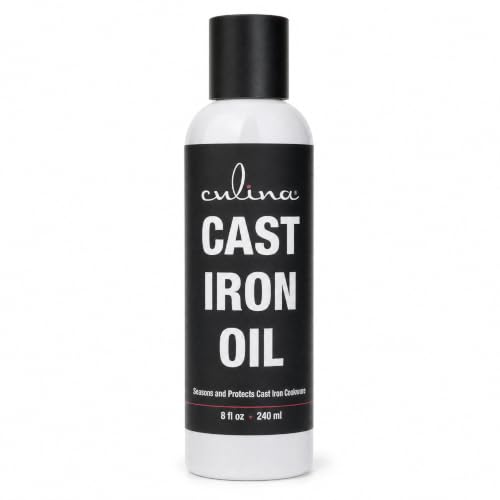
EASY TO USE – For best results, use our Culina Cast Iron Cleanser first. Once dry, apply a light coat of Cast Iron Conditioner and rub into cooking surface with a clean, dry cloth. Use after every meal for optimal surface protection.
Essential Tools and Materials
Before you tackle rust removal and restoration, gathering the right equipment guarantees you’ll work efficiently without damaging your skillet’s seasoning.
You’ll need essential cleaning supplies including soft-bristled brushes, chain mail scrubbers, and curved edge scrapers designed for cast iron’s contours. Steel wool effectively removes stubborn rust particles after initial treatment. For rust prevention techniques, stock potatoes and salt to create an oxalic acid paste that targets oxidation without harsh chemicals. Additionally, using a wire brush can help with initial rust removal and restoration.
To further protect your cookware, consider using oxygen absorbers when storing your cast iron skillet to prevent moisture buildup and rust formation. Prepare drying materials like microfiber towels and lint-free cloth rags to prevent water spotting. You’ll also need seasoning oils or house seasoning blends containing beeswax for post-cleaning protection. Apply these sparingly—approximately ¼ teaspoon per application—ensuring you wipe away excess oil for a proper matte finish.

Easy Cleanup Tool: The Lodge Scrub Brush is designed to help tackle stubborn food residue and simplify cast iron cookware cleanup

PREMIUM MATERIAL: The cast iron skillet cleaner applies premium grade never rusting stainless steel. It is built with soldered and handmade construction, which makes it durable and stronger. Boasting unmatched durability for long-lasting use

PRACTICAL: Wire brushes are ideal for removing paint stains, rust, welding slag,solder,scale, Great for remove corrosion and more from parts, equipment, machinery and other surfaces. Also great for cleaning threads, grills or tile.
Risks and Precautions to Avoid
While rust removal restores your cast iron’s functionality, understanding the health and safety implications of both rust exposure and aggressive cleaning methods guarantees you’ll protect yourself and your cookware throughout the restoration process. Rust health concerns arise primarily from ingesting contaminated food; acidic dishes accelerate rust leaching into meals. You’ll want to wear gloves and eye protection when scrubbing with steel wool or wire brushes to avoid sharp edges and particle inhalation. Work in well-ventilated spaces when applying chemical rust removers, as chemical rust removers can release harmful fumes. Cookware safety also depends on your post-cleaning maintenance—thorough drying prevents rust recurrence, while proper seasoning restores the pan’s protective layer. Never use dishwashers or harsh detergents, which strip seasoning and compromise your skillet’s integrity. Additionally, be aware that not using a cast iron skillet can lead to cooking with alternative pans, which helps you achieve similar results without the rust issues.