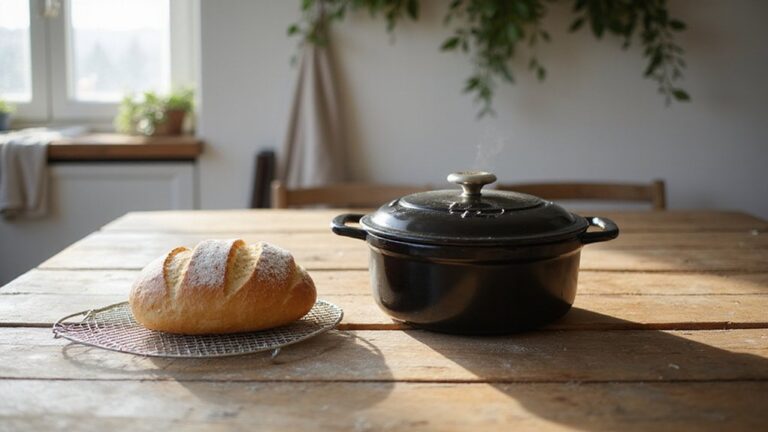
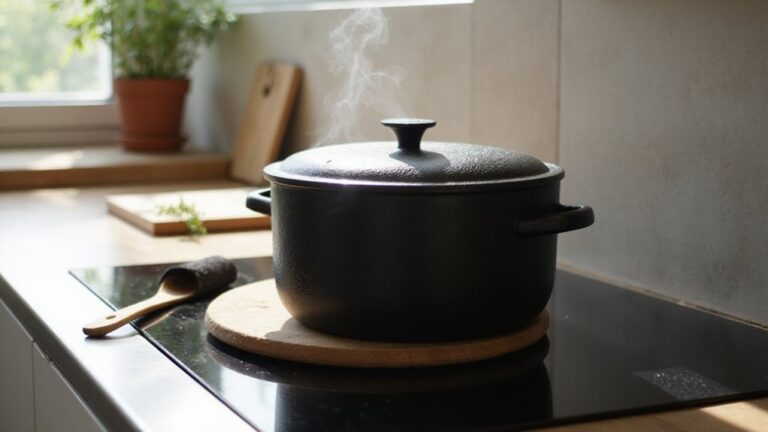
You can use your Dutch oven on any stovetop—gas, electric, or induction. Cast iron and enameled cast iron offer excellent versatility, though you’ll want to avoid preheating an empty enameled Dutch oven to prevent cracking. Use medium heat for preheating and low to medium for slow cooking. Always apply a thin oil layer before heating for protection. The material matters: ceramic and stoneware aren’t suitable for direct heat due to thermal shock risks. Uncover deeper techniques that’ll transform your stovetop cooking.
Stovetop Compatibility Across All Heat Types
Since Dutch ovens come in various materials and constructions, you’ll need to verify compatibility with your specific stovetop type before regular use. Different heat sources demand distinct material types for peak performance and safety.
Cast iron Dutch ovens work universally across gas, electric, and induction stovetops, offering exceptional durability and heat retention. This durability makes them ideal for braising meats, where you can easily transfer from stovetop to oven without concern. Enameled cast iron provides similar versatility but requires careful temperature management to protect the enamel coating. Induction stovetops specifically require magnetic bases—a simple magnet test confirms compatibility. Ceramic and stoneware Dutch ovens, however, aren’t suitable for direct heat sources due to thermal shock risks.
Understanding your Dutch oven’s material composition and matching it to your heat source prevents damage and guarantees consistent cooking results across all stovetop types. Additionally, a Dutch oven can also be a versatile tool for crowd-pleasing desserts like peach cobbler when used appropriately.
Essential Heating and Use Guidelines
Now that you’ve confirmed your Dutch oven’s compatibility with your stovetop, you’ll need to master the heating techniques that protect your investment and deliver superior cooking results.
Start with gradual heating by adding ingredients before increasing heat incrementally. Never preheat an empty enameled Dutch oven, as this risks cracking the enamel coating. Instead, apply a thin oil layer beforehand to shield the surface. For best results, try out a delicious dish like Creamy Gnocchi Parisienne Gratin that benefits from low and slow cooking.
For temperature control, preheat on medium heat for several minutes before cooking. Use low to medium settings for slow cooking like stews, reserving medium-high heat exclusively for searing meat. Avoid rapid temperature fluctuations—adjust heat slowly in 25°F increments. Keep in mind that using a tight-fitting lid enhances heat retention, making your cooking more efficient.
On electric stovetops, prevent scratching by avoiding sliding motions. Monitor heat distribution carefully to prevent hot spots and uneven cooking.

【Airtight Lid Locks In Freshness & Flavor】Experience the magic of this Dutch oven with lid, precision-engineered to create a tight seal. It locks in moisture and essential nutrients, delivering richer flavor and incredibly tender, juicy results in every dish—from slow-braised meats to hearty soups. Achieve a perfect, crispy crust on your artisan loaves—it's the ultimate Dutch oven for bread baking. The interior self-basting dots continuously redistribute condensation, ensuring your food stays perfectly moist, never dry or mushy

Even Heat for Perfect Cooking: Premium enameled cast iron delivers superior heat distribution and retention; no hot spots for tender braises, flavorful stews, and perfectly risen sourdough bread.

Mastering Key Cooking Techniques
You’ve mastered the fundamentals of heat control, and now you’re ready to release the full potential of your Dutch oven through deliberate cooking techniques that transform basic ingredients into complex, deeply flavored dishes. Begin by searing meat to develop the Maillard reaction‘s browned crust, then deglaze with wine or broth to incorporate flavorful browned bits. Layer vegetables and aromatic ingredients sequentially, allowing each component to absorb preceding flavors. Add hardy vegetables first, delicate herbs last. This staggered approach prevents overcooking while building complexity. Pair these layering strategies with precise heat management—maintaining medium-low temperatures for even heat distribution. Your Dutch oven’s thick walls retain heat efficiently, supporting slow cooking that enhances flavor development without burning. Additionally, incorporating sous vide techniques can elevate your dish even further. These techniques create superior results in braising, stewing, and simmering applications, as you will discover in hearty Dutch oven beef stew preparation.

Even Heat Distribution Retention: This Umite Chef Dutch oven Made with heavy-duty enameled cast iron, ensures even heat distribution for perfect searing and slow cooking, locking in flavors. thickened walls lock in heat for slow braising, searing, and baking. Unlike thin pots that scorch food, this professional-grade Enameled cast iron potSuperior heat retention after preheating (allow 5-7 mins for even distribution). CRITICAL: Always cool naturally for 45+ mins before cleaning. Thermal shock (hot-to-cold contact) cracks enamel. USE TIP: Preheat 2-3 mins on medium-low only

Even Heat Distribution Retention: This Dutch oven Made with heavy-duty enameled cast iron, ensures even heat distribution for perfect searing and slow cooking, locking in flavors. thickened walls lock in heat for slow braising, searing, and baking. Unlike thin pots that scorch food, this professional-grade Enameled cast iron pot maintains steady temperatures

IDEAL FOR FAMILY MEALS - Perfectly sized for families of 3–5 people, this 5.5QT Dutch oven handles everything from hearty soups and stews to one-pot dinners, pasta dishes, and Sunday pot roasts. Spacious enough for a whole chicken yet practical for everyday cooking, it delivers the ideal balance between daily family meals and weekend entertaining. Also well-sized for artisan bread bakers who want one pot for both family dinners and sourdough baking.
Searing, Simmering, and Braising Excellence
Three foundational techniques—searing, simmering, and braising—form the backbone of Dutch oven stovetop cooking, each demanding precise heat management and strategic ingredient layering to achieve ideal results.
Your searing techniques begin by preheating the Dutch oven on medium-high heat with light oil coating. You’ll sear meat first to develop a flavorful crust, then set it aside while vegetables absorb those meat flavors at lower temperatures. Avoid overcrowding the pot to maintain proper browning and ensure optimal cooking performance.
For simmering flavors, you’ll use low to medium heat, leveraging the Dutch oven’s superior heat retention. Layer ingredients by cooking time—tougher meats and root vegetables enter first, delicate herbs near the end. Keep the lid on to capture condensation and maintain moisture, enhancing the dish’s overall flavor.
Braising combines both techniques: sear meat, then cook covered with liquid at low temperature for hours, achieving tender results through even heat distribution and uniform cooking. Additionally, the Dutch oven’s even heat distribution ensures that all ingredients cook uniformly and enhance the dish’s flavor profile.

Pre-seasoned 2-in-1 cast iron dutch oven: The 2-In-1 cast iron dutch oven pot with skillet lid has been burned with vegetable oil,(no synthetic coatings or chemicals). The shallow skillet that can be used as a lid

FEAST & BATCH COOKING - Designed for large families, holiday gatherings, and weekend meal prep, this 7QT Dutch oven comfortably serves 5–8 people. Its generous capacity easily handles family-size soups, large-batch stews, pot roasts, and whole chickens without overcrowding ingredients. Perfect for Thanksgiving recipes, holiday entertaining, and batch cooking with fewer rounds in the kitchen.

IDEAL FOR FAMILY MEALS - Perfectly sized for families of 3–5 people, this 5.5QT Dutch oven handles everything from hearty soups and stews to one-pot dinners, pasta dishes, and Sunday pot roasts. Spacious enough for a whole chicken yet practical for everyday cooking, it delivers the ideal balance between daily family meals and weekend entertaining. Also well-sized for artisan bread bakers who want one pot for both family dinners and sourdough baking.
Proper Care and Maintenance Practices
Proper care and maintenance practices for a Dutch oven’s longevity depend critically on how you clean, store, and maintain it after each use. For cast iron Dutch ovens, use warm water and a stiff brush without soap to preserve seasoning. To enhance its cooking performance, properly searing chicken in a cast iron skillet is an essential technique. With enamel care, employ mild soapy water and nonabrasive cloths to prevent scratching. Dry both types thoroughly immediately after washing to prevent rust and water spots. Store your Dutch oven with paper towels inside to absorb moisture. Periodically reseason cast iron by applying thin oil layers and baking at standard oven temperatures for approximately one hour. Never use dishwashers, as moisture and detergents accelerate deterioration. Handle enameled Dutch ovens carefully to avoid chips and never heat them empty on stovetops. Proper Dutch oven care considerably extends your Dutch oven’s functional lifespan.
Protecting Your Dutch Oven’s Enamel Coating
While proper cleaning and storage preserve your Dutch oven’s functionality, protecting its enamel coating during stovetop use is equally critical to maintaining its appearance and performance. You’ll safeguard your investment by avoiding thermal shock—never place a cold Dutch oven on a hot burner or vice versa. Instead, add liquid before heating to distribute temperature gradually and evenly across the enamel surface. This allows the enamel to resist cracking due to sudden temperature changes.
For ideal enamel preservation, maintain low to medium heat settings, keeping temperatures below 500°F. It’s also important to remember that enameled Dutch ovens resist rust and can cook acidic ingredients without damaging the cookware. Match your burner size to the pot’s base to prevent uneven stress on the coating. Always lift rather than drag your Dutch oven when repositioning it, and never move it while hot. These deliberate practices greatly extend your cookware’s lifespan while maintaining its pristine enamel finish.
Outdoor and Specialty Cooking Applications
Because Dutch ovens excel at retaining and distributing heat evenly, they’re uniquely suited for outdoor cooking environments where you’ll encounter open flames, charcoal, and unpredictable weather conditions. You’ll find that coals management becomes critical for maintaining precise temperatures. The ring method—positioning charcoal briquettes around your pot’s edges—gives you granular heat control without direct flame exposure. For outdoor frying, you’ll appreciate the Dutch oven’s thick walls, which contain splatters and maintain consistent oil temperatures at 350°F. Using trivets creates additional heat buffers, essential when cooking in windy conditions. You can employ the same braising, sautéing, and baking techniques outdoors as you would indoors, adjusting only your fuel source and heat placement. Mastering coals management guarantees reliable, efficient cooking across diverse outdoor applications.

🔥 A Camp Cooking must-have: Lid Stand+ Lid Lifter+ Heat Resistant Gloves+Scissor Tongs, widely used for BBQ and campfire cooking; Enjoy your camping party with the best suitable tools!

Works On Most Slotted Lids

Why Dutch Ovens Are Kitchen Essentials
Dutch ovens have earned their place as indispensable kitchen staples due to their exceptional engineering and remarkable versatility. You’ll appreciate how their thick cast iron construction enables superior heat retention and even distribution, eliminating hot spots that compromise cooking quality. This design directly enhances cooking efficiency by consolidating multiple techniques—searing, simmering, and baking—into a single vessel, substantially reducing your preparation and cleanup time. Additionally, using a cast iron skillet for achieving perfect steak doneness can be replicated in a Dutch oven.
The heavy lid’s steam-trapping mechanism drives flavor enhancement through moisture retention and caramelization. You’ll achieve complex, deeply developed sauces and tender textures impossible with conventional cookware. Additionally, the moist cooking environment preserves nutrients better than high-heat methods, reducing harmful compound formation. Whether you’re braising meats, baking artisan bread, or preparing nutrient-dense whole foods, Dutch ovens‘ forgiving heat distribution suits both novice and experienced cooks, making them genuinely irreplaceable kitchen investments. The Lodge Dutch oven’s versatility also makes it ideal for outdoor cooking and various recipes.