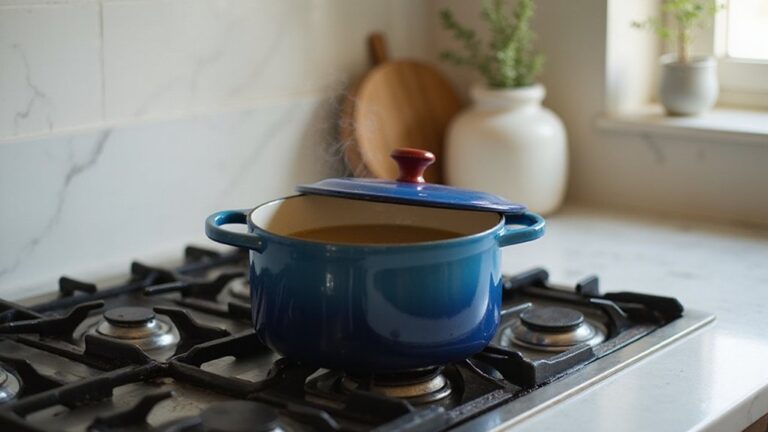
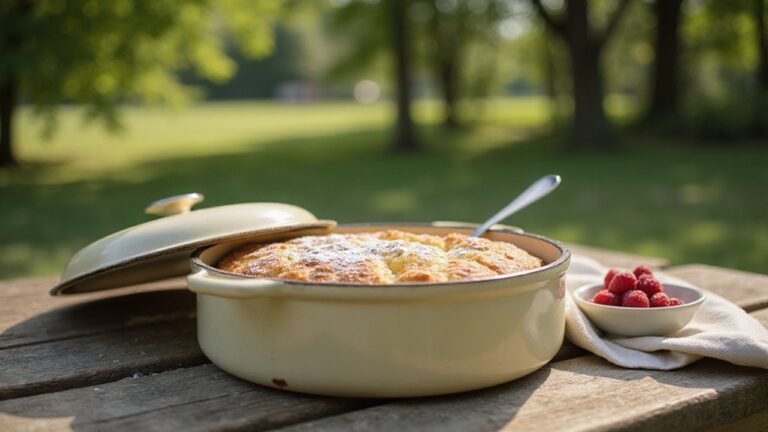
You’ll extend your Dutch oven’s lifespan by mastering four essential practices. Hand-wash with mild soap and hot water immediately after use, then dry thoroughly to prevent rust. Season cast iron regularly with high smoke point oils at 400–500°F for one hour. Always use wooden or silicone utensils, handle with both hands using potholders, and avoid thermal shock by cooling before adding cold liquids. Store in cool, dry environments with the lid slightly ajar. These foundational techniques establish the framework for deeper care strategies.
Cleaning Techniques for Cast Iron and Enameled Dutch Ovens
Proper cleaning preserves your Dutch oven’s performance and lifespan, whether you’re maintaining seasoned cast iron or protecting an enamel coating. For cast iron, you’ll want to cool it completely before washing with hot water and a soft sponge. Address stain removal by boiling water with baking soda inside the pot, then scrape softened food residue with a wooden spoon. Apply a baking soda paste for stubborn stains and let it sit thirty minutes before scrubbing. Remember to always dry completely to prevent rust and maintain the skillet’s seasoning, as thoroughly drying is crucial for preserving the skillet’s longevity.
Enameled Dutch ovens require gentler care—use hot soapy water and avoid abrasive scrubbers that damage the coating. Skip metal utensils entirely. For both types, rinse thoroughly and dry immediately with cloth towels. Never use your dishwasher, as it compromises the oven’s integrity and seasoning.

Quality Enameled Dutch Oven: The Lodge Essential Enamel Cast Iron Dutch Oven gives you all the benefits of cast iron cooking, great heat retention and durability, without fear of rust; it's also PFAS free
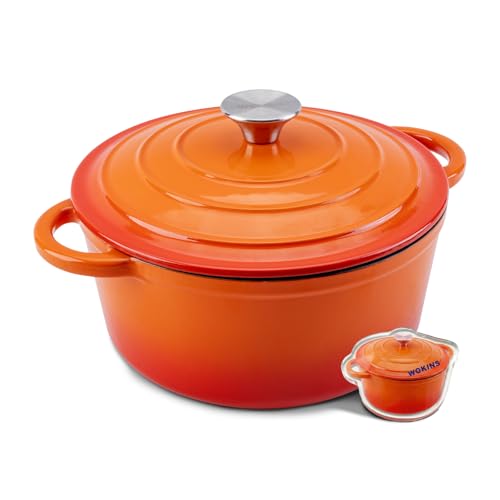
【Even Heat Distribution & Heat Retention】Our premium Dutch oven is crafted from heavy-duty enameled cast iron.Even Heat Distribution,Thick walls lock in heat and flavor.Ideal for slow cooking, searing, and bread baking, its robust, one-piece construction offers exceptional durability.Note: For best results on the stovetop, use low to medium heat to help prevent food from sticking.

SUPERIOR HEAT RETENTION & EVEN COOKING – Heavy-duty cast iron construction delivers exceptional heat retention and even heat distribution for consistent cooking results, from slow-simmered stews to perfectly roasted meals.
Seasoning and Reseasoning Cast Iron Dutch Ovens
Once you’ve mastered the cleaning techniques that protect your Dutch oven, you’re ready to build and maintain the seasoning that defines cast iron performance. Start with proper oil selection—choose high smoke point oils like grapeseed, canola, or lard rather than olive oil. Applying a thin layer of oil ensures an even coating, crucial for optimal seasoning integrity. Apply an extremely thin layer to all surfaces, then wipe away excess with a lint-free cloth to achieve a barely visible sheen. For the baking process, preheat your oven to 400–500°F and place the Dutch oven upside down on the middle rack for one hour. Allow it to cool completely inside the closed oven. Repeat this cycle at least two to three times to develop a durable, non-stick surface. Using oils that undergo polymerization when heated can further enhance the seasoning integrity. Reseason whenever the finish appears dull or food begins sticking.
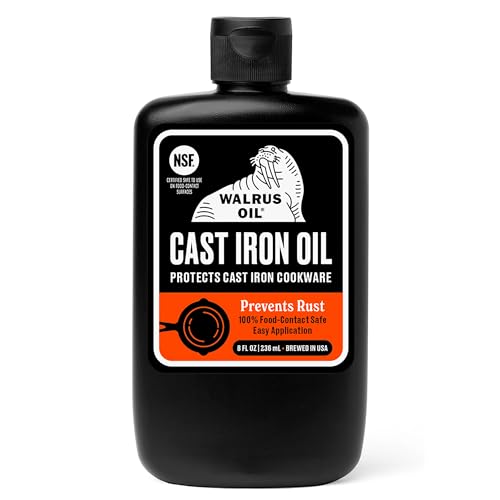

Light Buttery Flavor That Elevates Every Meal: Algae Cooking Club Chef-Grade Algae Oil enhances every dish with subtle richness. Its neutral profile makes it ideal for searing, baking, and dressings, transforming everyday meals into gourmet experiences.

Mild and Easy: Grapeseed Oil is at its best in stir-fries and sautés; it doesn't overwhelm other ingredients and lets fresh flavors shine. When grilling or frying, it is a must-have in the pantry.
Essential Usage and Cooking Guidelines
As you put your seasoned Dutch oven to work, understanding how to manage temperature and technique will release its full potential. Preheat your Dutch oven to 350 degrees Fahrenheit before browning ingredients—this foundational step locks in flavors and guarantees proper cooking.
Master layered cooking techniques by sautéing aromatics and vegetables first, then removing them before adding remaining ingredients. This approach creates more complex, refined dishes than adding everything simultaneously. Always avoid thermal shock by allowing your hot Dutch oven to cool slightly before introducing cold liquids or ingredients, preventing structural damage. It’s important to note that smaller Dutch ovens, such as a 3-quart size, can still be effective for cooking smaller portions, similar to their function in bread baking.
Whether you’re braising meat for hours or sautéing at higher temperatures, your Dutch oven’s superior heat retention and even distribution enable consistent flavor enhancement across all cooking applications. Using high smoke point oils like grapeseed or canola ensures optimal results when sautéing and searing.

Introducing Alathote Enamel Dutch Oven, the ultimate cooking companion for culinary enthusiasts and home chefs. With its exceptional quality and versatile design, this Dutch oven is built to deliver outstanding cooking performance and elevate your kitchen experience to new heights.
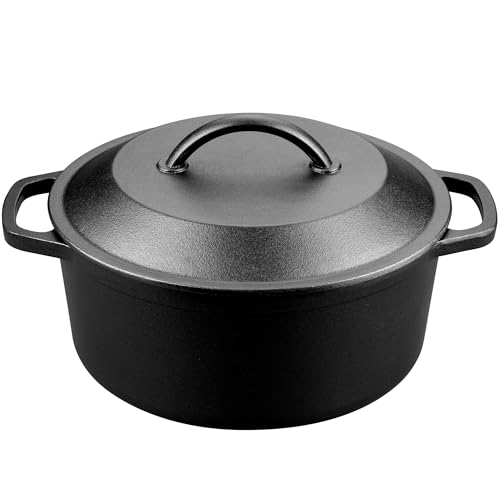
VERSATILE USE: The bread dutch oven with lid is perfect for baking sourdough and homemade sandwich loaves with crispy crusts and soft interior; beyond baking bread, this cast iron bread pan is also perfect for slow-cooking, simmering, braising, baking, Boiling, or roasting a wide range of recipes.

2-IN-1 DUTCH OVEN + SKILLET — The combo lid on this 3-quart cast iron pot doubles as a full 8-inch frying pan, giving you two pieces of fully functional cast iron cookware in one kit. Use the Dutch oven for soups, stews, braises, and bread — then flip the lid over and cook eggs, sear steaks, or fry chicken in the skillet.
Proper Storage Recommendations
Your Dutch oven’s longevity depends on three critical factors: moisture control, physical protection, and environmental management.
For Dutch oven storage, you must guarantee the pot is completely dry before placing it away. Towel dry thoroughly or use low stovetop heat to eliminate residual moisture. Store in cool, dry environments while avoiding humid locations that accelerate rust formation. Regularly checking for rust formation will help keep your Dutch oven in optimal condition.
Regarding moisture prevention, prop the lid slightly ajar with a rolled paper towel to permit air circulation. Never seal the pot completely, as this traps condensation and promotes mildew growth. Additionally, ensure to regularly maintain proper seasoning to prevent corrosion and preserve its non-stick properties.
Protect your Dutch oven by avoiding stacks of cookware inside it. Place protective cloth layers between items if stacking is necessary. Store on stable surfaces away from direct sunlight, heat sources, and temperature fluctuations. Use breathable cloth covers to shield from dust and contaminants without trapping moisture.

【DIMENSIONS:Dia φ8.3" x H 0.8" / Dia φ21x H 2cm; WEIGHT:6.53oz / 185g.】This cooking grid's outer diameter is φ8.3 inches.

Made of cast iron and seasoned with natural vegetable oil. Excellent in heat retention and even heating

Works On Most Slotted Lids
Safe Handling and Care Practices
Proper handling and cleaning techniques directly impact your Dutch oven’s performance and lifespan. Practice safe lifting by using both hands and potholders when removing your cookware from the oven, as handles become extremely hot during cooking. Develop steam awareness by keeping lids ajar before turning off heat and removing them carefully to prevent burns.
Handle enameled Dutch ovens with particular care to prevent chips or scratches that compromise the protective coating. Avoid sudden temperature changes, which can crack enameled surfaces. Never cut food directly on enamel, as this damages the finish. Keep in mind that the tight-fitting lid helps trap heat and moisture, enhancing your cooking results. Additionally, be sure to follow gentle cleaning methods to maintain the integrity of your Dutch oven.
Periodically inspect handles and knobs for tightness and secure attachment. Check your Dutch oven’s condition before and after each use to catch potential issues early, ensuring reliable performance for years ahead.
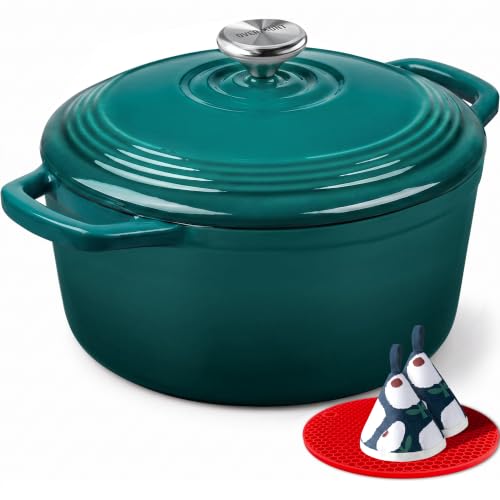
IDEAL FOR FAMILY MEALS - Perfectly sized for families of 3–5 people, this 5.5QT Dutch oven handles everything from hearty soups and stews to one-pot dinners, pasta dishes, and Sunday pot roasts. Spacious enough for a whole chicken yet practical for everyday cooking, it delivers the ideal balance between daily family meals and weekend entertaining. Also well-sized for artisan bread bakers who want one pot for both family dinners and sourdough baking.

PROFESSIONAL BREAD BAKING EXPERIENCE: Achieve artisan-quality sourdough and crusty loaves with our 6QT cast iron bread oven and included banneton basket. The traditional dome design traps steam naturally, while easy-to-follow recipes help beginners and experts master homemade bread.

Even Heat Distribution Retention: This Umite Chef Dutch oven Made with heavy-duty enameled cast iron, ensures even heat distribution for perfect searing and slow cooking, locking in flavors. thickened walls lock in heat for slow braising, searing, and baking. Unlike thin pots that scorch food, this professional-grade Enameled cast iron potSuperior heat retention after preheating (allow 5-7 mins for even distribution). CRITICAL: Always cool naturally for 45+ mins before cleaning. Thermal shock (hot-to-cold contact) cracks enamel. USE TIP: Preheat 2-3 mins on medium-low only
Preventing Thermal Shock and Damage
One of the most damaging threats to your Dutch oven’s longevity is thermal shock—the stress that occurs when your cookware experiences rapid temperature fluctuations. Enameled cast iron proves particularly vulnerable to cracking and chipping under these conditions.
Master thermal shock prevention through deliberate temperature management. Heat your Dutch oven gradually rather than applying intense heat immediately. Allow it to cool completely before transferring it to cold surfaces or immersing it in water. Never place a hot pot directly into a refrigerator or freezer.
When cleaning, wait until your Dutch oven fully cools, then rinse with lukewarm rather than cold water. Regularly seasoning your Dutch oven can enhance its durability against thermal shock. Place hot pots on heat-safe surfaces like wooden trivets. These practices protect your enamel coating and prevent permanent warping or cracking. Additionally, maintaining a proper interior finish helps avoid damage during thermal fluctuations and preserves the pot’s integrity over time.
Regular Maintenance for Long-Term Durability
While thermal shock prevention protects your Dutch oven from catastrophic damage, consistent maintenance routines guarantee it’ll perform reliably for decades.
Establish regular cleaning frequency by hand-washing with mild dish soap and warm water immediately after use. This prevents residue buildup and rust formation on cast iron surfaces. Dry thoroughly with a soft cloth—never air-dry—to eliminate moisture that promotes corrosion.
Your maintenance routines should include periodic reseasoning when the cooking surface loses non-stick properties. Apply a thin neutral oil layer and bake at 350-400°F for approximately one hour to bond seasoning effectively. It’s also important to always cook with some liquid or oil to maintain the enamel surface quality.
Store your Dutch oven in dry locations away from humidity. For stubborn food, soak with warm soapy water before gentle scrubbing using non-abrasive sponges. Avoid steel wool and metal scrapers that damage enamel coatings.
Inspecting and Addressing Enamel Issues
Because your Dutch oven’s enamel coating is fundamentally a glass-like layer fused to cast iron, understanding its composition and vulnerabilities is critical to preventing irreversible damage. Perform regular enamel evaluation by inspecting for chips, scratches, and discoloration that expose underlying cast iron. Metal utensil contact and hard scourers create visible damage, while repeated dishwasher washing produces a dull, matte appearance indicating degradation. Additionally, using high smoke point oils while cooking can help maintain the enamel and prevent sticking.
Address minor imperfections promptly before fissures propagate. Soaking stuck-on residue in hot water with detergent eliminates aggressive scrubbing needs. For chip repair, consult manufacturer-specific restoration options. Prevent future damage by using wooden, silicone, or bamboo utensils exclusively, hand washing with non-abrasive sponges, and managing heat carefully to avoid thermal shock that compromises enamel integrity. Additionally, thoroughly drying your Dutch oven after washing helps prevent rust and prolongs the lifespan of the cast iron base.
Expert Tips for Years of Reliable Use
Now that you’ve mastered enamel inspection and prevention, implementing expert maintenance strategies will extend your Dutch oven’s longevity greatly. Master seasoning techniques by applying thin oil layers after each cleaning, then baking at 400°F for one hour to polymerize protective coatings. Dry your Dutch oven thoroughly in a warm oven immediately after washing to eliminate moisture that promotes rust. Additionally, using baking soda to remove stubborn food residue can greatly assist in keeping your cookware clean. Store it in low-humidity environments with the lid slightly ajar, preventing condensation buildup. Use only wooden or silicone utensils during cooking to preserve seasoning integrity. Cool your Dutch oven naturally rather than shocking it with cold water. Inspect periodically for rust or dull surfaces, addressing issues immediately through re-seasoning. Remember that applying a thin coat of oil after cleaning is essential for maintaining and building up the seasoning. These deliberate practices guarantee reliable performance for decades.