You’ll create a stunning Dutch oven apple Dutch baby pancake that rises dramatically while baking. Start by preheating your cast iron skillet to 400°F, then layer sliced Honeycrisp or Granny Smith apples on the bottom. Blend eggs, flour, milk, and vanilla into a smooth batter, then pour it over the foaming butter and apples. Bake for 15–25 minutes without opening the door, and you’ll achieve a puffed, golden masterpiece with a custard-like center. Dust with powdered sugar and serve immediately for maximum impact—though there’s much more technique to master.
Ingredients and Equipment You’ll Need
To create a Dutch oven apple Dutch baby pancake that rises spectacularly and delivers that signature custardy interior, you’ll need to gather both pantry staples and specialized cookware.
For your batter, collect four to six large eggs, one-half to three-quarters cup all-purpose flour, one cup milk, and four tablespoons butter. You’ll also want granulated sugar, salt, cinnamon, and vanilla extract to enhance flavor. Select apple varieties like Gala, Honeycrisp, or Granny Smith for their superior taste and texture. Proper seasoning with high smoke point oils is crucial for maintaining your Dutch oven’s non-stick properties, especially when cooking sweet batters.
Your equipment matters equally. You’ll need a preheated nine to twelve-inch oven-safe Dutch oven or cast iron skillet, a blender for achieving smooth batter consistency, measuring tools, and a spatula. Preheat your oven between 400°F and 450°F before starting. This combination guarantees ideal rise and caramelization throughout your pancake, similar to the slow cooking that enriches the flavors in a pot roast.

SUPERIOR HEAT RETENTION & EVEN COOKING – Heavy-duty cast iron construction delivers exceptional heat retention and even heat distribution for consistent cooking results, from slow-simmered stews to perfectly roasted meals.

Heavy-Duty Camping Cookware: Designed for campfire coals, the Lodge Seasoned Cast Iron Camp Dutch Oven uses a flanged lid to distribute heat above and below for even cooking

PRE-SEASONED CAST IRON: 7-quart heavy-duty dutch oven pot with lid and dual side handles for easy lifting and maneuvering
Preparing Your Apples and Pan
The foundation of your Dutch baby’s success hinges on two critical preparations: perfectly prepared apples and a properly heated pan.
Start with apple selection by choosing firm varieties that resist mushiness. Wash them thoroughly and remove stems before peeling and coring. Your slicing techniques matter greatly—uniform thickness prevents some pieces from cooking while others turn mushy. Stack peeled halves and cut straight down for consistent dice, or use the chef’s knife technique along the stem’s sides.
To prevent browning, squeeze lemon juice over sliced apples immediately. Alternatively, soak them in saltwater for extended storage. Properly maintaining your cast iron skillet will further enhance your cooking experience, creating a resilient, non-stick layer.
Meanwhile, preheat your Dutch oven to 400°F. Cast iron retains heat exceptionally well, ensuring even heat distribution. This preheating step guarantees consistent pancake structure and proper cooking throughout your apple filling. Additionally, seasoning your cast iron with lard can enhance the non-stick surface and durability of your pan, making it even more effective for your Dutch baby pancakes.
Making and Baking the Batter
Once your Dutch oven‘s glowing at 400°F, you’re ready to blend your batter into silky perfection. Combine eggs, flour, milk, sugar, and vanilla in a blender, pulsing until you’ve achieved a smooth batter consistency without lumps. This mixing technique guarantees even cooking and that signature custardy texture you’re after. Enameled Dutch ovens are praised for being easier to clean than traditional cast iron, making them a practical choice for this recipe.
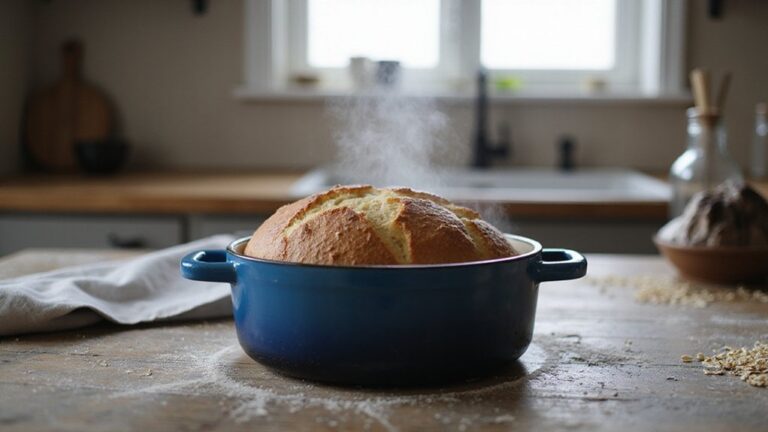
Working quickly, remove your preheated Dutch oven and add foaming butter. Pour the batter gently over your arranged apples, covering them evenly without pushing toward the edges. Slide it back into the oven immediately—don’t hesitate, as the hot pan is essential for that dramatic rise. Using a Dutch oven for this recipe helps create a perfect environment for baking, similar to how it does for artisan bread.
Bake for 15-25 minutes without opening the door. Your pancake’s edges will puff magnificently golden while the center stays tender. It’ll deflate slightly after removal, which is completely normal. Dust with confectioners’ sugar and serve immediately.

Even Heat Distribution Retention: This Umite Chef Dutch oven Made with heavy-duty enameled cast iron, ensures even heat distribution for perfect searing and slow cooking, locking in flavors. thickened walls lock in heat for slow braising, searing, and baking. Unlike thin pots that scorch food, this professional-grade Enameled cast iron potSuperior heat retention after preheating (allow 5-7 mins for even distribution). CRITICAL: Always cool naturally for 45+ mins before cleaning. Thermal shock (hot-to-cold contact) cracks enamel. USE TIP: Preheat 2-3 mins on medium-low only

Quality Enameled Dutch Oven: The Lodge Essential Enamel Cast Iron Dutch Oven gives you all the benefits of cast iron cooking, great heat retention and durability, without fear of rust; it's also PFAS free

Even Heat Distribution Retention: This Dutch oven Made with heavy-duty enameled cast iron, ensures even heat distribution for perfect searing and slow cooking, locking in flavors. thickened walls lock in heat for slow braising, searing, and baking. Unlike thin pots that scorch food, this professional-grade Enameled cast iron pot maintains steady temperatures
Achieving the Perfect Rise and Texture
Because a Dutch baby pancake’s dramatic puff depends almost entirely on steam generation, your oven temperature and skillet preparation are non-negotiable. Maintain oven heat around 425–450°F throughout baking, and never peek inside—heat loss causes deflation.
Your batter consistency determines how quickly steam distributes and rises. You’ll want a thin, pourable mixture that spreads evenly across the preheated, butter-coated skillet, creating rapid steam pockets. The gluten network and egg proteins trap this steam, expanding dramatically under intense heat. It’s also helpful to remember the importance of temperature accuracy to ensure your oven maintains the perfect environment for baking. Furthermore, using cast iron skillets is essential, as they retain heat exceptionally well, enhancing the puffing process.
Position your cast iron skillet in the oven’s middle rack to guarantee even cooking and maximum rise without over-browning. Once the pancake achieves its signature golden-brown puff, serve immediately before natural steam escape deflates it. This timing captures the perfect balance between crispy edges and a tender, custardy center.

5.5-inch square skillet for grilled cheese or ham & cheese sandwiches

YOUR NEW GO-TO PAN: Lodge cast iron cookware is the perfect kitchen tool for beginners, home cooks and chefs. Cast iron can handle any kitchen cooktop, oven, grill, and open flame. Crafted in America with iron and oil, its naturally seasoned cooking surface creates an easy-release and improves with use.

VERSATILE 8-IN-1 COOKING: The Always Pan in cast iron is a 10-inch wonder — it grills, sears, braises, fries, sautés, roasts, bakes, broils, stews, and serves, all in one!
Serving Suggestions and Flavor Variations
Now that you’ve mastered the technical foundation of your Dutch baby pancake, it’s time to elevate it with thoughtful toppings and creative variations. You’ll find topping ideas ranging from classic to indulgent. Dust your pancake with powdered sugar and whipped cream for tradition, or drizzle warm maple syrup across the puffed surface.
Incorporate seasonal fruits for dynamic flavor profiles. During fall and winter, you’ll appreciate caramelized apple wedges glazed in honey, butter, and cinnamon. Spring and summer call for fresh berries—blueberries, strawberries, and raspberries—providing bright color contrast. For sophistication, try poached quince or roasted rhubarb. Also, consider adding a sprinkle of powdered sugar, which adds a delightful sweetness to the overall presentation.
Don’t overlook complementary pairings. Candied bacon delivers savory-sweet contrast, while chocolate sauce transforms your creation into dessert. Additionally, consider using a cast iron skillet for unique texture and flavor. Plate immediately to preserve that signature puffed texture and ideal warmth.