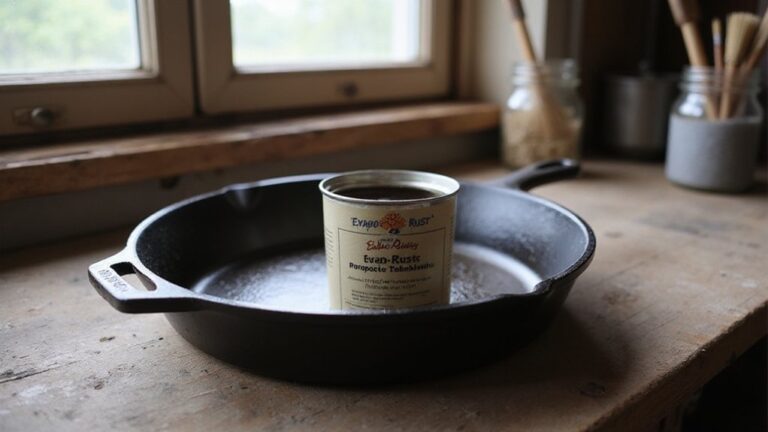
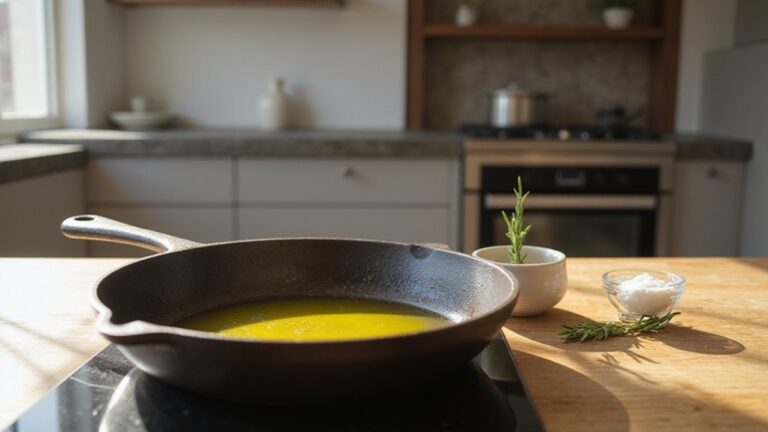
You’ll preserve your cast iron skillet by hand-washing it with warm soapy water and a stiff brush, then drying it immediately. Apply a thin oil layer while warm to maintain seasoning. Store your skillet in a dry location with good air circulation, avoiding humid environments. Use high-smoke point oils and coarse salt for cleaning stubborn residue. Skip harsh detergents, bleach, and vinegar solutions that damage seasoning. These foundational practices establish protection, though mastering advanced techniques will maximize your skillet’s durability.
Cleaning Techniques for Cast Iron
Proper cleaning is fundamental to maintaining your cast iron skillet‘s seasoning and preventing rust. You’ll want to establish a regular cleaning frequency immediately after use to prevent food buildup and corrosion. Hand wash your skillet with warm, soapy water using a stiff-bristled brush or chain mail scrubber—these scrubber types effectively remove debris without excessive abrasion. For stubborn residue, apply coarse kosher salt as a mild abrasive agent. Additionally, consider using baking soda as a cleaning agent to create a paste that can help remove tougher stains. Avoid soaking, as prolonged water exposure causes rust. Dry your skillet thoroughly with lint-free cloths or on the stovetop to eliminate all moisture. Finally, apply a thin layer of cooking oil while the pan’s still warm. This post-cleaning maintenance preserves seasoning and protects against deterioration. Additionally, if you notice surface rust, it can be treated with vinegar and scrubbing before re-cleaning and seasoning.

✔️【Package Included】4pcs steel wool scrubber set, they are easy to clean and scrub the stains and grease on the kitchen utensils, as well as the rust on the bottom of various pots, making them shiny as new. Of course you can use it together with a cleaning agent, the removal effect is better and the efficiency is higher.
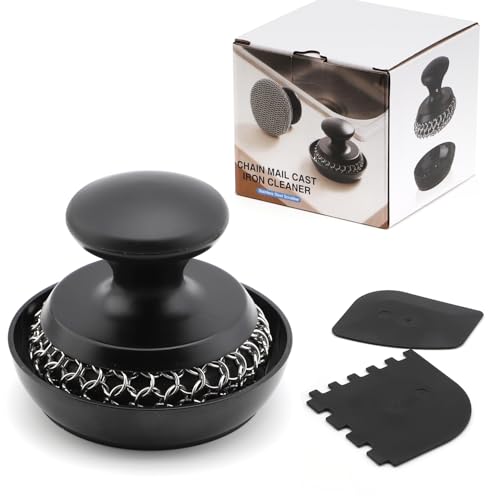
Your Reliable Kitchen Companion: The cast iron chain mail scrubber can help you to reduce the pain of cleaning cast iron cookware. Just pick up the ergonomic and comfortable handle, scrub your cast iron pan, and throw them into the dishwasher. Keep your hands are safely away from the greasy water.

【PROFESSIONAL COMBO FOR TOUGH CLEANING】: Cast iron scrubber is made of 316 stainless steel + silicone. Silicone has extreme stability, can resist high temperatures. Pan scraper is made of thickened ABS plastic, non-stick and non-cracking, heat-resistant up to 275 °F
Building and Maintaining Seasoning
Since cast iron’s non-stick properties depend entirely on built-up oil layers, you’ll need to establish a seasoning foundation before regular cooking can maintain it. Begin with six minimum coats using proven seasoning techniques. Apply thin oil layers with lint-free rags—barely visible amounts prevent pooling while ensuring proper polymerization. Heating with lard as a seasoning fat can create a durable seasoning layer and is an effective traditional choice. Heat your skillet upside-down at 450-500°F for one hour, then cool completely in the turned-off oven. Crisco shortening produces reliable black patina results without burning away. Repeat this cycle six times to establish a hardwearing base. Once established, your most effective maintenance strategy involves regular cooking with oil. Each meal deposits additional protective layers naturally, progressively strengthening your seasoning while you prepare food. Additionally, remember that high smoke point oil is essential for optimal results when seasoning your skillet.
Rust Prevention Strategies
Once you’ve established a solid seasoning foundation, you’ll need to adopt deliberate rust prevention strategies to keep your skillet in peak condition. Moisture control is paramount—always dry your skillet immediately after washing and store it in a dry location with good air circulation. Never let it sit damp or wet.
Consistent oil application forms your primary defense against oxidation. Apply a thin layer of high-smoke point oil after each cleaning, covering all surfaces including the handle and bottom. For enhanced protection, periodically heat your skillet and reapply oil, then bake it upside down at 350–375°F for an hour to bond the seasoning layer. Additionally, be cautious when using your skillet on glass cooktops, as improper handling can lead to scratches that compromise the skillet’s surface.
Avoid storing food inside the pan, as residual acids and moisture degrade your protective coating and accelerate rust formation.

Mild and Easy: Grapeseed Oil is at its best in stir-fries and sautés; it doesn't overwhelm other ingredients and lets fresh flavors shine. When grilling or frying, it is a must-have in the pantry.

Light Buttery Flavor That Elevates Every Meal: Algae Cooking Club Chef-Grade Algae Oil enhances every dish with subtle richness. Its neutral profile makes it ideal for searing, baking, and dressings, transforming everyday meals into gourmet experiences.
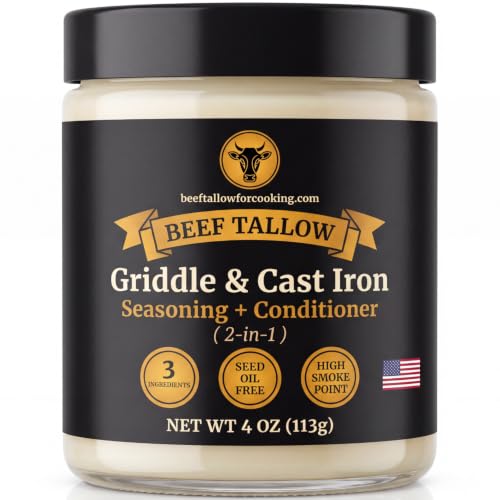
THE SEED OIL FREE FORMULA — Golden Render is the world's first seed oil free, tallow-based griddle seasoning & cast iron conditioner. While others use soy, shortening, grapeseed, sunflower or canola, we use just 3 clean ingredients: beef tallow, avocado oil & beeswax.
Safe Cleaning Agents and Practices
While maintaining a protective oil layer defends your skillet from rust, you’ll need to know which cleaning agents and methods won’t compromise that seasoning foundation. Hot water and mild dish soap are safe when rinsed and dried promptly. For eco-friendly cleaners, coarse salt acts as a natural abrasive for stuck-on food. Safe scrubbing tools include natural fiber brushes, chain mail scrubbers, and copper cleaning cloths that effectively remove residue without stripping seasoning. Additionally, using stiff brushes can be beneficial for tackling tougher bits of food without damaging your skillet’s surface. Avoid harsh detergents, bleach, dishwashers, and acidic vinegar solutions that damage your pan. Never soak cast iron or use abrasive metal pads. After scraping food residue and scrubbing, rinse thoroughly, dry immediately with a towel, and apply a thin oil layer to restore protection. Additionally, using modern dish soaps can effectively clean stubborn food residue without harming the skillet’s seasoning.

YOUR NEW GO-TO ENAMELED CAST IRON CLEANER: The Lodge Enameled Cast Iron Cleaner will keep your enamel cast iron pans looking and cooking its best for generations. This gentle cleanser is entirely bleach and dye-free and specially designed to clean enameled cast iron, inside and out.

RESTORES & SEASONS CAST IRON COOKWARE: Culina Cast Iron Scrub is designed to restore cookware by removing stubborn rust spots, burnt residue, and stuck-on food that builds up over time. Infused with high-quality coconut oil, it also helps season cast iron surfaces while essential oils help eliminate unwanted odors.

Clean your cast iron pans with the uniquely designed chainmail that allows for safe treatment of pan
Usage and Maintenance Tips
Three essential practices—proper preheating, correct oil application, and appropriate heat management—form the foundation of cast iron cooking. You’ll achieve excellent results by preheating your skillet thoroughly before adding oil, then raising temperatures gradually to prevent warping.
Your cooking techniques should emphasize medium to medium-high heat for most recipes, allowing the pan’s superior heat retention to work effectively for searing and roasting. Consider food compatibility carefully: while cast iron excels with fatty foods and proteins, you’ll want to avoid prolonged exposure to acidic ingredients like tomatoes or vinegar, which can compromise seasoning. Additionally, ensure that your skillet is properly preheated to create a natural nonstick surface, minimizing the likelihood of sticking.
Between uses, maintain your skillet by applying oil after cooking. You’ll protect the seasoning layer and extend your pan’s lifespan greatly through consistent, mindful usage patterns.
Proper Storage and Long-Term Care
Because cast iron’s seasoning layer can deteriorate rapidly in humid environments, you’ll want to store your skillets strategically to prevent rust and maintain their cooking performance. Choose dry, cool locations away from damp basements and sinks to establish effective moisture management. Before storing, verify your skillets are completely dry, then apply a thin oil layer for long-term protection. Use breathable storage solutions like cloth wraps or open shelving rather than airtight containers, which trap moisture. Consider vertical racks or wall-mounted organizers that maximize space while promoting air circulation. Additionally, keeping your cast iron skillet thoroughly dry after each use is essential to avoid rust. Place silica gel packets nearby for additional humidity control. Inspect your collection every few months for rust signs, rotating pieces periodically to prevent static exposure. These practices preserve your investment and guarantee reliable performance for years. Regular maintenance, including applying a light coat of oil, helps keep the skillet’s seasoning intact.