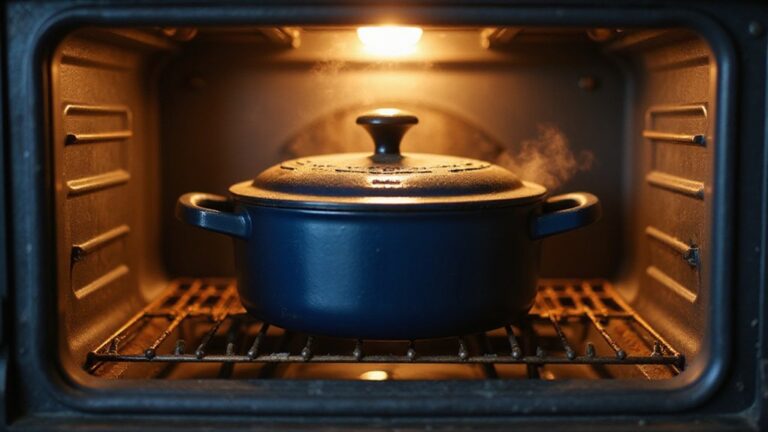
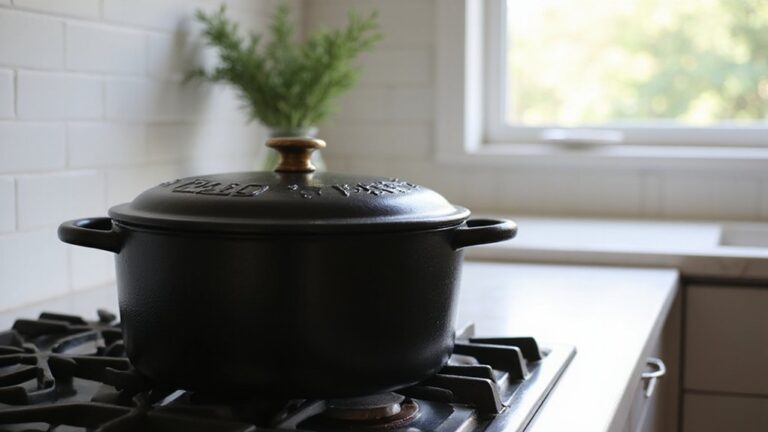
You’ll master Dutch oven cooking by understanding three core elements: your equipment, heat management, and proper technique. Start with an enameled cast iron Dutch oven—it’s low-maintenance and forgiving for beginners. Use the “times two guideline” to estimate briquettes for 350°F cooking. Learn to sear, braise, and simmer with balanced heat distribution. Hand wash immediately after cooking and maintain your pan with minimal effort. These fundamentals will reveal countless delicious possibilities.
Understanding Your Dutch Oven
When you’re selecting a Dutch oven, you’ll want to evaluate the material carefully, as it directly impacts your cooking results. Enameled cast iron offers the best balance—it retains heat exceptionally well while eliminating the need for seasoning. Bare cast iron performs similarly but requires ongoing maintenance. Ceramic Dutch ovens are lightweight with excellent heat retention, while stainless steel options prioritize easy cleanup over performance. Additionally, understanding temperature differences in your cooking can ensure your meals turn out perfectly.
Your lid design matters equally. Tight-fitting lids trap moisture and heat, transforming your Dutch oven into a convection oven. Domed lids with engineered dimples return steam evenly, effectively basting your food throughout cooking. Light-colored enamel interiors let you monitor progress without lifting the lid, preventing ingredient burning. Additionally, enameled cast iron eliminates the need for seasoning, making it a hassle-free option for many home cooks.

Even Heat Distribution Retention: This Umite Chef Dutch oven Made with heavy-duty enameled cast iron, ensures even heat distribution for perfect searing and slow cooking, locking in flavors. thickened walls lock in heat for slow braising, searing, and baking. Unlike thin pots that scorch food, this professional-grade Enameled cast iron potSuperior heat retention after preheating (allow 5-7 mins for even distribution). CRITICAL: Always cool naturally for 45+ mins before cleaning. Thermal shock (hot-to-cold contact) cracks enamel. USE TIP: Preheat 2-3 mins on medium-low only

BREAD BAKER'S DUTCH OVEN, 500°F OVEN-SAFE, SOURDOUGH-READY – one of the highest ratings in its class – delivering the sustained heat that sourdough, artisan bread, and pizza dough demand. Thick cast-iron walls trap and circulate heat like a brick oven, producing bakery-quality crusts at home. The tight-sealing lid features raised self-basting nodes that continuously recirculate steam: a perfect moisture chamber, every single bake.

【Airtight Lid Locks In Freshness & Flavor】Experience the magic of this Dutch oven with lid, precision-engineered to create a tight seal. It locks in moisture and essential nutrients, delivering richer flavor and incredibly tender, juicy results in every dish—from slow-braised meats to hearty soups. Achieve a perfect, crispy crust on your artisan loaves—it's the ultimate Dutch oven for bread baking. The interior self-basting dots continuously redistribute condensation, ensuring your food stays perfectly moist, never dry or mushy
Heat Management and Temperature Control
Because your Dutch oven won’t have the precision of a conventional oven, you’ll need to master heat control through coal placement and quantity. Start by using the “times two guideline”: multiply your Dutch oven’s diameter in inches by two to estimate briquettes needed for roughly 350°F. Each coal produces approximately 20-25°F of heat, so adjust by adding or removing coals in pairs for 25°F changes. The Dutch oven’s superior heat retention ensures that food cooks evenly, making heat management crucial for great results.
Different cooking methods require specific heat ratios. Baking demands a 3:1 ratio (top to bottom) to prevent burning underneath. Roasting needs equal heat distribution with a 1:1 ratio. Simmering requires more bottom heat using a 1:3 ratio.
Arrange coals in circular patterns around your Dutch oven’s base and checkerboard patterns on the lid to guarantee even heating. Preheating your Dutch oven for a few minutes can also help optimize heat storage. Rotate your Dutch oven and lid every 10-15 minutes, and use a probe thermometer to monitor internal temperatures consistently.
Essential Equipment and Preparation
Success in Dutch oven cooking hinges on having the right tools and understanding how to prepare them properly. You’ll need essential Dutch oven accessories like a lid lifter for safe removal and a charcoal chimney starter for efficient heat preparation. Invest in silicone handle grips, heat-resistant gloves, and tongs to protect yourself from burns while handling hot cookware.
Before cooking, you should preheat your Dutch oven gradually to prevent damage and guarantee even heating, as gradual heating is critical to avoiding cracking or warping the pot. Cast iron requires several minutes to warm properly. After each use, maintain your pot by scraping stuck-on food, rinsing with water, and applying oil—avoiding soap preserves the seasoning layer. These cooking tools and maintenance practices extend your equipment’s lifespan while building your confidence as a beginning Dutch oven cook.

Heat protecting silicone pot handle covers which come in one pair (2 pcs) are available in three beautiful retro colors (Soy Green, Cream, Cinnamon). Its smooth, simple design and calming colors complement any kitchen or kitchenware. Measures 3.1" x 1.6" x 1.3"

High Heat Resistance: handle cover made of quality silicone, resistant to high temperatures of 475°F/250°C, suitable for high temperature cooking scenarios such as ovens, microwave ovens, air fryers, etc., safe and does not release harmful substances; Tips: when using the handle cover, be careful not to let the temperature get too high; Otherwise, it will be damaged
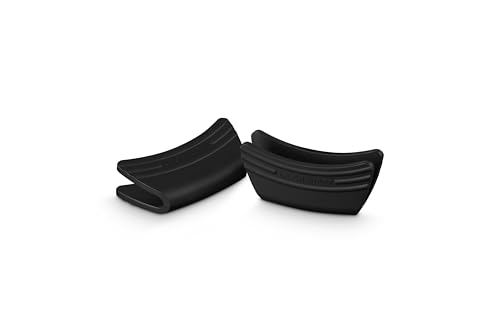
More convenient to clean: The mitts are easy to clean and dishwasher safe
Mastering Basic Cooking Techniques
Now that you’ve prepared your Dutch oven and assembled your tools, you’re ready to learn how heat and moisture work together to produce outstanding results. Master sautéing techniques by heating oil over medium-high briquette placement, then adding ingredients that complement each other through thoughtful ingredient pairing. For stews and braises, use balanced heat distribution—roughly equal briquettes top and bottom—to guarantee even cooking. The Dutch oven’s lid naturally recirculates steam, creating a self-basting effect that keeps food moist without constant attention. Additionally, lye bath cleaning can be employed to maintain your Dutch oven’s cast iron upkeep and ensure it remains in optimal cooking condition. Stir occasionally to prevent sticking and promote uniform heat distribution. For longer cooking times exceeding forty-five minutes, refresh your briquettes to maintain consistent temperature. These fundamentals establish the foundation for all Dutch oven cooking success. Additionally, applying bacon grease seasoning to your Dutch oven can enhance its cooking properties and flavor profile.
Getting Started With Simple Recipes
With the foundational techniques under your belt, you’re ready to put your Dutch oven to work with recipes that build confidence and deliver satisfying results. Start with beginner tips like choosing one-pot meals such as Sausage, White Bean, and Kale Soup or Sweet Potato Chili, which minimize cleanup while maximizing flavor. These recipes rely on simple ingredients: canned beans, fresh vegetables, store-bought rotisserie chicken, and basic seasonings like garlic and herbs. Most dishes take 30–60 minutes from start to finish. Brown your meat or sauté vegetables first to build depth, then simmer for 20–30 minutes until everything’s tender. Expert cooks often recommend adding a flavorful liquid to enhance the overall taste, similar to how a savory cooking liquid is created in a Dutch oven pot roast. Finish with fresh herbs or lemon juice to brighten flavors. You’ll master Dutch oven cooking quickly with these straightforward, satisfying meals. To expand your culinary repertoire, consider adding classic recipes like Beef Stew or other options that highlight the versatility of your Dutch oven.

LOW MAINTENANCE: a great alternative to the traditional bare cast iron pot for busy working individuals, our ovenproof casserole dish is coated with enamel for a sleek smooth finish, enjoy quick and easy cleaning with no need of seasoning!


Festive Pumpkin Design for Fall & Holidays: Celebrate autumn gatherings with this pumpkin shaped Dutch oven. The unique pumpkin design with golden stem knob makes it a perfect centerpiece for Halloween, Thanksgiving, Christmas, and harvest season tables.
Baking and Roasting in a Dutch Oven
Once you’ve mastered stovetop cooking, your Dutch oven becomes an invaluable tool for baking artisan bread and roasting vegetables with exceptional results. Preheat your Dutch oven for at least 30 minutes at 425°F–475°F to guarantee even heat distribution and create the steamy environment bread needs. The Dutch oven’s moisture-sealed environment is crucial for achieving a bakery-quality loaf.
Shape your dough into a round or oval loaf, then use parchment paper to transfer it safely into the hot pot. Dust the bottom with cornmeal to prevent sticking. Slash the top with a sharp knife for controlled expansion.
Bake covered for 20–30 minutes to trap steam and promote oven spring, regardless of your bread types or dough hydration levels. Remove the lid for the final 10–25 minutes to develop a crispy crust. Your loaf reaches doneness at 90°C internal temperature. Cool on a wire rack for 10–30 minutes before slicing. This method is praised for its ability to trap steam, making it easier to achieve that perfect bakery-style loaf.
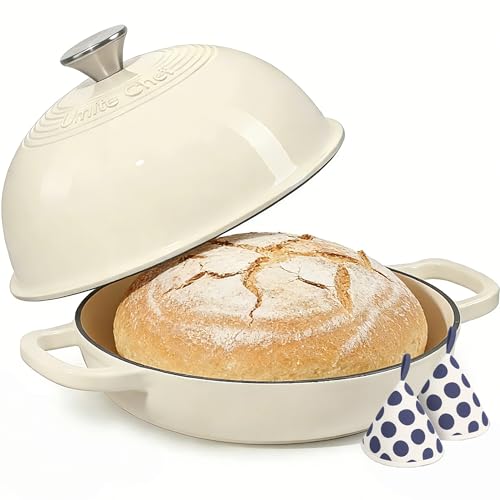
Achieve Professional Artisan Bread at Home - Expertly designed for bread baking, this 6 qt cast iron bread oven creates the ideal steam baking environment. Crafted from high-quality cast iron, it ensures superior heat retention for a crispy, golden crust and impressive oven spring—just like a bakery. The domed cloche lid traps moisture perfectly, guaranteeing delectable results every time

2-in-1 Versatile Cookware Design: The Lodge Cast Iron Double Dutch Oven is a Dutch oven and dual-handle skillet in one smart design, expanding your options for searing, baking, frying, and more

Pre-seasoned 2-in-1 cast iron dutch oven: The 2-In-1 cast iron dutch oven pot with skillet lid has been burned with vegetable oil,(no synthetic coatings or chemicals). The shallow skillet that can be used as a lid
Braising and Simmering for Tender Results
While baking bread showcases your Dutch oven’s dry-heat capabilities, braising reveals its true mastery over moist-heat cooking. Start by searing tough cuts like chuck roast or short ribs over medium-high heat to develop a flavorful crust. Leave adequate space between pieces for proper air circulation. Next, add aromatics and deglaze the pan with wine or broth, incorporating those browned bits. Pour in enough liquid to reach halfway up your meat—this partial submersion creates concentrated flavor. Your braising techniques succeed when you cover tightly and cook low and slow at 275–325°F until the meat becomes fork-tender. The key is to cook until the meat reaches an internal temperature of about 200-210°F, which ensures a melt-in-your-mouth texture by breaking down connective tissue. Finally, remove the meat and reduce the sauce on the stovetop, then return everything to simmer briefly. These simmering methods transform collagen into gelatin, yielding succulent results. For a truly rich depth of flavor, consider deglazing with wine or broth, as it helps lift those flavorful bits from the bottom of your Dutch oven.

Even Heat Distribution Retention: This Dutch oven Made with heavy-duty enameled cast iron, ensures even heat distribution for perfect searing and slow cooking, locking in flavors. thickened walls lock in heat for slow braising, searing, and baking. Unlike thin pots that scorch food, this professional-grade Enameled cast iron pot maintains steady temperatures

Moisture-Locking Lid: The Lodge Essential Enamel Cast Iron Dutch Oven features a moisture-locking design ideal for roasting, braising, and slow cooking pot meals

Proper Cleaning and Maintenance
Your Dutch oven’s longevity depends on how you care for it after cooking. Hand wash your Dutch oven immediately using appropriate cleaning techniques tailored to its material. For cast iron, rinse with warm water and a stiff brush, then dry thoroughly. For enameled versions, use dish soap and a soft sponge, avoiding steel wool that damages the finish. Regularly using your Dutch oven helps create a natural nonstick seasoning, enhancing ease of cleaning.
Essential maintenance tips include coating cast iron with oil before storage to prevent corrosion. Air-dry enameled Dutch ovens completely before putting them away. For stubborn residue, simmer water with baking soda on the stovetop for ten minutes. Regular use helps build and maintain your cast iron’s natural nonstick seasoning, making it easier to clean. Never soak bare cast iron or place any Dutch oven in the dishwasher. Following these straightforward cleaning techniques and maintenance tips preserves your cookware’s performance and appearance for years.
Seasoning and Caring for Cast Iron
Cast iron seasoning is a chemical transformation that protects your pan and creates a natural non-stick surface. You’ll want to select flaxseed oil, which produces the hardest, most durable polymer coatings compared to other options like coconut oil or Crisco. Additionally, using beef tallow as an alternative can offer similar benefits due to its high smoke point and natural composition.
Your seasoning techniques should involve applying thin layers of oil, wiping away excess with lint-free cloth, then baking at 450–500°F for one hour. Place your pan upside-down to prevent pooling. You’ll need a minimum of six coats, applying each layer after the pan cools for two hours.
Between coats, pre-heat your pan to 200°F for consistent results. Once seasoned, maintain your Dutch oven through regular cooking with oils and fats. Each use naturally builds additional layers, continuously improving your pan’s non-stick performance over time. Additionally, proper cleaning techniques help to preserve the seasoning for generations of use.
Troubleshooting Common Cooking Challenges
Even the most carefully seasoned Dutch oven can present cooking challenges if you’re not aware of what’s causing them. Food sticking to the bottom typically results from excessive cooking temperature—lower your heat and guarantee you’ve added adequate oil before heating. For burnt exteriors with raw interiors, reduce your cooking temperature and extend cooking time, allowing heat to penetrate evenly. Dutch ovens retain heat efficiently, so medium-low settings often suffice. Additionally, consider how preheating your pan can improve your cooking results. Watery stews develop when you keep the lid on too long; remove it during final cooking to allow evaporation and concentrate flavors. Prevent uneven cooking by avoiding overcrowding—brown ingredients in batches instead. Finally, manage steam control by checking your lid’s fit; steam escaping indicates excessive heat or improper seating, which can dry out your food. Remember, Dutch ovens excel at even heat distribution, which is key to successful cooking techniques.