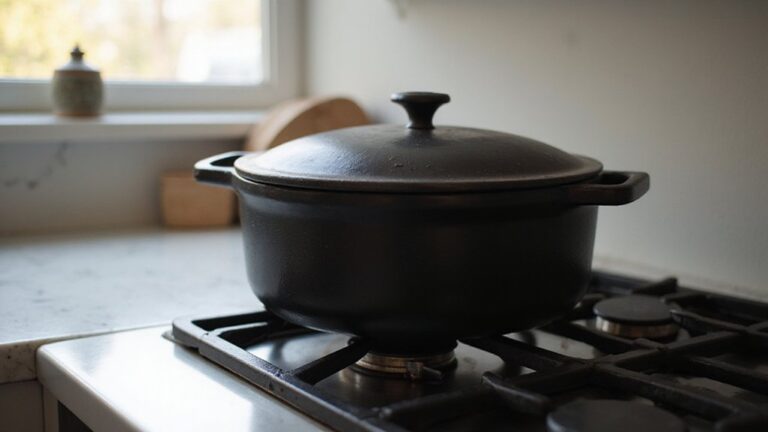
You’ll transform tough chuck roast into fork-tender perfection using Dutch oven braising—a low, moist-heat method that converts collagen into gelatin. Season your roast generously, sear all sides until golden, then build a rich braising liquid with aromatics, broth, and herbs. Braise at 275°F for three hours, let it rest, and slice against the grain. Finish by skimming fat from the pan juices and thickening them into silky gravy. The technique’s simple, but mastering each step’s nuances transforms an ordinary dinner into something extraordinary.
Preparing and Seasoning Your Chuck Roast
Before you season and sear your chuck roast, proper temperature handling is essential to achieving an evenly cooked, tender result. Remove your roast from the refrigerator 30 minutes to an hour before cooking to allow temperature adjustment that promotes consistent heat penetration and better searing capability. Checking your oven’s true temperature can also help ensure accurate cooking results.
Your seasoning methods should be generous and deliberate. Apply kosher salt at roughly 3/4 to 1 teaspoon per pound, then crack fresh black pepper liberally across all surfaces. Consider complementary spices like garlic powder, paprika, or cumin based on your desired flavor profile.
Pat your roast completely dry with paper towels before seasoning—removing surface moisture prevents steaming and enables peak crust formation through the Maillard reaction. You can season twice: before searing and again after resting, allowing salt adequate time to penetrate the meat thoroughly. To ensure the best flavor development, consider resting the seasoned roast for at least three rounds or more before cooking to let the seasonings fully absorb into the meat.
The Searing Process for Maximum Flavor
Once your chuck roast has reached room temperature and you’ve patted it dry, you’re ready to access one of pot roast’s most transformative steps: the sear. Heat your Dutch oven for 2-3 minutes until it reaches a sizzling temperature, then add high smoke-point oil like vegetable or ghee. When the oil shimmers, carefully place your seasoned roast into the pot without moving it. Let each side sear undisturbed for 3-5 minutes, achieving deep golden-brown crust development through the Maillard reaction. Keep in mind that properly measuring the temperature of the roast is essential, as infrared thermometers can only measure the surface temperature and may not provide an accurate reading for deeper cooking needs. Turn with tongs to sear all sides evenly. Don’t overcrowd; work in batches if necessary. The resulting fond—those browned bits stuck to the pot—contains concentrated flavors you’ll deglaze into your gravy, enriching the entire dish with savory depth. This process of achieving a golden-brown crust is crucial not only for pot roasts but also for similar cooking methods like making S’mores dip.
Building Your Braising Liquid Foundation
Now that you’ve built a flavorful fond in your Dutch oven, you’re ready to construct the braising liquid—the aromatic, savory foundation that’ll transform your roast into fork-tender perfection.
Begin by sautéing your aromatics—onions, garlic, carrots, and celery—in the pot to extract deep flavor from those caramelized bits. Deglaze with wine or broth, scraping up every flavorful particle. Combine beef broth, wine, tomato paste, and Worcestershire sauce, maintaining proper liquid ratios: your liquid should cover half to nearly all the roast without submerging it completely. An excellent way to enhance your dish is by choosing ingredients from cozy one-pot meals that resonate with seasonal flavors.
Add whole herbs like thyme, rosemary, and bay leaves for complexity without bitterness. Season generously with salt and pepper. Bring this aromatic mixture to a gentle simmer, ensuring flavor development throughout the braising process before returning your seared meat to the pot. An important step in this process is thickening the sauce towards the end for a rich finish.
Deglazing and Infusing Herbs
The magic of a truly exceptional pot roast hinges on two critical techniques: capturing every molecule of fond through deglazing, then layering in herbs to build complex, savory depth. After searing your meat, add acidic liquid—red wine or vinegar work beautifully—to your hot pan. Scrape vigorously with a wooden spoon, dissolving those caramelized browned bits into your deglazing liquid. This fond-rich base transfers directly into your braising pot, forming your sauce’s flavor foundation.
Additionally, the Dutch oven’s superior heat retention allows for consistent cooking at low temperatures, which is ideal for braising. Next, implement strategic herb infusion by adding bay leaf, thyme, and rosemary early in the braising process. Tie herbs in a bouquet garni for easy removal, or add them directly to the liquid. During slow oven cooking at 275–300°F, these herbs gradually release their essential oils, creating harmonious, deeply layered flavors throughout your gravy. For a comforting, hearty meal, ensure that the vegetables are simmered to absorb the rich, aromatic cooking liquid.

Even Heat Distribution Retention: This Umite Chef Dutch oven Made with heavy-duty enameled cast iron, ensures even heat distribution for perfect searing and slow cooking, locking in flavors. thickened walls lock in heat for slow braising, searing, and baking. Unlike thin pots that scorch food, this professional-grade Enameled cast iron potSuperior heat retention after preheating (allow 5-7 mins for even distribution). CRITICAL: Always cool naturally for 45+ mins before cleaning. Thermal shock (hot-to-cold contact) cracks enamel. USE TIP: Preheat 2-3 mins on medium-low only
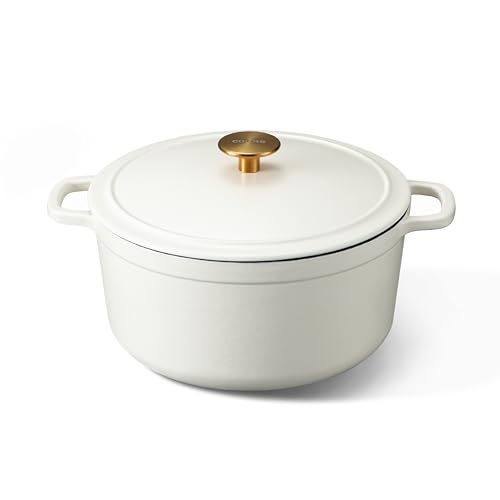
Superior Even Heat Control: One-piece thick cast iron delivers uniform heat with zero hot spots and excellent heat retention, ideal for searing, braising and crusty bread baking. Preheat on medium-low heat; cool naturally before washing to prevent enamel cracking.

BREAD BAKER'S DUTCH OVEN, 500°F OVEN-SAFE, SOURDOUGH-READY – one of the highest ratings in its class – delivering the sustained heat that sourdough, artisan bread, and pizza dough demand. Thick cast-iron walls trap and circulate heat like a brick oven, producing bakery-quality crusts at home. The tight-sealing lid features raised self-basting nodes that continuously recirculate steam: a perfect moisture chamber, every single bake.
The Initial Braising Phase
Your deglazing liquid—now enriched with dissolved fond and herb aromatics—becomes the foundation upon which everything else builds, and you’re ready to move into the controlled, patient environment where true transformation occurs. Pour this mixture over your seared roast, ensuring it partially submerges the meat. Cover your Dutch oven with a tight-fitting lid, then transfer it to a preheated 275-degree oven. This initial temperature control is essential: the gentle heat allows collagen to gradually convert to gelatin without drying the exterior. The sealed environment provides humidity retention, trapping steam that condenses on the lid’s interior and drips back onto the meat. Over three hours, this humid cocoon works methodically, transforming tough connective tissue into succulent tenderness while flavors deepen throughout the braising liquid. Additionally, remember to avoid thermal shock by placing your Dutch oven in the oven as it preheats to ensure even heating. The use of a vacuum sealing method before freezing any leftover pot roast can help maintain its quality and flavor for future meals.
Adding Root Vegetables at the Right Time
After your roast has braised for approximately 90 minutes to 2 hours, you’ll notice the meat’s exterior has softened considerably, though it won’t yet reach that perfect fork-tender stage—this is precisely when you should introduce your root vegetables. This perfect vegetable timing prevents mushiness while allowing proper flavor absorption.
Carrots, potatoes, and parsnips need 45–60 minutes to achieve peak tenderness. Layer them underneath or around the roast to shield them from direct heat and maximize their contact with braising liquid. Submerge vegetables partially to guarantee even cooking and prevent overcooking’s detrimental effects on texture and gravy clarity. Additionally, tender vegetables like carrots can help to enhance the flavors in the dish as they absorb the juices from the roast.
Onions soften faster—30–45 minutes—while celery requires only 20–30 minutes. Their delayed addition preserves structural integrity and prevents excess starch from clouding your finished sauce. Additionally, using a cast iron skillet for browning the meat beforehand enhances the flavors and contributes to a richer gravy.

PFAS-FREE & NON-TOXIC COOKWARE: ATTENTION: If your manual mentions "enamel" or "low-medium heat only", it is incorrect. This is 100% pure cast iron cookware! Not Enamel-Coated: Safe for High-Heat Cooking! Metal utensils OK (avoid sharp edges) Every Umite Chef cast iron pot has been burned with 100% natural, food-grade vegetable oils—absolutely zero PFAS, PFOA, PTFE, synthetic coatings, or toxic chemicals. Our seasoning naturally builds with use, developing a superior non-stick surface over time while ensuring oven-to-table safety

【10QT CAMPING DUTCH OVEN】 The Velaze 10 Quart camping dutch oven is made of cast iron with a high-quality design and excellent thermal conductivity and heat retention. The flanged lid holds hot coals and inverts for use as a griddle. The extra stand support allows the oven to sit perfectly over the table.

𝐃𝐨𝐦𝐞 𝐃𝐞𝐬𝐢𝐠𝐧: Perfect for Crusty Sourdough The AHJ pre-seasoned Dutch oven is ideal for sourdough baking. When used with the lid in the oven, it locks in steam—ensuring condensation drips down the lid walls without soggying the bread—for an ultra-crisp crust and soft, fluffy interior. The 5-quart large capacity easily accommodates big sourdough loaves, perfect for sharing with the whole family.
Achieving Fork-Tender Perfection
Proper vegetable timing guarantees they’ll reach doneness alongside your roast, but achieving that coveted fork-tender meat requires mastering several interconnected techniques that begin long before vegetables hit the pot. You’ll reveal fork-tender secrets by maintaining oven temperatures between 250°F and 325°F, allowing extended braising that transforms collagen into gelatin. The tight-fitting Dutch oven lid traps essential steam, preventing moisture loss while muscle fibers break down completely. To achieve optimal results, consider the importance of proper technique to ensure that every component is cooked perfectly and flavors are melded harmoniously.
Don’t skip the searing phase—those golden-brown crusts develop Maillard reactions that seal juices and intensify flavor. Adding pepperoncini peppers and juice during the cooking process can elevate the flavor profile significantly. Resist the urge to rush; three hours or more of slow cooking yields substantially better results than shorter intervals.
Finally, rest your roast in its braising liquid post-cooking. This vital step redistributes internal juices, perfecting flavors and ensuring fork-tender slices that showcase your mastery.

【Airtight Lid Locks In Freshness & Flavor】Experience the magic of this Dutch oven with lid, precision-engineered to create a tight seal. It locks in moisture and essential nutrients, delivering richer flavor and incredibly tender, juicy results in every dish—from slow-braised meats to hearty soups. Achieve a perfect, crispy crust on your artisan loaves—it's the ultimate Dutch oven for bread baking. The interior self-basting dots continuously redistribute condensation, ensuring your food stays perfectly moist, never dry or mushy

Even Heat Distribution Retention: This Dutch oven Made with heavy-duty enameled cast iron, ensures even heat distribution for perfect searing and slow cooking, locking in flavors. thickened walls lock in heat for slow braising, searing, and baking. Unlike thin pots that scorch food, this professional-grade Enameled cast iron pot maintains steady temperatures

Moisture-Locking Lid: The Lodge Essential Enamel Cast Iron Dutch Oven features a moisture-locking design ideal for roasting, braising, slow cooking, and baking bread
Testing for Doneness
How do you know when your pot roast has reached that perfect fork-tender state? You’ll rely on doneness indicators to determine when your roast is ready to serve.
A meat thermometer is your most reliable tool. Insert it into the thickest part of the roast, away from bone or fat. For medium doneness, the USDA recommends 145°F (63°C). Well-done beef reaches 160°F (71°C) or higher. Be sure to use a thermometer that is labeled as oven-safe to prevent damage while cooking.
Check multiple spots on irregularly shaped roasts to ascertain consistent doneness throughout. The fork test complements thermometer readings—properly cooked meat should penetrate almost effortlessly and feel soft inside.
While the touch test and visual cues provide additional guidance, they lack reliability due to individual variation. Combine methods for confident results, always prioritizing the meat thermometer’s precise measurement over subjective assessments. Additionally, ensure you are using an oven-safe probe thermometer if you choose to leave it in the roast while cooking.
Resting and Slicing Your Roast
Once your pot roast reaches its target internal temperature, you’re not quite ready to carve it up. Let it rest for at least three minutes—this essential step delivers significant resting benefits. During this period, carryover cooking completes while proteins stabilize and redistribute juices throughout the meat, maximizing moisture retention and tenderness. Many outdoor cooking enthusiasts find that using a Dutch oven enhances flavors and tenderness in various meat dishes, including pot roast.
Expect your internal temperature to climb another 5-10°F during resting. Tent loosely with foil to maintain warmth without trapping steam.
When you’re ready to slice, employ proper slicing techniques: use a sharp knife and cut against the grain for shorter muscle fibers. Create thin, quarter-inch slices at slight angles for appealing presentation. Begin slicing only after the minimum rest period elapses, then serve immediately to preserve temperature and moisture. Accompany with prepared gravy for enhanced flavor. Additionally, consider the importance of Dutch oven cooking to enhance the overall flavor profile of your pot roast.
Making and Serving the Gravy
As your perfectly rested roast rests on the cutting board, you’re ready to transform the flavorful braising liquid left in your Dutch oven into a silky, luxurious gravy that’ll elevate every bite.
Start by skimming excess fat from the surface, then deglaze the pot with broth or wine to incorporate those caramelized browned bits. For gravy thickening, prepare a cornstarch slurry using 1–2 tablespoons cornstarch per ¼ cup water, then whisk it into the simmering liquid while stirring continuously to prevent lumps. Remember, after enjoying this delicious roast, you can easily clean your Dutch oven with baking soda to keep it in excellent condition. It’s important to note that using a preheated skillet can help enhance the cooking process for the roast itself.
Adjust consistency by adding more liquid if needed. Consider flavor enhancements like cream, fresh herbs, or sautéed garlic and onions for depth. Season with salt and pepper to taste. Ladle the hot gravy over your sliced roast and vegetables, ensuring it coats the back of a spoon—the perfect finishing touch.

Minimalist Cornstarch in a resealable bag

Unpretentious Baker Corn Starch

Earthborn Elements Corn Starch