You’ll vacuum seal mason jars by combining boiling water bath canning with vacuum-sealing technology. First, sanitize and preheat your jars, then fill them with high-acid foods like fruits or pickles, leaving proper headspace. Use your vacuum sealer’s chamber or hose attachment to remove air, then screw the band securely. Submerge the sealed jars in 212°F water for the time specified in your recipe. Verify the seal by pressing the lid’s center—it shouldn’t flex. Store in cool, dark conditions. Understanding elevation adjustments and safety protocols for different foods’ll enhance your success.
Understanding the Boiling Water Canning Method
Since you’re vacuum sealing mason jars, you’ll want to understand how boiling water bath canning creates that essential seal. This method submerges filled jars in 212°F water, which kills vegetative bacteria and removes air from the headspace. You’ll find it’s suitable for high-acid foods like fruits, tomatoes, and pickles—food acidity prevents dangerous bacterial growth.
Processing times vary based on jar sizes and recipe requirements, ranging from 5 to 85 minutes. As jars cool, the heat causes air to contract, forming a vacuum seal indicated by a concave lid.
If you’re canning above 1,000 feet elevation, you’ll need to adjust processing times accordingly. Understanding these fundamentals guarantees you achieve safe, properly sealed jars every time.
Essential Equipment and Tools
To achieve successful vacuum seals in mason jars, you’ll need to gather the right equipment before you begin. Start with a boiling-water bath canner and a jar lifter tool—your jar lifter uses are critical for safely removing hot jars without burns. You’ll also need a wide-mouth funnel for mess-free filling, a chopstick for removing air bubbles, and paper towels for wiping rims clean.
Your sealing techniques require mason jar sealer lids with rubber gaskets, appropriately sized lid rings, and a vacuum sealing attachment system with both manual and wide-mouth options. Prepare a shallow bowl for softening sealing compounds and a reliable timer for tracking processing times. These tools guarantee proper vacuum formation and safe food preservation throughout your canning process.

【Suitable for two types of Mason jars】The electric Mason jar vacuum sealer contains two sizes of mouth seals for your daily use. To get the standard mouth seal jar, simply insert the red arrow on the standard mouth seal converter, align it with the unlock symbol on the main unit and then insert it inside the silicone ring in the wide mouth seal area and tighten it clockwise, at this point the arrow is aligned with the lock symbol, which indicates a successful installation.

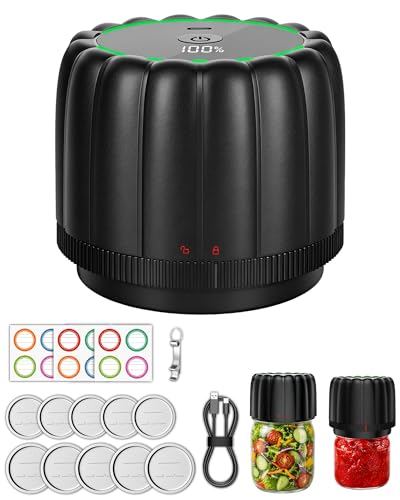
【Superior Sealing Performance, Extend Food Freshness Up to 10x】 Featuring an upgraded -85kpa high-power motor, our jar sealer for mason jars creates a tight, leak-proof vacuum seal that keeps air and moisture out, extending the shelf life of your food by up to 10 times compared to regular lids. Whether you're storing dehydrated herbs, bulk coffee beans, leftover meals, jams, or snacks, this electric mason jar vacuum sealer kit ensures your food stays fresh, crisp, and flavorful for weeks—no more wasted food, no more stale snacks
Preparing Your Mason Jars and Food
Now that you’ve assembled your equipment, you’ll need to prepare your mason jars and food properly to guarantee successful vacuum sealing. Start with Mason jar sanitation by washing jars, lids, and bands in hot soapy water, then rinse thoroughly to remove residue. Dry lids and bands completely and set them aside separately. Preheat jars by submerging them in simmering water at approximately 180°F until you’re ready to fill them. This heating prevents thermal shock and cracking.
Meanwhile, prepare your food using appropriate food preparation techniques for your recipe. Have all ingredients measured and ready. When you’re prepared to fill, remove jars individually from the hot water and maintain consistent temperature throughout the process.
The Step-by-Step Processing Technique
Once you’ve prepared your jars and ingredients, you’re ready to begin the vacuum sealing process, which differs fundamentally from traditional boiling water bath canning. Place your dry goods inside the mason jar, leaving appropriate headspace. Set the lid on top without screwing the band on yet. Position the jar inside your vacuum sealer’s chamber or attach the accessory hose to the jar lid. Activate the vacuum sealing function to remove air from both the jar and chamber, creating a tight seal through air removal rather than heat. It’s important to note that oven bags are not safe for sous vide cooking due to their inability to withstand low temperatures and the vacuum-sealing process. Once the process completes and you’ve achieved proper food preservation, remove the jar and screw the band on securely. This method guarantees effective storage without any boiling water involvement.
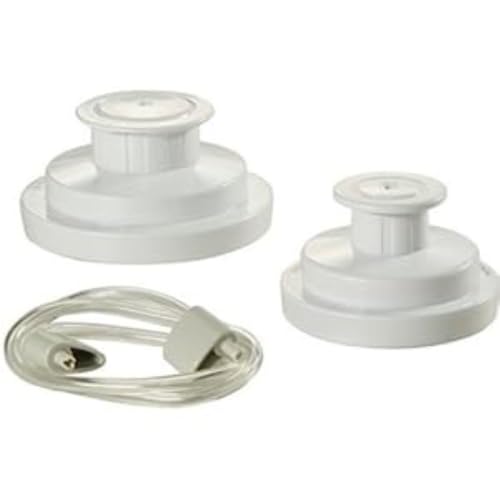

✅【Widely Compatibly】Our upgraded vacuum jar sealer kit with 3 different hose connectors compatible with all Foodsaver's models. The tip connector is compatible with FoodSavers VS and FM series, the round connector is fit for FoodSavers V and VAC series. We also have a round hose connector for vacuum sealers with an external vacuum suction port(0.22inch ≤ diameter ≤ 0.24inch), so it is also suitable for other brands of vacuum sealer. Note: Our jar sealer attachment do not fit the NESCO VS series, please check your model before purchasing.

【 Mason Jar Vacuum Sealer Kit】- Embrace the power of comprehensive kit, featuring 1 wide mouth jar sealer, 1 regular-mouth jar sealer, 2 hose connectors,suitable to use as food sealer 1 manual vacuum pump, 1 lid opener, 1 user guide, 5 wide-mouth Mason jar lids, and 5 regular-mouth Mason jar lids. To enhance your experience, we have included additional updated more lids.Food Grade,BPA Free
Verifying and Maintaining Your Seals
After you’ve completed the vacuum sealing process, you’ll want to verify that your jars have achieved a proper seal before storing them. Press down on each jar’s lid center—it shouldn’t flex or pop back up. Conduct seal inspection by checking for any visible gaps or irregularities around the lid’s perimeter.
For seal longevity, store your sealed jars in a cool, dark location away from temperature fluctuations and direct sunlight. Monitor them periodically throughout storage, pressing the lid center monthly to confirm the seal remains intact.
However, understand that vacuum sealing alone doesn’t provide the same food safety guarantees as boiling water canning for low-acid foods. It’s suitable for dry goods and already-processed items, not for foods requiring heat processing to eliminate pathogens.

Widely Compatible: Our jar vacuum sealer kit comes with 3 adapter interfaces. Compatible with foodsaver's VS and FM series models, NutriChef PKVS40BK vacuum sealer, etc.We also have a hose connector for vacuum sealers with a protruding external suction port (0.22in≤suction port diameter≥0.24in).

WORKS WITH ALL MASON JARS - VacuFresh fits both regular (2.68") and wide mouth (3.27") mason jars. Whether storing spices, snacks, or meal preps, this compact can sealer machine works with every jar in your pantry.
Common Mistakes and How to Avoid Them
Even with proper technique, vacuum sealing mason jars can fail when you don’t attend to critical details. You’ll compromise your seal by ignoring head space requirements—use ¼ inch for jams, ½ inch for tomatoes and fruit, and 1 inch for vegetables. Incorrect lid tightness causes failure; tighten rings only to fingertip tight, not overly snug, so air escapes during processing. Never substitute paraffin wax for boiling water bath processing, as it doesn’t eliminate spoilage organisms or guarantee protection. Sterilize jars properly in boiling water for 10–15 minutes; avoid ovens and dishwashers, which don’t reach sustained temperatures needed for effective sterilization. Finally, never boil sealer lids—use only simmered water to preserve the sealing compound’s integrity. Additionally, proper vacuum sealing techniques can enhance the longevity of your preserved items.