You’ll transform tough brisket into tender, juicy meat by searing it fat-side first in a preheated cast iron Dutch oven, then braising it low and slow at 225°F to 325°F until it reaches 195°F-205°F internally. Use a braising liquid combining beef broth, wine, and aromatics like garlic, bay leaves, and thyme. The key’s maintaining a tightly covered Dutch oven to trap steam. Slice against the grain and finish with a silky pan sauce. The specifics of timing, temperature precision, and flavor layering reveal the difference between good and exceptional results.
Preparation and Ingredients for Dutch Oven Beef Brisket
Selecting the right brisket cut sets the foundation for a successful Dutch oven braise. You’ll choose between the point or flat cut, each offering distinct fat content and texture profiles. A 3- to 6-pound brisket guarantees even cooking, while well-marbled meat yields superior juiciness. Additionally, using a cast iron Dutch oven can enhance the caramelization and browning through its superior heat retention.
Position your brisket fat-side up to allow natural basting during the slow cook. Trim excess fat according to preference, preserving some for moisture retention.
For your dry rub, you’ll combine brown sugar, salt, smoked paprika, garlic powder, onion powder, cayenne, cumin, and black pepper. These seasoning options create depth and complexity. Press the mixture onto all surfaces and refrigerate overnight to deepen flavor penetration. This systematic approach maximizes tenderness and taste in your final dish. Additionally, using a Dutch oven for cooking helps retain moisture retention and ensures an even heat distribution, enhancing the overall outcome of your brisket.

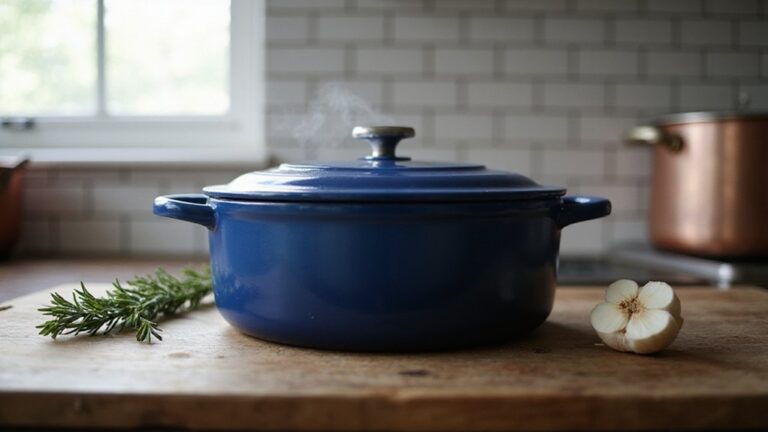
Even Heat Distribution Retention: This Umite Chef Dutch oven Made with heavy-duty enameled cast iron, ensures even heat distribution for perfect searing and slow cooking, locking in flavors. thickened walls lock in heat for slow braising, searing, and baking. Unlike thin pots that scorch food, this professional-grade Enameled cast iron potSuperior heat retention after preheating (allow 5-7 mins for even distribution). CRITICAL: Always cool naturally for 45+ mins before cleaning. Thermal shock (hot-to-cold contact) cracks enamel. USE TIP: Preheat 2-3 mins on medium-low only

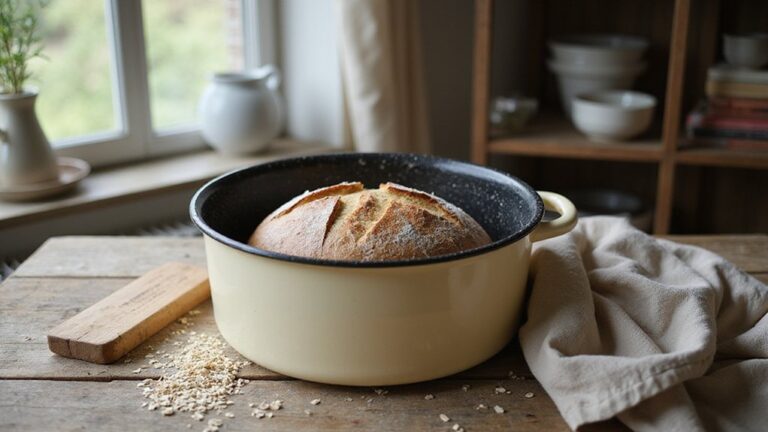
BREAD BAKER'S DUTCH OVEN, 500°F OVEN-SAFE, SOURDOUGH-READY – one of the highest ratings in its class – delivering the sustained heat that sourdough, artisan bread, and pizza dough demand. Thick cast-iron walls trap and circulate heat like a brick oven, producing bakery-quality crusts at home. The tight-sealing lid features raised self-basting nodes that continuously recirculate steam: a perfect moisture chamber, every single bake.

PFAS-FREE & NON-TOXIC COOKWARE: ATTENTION: If your manual mentions "enamel" or "low-medium heat only", it is incorrect. This is 100% pure cast iron cookware! Not Enamel-Coated: Safe for High-Heat Cooking! Metal utensils OK (avoid sharp edges) Every Umite Chef cast iron pot has been burned with 100% natural, food-grade vegetable oils—absolutely zero PFAS, PFOA, PTFE, synthetic coatings, or toxic chemicals. Our seasoning naturally builds with use, developing a superior non-stick surface over time while ensuring oven-to-table safety
Searing and Browning Techniques
The Maillard reaction—that magnificent chemical transformation occurring when proteins and sugars heat to high temperatures—creates the flavorful browned crust that distinguishes exceptional Dutch oven brisket. You’ll achieve excellent results by heating your Dutch oven over medium-high heat before adding avocado oil, ensuring immediate sizzle when you place your room-temperature, patted-dry brisket into the pan. Sear the fat side first for about 4-5 minutes per side, flipping carefully to preserve the developing crust. Your searing methods directly impact flavor enhancement through uniform browning on all surfaces, including the ends. Maintain consistent medium-high heat throughout—avoiding steaming or burning—then briefly remove the brisket to sauté aromatics in the fond before deglazing with broth, setting the stage for tender, braised perfection. Additionally, incorporating Dutch oven desserts into your camping meal plan can create a well-rounded outdoor experience that satisfies all cravings. Do remember that factors like environmental conditions can also influence the cooking process and the end result, so it’s essential to monitor your heat source carefully.

America's #1 Avocado Oil for Cooking — Every batch of Chosen Foods avocado oil is independently tested to confirm 100% pure avocado oil with no fillers or seed oil blends. Our purity standard was verified by UC Davis as one of only two avocado oil brands to pass their rigorous quality test. This bottle delivers the clean, neutral taste and consistent high-heat performance that has made Chosen Foods the avocado oil of choice for home cooks, professional chefs, and clean-eating households across the United States.

America's #1 Avocado Oil for Cooking — Every batch of Chosen Foods avocado oil is independently tested to confirm 100% pure avocado oil with no fillers or seed oil blends. Our purity standard was verified by UC Davis as one of only two avocado oil brands to pass their rigorous quality test. This bottle delivers the clean, neutral taste and consistent high-heat performance that has made Chosen Foods the avocado oil of choice for home cooks, professional chefs, and clean-eating households across the United States.

Healthy High Heat Oil: Expeller-pressed from fresh avocados and protected in our iconic light-blocking tin, this smooth, neutral oil preserves freshness and flavor. Fire up the grill, sear the perfect steak, or master a golden, crispy fry — all without losing the natural taste of your ingredients. With a high smoke point and everyday versatility, Sear & Sizzle should be every kitchen’s secret weapon.
Cooking Temperature and Timing
Once you’ve achieved that beautiful brown crust through searing, you’ll want to slide your brisket into an oven preheated to between 225°F and 325°F—the choice depends on your timeline and desired outcome. At 225°F, expect 5-6 hours for a tender result; at 300°F, plan roughly 30-60 minutes per pound. Higher temperatures around 325°F shorten cooking to 3-4 hours but demand careful monitoring. Additionally, using a cast iron skillet for searing prior to oven cooking can enhance the browning process and flavor.
Your timing guidelines should prioritize reaching an internal temperature of 195°F-205°F, where collagen fully breaks down. Use a probe thermometer to track progress without guessing. Maintain consistent oven temperature throughout—fluctuations compromise moisture retention and tenderness. Cover your Dutch oven tightly to trap steam, creating an ideal braising environment. After cooking, rest your brisket 15-20 minutes before slicing.
Braising Liquids and Flavor Enhancement
While your brisket rests after searing, you’ll want to build a braising liquid that’ll transform tough connective tissue into silky tenderness while developing complex, savory flavors. Understanding braising fundamentals means combining complementary components: two to four cups of low-sodium beef broth provides the base, while one cup of red wine vinegar or white wine adds critical acidity for meat breakdown. braising liquid is vital for achieving the desired texture and flavor. Burgundy or Pinot Noir varietals enhance your flavor profiles with sophisticated depth and tannins. Incorporate umami through Worcestershire sauce or soy sauce—roughly one-third to one-half cup—creating savory complexity. Layer in aromatics: halved garlic cloves, bay leaves, and fresh thyme sprigs permeate the liquid. Brown your onions first to establish a caramelized foundation. This systematic approach guarantees your braising liquid works synergistically to tenderize while building exceptional sauce depth. A common method includes browning the meat before braising to enhance flavor through the Maillard reaction, ensuring a richer final dish.

Swanson Lower Sodium* Beef Broth is made with quality ingredients for a rich homemade taste

One (1) 32 oz carton of Pacific Foods Low Sodium Organic Beef Broth
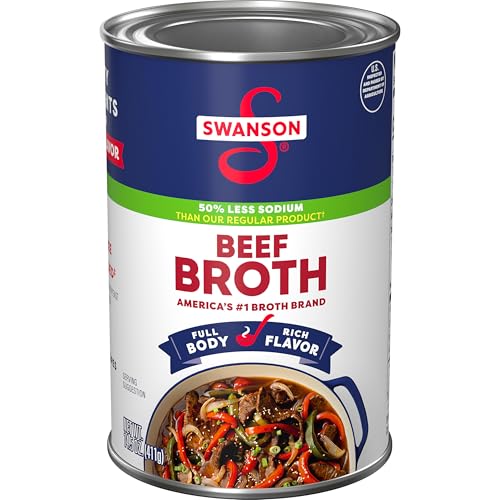
Swanson Lower Sodium* Beef Broth is made with quality ingredients for a rich homemade taste
Finishing and Serving
After your braising liquid has worked its magic, transforming that tough cut into tender, succulent meat, you’ll shift focus to extracting maximum flavor from those hard-earned pan drippings and presenting your brisket at its peak. Start by preparing finishing sauces using the browned bits and cooking liquids remaining in your Dutch oven. Whisk cornstarch with water, then simmer until thickened—about five minutes. Consider combining BBQ sauce, Worcestershire, and soy sauce for depth. Searing the meat beforehand helps to enhance the flavor of the pan drippings. For slicing techniques, identify the grain beforehand and slice thinly at 1/8 inch against it using a sharp knife. Arrange overlapping slices at angles for an attractive presentation. Serve immediately with coleslaw, mashed potatoes, or crusty bread, drizzling sauce over top for enhanced moisture. If you’re using cast iron for cooking, remember to restore your skillet regularly to maintain its effectiveness and prevent rust buildup.

【10QT CAMPING DUTCH OVEN】 The Velaze 10 Quart camping dutch oven is made of cast iron with a high-quality design and excellent thermal conductivity and heat retention. The flanged lid holds hot coals and inverts for use as a griddle. The extra stand support allows the oven to sit perfectly over the table.

𝐃𝐨𝐦𝐞 𝐃𝐞𝐬𝐢𝐠𝐧: Perfect for Crusty Sourdough The AHJ pre-seasoned Dutch oven is ideal for sourdough baking. When used with the lid in the oven, it locks in steam—ensuring condensation drips down the lid walls without soggying the bread—for an ultra-crisp crust and soft, fluffy interior. The 5-quart large capacity easily accommodates big sourdough loaves, perfect for sharing with the whole family.

【CAST IRON DUTCH OVEN】 Velaze enamel cast iron dutch oven pot with lid is solid and durable, can be used for multiple cooking methods such a cooking, baking, stewing etc. Large capacity dutch oven is great for beginners or pros and almost meet all the needs of family gatherings. Please always use oven gloves or a pot rack when handling the pot. The handle will be very hot!
Essential Equipment and Techniques
Before you’ll need the right tools to execute this technique successfully. A 5.5-quart enameled cast iron Dutch oven serves as your primary cooking vessel, offering superior heat retention and even temperature distribution. You’ll also want a meat thermometer to verify internal temperatures and tongs for safe handling. Utilizing a Dutch oven also enhances the cooking process through slow, moist heat, which is perfect for creating flavorful dishes.
Sear your brisket on all sides using high smoke point oil over medium-high heat until golden brown. This essential step locks in juices and develops deep flavor. Transfer the seared brisket fat side up into your preheated Dutch oven, then add liquid and aromatics around it. Cover tightly and braise at 300°F–325°F for 30–60 minutes per pound until the internal temperature reaches 200°F–205°F, ensuring tender, fall-apart results. Utilizing a Dutch oven not only enhances the cooking process but also allows for recipes like Beef Stew that benefit from slow, moist heat.

【Airtight Lid Locks In Freshness & Flavor】Experience the magic of this Dutch oven with lid, precision-engineered to create a tight seal. It locks in moisture and essential nutrients, delivering richer flavor and incredibly tender, juicy results in every dish—from slow-braised meats to hearty soups. Achieve a perfect, crispy crust on your artisan loaves—it's the ultimate Dutch oven for bread baking. The interior self-basting dots continuously redistribute condensation, ensuring your food stays perfectly moist, never dry or mushy

【Airtight Lid Locks In Freshness & Flavor】Experience the magic of this Dutch oven with lid, precision-engineered to create a tight seal. It locks in moisture and essential nutrients, delivering richer flavor and incredibly tender, juicy results in every dish—from slow-braised meats to hearty soups. Achieve a perfect, crispy crust on your artisan loaves—it's the ultimate Dutch oven for bread baking. The interior self-basting dots continuously redistribute condensation, ensuring your food stays perfectly moist, never dry or mushy

Even Heat Distribution Retention: Crafted from heavy-duty enameled cast iron, the Wildone Dutch Oven ensures superior even heat distribution for flawless searing and slow cooking, locking in flavors. Thick cast-iron walls trap and circulate heat like a brick oven, producing bakery-quality crusts at home. Whether you're a beginner or a seasoned baker, consistent results are now within reach
Tips for Perfect Results Every Time
Temperature control’s the foundation of Dutch oven brisket success—cook yours at 300°F to 325°F to guarantee even heat distribution and prevent the meat from drying out. Use a meat thermometer to target 195–205°F internally for ideal tenderness and collagen breakdown. Additionally, consider that a slow-baking method ensures the meat becomes fork-tender, much like classic pot roast dishes.
Your tenderness tips include searing the brisket for 3–5 minutes per side before braising to develop a caramelized crust that locks in juices. For moisture retention, add braising liquid covering at least one-third of the meat, incorporating beef broth, beer, or Worcestershire sauce with aromatics like onions and garlic. Additionally, consider using fresh herbs as they can enhance the overall flavor profile of your dish.
Season generously with kosher salt and pepper at least an hour beforehand. Avoid lifting the Dutch oven lid frequently to maintain consistent heat. Finally, rest your brisket 10–15 minutes after cooking to redistribute juices throughout the meat.