

You’ll achieve consistent, flavorful dabs by targeting your nail’s surface temperature with an infrared thermometer before applying concentrate. Point the laser at your nail’s center, adjusting for material emissivity—quartz and titanium require different settings. Monitor cooling rates in real-time to hit your concentrate’s ideal window: live resin and rosin thrive at 425–490°F, while shatter prefers 545–570°F. Combine thermometer data with elapsed time for reproducible results. Uncover how calibration, advanced positioning techniques, and concentrate-specific strategies elevate your dabbing precision further.
Understanding Optimal Temperature Ranges for Dabbing
When you’re using an infrared thermometer to monitor your dabbing setup, understanding how temperature directly affects your concentrate’s performance becomes crucial. You’ll find that ideal dabbing ranges vary greatly based on concentrate characteristics. Live resin and rosin require 425°F–490°F to preserve terpenes and flavor. Shatter and crumble perform best at 545°F–570°F for balanced potency and vaporization. THCA isolate demands higher temperatures exceeding 570°F for complete THC conversion. Bubble hash needs gentler heat between 350°F–400°F to prevent degradation. Each temperature window delivers distinct results: lower ranges enhance flavor while sacrificing some potency, whereas higher temperatures maximize cannabinoid activation at the expense of terpene preservation. Selecting the correct range guarantees you extract maximum value from your concentrates.
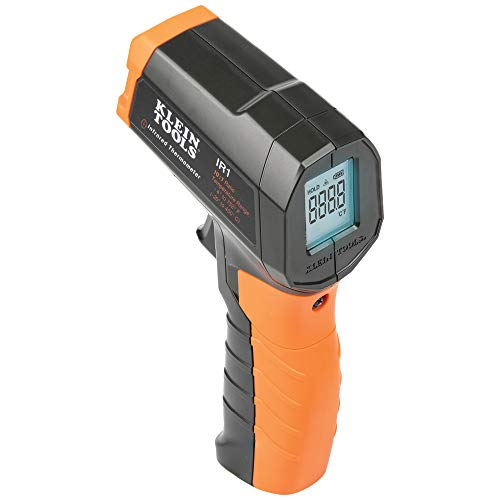
PRECISE TEMPERATURE MEASUREMENT: Optical resolution (distance-to-spot) of 10:1 ensures accurate temperature readings from a distance

【Highly Accurate & Adjusts to Any Surface】Designed with the latest thermopile sensor technology, the infrared laser thermometer gun is accurate to +/-1.5%; Improve this pizza oven thermometer gun measurements by adjusting the emissivity from 0.1–1.0 to match the surface material being measured

𝐕𝐞𝐫𝐬𝐚𝐭𝐢𝐥𝐞 𝐓𝐨𝐨𝐥𝐬: Infrared technology allows you to measure various objects at home and outdoors; Use it for 𝒎𝒆𝒂𝒕, 𝑫𝑰𝒀 𝒄𝒂𝒏𝒅𝒚, 𝒐𝒗𝒆𝒏𝒔, 𝒈𝒓𝒊𝒍𝒍𝒊𝒏𝒈, 𝒇𝒐𝒐𝒅, 𝒄𝒐𝒐𝒌𝒊𝒏𝒈, 𝒂𝒖𝒕𝒐𝒎𝒐𝒕𝒊𝒗𝒆 𝒖𝒔𝒆, 𝑨/𝑪, 𝒓𝒆𝒇𝒓𝒊𝒈𝒆𝒓𝒂𝒕𝒐𝒓𝒔, etc.
Why Infrared Thermometers Are Essential for Dab Rigs
Given the strict temperature requirements you’ve learned for different concentrate types, an infrared thermometer becomes indispensable for achieving consistent results. This specialized dabbing accessory eliminates guesswork through infrared technology, delivering precise readings within one second. You’ll measure surface temperatures accurately on quartz bangers without touching hot surfaces, minimizing burn risks. The thermometer should be held perpendicular to the target forehead area, which must be clean and dry, avoiding any coverings or products that might alter temperature. Adjustable emissivity settings accommodate different materials—quartz, titanium, ceramic—ensuring reliable measurements across your setup. Advanced models feature laser-guided targeting, eliminating errors from surrounding heat sources. Alert systems notify you when ideal vaporization temperatures arrive, streamlining your sessions. By preventing overheating that degrades concentrates and low-temperature dabs that waste product, infrared thermometers maximize efficiency. You’re investing in a tool that transforms dabbing from imprecise to data-driven, enhancing flavor, potency, and consistency while protecting your concentrates. Choosing the right fuel, such as butane for dabbing, further improves overall experience by preserving the delicate terpenes and flavor profile of your concentrates.

Temperature measurement range:-50℃-500℃ (-58℉-932℉)Display resolution: 0.1 ℃ or 0.1 ℉

【LIGHTNING-FAST & ACCURATE】Get instant readings in just 0.5s with ±1% accuracy. The 12:1 distance-to-spot ratio lets this laser temperature gun safely measure hot surfaces from 14 inches away—no need to get close to heat or danger.

🎁【High Accuracy】 DESOMIYE laser thermometer gun adopts the latest high-sensitivity temperature sensor, which can measure the temperature range of -50°C~600°C (-58°F~1112°F) in only 0.5 seconds. For best results, the reader should be 14 inches away from the object.
Selecting the Right Infrared Thermometer for Your Setup
Because dabbing demands precise temperature control, choosing the right infrared thermometer requires evaluating specific technical capabilities against your rig’s configuration and budget.
Assess your sensor features carefully. Flexible or posable arms accommodate various rig sizes, while laser-guided targeting guarantees precision on small quartz bangers. German-made sensors offer superior reliability and accuracy within one second—critical for consistent results. Proper temperature control enhances your overall dabbing experience by preventing the degradation of concentrates.
Consider your price considerations alongside functionality. High-end models like the Wulf Dab Rite Pro deliver advanced features including alarms, bright displays, and patented RGB indicators. The Terporium IR Pro provides excellent accuracy at moderate cost, while the Terpometer V2 serves budget-conscious users seeking basic IR capability.
Evaluate display type, auto shut-off capabilities, and ergonomic design to match your dabbing frequency and mobility needs. Additionally, infrared thermometers are valued for their non-contact temperature measurement ability, making them suitable for ensuring optimal dabbing temperatures without altering your setup.

𝐖𝐢𝐝𝐞 𝐓𝐞𝐦𝐩𝐞𝐫𝐚𝐭𝐮𝐫𝐞 𝐑𝐚𝐧𝐠𝐞: Measure a temperature range from -58°–1130°𝙁 / -50°–610°𝘾 𝙖𝙣𝙙 𝙜𝙚𝙩 𝙮𝙤𝙪𝙧 𝙧𝙚𝙨𝙪𝙡𝙩 𝙞𝙣 0.5 𝙨𝙚𝙘𝙤𝙣𝙙𝙨; The display will also show the max temperature of the surface you’re measuring. Perfect heat gun for measuring.

NON-CONTACT SURFACE CHECKS Check hot or cold surfaces without touching them. This infrared thermometer gun helps you check cookware, griddles and household surfaces.The -58°F to 712°F range makes it suitable for pizza ovens, grills, griddles, For surface temperature measurement only.

Wide Temperature Range: Measures temperatures from -58℉ to 1112℉ (-50℃ to 600℃), making it perfect for a variety of applications, including cooking, pool maintenance, oven temperature checks, and candy making
Heating Your Dab Nail Correctly
Mastering the heating process is fundamental to achieving consistent, flavorful dabs—and it’s where precision separates quality results from wasted concentrate. Your nail material dictates heating duration: quartz requires 30–60 seconds, titanium 45–90 seconds, and ceramic 45–60 seconds. Apply steady, uniform flame while rotating the nail to guarantee even temperature distribution and prevent hot spots that cause uneven vaporization.
Avoid the common mistake of heating until the nail glows red—temperatures above 900°F combust concentrates and degrade quality. Instead, use an infrared thermometer to target your preferred range: low-temp (350–550°F) maximizes flavor, while medium-temp (475–600°F) balances vapor density with taste. Proper use following manufacturer guidelines is essential for reliable measurements, as infrared thermometers accurately measure surface temperature but not internal temperatures.
Consistency matters. Establish a repeatable heating schedule specific to your nail material and torch strength. This reproducible methodology guarantees you achieve ideal dab temperatures repeatedly.
Taking Accurate Temperature Readings
Now that you’ve dialed in your heating technique, you’ll need an infrared thermometer to verify you’re hitting your target temperature range—and not all IR thermometers deliver equal accuracy for this task. Temperature precision demands ±1.5% accuracy or better, which requires adjustable emissivity settings calibrated to your quartz banger’s surface properties. Position your thermometer 2-3 inches perpendicular to the heated zone, using the laser guide for exact targeting. Reading consistency relies on fast response times—one second or less—to capture measurements within your ideal dabbing window. Verify your thermometer’s accuracy against certified contact probes at temperatures between 450°F and 650°F. Regular calibration checks maintain your device’s reliability across multiple readings, eliminating positional variability and confirming stable output regardless of minor adjustments. Additionally, remember that understanding your device’s distance-to-spot ratio is crucial for obtaining precise temperature readings. Furthermore, using the right thermometer for the cooking method is essential, as each thermometer type serves its specific cooking method.

【Ultimate Versatility for Kitchen, Garage & House】Ideal for a multitude of tasks! Check pizza oven or griddle heat for perfect cooking, monitor HVAC system vents, or safely diagnose automotive repair issues like overheating engine parts, all with our infrared thermometer gun

【CAL Function for Stable Reading】 Features exclusive one-button calibration technology to maintain measurement consistency for objects over time, effectively countering the reading drift often seen in standard thermometers. Our advanced sensor delivers dependable data for your projects.

►【HIGH ACCURACY】Combining the latest temperature sensor technology and advanced Fresnel lens, this instrument reads values of high accuracy up to ±2% in only 0.5s thanks to adjustable emissivity. The distance to spot ratio is 12:1, which means you can measure the target at a longer distance.
Monitoring Cooling Rates and Timing Your Dabs
Temperature data transforms dabbing from guesswork into reproducible technique. You’ll monitor cooling efficiency by tracking how your nail’s temperature drops after heating, typically over 30-60 seconds depending on material and thickness.
Your infrared thermometer provides real-time feedback during cooldown, enabling timing precision essential for ideal dab temperatures between 450-550°F. Use digital timers alongside temperature readings to establish a personalized cooling timeline that accounts for your specific nail material, size, and heating source.
Consistent sensor positioning and accounting for ambient room temperature guarantee accuracy. However, remember that infrared thermometers only measure surface temperature and cannot assess the internal temperature of your nail, which may alter your timing strategy. By integrating temperature data with elapsed time measurements, you’ll develop reliable intervals that eliminate variables and deliver consistently perfect dabs every session.
Temperature Guidelines for Different Concentrate Types
Since each concentrate type possesses distinct chemical compositions and extraction methods, you’ll need to adjust your dab temperature accordingly to enhance both flavor and potency. Rosin demands the lowest heat at 350°F–450°F to preserve its solventless terpene profile. Shatter tolerates 450°F–550°F, while live resin thrives at 480°F–530°F due to its fresh-frozen extraction. Wax and crumble perform best between 400°F–500°F, whereas budder prefers 350°F–450°F. Diamonds require the highest temperature ranges at 500°F–600°F because of their purity and minimal terpene content. Sauce and sugar concentrate types fall between 450°F–550°F. Distillate works well at 400°F–500°F. Your infrared thermometer enables precise measurement across these distinct temperature ranges, ensuring you hit your concentrate type’s ideal zone consistently.
How Temperature Affects Vapor Quality and Flavor
Getting the heat right fundamentally determines what you’ll experience when you dab—from the flavor profile to the vapor density to the psychoactive intensity.
Low temperatures (315-330°F) preserve delicate terpenes like pinene and limonene, maximizing flavor complexity while producing cooler, gentler vapor. Medium temperatures (330-370°F) balance terpene retention with cannabinoid extraction, delivering richer flavors alongside satisfying vapor density. Higher temperatures (370-430°F) sacrifice subtle flavors but increase vapor thickness and potency.
Your infrared thermometer lets you hit precise sweet spots. Around 350-400°F, you’ll optimize both terpene and cannabinoid vaporization simultaneously. This range captures anti-inflammatory flavonoids while preserving aromatic compounds that enhance your experience. Above 400°F, you prioritize potency over nuance—terpenes degrade rapidly, diminishing sensory appeal despite increased psychoactive effects.
For accurate measurements, remember to consider the distance-to-spot ratio which ensures that the area you’re measuring aligns with your target, enhancing the reliability of your readings.
Maintaining and Calibrating Your Infrared Thermometer
Once you’ve dialed in your ideal dabbing temperature, keeping your infrared thermometer accurate guarantees you’ll consistently hit those precise sweet spots. Regular calibration techniques verify reliability—use an ice bath at 32°F or boiling water at 212°F as reference points, comparing readings against known standards. For field verification, employ surface probe comparison methods to align IR measurements with direct contact readings.
Maintenance tips preserve accuracy over time. Clean the lens only per manufacturer instructions using gentle, non-abrasive materials. Replace batteries regularly to prevent erratic readings and check contacts for corrosion. Store your device in stable, low-humidity conditions within a protective case, avoiding temperature extremes. Perform periodic inspections of lens cleanliness, physical integrity, and battery status. These practices uphold calibration integrity and extend device lifespan.

PRECISION MEASUREMENTS FOR COOKING: Know how hot your cooking surfaces are before you start cooking. Good for pizza ovens, griddles, ovens, pans and more. The digital infrared thermometer gun for cooking offers an emissivity range from 0.1 to 1.0, ensuring precise temperature readings across diverse surfaces and conditions. For optimal accuracy, maintain a 14-inch distance from the target object with the temperature thermal gun.
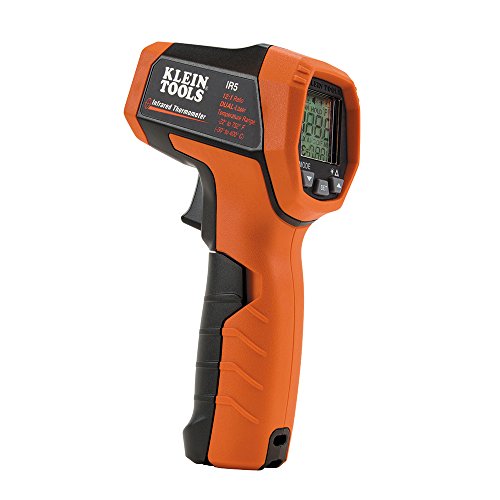
PRECISE TEMPERATURE MEASUREMENT: Optical Resolution (Distance-to-spot) of 12:1 ensures accurate temperature readings from a distance

【2-in-1 Infrared & Probe Thermometer】Perfect for home chefs, grilling enthusiasts and DIY hobbyists who demand professional control; Use the IR sensor for safely checking pan, oven, or grill surface temps, and the meat probe for perfectly cooked meats, candy, or frying oil
Advanced Techniques for Consistent Dabbing Results
With your infrared thermometer calibrated and maintained, you’re positioned to leverage precise temperature data for maximizing your dabbing sessions. You’ll achieve vaporization efficiency by targeting the 450-550°F sweet spot, which fully vaporizes concentrates without combustion or waste.
Your precision techniques should combine thermometer readings with cooldown timing, adjusting in 5-10 second increments to find your ideal temperature. You’ll measure nail surface temperature immediately before applying concentrate, ensuring accurate targeting across different banger materials.
You’ll enhance consistency by synchronizing infrared data with carb cap usage to maintain temperature stability during vaporization. Apply small concentrate amounts carefully, allowing gradual vaporization. Systematically experiment with varying temperatures and banger materials to map favorable conditions for your specific concentrates, creating repeatable, high-quality sessions.


