You shouldn’t use a deep fry thermometer for cooking meat because it’s designed for oils reaching 400°F+, while meat thermometers max out around 212°F. Deep fry thermometers lack the calibration precision needed for safe internal meat temperatures—they’re accurate to only ±2°F, which doesn’t meet USDA safety standards. You’ll also risk cross-contamination and unreliable readings that could leave your food dangerously undercooked. Dedicated meat thermometers offer superior accuracy and safety for your cooking needs.
Understanding Deep Fry Thermometer Design and Purpose
When you’re working with hot oil, you’ll want a thermometer that’s specifically engineered for the task. Deep fry thermometers feature a temperature range spanning from roughly 100°F to 400°F, making them ideal for monitoring oil conditions. You’ll find these instruments equipped with long probes that keep your hand safely away from splattering oil and intense heat.
The clip designs on most models allow you to secure the thermometer directly to your pot’s side, freeing your hands during cooking. This hands-free functionality guarantees stable probe placement and consistent temperature readings. The thermometer’s primary purpose is maintaining precise oil temperatures, preventing overheating that could degrade the oil, create harmful compounds, or pose fire risks. By facilitating accurate monitoring, you’ll enhance cooking efficiency, achieve consistent results, and ultimately extend your cooking oil’s lifespan.
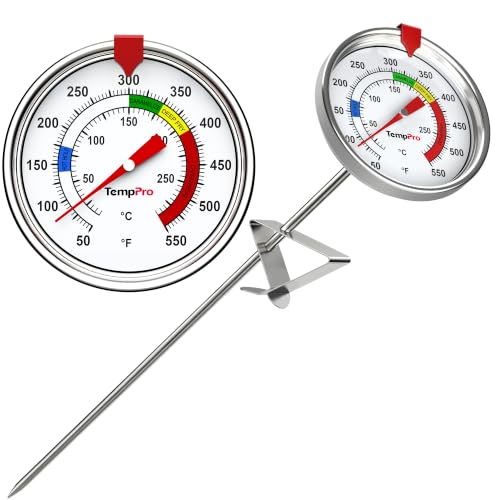
【9" Long Probe with Pot Clip】The frying thermometer for oil comes with a 9-inch probe and a secure pot clip, allowing it to be safely attached to cooking pots of different sizes, effectively protecting you from hot oil splatter

ACCURATE FAST READINGS (No More Burned Candy) --- Our candy deep fry thermometer provides instant and accurate temperature readings within seconds. Its advanced technology ensures precise measurements, allowing you to monitor the temperature of your food with confidence.

【Backlit 90° Rotating Display】The large 90-degree rotating screen enables effortless angle adjustment for optimal visibility, while the backlight ensures precise food temperature readings even in dimly lit environment
Meat Cooking Temperature Safety Requirements
Because bacteria multiply rapidly in undercooked meat, you’ll need to understand the USDA’s safe internal temperature guidelines for different meat types. Whole cuts of beef, pork, veal, and lamb require 145°F with a 3-minute rest period, while ground meats must reach 160°F. All poultry demands 165°F regardless of cooking methods used. These temperature distinctions exist because ground meats expose more surface area to bacterial contamination during processing. You’ll achieve accuracy only through a food thermometer inserted into the thickest part without touching bone. Visual cues like color remain unreliable. The rest period isn’t optional—it allows temperatures to stabilize and destroy remaining pathogens while improving juiciness and tenderness simultaneously. Cooking chicken to 165 degrees Fahrenheit ensures the elimination of harmful bacteria such as Salmonella and Campylobacter. Using a lid for sous vide cooking can also help maintain consistent temperatures and prevent moisture loss when preparing meat.
Compatibility Issues Between Deep Fry and Meat Thermometers
While deep fry and meat thermometers serve distinct culinary purposes, you’ll find they’re not interchangeable tools despite their similar appearance. The fundamental differences lie in their design specifications and operational capabilities.
Deep fry thermometers withstand continuous exposure to temperatures exceeding 400°F, while meat thermometers typically max out around 212°F for internal readings. This temperature gap means using a meat thermometer in hot oil risks damaging its sensors and compromising accuracy. Furthermore, meat thermometers are essential for measuring internal temperature to ensure safe cooking.
Probe materials differ greatly too. Deep fry models employ oil-resistant materials for sustained high-heat environments, whereas meat thermometers prioritize food-safe stainless steel optimized for quick internal temperature checks. Additionally, their thermometer temperatures and calibration systems diverge—deep fry units maintain stable readings at constant heat levels, while meat thermometers respond rapidly to changing internal temperatures. These incompatibilities make using one for the other’s intended purpose unreliable and potentially hazardous. Proper thermometer usage is crucial for ensuring safe cooking temperatures.

【High Accuracy & Fast Reading】Digital candy thermometer get precise temperature readings in just 1 second with accuracy ±0.9°F, making it a smart choice for candy making and deep frying

MULTI-PURPOSE: the improved probe length 15" deep fryer thermometer for oil, meat thermometer,turkey fryer thermometer, oil thermometer for frying, water thermometer with pot clip can directly and accurately measure the oil pan, deep frying, barbecue temperature, which also has a wide range of applications including scalding milk, making candy and frosting, and deep frying any kind of food.a good thanksgiving turkey thermometer. turkey fryer accessories
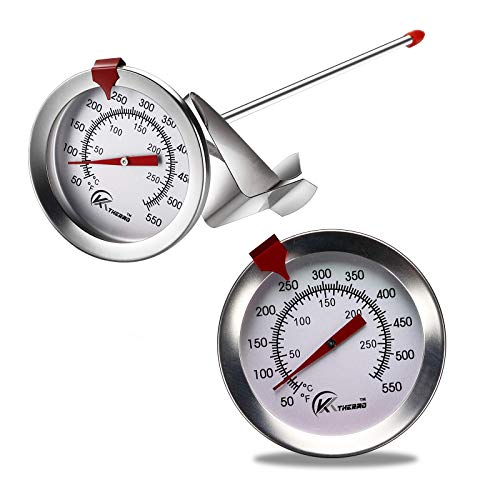
MULTI-PURPOSE: Mechanical induction, can be directly and accurately measure the oil pan, frying, barbecue temperature control.
Calibration and Accuracy Concerns for Meat Temperatures
The gap between a deep fry thermometer’s design and meat cooking demands creates significant accuracy challenges you’ll want to understand before relying on one for food safety. Deep fry thermometers employ calibration methods optimized for oil’s rapid temperature fluctuations, not meat’s gradual internal heating. You’ll find factory calibration accuracy rated at ±2°F—acceptable for frying but borderline for USDA safe minimum temperatures like 165°F for poultry. Regular calibration is essential, as temperature precision suffers further because these thermometers lack recalibration options many meat thermometers offer. Extended exposure to high oil temperatures can also compromise long-term calibration stability. The probe design itself, tailored for oil immersion rather than solid tissue penetration, limits your ability to obtain reliable internal readings. These limitations create genuine food safety risks you shouldn’t ignore. Oven-safe probe thermometers are a safer alternative for monitoring meat temperatures accurately throughout the cooking process.
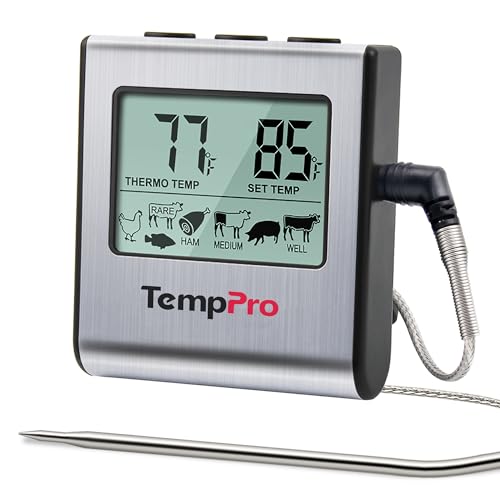
Cook mode with USDA preset temperature settings: TempPro cooking thermometer ideal for meat, oven, smoker or stove top; Programmable alert with preset temperatures for specific foods recommended by USDA; All of the preset temps can be reset to your desired tastes

STAYS IN THE MEAT WHILE IT COOKS, NO BATTERY EVER: Push the 4.5-inch stainless steel probe into the roast, close the oven door and read the 2.5-inch dial through the glass. Bimetal mechanics: nothing to charge, nothing to replace, nothing to set up.

Smart Display Base with Control: The ThermoMaven G1 wireless meat thermometer features a versatile smart display base that offers real-time temperature readings and allows you to set temperatures directly on the device—no app required. With our user-friendly one-click setup, you can connect the probe, pair it with the base, and start cooking in seconds—no complicated setup needed!
Hygiene and Cross-Contamination Risks
Using a deep fry thermometer for meat cooking introduces serious hygiene challenges that you can’t overlook. Without proper thermometer sanitation between uses, you’ll transfer pathogens like Salmonella and E. coli from raw meat to cooked products. Metal stems readily harbor bacteria if not cleaned thoroughly with hot, soapy water before and after each use.
Cross contamination prevention requires dedicating separate thermometers for oil and meat temperatures. If you must share one thermometer, sanitize it completely between tasks and allow it to dry fully. Avoid leaving the probe in raw meat prolonged periods, which promotes bacterial biofilm formation. Store your thermometer in a clean, dedicated container away from raw juices. These practices guarantee accurate readings while protecting your food safety. Additionally, using separate utensils for handling raw meat not only prevents cross-contamination but also enhances overall cooking safety in your kitchen.
Manufacturer Guidelines and Food Safety Standards
Because deep fry thermometers aren’t designed to measure internal meat temperatures, you’ll find that manufacturers explicitly warn against using them for this purpose. Your deep fry thermometer usage should remain limited to oil monitoring, as these devices receive factory calibration specifically for the 300°F to 400°F range. When you apply meat cooking techniques, the USDA mandates using certified meat thermometers to verify safe internal temperatures—165°F for poultry, 145°F for beef. Deep fry thermometers lack the accuracy certification required at these lower temperatures, potentially leaving your meat dangerously undercooked. Additionally, commercial guidelines discourage cross-use unless manufacturers explicitly rate the thermometer for both applications. You’ll compromise food safety and reliability by deviating from specialized equipment designed for each cooking method.
Better Thermometer Alternatives for Cooking Meat
Since deep fry thermometers don’t meet your meat-cooking needs, you’ll want to invest in a dedicated meat thermometer—a tool specifically calibrated for the lower temperature ranges essential to food safety. Different thermometer types suit various cooking methods. Digital instant-read thermometers provide rapid measurements ideal for quick doneness checks across grilling, roasting, and pan-searing. Wireless models with dual sensors offer remote monitoring, perfect for low-and-slow smoking or oven cooking. For high-temperature searing, choose thermometers with ambient heat tolerance up to 932°F and stainless steel probes. Each option features specialized algorithms and calibration that deep fry thermometers lack. Additionally, ensure that your thermometer is designed to be oven-safe to prevent damage when used in high-heat environments. It is crucial to select a thermometer that offers superior wireless range for optimal performance, especially when tracking temperature over long periods. Select based on your primary cooking methods—you’ll gain accuracy, consistency, and confidence in achieving perfectly cooked meat every time.

Fast & Accurate: Get precise readings in just 1 second with ±0.9°F accuracy. NSF Certified for trusted food safety, this digital food thermometer features a 4.3 inches food-grade stainless steel meat probe, perfect for grilling, frying, baking, making candy and more

【Fast & Accurate】Our meat thermometer digital delivers accurate readings within ±1°F in just 1–2 seconds, with a wide temperature range of -58°F to 572°F (-50°C to 300°C). No more waiting over the heat - know your food's exact temperature instantly.

【8X Faster + 4X More Precise】: Upgraded with an industrial-leading professional thermocouple sensor, Themomonster meat thermometer digital with NIST certified ±0.5℉ precision provides you the accurate temperature of your food in just 0.5 Seconds.