You’ll need to preheat your oven to 450–500°F for 30–60 minutes and select an alternative vessel like a cast iron skillet, roasting pan with dome lid, or clay pot for heat retention. Generate steam using boiling water over lava rocks or ice cubes for the first 15–20 minutes to prevent premature crust formation. Score your dough at a 90° angle before transferring it carefully onto a preheated baking peel. Bake medium loaves for 35–40 minutes until they reach an internal temperature of 205–210°F. Mastering these techniques will transform your results considerably.
Preheating Your Oven and Baking Surface
To achieve ideal oven spring and crust development, you’ll want to preheat your oven to between 450°F (232°C) and 500°F (260°C). Some bakers preheat hotter—up to 520°F—then lower the temperature when loading dough to enhance rise.
Preheat durations matter considerably. You’ll need at least 30 to 60 minutes for a baking stone or steel to reach target temperature, ensuring consistent heat transfer. Heavy vessels require longer preheating since oven air temperature stabilizes faster than baking surface temperature, which may lag by about 100°F (60°C). The superior heat retention of a well-preheated baking surface can significantly impact the outcome of your sourdough. Additionally, the use of a Dutch oven contributes to creating steam that fosters a better crust during the initial baking phase.
Position your baking stone on the middle or lower rack for ideal heat distribution. Avoid placing cold dough directly on any surface; transfer it onto the preheated stone to trigger proper oven spring and crust formation. Maintain consistent oven temperature throughout baking to prevent heat drops that compromise bread rise and browning.
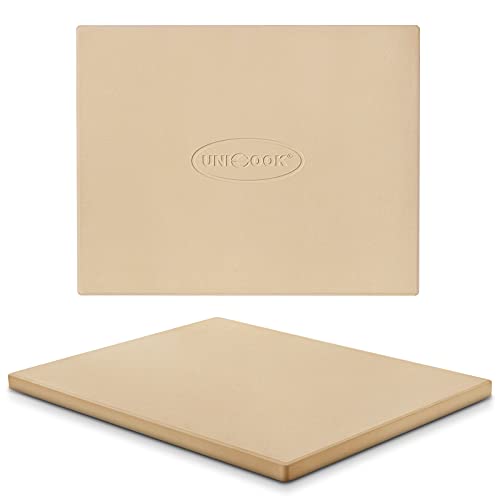
Rectangular Baking Stone: This baking stone measures 15" L x 12" W with 0.6" thickness and weighs about 6.8 lbs. The Unicook pizza stone is ideal for baking personal pizzas up to 11 inches in diameter. For 12-inch or larger pizzas, please check our larger models. For charcoal kettle grill, please check our round stone models. Important: Please ensure a minimum of 1-2 inches of clearance on ALL sides inside your oven or grill for proper fit and airflow

PIZZA STONE FOR GRILL AND OVEN: Our very best pizza stone formulated from toughened porous cordierite stone. FDA safe and heat resistant up to 1112°f(600℃).

12X12 Pizza Stone for Oven: The Unicook square pizza stone measures 12"x12". It is compatible with Ninja MO201/OO101, Cuisinart CPZ-120, Vevor and Big Horn 12" pizza ovens. Please verify your oven’s interior dimensions and ensure 1 inch of clearance on ALL sides for a perfect fit and airflow
Generating Steam for Optimal Crust Development
Why does steam matter so much for sourdough baking? Steam keeps your dough surface moist and flexible during the critical first 15–20 minutes, enabling maximum oven spring and volume expansion. Without it, your crust forms prematurely, trapping the loaf and creating a dense result. Achieving a crusty artisan-quality loaf is highly dependent on this steam generation.
Several steam generation techniques work effectively. Pour boiling water over lava rocks in a preheated cast iron pan, or saturate rolled towels with boiling water in a baking pan. You can also toss ice cubes into a hot skillet or mist your oven interior with a spray bottle immediately after loading the dough.
Steam duration importance cannot be overstated. Maintain steam for at least 15 minutes—no longer than 20. Removing it afterward allows your crust to dry and develop proper color and crispness. Additionally, ensuring your oven’s true temperature is accurate helps achieve the best results in baking.
Selecting Alternative Baking Vessels
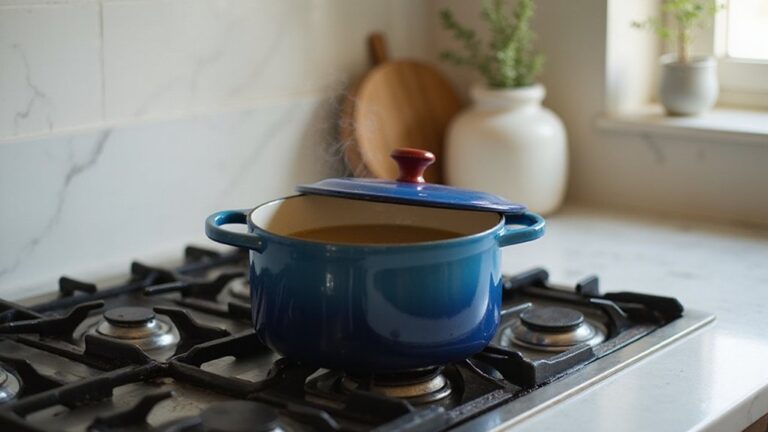
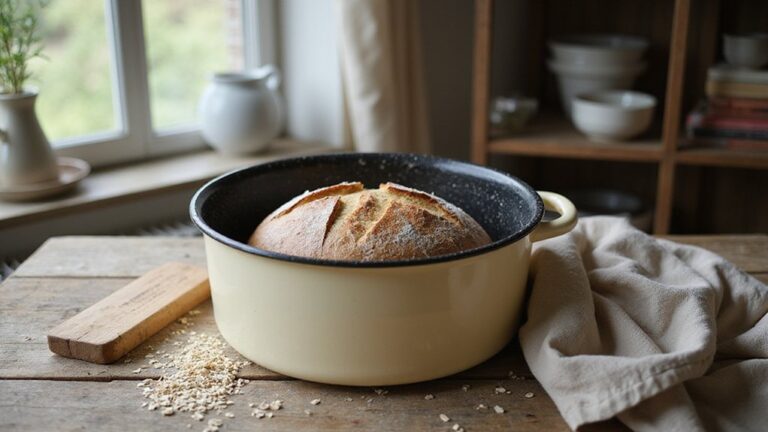
While a Dutch oven remains the gold standard for sourdough baking, you don’t need one to achieve excellent results. You’ll find several alternative materials that work effectively for sourdough. Cast iron skillets provide excellent heat retention and durability, making them a reliable choice for creating a consistent baking environment. Oven-safe metal baking dishes offer superior temperature tolerance compared to glass options. Roasting pans paired with dome lids successfully trap steam through clever vessel shapes that mimic Dutch ovens. Clay pots deliver slow, even heat release, though they require careful preheating. Cookie sheets suit smaller loaves but sacrifice steam trapping. Each alternative material presents distinct advantages depending on your loaf size and desired crust characteristics. Select based on your kitchen equipment and desired results, adjusting baking times accordingly for ideal outcomes. Many bakers utilize a cast iron skillet as it can create a conducive environment for the dough to rise effectively, thanks to its even heat transfer that promotes better crust development.

2-in-1 Versatile Cookware Design: The Lodge Cast Iron Double Dutch Oven is a Dutch oven and dual-handle skillet in one smart design, expanding your options for searing, baking, frying, and more

【ALL YOU NEED】Complete set includes 5QT bread oven cast iron with frying pan lid,bread proofing basket, bread sling, stainless steel scraper, cleaning brush, bowl scraper, wooden-handled dough whisk, bread lame, silicone oil brush,silicone spatula. Sourdough starter kit with pre-seasoned cast iron dutch oven is ready to use out of the box!

Rustic Cast Iron Bread Oven: The 6 qt Bread Oven is your ticket to bread-baking success. With a capacity of 6 quarts, this Cast Iron Bread Oven with Lid is designed for baking bread. The base of this Sourdough Dutch Oven with Cloche Lid is shallow, you don’t worry about burning yourself when transferring dough into your preheated pot
Scoring and Loading Your Dough
After your dough completes its final proof, you’ll need to score it before loading it into the oven. Use a sharp razor blade or bread lame for clean cuts—dull knives produce ragged edges. Score at a 90° angle, making expansion scores about ½ inch deep and artistic scores around ¼ inch. Cold or firm dough facilitates cleaner scoring; flash-chill warm dough in the freezer for thirty minutes if needed.
Your scoring techniques should direct expansion and prevent random splitting. Score from edges toward center to guarantee proper opening. After scoring, carefully transfer your dough onto a baking peel using deliberate dough handling to avoid deflating or disturbing the cuts. Load immediately into your preheated oven for best oven spring.

PREMIUM QUALITY: Premium hand crafted wood handle with stainless steel stick to attach replaceable blades. Built to last.


【Elevate Your Creations】: Our bread lame empowers you to become a bread artist. With its precise curved blade and the complimentary straight knife, you can effortlessly score intricate patterns, designs, or even your initials onto the surface of your bread dough. Transform your loaves into stunning works of edible art that will impress both your family and friends.
Baking Time and Temperature Guidelines
Once you’ve loaded your scored dough into the oven, you’ll need to establish the right baking temperature and timing to achieve proper oven spring and crust development. Set your oven to 450°F (232°C), the standard temperature that delivers consistent results for medium loaves. You’ll bake exposed for 35–40 minutes at this temperature, adjusting timing based on loaf sizes and your oven type. Smaller loaves require 20–30 minutes, while larger ones may need up to 60 minutes. Monitor your baking techniques carefully: maintain steam for the first 15–20 minutes using a water pan or spritzing method, then release it to allow browning. Sous vide cooking can teach you the importance of temperature control in achieving perfect results. Check internal temperature near the end—your sourdough is done when it reaches 205–210°F (96–98°C). Additionally, creating steam through a pan of hot water in the oven can help ensure a crispy crust.