You shouldn’t use a meat thermometer for candy-making. Your meat thermometer maxes out at 200–212°F, but candy-making demands accurate readings up to 400°F or higher. The probe’s limited depth won’t properly immerse in liquid mixtures, and the sensor isn’t calibrated for precise sugar-cooking stages. Additionally, sustained high-heat exposure damages meat thermometer components, risking inaccurate readings and potential safety hazards. A dedicated candy thermometer’s superior construction and range prove essential. Understanding the critical differences between these tools reveals why substitution compromises your results.
Temperature Range Differences Between Meat and Candy Thermometers
The fundamental distinction between meat and candy thermometers lies in their operational ranges: meat thermometers typically max out around 200–212°F (93–100°C), while candy thermometers extend to 400°F (204°C) or higher. This notable difference reflects their specialized purposes. You’ll find meat thermometers calibrated for safe cooking temperatures between 145–170°F (63–77°C), where temperature calibration focuses on food safety standards. Conversely, candy thermometers accommodate precise cooking stages—soft ball, hard ball, and hard crack—requiring accurate readings at markedly elevated temperatures. Since sugar cooking demands exact temperature identification for proper crystallization, you need a thermometer designed for these extreme conditions. A meat thermometer’s limited range renders it unsuitable for monitoring candy-making processes, potentially yielding inaccurate readings or instrument failure.

8-inch glass candy thermometer great for stove-top use

ACCURATE FAST READINGS (No More Burned Candy) --- Our candy deep fry thermometer provides instant and accurate temperature readings within seconds. Its advanced technology ensures precise measurements, allowing you to monitor the temperature of your food with confidence.

7-inch candy thermometer reads temperature instantly and precisely
Design and Probe Length Considerations
Beyond temperature range, design and probe construction reveal why meat thermometers fundamentally don’t work for candy-making. You’ll find that meat thermometer probes are engineered for quick checks in solid foods, featuring shorter designs that can’t achieve adequate immersion depth in candy mixtures. Candy thermometers, conversely, utilize long, narrow stems measuring 6 to 8 inches—specifically designed for sustained liquid immersion while protecting your hands from heat exposure.
Your meat thermometer’s abbreviated probe length prevents it from reaching ideal depths in candy pots, compromising accuracy. The probe design differences extend beyond length; materials and housing construction aren’t interchangeable between thermometer types. Candy thermometers feature stainless steel construction with heat-resistant plastic handles engineered for prolonged exposure, while meat thermometers use basic plastic or silicone designs suited only for brief temperature checks. Additionally, most modern meat thermometers can measure oil temperature but are not ideal for candy-making due to their limited probe depth.
Accuracy and Practical Usage
While design limitations present a considerable hurdle, accuracy and practical usage ultimately determine whether you can successfully substitute a meat thermometer for candy-making. You’ll need a thermometer that reads reliably to at least 170°C (338°F) with ±1-2°F precision—critical for hitting exact sugar stages. Digital models with wide temperature ranges minimize deviation in your recipes, directly impacting texture and quality.
Your usage guidelines should include regular accuracy checks before each candy session. Digital thermometers with built-in calibration or alarm functions reduce guesswork during rapid temperature changes. Verify your probe tolerates frequent syrup immersion without damage. Instant-read capability matters considerably when you’re working with quickly changing temperatures. Choose instruments explicitly designed for high-heat liquids rather than standard meat thermometers capped at 100°C.

【Backlit 90° Rotating Display】The large 90-degree rotating screen enables effortless angle adjustment for optimal visibility, while the backlight ensures precise food temperature readings even in dimly lit environment

【High Accuracy & Fast Reading】Digital candy thermometer get precise temperature readings in just 1 second with accuracy ±0.9°F, making it a smart choice for candy making and deep frying

Fast and Accurate Reading: Kitchen thermometer for cooking features a 1 second readout speed and high accuracy of +/-0.9 degrees Fahrenheit, ensuring you receive the most delicious results every time
Safety and Durability Concerns
If you’re considering a meat thermometer for candy-making, you’ll encounter significant safety and durability obstacles that demand careful attention. Most meat thermometers max out at 212°F, far below candy-making temperatures, risking probe failure and sensor degradation. Thermometer materials matter critically—glass components can shatter, while plastic elements may melt or deform. Mercury-containing models pose contamination hazards if damaged. Additionally, some types of thermometers are not designed to withstand the high temperatures candy-making requires.
You’ll also face durability challenges. Prolonged high-heat exposure permanently damages sensors, shortening lifespan and reliability. Digital thermometers’ electronics degrade rapidly in extreme temperatures, causing malfunctions. Immersion in boiling sugar accelerates corrosion and probe failure. Safety regulations and thermometer materials designed for candy require ratings exceeding 400°F with stainless steel probes and heat-resistant cables. Inaccurate readings from compromised thermometers invite overheating risks and potential burns or fires. Additionally, it’s crucial to ensure that the thermometer provides consistent temperature readings, as inaccurate measurements can lead to improper candy textures.
Suitability and Versatility of Each Thermometer Type
Given the durability and safety limitations of meat thermometers for candy work, you’ll want to understand how each thermometer type performs across different cooking applications. Meat thermometers excel specifically in roasting, grilling, and baking—environments where you’re monitoring gradual temperature changes in thick proteins. Dedicated grill thermometers can provide more accurate readings of ambient heat than meat thermometers. Candy thermometers, conversely, handle high-temperature immersion tasks like deep frying and sugar cooking. Comparison challenges arise when considering versatility: advanced digital thermometers with broad temperature ranges and fast response times can theoretically replace multiple tools, yet most culinary professionals recommend maintaining separate thermometer types. You’ll achieve precision and safety by matching each thermometer type to its intended purpose rather than forcing cross-functional use that compromises accuracy or creates hazardous situations. Additionally, using a deep fry thermometer for candy-making can lead to inaccurate readings, as it is not calibrated for the precise sugar temperatures needed for candy production.

Pot Clip Design for Safer Operation: This candy thermometer digital with clip can be fixed to the pot so you can free your hands to focus on the cooking, and protect your hands from the hot

𝐕𝐞𝐫𝐬𝐚𝐭𝐢𝐥𝐞 𝐓𝐨𝐨𝐥𝐬: Infrared technology allows you to measure various objects at home and outdoors; Use it for 𝒎𝒆𝒂𝒕, 𝑫𝑰𝒀 𝒄𝒂𝒏𝒅𝒚, 𝒐𝒗𝒆𝒏𝒔, 𝒈𝒓𝒊𝒍𝒍𝒊𝒏𝒈, 𝒇𝒐𝒐𝒅, 𝒄𝒐𝒐𝒌𝒊𝒏𝒈, 𝒂𝒖𝒕𝒐𝒎𝒐𝒕𝒊𝒗𝒆 𝒖𝒔𝒆, 𝑨/𝑪, 𝒓𝒆𝒇𝒓𝒊𝒈𝒆𝒓𝒂𝒕𝒐𝒓𝒔, etc.
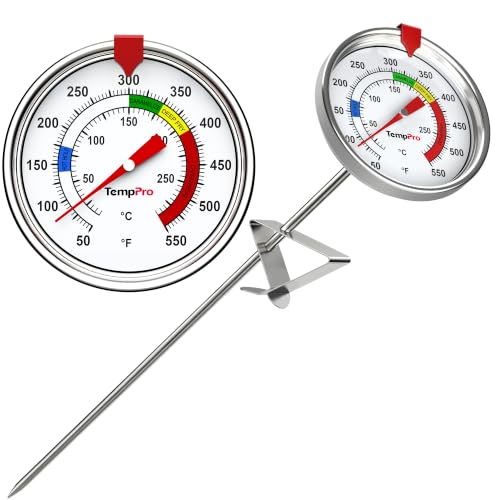
【9" Long Probe with Pot Clip】The frying thermometer for oil comes with a 9-inch probe and a secure pot clip, allowing it to be safely attached to cooking pots of different sizes, effectively protecting you from hot oil splatter
Technological Advances and Modern Solutions
Since the limitations of meat thermometers for candy work have become clear, modern digital candy thermometers now offer you precision and durability that fundamentally transform how you approach sugar cooking. You’ll benefit from accuracy within ±0.5°F and readings delivered in under one second, enabling real-time adjustments during critical candy stages. Contemporary designs feature waterproof, splash-proof construction that withstands boiling sugar environments where traditional glass thermometers fail. The user interface delivers backlit digital displays with calibration options and preset temperature alerts for specific candy stages. Emerging smart technology integrates Bluetooth connectivity and data logging, allowing you to monitor progress remotely and refine recipes systematically. These innovations eliminate guesswork, reduce user error, and guarantee consistent results across your candy-making projects. Moreover, utilizing a Thermapen’s spot-check capability can help you prevent unwanted crystallization, enhancing the overall candy-making process.