You can rely on infrared thermometers for accurate surface temperature readings, but they won’t measure your food’s internal temperature—a critical limitation for food safety. Research shows an average 1.10°C variance between surface and probe readings across 212 samples. While infrared thermometers excel at detecting thermal energy without contact, factors like emissivity, reflective surfaces, and ambient radiation can compromise accuracy. For dependable results, you’ll want to supplement infrared measurements with probe thermometers, especially for poultry. Understanding when each tool performs best transforms your kitchen safety approach.
How Infrared Thermometers Measure Temperature
Because all objects emit infrared radiation proportional to their temperature, infrared thermometers can detect thermal energy without making contact with a surface. Your thermometer’s lens focuses infrared rays onto a thermopile detector, where the detection process converts radiation into electrical signals. The thermopile absorbs infrared energy and transforms it into voltage, which you see displayed as a temperature reading within seconds. However, emissivity effects greatly influence accuracy. Different materials emit thermal energy at varying efficiencies, affecting how your thermometer interprets the infrared data. You’ll achieve more accurate readings by adjusting your thermometer’s emissivity setting to match your target material’s properties. To ensure precise measurements, understand your device’s distance-to-spot ratio, which defines how far you can be from your target while still obtaining an accurate reading. Surface condition and molecular structure further impact measurement precision, making emissivity compensation essential for reliable cooking temperature assessments. Furthermore, similar to non-contact infrared thermometers, proper use and understanding of environmental factors are crucial for obtaining accurate temperature readings in cooking applications.

𝐕𝐞𝐫𝐬𝐚𝐭𝐢𝐥𝐞 𝐓𝐨𝐨𝐥𝐬: Infrared technology allows you to measure various objects at home and outdoors; Use it for 𝒎𝒆𝒂𝒕, 𝑫𝑰𝒀 𝒄𝒂𝒏𝒅𝒚, 𝒐𝒗𝒆𝒏𝒔, 𝒈𝒓𝒊𝒍𝒍𝒊𝒏𝒈, 𝒇𝒐𝒐𝒅, 𝒄𝒐𝒐𝒌𝒊𝒏𝒈, 𝒂𝒖𝒕𝒐𝒎𝒐𝒕𝒊𝒗𝒆 𝒖𝒔𝒆, 𝑨/𝑪, 𝒓𝒆𝒇𝒓𝒊𝒈𝒆𝒓𝒂𝒕𝒐𝒓𝒔, etc.

【Highly Accurate & Adjusts to Any Surface】Designed with the latest thermopile sensor technology, the infrared laser thermometer gun is accurate to +/-1.5%; Improve this pizza oven thermometer gun measurements by adjusting the emissivity from 0.1–1.0 to match the surface material being measured

【Ultimate Versatility for Kitchen, Garage & House】Ideal for a multitude of tasks! Check pizza oven or griddle heat for perfect cooking, monitor HVAC system vents, or safely diagnose automotive repair issues like overheating engine parts, all with our infrared thermometer gun
Accuracy for Surface Temperature Measurement
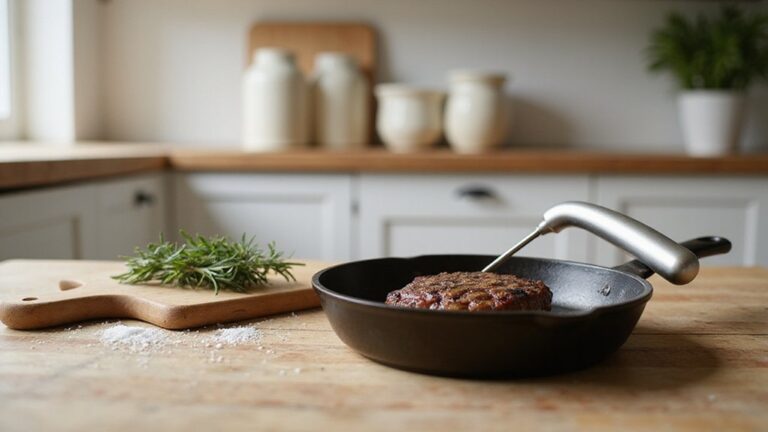
Infrared thermometers excel at measuring surface temperatures, yet they’ve got important limitations you’ll need to understand for cooking applications. Surface emissivity—how efficiently a surface emits infrared radiation—directly impacts your reading’s accuracy. Cast iron and organic foods (emissivity ~0.95) yield reliable measurements, while shiny metals reflect infrared energy, causing significant overestimation. You’ll notice temperature variance between surface and internal readings; this gap varies by food type. Distance matters too—measuring from close range reduces your spot size, improving precision. Additionally, ambient radiation from surrounding objects can skew results. Adjusting your thermometer’s emissivity settings and avoiding reflective surfaces enhances accuracy. Understanding these factors helps you leverage IR thermometers effectively while recognizing when probe thermometers prove necessary. However, remember that infrared thermometers only measure surface temperature, which limits their effectiveness for ensuring food safety in thicker items. To achieve accurate readings, it’s critical to aim the thermometer at a non-reflective surface that equilibrates with the ambient air.
Comparing Infrared and Probe Thermometers
Your thermometer comparison reveals critical distinctions. Probe thermometers measure core internal temperature by inserting a metal probe directly into food’s thickest section—essential for food safety compliance. Infrared thermometers capture only surface readings, making them unsuitable for verifying that harmful bacteria are eliminated. Additionally, specialized kitchen thermometers can serve multiple culinary purposes when their temperature tolerance aligns with cooking requirements.
Research demonstrates a correlation (r = 0.706) between both devices across retail food samples, yet infrared limitations persist. The average difference measured 1.10°C with a 6.54°C standard deviation across 212 samples. However, infrared thermometers’ accuracy varies considerably by food type and environmental conditions, while probe thermometers remain consistently reliable for internal temperature assessment. Understanding these infrared limitations guarantees you select the appropriate tool for your specific cooking needs. Additionally, infrared thermometers are commonly used in food service safety to ensure appropriate temperatures in storage and cooking environments.

Fast and Accurate Reading: Kitchen thermometer for cooking features a 1 second readout speed and high accuracy of +/-0.9 degrees Fahrenheit, ensuring you receive the most delicious results every time

【8X Faster + 4X More Precise】: Upgraded with an industrial-leading professional thermocouple sensor, Themomonster meat thermometer digital with NIST certified ±0.5℉ precision provides you the accurate temperature of your food in just 0.5 Seconds.

【No More Overcooking, 8X Faster】Ultra-fast 0.5 second instant read meat thermometer delivers accurate temperature instantly, helping you avoid overcooking and achieve perfect doneness every time.
Performance Across Different Food Types
How well your infrared thermometer performs depends critically on the food type you’re measuring, since different foods present distinct measurement challenges. For meat types, you’ll find that whole chicken requires a 53°C infrared reading to predict safe internal temperatures, while chicken strips demand 62°C—a significant difference reflecting structural variations. Semi solids like stuffing and mashed potatoes reach bacteria-killing temperatures reliably through infrared measurement at 165°F when you insert a spoon into the food’s center, creating a void for accurate readings. Material composition heavily influences accuracy across food categories. Oil and pan surfaces with high emissivity, like matte cast iron, yield precise measurements, whereas shiny steel surfaces won’t. Understanding these performance variations guarantees you’ll deploy your infrared thermometer effectively across your kitchen’s diverse cooking applications. However, infrared thermometers are not inherently accurate for measuring liquids like water without proper technique, complicating their usage in certain culinary scenarios. Using the proper techniques is crucial, as deep fry thermometers are specifically designed for optimal performance in frying conditions.

【2-in-1 Infrared & Probe Thermometer】Perfect for home chefs, grilling enthusiasts and DIY hobbyists who demand professional control; Use the IR sensor for safely checking pan, oven, or grill surface temps, and the meat probe for perfectly cooked meats, candy, or frying oil

Instant Read Meat Thermometer | Our instant read thermometer features a temperature probe and advanced, highly accurate technology with a 1-2 second response time. Our instant read food thermometer comes pre-calibrated with instructions and a meat temperature chart, plus a recalibration feature if needed.

Temperature measurement range:-50℃-500℃ (-58℉-932℉)Display resolution: 0.1 ℃ or 0.1 ℉
Calibration and Validation Requirements
Since your infrared thermometer’s accuracy directly affects food safety outcomes, you’ll need to establish a reliable calibration routine that accounts for the device’s unique measurement characteristics. You should validate your thermometer against reference standards across your expected temperature range using calibration methods like ice point and boiling point techniques. Food safety accuracy standards demand you maintain ±0.5°C tolerance to guarantee dependable cooking temperature measurements. In contrast to traditional meat thermometers, infrared thermometers should not be used for continuous monitoring during cooking. Before first use, calibrate your device to verify factory accuracy, then recalibrate every six months or after physical shocks. You’ll want to cross-check readings with known standards and account for the thermometer’s distance-to-spot ratio during adjustment. If your thermometer can’t meet these accuracy standards through calibration, you should replace it or pursue manufacturer servicing to maintain compliance. Regular testing of your infrared thermometer, similar to proper calibration of meat thermometers, ensures continued accuracy over time.
Practical Applications in Your Kitchen
Now that you’ve calibrated your infrared thermometer to food safety standards, you can deploy it across multiple kitchen tasks where its speed and accuracy outperform traditional methods. You’ll find it invaluable for verifying oven temperature before cooking, eliminating guesswork about calibration drift. For frying oil, it matches stem thermometer accuracy while delivering faster readings—critical when you’re targeting precise temperatures like 350°F. It’s important to remember that calibration is important for accurate readings, especially after any drops or abuse. You can quickly assess cookware surface temperatures for ideal searing, check refrigerator and freezer conditions against safe thresholds, and measure food surface temperatures to predict internal doneness. Oven-safe thermometers generally withstand temperatures up to around 550°F, making them reliable companions for precise cooking. Focus on matte surfaces for best results; avoid reflective cookware. This versatility transforms your thermometer into an essential kitchen tool that enhances consistency and safety across multiple cooking applications.

Wide Temperature Range: Measures temperatures from -58℉ to 1112℉ (-50℃ to 600℃), making it perfect for a variety of applications, including cooking, pool maintenance, oven temperature checks, and candy making

Breakthrough in advanced technology - The infrared thermometer is equipped with a German military-grade infrared sensor chip that provides accurate temperature measurement over a wide range from -58°F to 1112°F With a professional measurement spot ratio of 12:1, the error can be kept within ±1.5% even when the temperature of the mechanical bearings is measured at a distance of 3 meters. The flash response time of 0.5 seconds makes high temperature hazards invisible.

𝐖𝐢𝐝𝐞 𝐑𝐚𝐧𝐠𝐞: Every Etekcity infrared thermometer passes the precise and strict calibration test, so you can accurately measure between -58°–1130°F / -50°–610°C with an accuracy of ±2%. Perfect oven thermometer for measuring
Common Limitations and Misconceptions
While infrared thermometers offer impressive speed and convenience, they’re not universally reliable—and understanding their constraints is essential for accurate kitchen use. You’ll encounter significant measurement challenges with reflective surfaces like polished metal or glossy finishes, where temperature reflections skew your readings considerably. Transparent materials prove impossible to measure accurately since they emit minimal infrared radiation. Distance and aiming angles directly affect precision; you must maintain close proximity and perpendicular positioning to avoid underestimation or overestimation. Environmental interferences—steam, dust, and background heat sources—compromise accuracy further. Critically, infrared thermometers measure only surface temperature, not internal doneness, making them insufficient for food safety verification. You shouldn’t replace probe thermometers for critical temperature checks. Calibrating your device against contact thermometers establishes baseline reliability for specific applications and surfaces. Additionally, understanding the concept of emissivity adjustments can enhance measurement accuracy on different surface types, as the thermometer uses proprietary algorithms to account for varying emissivity levels.
Best Practices for Reliable Cooking Results
Understanding your infrared thermometer’s limitations transforms it into a reliable kitchen tool when you apply systematic strategies. You’ll achieve cooking precision by matching infrared technology to appropriate surfaces—use matte-finish cast iron rather than shiny steel pans, which produce inaccurate readings. For deep frying, verify oil reaches 350°F; for spice tempering, target 400°F. Calibrate your device regularly through commercial laboratory services to guarantee accuracy specifications hold. Take initial readings on temperature-stabilized media, as subsequent measurements drift progressively. It’s also important to remember that the distance-to-spot ratio affects your measurements and should be considered when aiming to achieve the desired temperature accurately. Recognize that infrared thermometers measure surface temperature only—supplement readings with probe thermometers for internal doneness verification, particularly with chicken products where correlations prove strongest. Additionally, keep in mind that vacuum sealing can extend the shelf life of food and improve meal prep efficiency, especially when accurate cooking temperatures are maintained. This combined approach maximizes your cooking reliability.
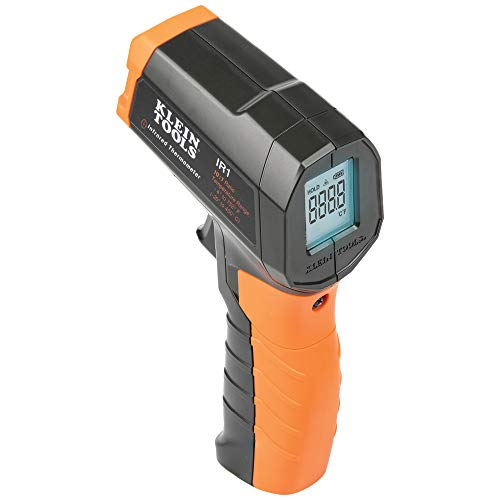
PRECISE TEMPERATURE MEASUREMENT: Optical resolution (distance-to-spot) of 10:1 ensures accurate temperature readings from a distance

NON-CONTACT SURFACE CHECKS Check hot or cold surfaces without touching them. This infrared thermometer gun helps you check cookware, griddles and household surfaces.The -58°F to 712°F range makes it suitable for pizza ovens, grills, griddles, For surface temperature measurement only.

NOT for HUMAN: THIS IS NOT A MEDICAL THERMOMETER,DO NOT USE TO TAKE TEMPERATURE OF BODY OR FOREHEAD. The NEWEST model of infrared thermometer measures a wider range from -58℉ to 1022℉(-50℃ to 550℃), supports switch ℉/ ℃. Tips: for better results, the oven thermometer should be 14 inches away from the object.