Yes, you can melt gold with a butane torch if it reaches at least 2,450°F, exceeding gold’s melting point of 1,064°C. You’ll need a graphite crucible, anhydrous borax flux, and proper safety equipment including heat-resistant gloves and shade 5 glasses. While butane torches work for small-scale jewelry projects and repairs, they’re limited for larger quantities and require practice for ideal flame control. Understanding the specific variables—torch specifications, gold alloy composition, and technique—determines your success rate.
Understanding Gold Melting Points
Before you can successfully melt gold with a butane torch, you’ll need to understand the melting points of different gold compositions. Pure 24-karat gold melts at 1,064°C (1,947°F), representing 99% purity or higher. However, gold purity considerably affects melting temperature. For instance, 18-karat gold melts at approximately 926°C, while 14-karat gold melts around 879°C. These variations stem directly from alloy compositions, which combine precious metals with silver, copper, and zinc to enhance durability. Lower purity alloys demonstrate proportionally lower melting points depending on their specific metal combinations. Understanding your gold’s exact composition and corresponding melting point proves essential before attempting to melt it with a butane torch, ensuring you select appropriate equipment and techniques.

PRO KIT - Professional's Ready-To-Go Kit with the propane torch head, 6 x Replaceable Heads, Piezo Lighter, and the Storage Box. Upgraded CSA-certified hose for more safety and a Piezo igniter for a higher ignition rate! Perfect for any turbo torch or Map gas torch Kit needs.

A MUST-HAVE BUTANE TORCH FOR YOUR MASTERPIECES: Use the LEXIVON 12-piece butane powered soldering set in a wide range of different applications, from wood burning to wire soldering.

Upgraded Full Metal Cover Version, change old design's plastic knob to solid brass constructed knob.
Butane Torch Temperature Capabilities
Temperature capability represents the primary factor distinguishing butane torches suitable for gold melting from those designed for culinary or light metalworking applications. You’ll find that most standard butane torches produce flames reaching up to 2,500°F (1,370°C), which barely meets gold’s melting point of 1,945°F. High-end specialized models exceed 2,000°C (3,600°F), providing the necessary margin for reliable melting. Additionally, dedicated cooking torches are optimized for even heat distribution, making them less effective for metalworking tasks.
Your torch’s flame intensity and temperature stability depend critically on nozzle design, fuel quality, and flame configuration. Narrower nozzles concentrate heat effectively, while dual or triple flame setups enhance output. High-purity butane refills guarantee consistent performance, and wind-resistant designs maintain stable temperatures during operation. You’ll achieve superior results selecting torches specifically engineered for metalworking rather than culinary purposes. Additionally, the proper use of high smoke point oils can ensure effective melting and prevent damage to your equipment.
Comparing Different Torch Types
Now that you’ve understood butane torch capabilities, you’ll want to evaluate how different fuel systems stack up against one another for gold melting work.
You’ll find propane torches deliver temperatures up to 2372°F with adjustable flame control, offering affordability while maintaining adequate melting capability. MAPP gas produces superior heat output at 7481 BTU per hour, enhancing melting techniques considerably.
Acetylene systems reach 6300°F with oxy-propane configurations, providing three times larger flame sizes than butane alternatives. You’ll access multiple interchangeable tips for precision control across various operations.
These torch types present distinct trade-offs. Butane suits hobbyists with small-scale work, while propane balances cost and performance. Acetylene delivers professional-grade capabilities for serious jewelry makers. Your choice depends on project scale, budget constraints, and melting techniques you’ll employ regularly.

MULTI-PURPOSE TORCH KIT: Ideal for soldering, thawing, sweating pipes, any general repair works, and DIY heat applications

CREATE WITH FIRE: Precision torch equips you with the power of an adjustable flame and accommodates a higher heat intensity than most propane torch heads when used with Bernzomatic Map-Pro fuel. Precision flame and high heat temperature enable users with a versatile tool for creating truly unique projects.

【Well-Made Brass Torch】: Made of premium quality solid brass, the only plastic part of welding torch is gas valve which can be resistant to high temperature and has no bad smell which can provide you with a healthy burning environment. All the components are quality made and will be used for several years trouble free.
Essential Equipment and Materials
Successfully melting gold with a butane torch requires you to assemble several critical components that work together to guarantee safe, efficient results. Your crucible selection directly impacts fuel efficiency and outcome quality. You’ll need a graphite crucible sized appropriately for your gold quantity—typically 1 to 3 ounces—preheated to prevent thermal shock. Pair this with a butane torch capable of reaching 2450°F, exceeding gold’s 1948°F melting point. Add anhydrous borax flux to prevent oxidation and separate impurities during melting. Essential safety equipment includes heat-resistant gloves, safety goggles, and a readily available fire extinguisher. Your workspace demands proper ventilation and a fireproof mat. Supporting tools like crucible tongs, graphite stirring rods, and heat-resistant molds complete your setup, enabling controlled, secure melting operations.
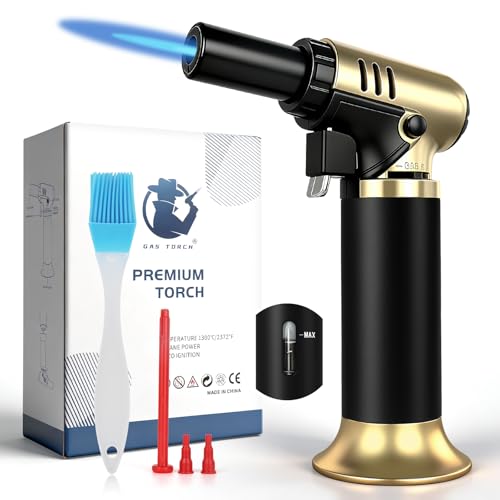
🔥 Powerful Jet Flame Torch Lighter – Adjustable high-heat flame delivers precision and consistency. Ideal for crème brûlée torch, BBQ torch, steak searing, cigar lighting, jewelry crafting, resin art, and more.

𝐈𝐧𝐭𝐫𝐨𝐝𝐮𝐜𝐢𝐧𝐠 𝐢𝐧𝐙𝐚𝐲𝐧𝐢𝐭𝐲 𝐓𝐡𝐞 𝐁𝐞𝐚𝐬𝐭 𝐓𝐨𝐫𝐜𝐡 𝐋𝐢𝐠𝐡𝐭𝐞𝐫: Our Butane Lighter fulfills the need for a reliable, safe, and refillable flame source for various tasks. Whether for crafting, or professional use, the adjustable flame, Continuous Flame Lock, and durable design of our Blow Torch ensure ease and precision. This Torch Lighter is Ideal for those seeking a versatile, high-quality tool to simplify daily tasks effortlessly.

Two Flames, One Tool - Soft & Jet Modes Made Simple KOACKL dual flame torch puts two fire modes in your hand. Turn the control knob for gentle soft flame perfect for crème brûlée, or switch to powerful jet flame for soldering, welding, and resin art. One tool. Endless possibilities.
Step-by-Step Melting Process
With your equipment prepared and materials organized, you’re ready to execute the actual melting procedure. First, place borax in your selected crucible—graphite or ceramic work best—to create a protective glazing film. Add your gold pieces and sprinkle additional borax on top for oxidation prevention. Position your butane torch horizontally, applying flame at a distance rather than directly against the crucible to avoid dispersing material. Your crucible selection directly impacts heat distribution efficiency. Maintain steady temperature control, continuing heat application until the gold achieves complete liquidity. It’s important to ensure that you monitor the heating process closely, similar to how you should care for cast iron pans, ensuring the crucible reaches approximately 1,000°F. Once fully melted, remove the torch and allow the crucible to cool completely before pouring into molds. These melting techniques establish consistency and material integrity throughout the process. It’s important to remember that while a butane torch can work for melting gold, temperature control is crucial for achieving the desired results.

【High Performance】This mini torch can work with propane, acetylene, hydrogen, propylene, natural gas etc to finish jewelry repair work.Two connectors mix the oxygen and acetylene ( gas), to get high performance welding flame. The green one connect with oxygen and red connect gas (Acetylene/Butane/Propane)

【Versatile Use】This metal melting kit includes various crucibles for melting metal, making it suitable for gold smelting, silver melting, and other metal casting applications, such as gold, silver, copper, aluminum and so forth. Crucible tongs set also ideal for satisfying lab, test analysis and other purposes small capacity metal melting projects.

Powerful Flame Temperature Heat up to 5252°F (2900°C)
Safety Precautions and Best Practices
Because you’re working with temperatures exceeding 1,000°F and an open flame, you must prioritize thorough safety protocols throughout the gold melting process. Your safety equipment includes Shade 5 glasses, heat-resistant gloves, and natural fiber clothing to shield against UV rays and burns. Workspace organization proves equally critical—remove all combustibles like paper and solvents, guarantee adequate ventilation with an exhaust fan, and position a Type ABC fire extinguisher within immediate reach. Keep your work area clear of obstacles and maintain awareness of surrounding flammable materials. Before handling any melted gold, verify that residual heat’s dissipated completely. Practice proper torch positioning at the flame’s tip for maximum efficiency, maintaining continuous motion to prevent unwanted metal accumulation. These precautions minimize burn and fire risks substantially. Additionally, before refilling your butane torch, it’s essential to purge excess air from the fuel tank to prevent malfunction and ensure optimal ignition.
Real-World Results and User Feedback
When you consult gold refining forums and review experimental data, the limitations of butane torches become unmistakably clear. User experiences consistently show that butane torches fall short for melting pure gold, while propane torches deliver reliable results. You’ll find documented cases where butane attempts yield only partial melting or sintering of small nuggets, not complete liquefaction. Melting struggles persist even with ideal crucible selection and flux application.
Conversely, propane torch users report successful melting of 1g gold nuggets within minutes using ceramic or graphite crucibles. Community feedback emphasizes that temperature deficiency—butane maxes around 2450°F versus propane’s 2700°F—fundamentally determines outcomes. Video evidence corroborates this disparity, showing complete gold buttons forming exclusively with propane-based setups. The consensus is unambiguous: propane greatly outperforms butane for practical gold melting applications.