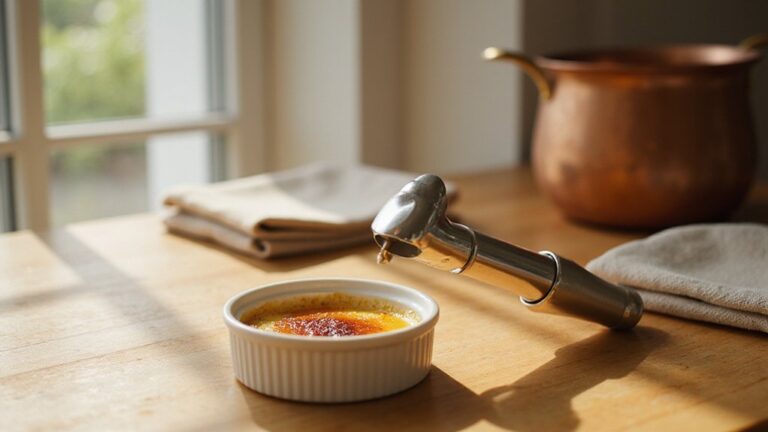
You can use a meat thermometer for candle making, but you’ll face significant limitations. Most meat thermometers max out at 212°F, potentially missing higher temperatures needed for certain wax types. They often lack the ±0.5°F accuracy you need for consistent results, and some don’t register below 40°F during cooling phases. While they’ll work temporarily, dedicated candle thermometers offer superior range, precision, and safety features that protect your batches and investment.
How Meat Thermometers Function in Candle Making
While meat thermometers aren’t specifically designed for candle making, their digital displays and calibration capabilities make them surprisingly effective tools for monitoring wax temperatures. You’ll find that premium models like the ThermoWorks ChefAlarm offer accuracy better than ±1°F, which proves essential when working with different wax types, particularly soy wax requiring specific temperature windows.
The extra-long probes allow you to safely read temperatures in deep melting pots without risking hand contact with hot wax. Stainless steel construction withstands repeated exposure to temperatures between 120-180°F. Quick response times give you immediate feedback when wax reaches critical thresholds for fragrance oil incorporation around 140-160°F. However, verify calibration accuracy before relying on your meat thermometer for precise temperature monitoring throughout your candle-making process.
Temperature Range Capabilities for Wax Melting
Now that you’ve confirmed your meat thermometer’s accuracy, you’ll need to verify it covers the full spectrum of wax temperatures you’re working with. Candle waxes span 75-195°F, requiring thermometers capable of measuring across this entire range. Most meat thermometers max out at 212°F, technically sufficient, but you must guarantee yours reads accurately within candle-making temperatures.
Temperature fluctuations during heating and pouring demand precision within 1-2°F, particularly for specialty blends. Your thermometer must respond quickly to these changes while monitoring wax consistency throughout the process. Inadequate range coverage or slow response times risk overheating, causing wax degradation and poor candle quality. Verify your specific meat thermometer’s minimum reading capability—some digital models won’t register below 40°F, potentially leaving lower temperature ranges unmeasured during cooling phases.

WATERPROOF - IPX7 waterproof. No worry on the rinse or wash under running water after measuring, easy clean and keep your digital food thermometer always in good shape!
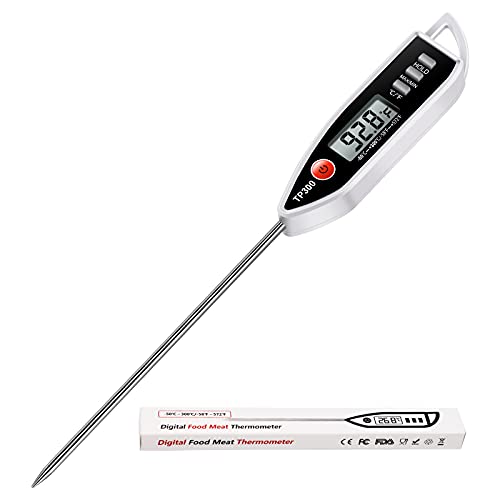
This kitchen thermometer simply insert probe into your food or liquid and get the temp, we prefer thermometers that display large numbers on their digital screens to make it easier to read temperatures quickly. Meat thermometer with 10 minutes auto-shut off function extends your battery life

ACCURATE FAST READINGS (No More Burned Candy) --- Our candy deep fry thermometer provides instant and accurate temperature readings within seconds. Its advanced technology ensures precise measurements, allowing you to monitor the temperature of your food with confidence.
Accuracy and Consistency Across Batches
Because candle quality depends on maintaining precise thermal conditions across multiple batches, you’ll need a thermometer that delivers consistent, accurate readings within ±0.5°F. Meat thermometers often lack the measurement precision candle making demands, since they’re optimized for biological temperature ranges rather than wax applications.
Your data accuracy directly impacts batch consistency. When pouring temperatures vary even slightly, you’ll notice differences in texture, surface finish, and fragrance throw. Inconsistent readings increase the risk of overheating fragrance oils or cooling wax unevenly, both causing aesthetic defects like frosting or cracking.
Specialized candle thermometers feature sturdy clips for stable positioning, quick response times, and calibration options that maintain accuracy over extended use. Meat thermometers can’t reliably provide this level of precision, making them an unreliable choice for reproducible results.
Preventing Wax Damage Through Proper Temperature Control
Temperature precision directly determines whether your candles’ll develop defects or maintain structural integrity. You must monitor wax quality by avoiding temperature fluctuations that cause frosting, cracking, or shrinkage. When you use a meat thermometer, immerse the probe into molten wax rather than relying on surface readings, which can be misleading. Infrared thermometers measure only surface temperature, potentially masking dangerous core overheating that damages wax. Consistent core temperature readings prevent localized heat damage and discoloration. You should verify your thermometer offers ±0.5°C accuracy and adequate depth penetration. Digital alarms help you catch temperature spikes before they compromise your batch. By maintaining steady readings between 140-160°F during pouring, you’ll eliminate preventable defects and guarantee reliable candle quality across every production cycle.
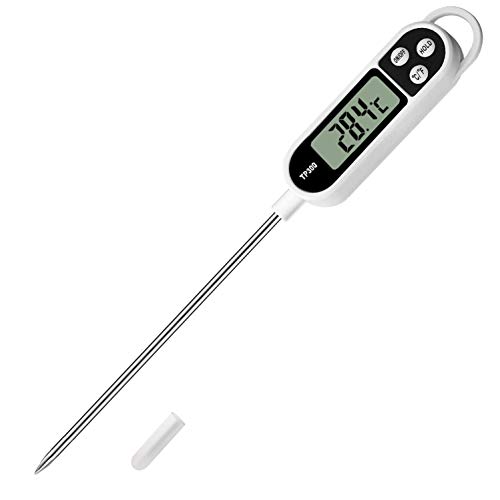
HOLD button keeps the teperature reading until it is pressed again; ON/OFF is the power switch function and it is with automatic power-off function after 10 minutes when there is no operation to extend your battery life
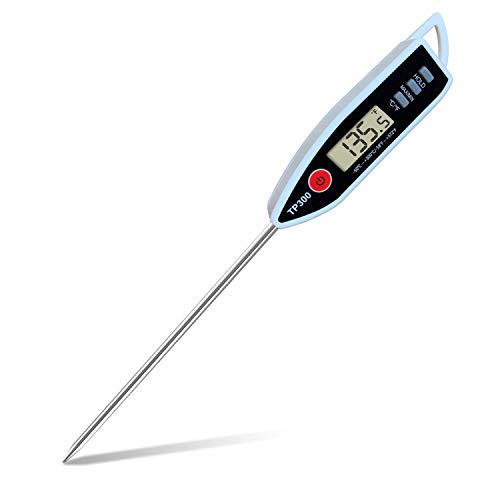
HOLD button keeps the teperature reading until it is pressed again; ℃/℉ button makes Celsius/Fahrenheit switchable; Power button function also with power-off feature after 10 minutes when there is no other operations

Fast and Accurate Reading: Kitchen thermometer for cooking features a 1 second readout speed and high accuracy of +/-0.9 degrees Fahrenheit, ensuring you receive the most delicious results every time
Safety Considerations When Using Meat Thermometers
Safety hinges on selecting the right equipment for high-temperature wax work. You must verify that your meat thermometer’s maximum temperature rating exceeds 200°F before use. Stainless steel thermometers offer better heat resistance than those with plastic components that’ll melt or contaminate your wax.
Follow critical usage guidelines to prevent hazards. Never use mercury thermometers due to toxic exposure risks if broken. Always employ a thermometer with a clip or handle to avoid direct contact with hot wax. Remove it carefully after use to prevent burns.
Implement these safety precautions consistently: don’t leave thermometers unattended in hot wax, inspect regularly for damage, and clean thoroughly with warm soapy water afterward. Replace any thermometer showing signs of corrosion or wear immediately.
Protecting Scent Oils During the Melting Process
While you’re melting wax for your candles, fragrance oils face their greatest vulnerability to degradation. You must monitor temperature carefully to prevent scent degradation and maintain fragrance retention throughout the process.
Excessive heat during melting causes fragrance molecules to dissipate before your candle solidifies. You’ll compromise potency if you overheat wax, which scorches the fragrance and alters its scent profile. Essential oils demand particularly careful handling due to their temperature sensitivity.
You should add fragrance oils only after wax cools to the ideal range: 155-165°F for general guidelines, or 77-85°C for soy wax. This timing guarantees proper binding between fragrance molecules and wax structure while preserving scent quality.
You’ll achieve superior fragrance retention by selecting candle-specific oils formulated to withstand high temperatures. Proper temperature control is non-negotiable for protecting your investment and delivering quality scent throw.
Comparing Meat Thermometers to Specialized Candle-Making Tools
Although meat thermometers seem like a convenient alternative, they’ll fall short of your candle-making needs in several critical ways. Meat thermometers typically max out at 200–220°F, potentially missing higher temperatures that candle wax reaches during melting. Their 3–4 inch probes won’t adequately measure deep wax batches, risking inaccurate readings throughout your container.
Specialized candle thermometers offer superior features specifically designed for your craft. They accommodate temperature ranges up to 400°F, covering all wax types and additives. With longer probes reaching up to 6 inches, they’ll accurately reflect your entire wax batch’s temperature. Additionally, candle thermometers feature materials resistant to wax and additives, ensuring durability and precise calibration for the delicate temperature control candle making demands.

[ Waterproof - IPX7 ] With the strong waterproof ability, it’s very suitable for measuring the temperature of liquids, such as water, milk, candles. When used in the kitchen, food, powder and oil stains are inevitable. The whole body can be rinsed under water. Easy to clean and maintain!

ESSENTIAL CANDLE MAKING SUPPLIES - Our 7 Inch probe wax candle making thermometer will assist with all types of candle making and is one of those great accessories to compliment your candle making kit.

[ Pot Clip Design, Rotatable Digital Screen ] This digital candy thermometer can be fixed to the pot with the clip and the display screen can be rotated to a suitable angle. This frees your hands to focus on cooking and reads clearly and easily.
Infrared and Clip-On Thermometer Alternatives
Beyond traditional probe thermometers, infrared and clip-on models offer distinct advantages for candle makers willing to explore alternative measurement methods. Infrared thermometers deliver non-contact readings within 0.5 seconds, measuring surface temperatures of containers and molds without inserting devices into molten wax. Their wide range (-50°C to 500°C) and ±0.1°C accuracy support various wax types and production stages. Backlit screens enhance visibility during nighttime operations.
Clip-on thermometers provide hands-free monitoring during extended melting and cooling processes. However, they require direct contact with wax, limiting their versatility compared to infrared options.
Both alternatives excel at preventing temperature-related failures like cracking, separation, and scent evaporation. Choose infrared thermometers for maximum convenience and safety in candle production.

𝐕𝐞𝐫𝐬𝐚𝐭𝐢𝐥𝐞 𝐓𝐨𝐨𝐥𝐬: Infrared technology allows you to measure various objects at home and outdoors; Use it for 𝒎𝒆𝒂𝒕, 𝑫𝑰𝒀 𝒄𝒂𝒏𝒅𝒚, 𝒐𝒗𝒆𝒏𝒔, 𝒈𝒓𝒊𝒍𝒍𝒊𝒏𝒈, 𝒇𝒐𝒐𝒅, 𝒄𝒐𝒐𝒌𝒊𝒏𝒈, 𝒂𝒖𝒕𝒐𝒎𝒐𝒕𝒊𝒗𝒆 𝒖𝒔𝒆, 𝑨/𝑪, 𝒓𝒆𝒇𝒓𝒊𝒈𝒆𝒓𝒂𝒕𝒐𝒓𝒔, etc.

Temperature measurement range:-50℃-500℃ (-58℉-932℉)Display resolution: 0.1 ℃ or 0.1 ℉
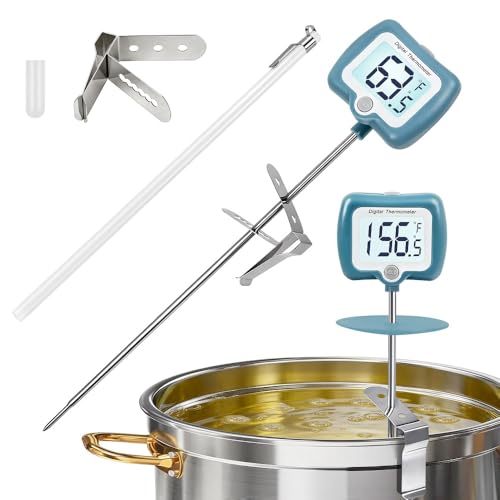
10 Inches Long Probe with Pot Clip: This Digital Candy Thermometer for candy making,cooking thermometer for liquids features a longer probe which allows you to use it in deeper pots and kettles. The candy thermometer with pot clip can fix the thermometer on the pot and can be moved up and down to adjust the height, freeing your hands to concentrate on operation and protecting you from heat. Adjustable clip fits on the 10-inch stem for secure attachment and avoids touching the bottom of the pot
Best Practices for Temperature Monitoring
Since precise temperature control directly impacts candle quality, you’ll need a thermometer that matches your wax type’s specific melting range. Establish consistent monitoring frequency to catch temperature fluctuations before they compromise your batch. Check temperatures every 2–3 minutes during heating phases, using an instant-read digital thermometer for rapid feedback. Immerse your probe 1–2 inches into the wax’s center to verify accuracy. Maintain ±1°C precision by calibrating your thermometer regularly with ice water and boiling water tests. Wipe your probe clean after each use to prevent wax buildup that interferes with readings. Store your thermometer in a cool, dry location and replace batteries promptly. These practices prevent overheating, guarantee consistent results, and extend your thermometer’s lifespan.
When to Invest in Dedicated Candle-Making Equipment
As your candle-making practice shifts from occasional hobby to regular production, you’ll likely notice that basic kitchen tools can’t sustain your growing needs. An equipment investment becomes prudent when you’re consistently producing beyond what standard kitchen pots accommodate. Dedicated tools prevent contamination, reduce waste, and deliver consistent results—factors that justify upgrading costs.
Entry-level dedicated equipment ranges from $40 to $100, offering digital thermometers and basic wax melters designed for high-temperature use. If you’re producing over 50 candles monthly or planning commercial sales, commercial-grade equipment with higher capacity and built-in temperature controls becomes essential. These professional tools include safety features like spigots and handles, reducing operational risks.
Long-term, dedicated equipment lowers costs through minimized material waste and increased production speed, making your equipment investment economically sound.

1.5Qt Capacity: The wax melting pot has 5.3-inch-tall and 7.4 inch in diameter. It looks small, but it holds more wax than any other container, helping you make more candles at once for DIY candle making lovers

1.5L Dual-Power Candle Melting Pot: Easily switch between two heating settings to melt large batches of wax in the pot, eliminating the need for batch melting and efficiently handling various DIY projects.

Wax Melter for Candle Making - Our candle making kit includes nearly all the accessories needed to make candles. It comes with a thermometer, stirring spoon, 5 candle holders, 100 wicks, and 100 wick labels, making it the perfect gift for beginners and candle making enthusiasts.