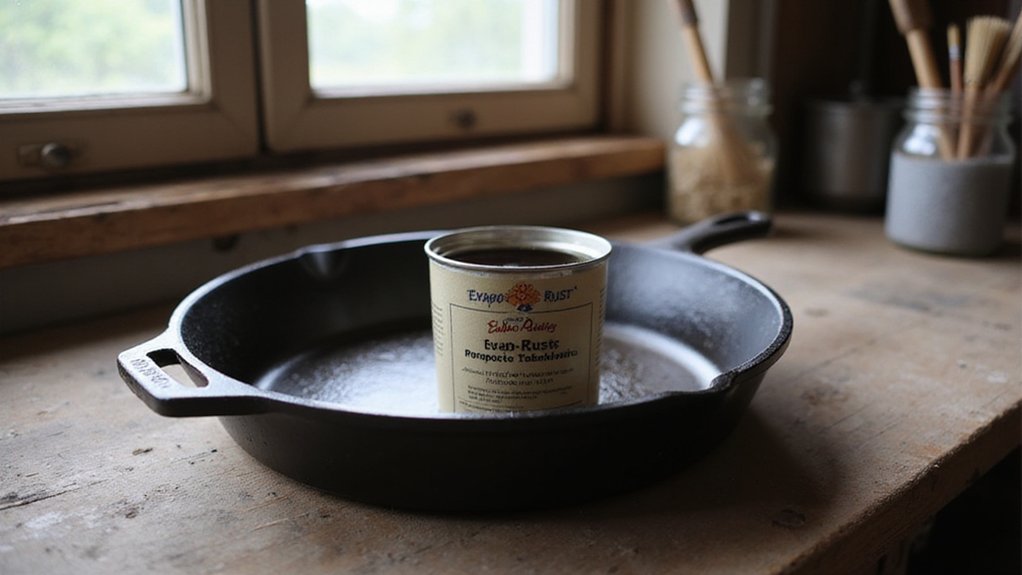
Wondering if Evapo-Rust is safe to use on cast iron? The good news is that, when used correctly, it can be a safe and effective way to remove rust without harming your pan.
It works by targeting rust specifically, leaving the metal and seasoning intact.
Keep reading to learn the proper soaking times and how to avoid damage.
Is Evapo-Rust Safe for Cast Iron?
Evapo-Rust is generally safe for cast iron cookware when used properly. It employs a chelating agent that binds to rust without affecting the underlying metal. For light rust, a 10-minute soak is sufficient, whereas heavy rust requires overnight immersion. This eco-friendly solution is non-toxic, non-corrosive, and leaves no harmful residue. An added benefit of using this method is that it preserves the pan’s natural seasoning which enhances non-stick performance and durability. To avoid damaging your cast iron, do not submerge non-rusted pieces for more than 48 hours, as prolonged exposure can roughen or dull the surface. Ensure the item is fully submerged to prevent dark lines forming along exposed edges. After the rust removal process, rinse the cookware thoroughly with water to clear away tiny iron particles. Re-dipping it in the solution afterward can help prevent flash rusting. For a more thorough restoration, advanced equipment like electrolysis tanks can remove all rust and buildup from heavily damaged pieces. Finally, let your cast iron air dry completely before use to maintain its quality. The Dutch oven’s superior heat retention also makes it ideal for slow-cooking after rust removal.
What Does Evapo-Rust Do to Rust on Cast Iron?
Evapo-Rust selectively removes rust from cast iron without harming the underlying metal when used properly. It targets only the rust, leaving the clean, uncorroded areas intact—unless you soak the piece for more than 24 hours. Prolonged soaking can cause etching or dimpling of the surface, so sticking to recommended durations is key. After treatment, rinse the cast iron immediately to prevent flash rusting, helping you preserve its smooth, functional surface. After rinsing, immediately dry the cast iron thoroughly and apply a light coat of oil to prevent rust from forming, as proper post-cleaning care is essential for protecting the pan. This process offers a gentle yet effective way to restore rusted cast iron without risking damage to the original finish. For long-term protection, the pan must then undergo a proper seasoning process to build a durable, non-stick surface.
How Long Can You Safely Soak Cast Iron in Evapo-Rust?
You should never soak cast iron in Evapo-Rust for more than 24 hours. Extended immersion beyond this time can cause dulling or etching of the metal surface. For light surface rust, a soak of 5 to 30 minutes usually suffices. Moderate rust requires up to 4 hours, while heavy corrosion may need an overnight soak of 8 to 12 hours. If deep pits are still visible after the initial soak, rinse the piece and re-immerse it, periodically checking progress. Maintaining this timeframe helps preserve the integrity and finish of your cast iron. You can also use this technique to clean cast iron used for camping meals like Dutch oven potatoes. Always keep the solution at 60°F or higher for optimal rust removal. A 1-gallon jug of Evapo-Rust costs approximately $29-$30 and can be reused multiple times until effectiveness diminishes. The method relies on a chemical reaction that selectively targets rust without damaging the underlying metal, similar to the precise control found in sous vide egg cooking.

EVAPO-RUST RUST REMOVER: Evapo-Rust effortlessly removes rust from automotive parts, hardware, tools, cookware, and antiques without any scrubbing or sanding.

Goodbye Rust: Remove rust stains around the home with a heavy-duty rust removal product trusted for over 60 years. The unique cleaner gel clings to dissolve rust stains on contact for difficult-to-reach places.

RESTORES & SEASONS CAST IRON COOKWARE: Culina Cast Iron Scrub is designed to restore cookware by removing stubborn rust spots, burnt residue, and stuck-on food that builds up over time. Infused with high-quality coconut oil, it also helps season cast iron surfaces while essential oils help eliminate unwanted odors.
What Happens If You Soak Cast Iron Too Long?
Soaking cast iron for longer than necessary can cause surface etching and subtle changes in the metal’s microstructure. Extended exposure increases the risk of carbon migration if the alloy is high in carbon content, which can alter the internal composition of the metal. While it doesn’t cause immediate harm to un-rusted cast iron, prolonged soaking may lead to tiny surface damage, such as micro pits, especially if the solution continues to react with the metal. If you delay rinsing after rust removal, the tiny iron molecules left on the surface can reactivate rust, leading to new corrosion. Keep in mind that deep pits or cavities can trap rust if they are not properly cleaned and re-soaked. To prevent issues, manufacturers recommend limiting soaking time to the minimum necessary for cleaning or treatment, and always rinsing thoroughly immediately after soaking to avoid re-rusting within 48 hours. For recipes that require excellent heat retention during long braising, ensuring the cast iron surface is clean and free of pits is crucial. Natasha’s project demonstrates that using a non-toxic and biodegradable formulation allows for safe overnight soaking without immediate harm, but timely removal and rinsing remain essential. Once clean, you should bake the skillet upside down in the oven to build a durable, nonstick seasoning layer. For best results after any soaking method, always dry the skillet thoroughly and apply a thin layer of oil to prevent rust.

Mild and Easy: Grapeseed Oil is at its best in stir-fries and sautés; it doesn't overwhelm other ingredients and lets fresh flavors shine. When grilling or frying, it is a must-have in the pantry.

YOUR NEW GO-TO SEASONING SPRAY: The Lodge Seasoning Spray is the perfect seasoning spray to maintain your cast iron cookware. It is made of 100% canola oil - no additives or propellants, to protect your cookware and enhance its finish.

TLC for your griddle cooktop: All you need to build a slick, easy-release surface that's protected from rust and easy to work with using Blackstone griddle seasoning and cast iron conditioner
How to Re-Season Cast Iron After Evapo-Rust Treatment
After rinsing and thoroughly drying your cast iron, you must immediately re-season it to prevent flash rusting on the bare metal. Begin by applying a high-fat, heat-stable oil such as flaxseed or canola oil. Coat the entire surface generously, then wipe off all excess oil to avoid a sticky, uneven finish. Place the pan upside down in a 450°F oven and bake it for one hour. After baking, allow the pan to cool inside the oven. This process polymerizes the oil, forming a durable, protective layer. Repeat the seasoning cycle several times to build up a strong, rust-resistant coating. To maintain your seasoned cast iron, clean it gently—never soak it—and reapply a thin layer of oil after each wash. Consistent care and proper seasoning ensure your cast iron stays rust-free and ready for cooking.

PURE, ORGANIC AND UNREFINED: Barlean's organic flax oil is cold pressed without the use of heat or solvents. Each drop is protected from damaging heat and light from seed to bottle, offering a potent and healthy balance of Omegas 3, 6, and 9 and a pleasant and mild nutty flavor.
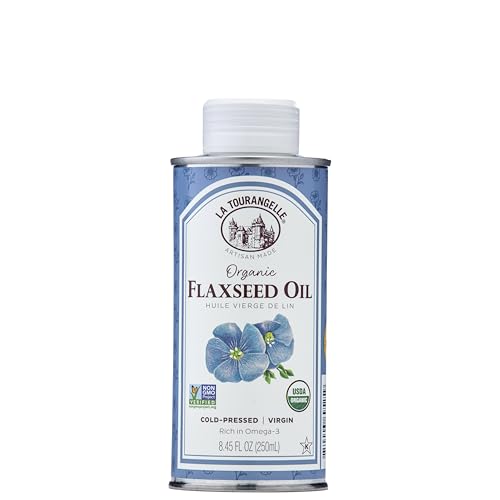
Organic Flaxseed Oil: This oil provides over 7 grams of plant based Omega-3, making it the ideal ingredient to add to your smoothies, oatmeal, or salad dressings.

USDA ORGANIC FLAXSEED OIL, GROWN AND PRESSED IN THE USA: One ingredient and nothing else. The flax is grown and pressed in North Dakota, then bottled for cast iron care rather than for cooking.