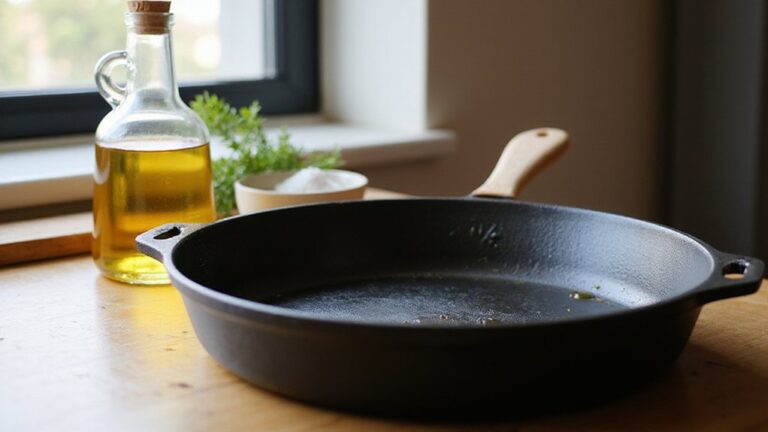
You’ll clean your skillet most effectively by allowing it to cool completely first, then using warm soapy water with a soft brush to remove food debris. For stubborn residue, apply baking soda paste or coarse salt with oil using gentle circular motions. Dry thoroughly with lint-free cloths to prevent rust. Finally, apply a thin layer of high smoke-point oil while the skillet’s still warm to maintain seasoning. There’s considerably more technique to master regarding long-term care.
Allow Your Skillet to Cool Completely
Before you clean your cast iron skillet, you’ll need to let it cool completely to prevent thermal shock that can warp or crack the pan. Implement proper cooling techniques by removing the skillet from direct heat and placing it on a heat-resistant surface at room temperature. Avoid immersing it in cold water, which causes damage and seasoning loss.
For ideal seasoning maintenance, consider cooling the skillet inside a turned-off oven, allowing oils to polymerize evenly and strengthen the nonstick coating. This method typically requires 15-30 minutes for standard cooling or several hours for deep seasoning cycles. Proper cleaning techniques are vital for maintaining the skillet’s longevity, as they help preserve its seasoning and cooking surface.
Prioritize safety tips by using oven mitts when handling warm skillets and ensuring the pan reaches a safe temperature before cleaning. Never place hot cast iron on delicate surfaces. Proper cooling preserves your skillet’s integrity and extends its lifespan, making it crucial to follow these steps to maintain effective cleaning and reseasoning of your cast iron skillet.
Remove Residue With Warm Soapy Water
Now that your skillet’s cooled completely, you’ll remove residue using warm soapy water—a proven method that effectively eliminates food debris and built-up grease without compromising your pan’s seasoning when executed properly. Modern dish soaps, when applied sparingly, won’t strip your seasoning layer. Begin by rinsing the pan under warm water to loosen particles. Apply mild soap with a nylon scrubbing brush or soft sponge, scrubbing gently but thoroughly across the cooking surface. This process not only helps remove stuck-on food but also aligns with the recommended practice of using coarse kosher salt as an abrasive for tougher residues. Rinse completely to remove all soap residue. Avoid soaking, which promotes rust development. Dry immediately with lint-free cloths, ensuring no moisture remains. These cleaning techniques combined with appropriate soap types maintain your skillet’s protective coating while removing stubborn residue effectively. Additionally, remember that using modern dish soaps can be beneficial for cleaning stubborn food residue.
Tackling Stubborn and Burnt-On Food
Despite your best cleaning efforts, stubborn burnt-on food sometimes resists standard soap and water methods. You’ll find several effective scrub choices tailored to your skillet’s condition and cleaning frequency.
Start with the heat and oil method: moderately warm your pan, apply salt with an oil-dampened paper towel held via tongs, and work the abrasive combination across burnt residue. This non-destructive approach preserves seasoning while removing buildup, and it’s crucial to maintain the seasoning to ensure your skillet functions optimally.
For alternative scrub choices, baking soda works effectively on multiple burnt layers when applied with gentle circular motions under warm water. If burnt food persists despite these methods, employ a dedicated rust eraser tool on your cool, dry skillet before washing.
Reserve steel wool for severe situations only, as intensive scrubbing risks removing seasoning. Immediately re-oil your skillet following any aggressive cleaning to restore protection. Additionally, consider that Dutch ovens can also benefit from similar cleaning techniques, especially when dealing with stuck-on food after slow cooking.

✔️【Package Included】4pcs steel wool scrubber set, they are easy to clean and scrub the stains and grease on the kitchen utensils, as well as the rust on the bottom of various pots, making them shiny as new. Of course you can use it together with a cleaning agent, the removal effect is better and the efficiency is higher.
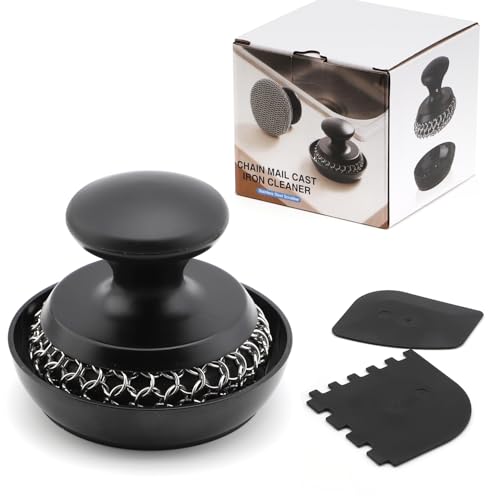
Your Reliable Kitchen Companion: The cast iron chain mail scrubber can help you to reduce the pain of cleaning cast iron cookware. Just pick up the ergonomic and comfortable handle, scrub your cast iron pan, and throw them into the dishwasher. Keep your hands are safely away from the greasy water.

【PROFESSIONAL COMBO FOR TOUGH CLEANING】: Cast iron scrubber is made of 316 stainless steel + silicone. Silicone has extreme stability, can resist high temperatures. Pan scraper is made of thickened ABS plastic, non-stick and non-cracking, heat-resistant up to 275 °F
Using Natural Abrasives Safely
When you’re ready to tackle stubborn burnt-on food without compromising your skillet’s seasoning, natural abrasives like baking soda and coarse salt offer effective, gentle alternatives to harsh chemical cleaners. Mix baking soda with warm water to create a paste, then apply it to affected areas using gentle circular motions with a soft sponge or nylon pad. Alternatively, combine coarse salt with a bit of oil to form an abrasive paste that physically breaks down residue without chemical damage. For the best results, after cooking and allowing the pan to cool, you can also use kosher salt as a gentle abrasive to remove food particles and impurities. Proper preheating your skillet ensures an even cooking surface, which means less sticking and easier cleanup overall.
For safe cleaning, avoid metal scouring pads and steel wool that strip seasoning. Instead, use soft-bristled brushes or paper towels. After scrubbing, immediately dry your skillet thoroughly with a clean towel, paying special attention to crevices where moisture collects. Apply a light oil coat to restore and protect your seasoning layer.

On Your Table For Generations: Morton Salt has been a household staple since 1848
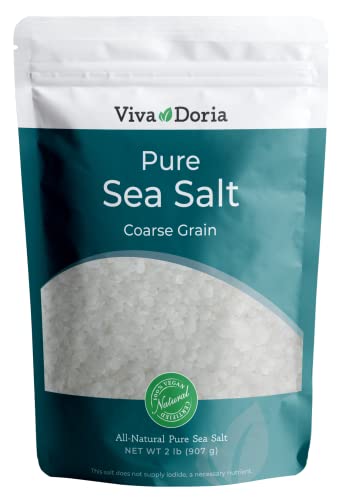
VISUALLY CAPTIVATING: Each crystal glistens with pristine clarity, reflecting the sun's radiant glow and embodying the sea's untamed essence.

PRODUCT OF ITALY – Authentic Mediterranean Sea Salt, originating from Trapani Salt Flats in Sicily, where the production of sea salt is a completely natural and time honored process, ensuring the highest standards of quality and authenticity.
Choosing the Right Cleaning Tools
Your choice of cleaning tools directly impacts both the effectiveness of your cleaning routine and the longevity of your cast iron’s seasoning. You’ll find that tool effectiveness varies greatly based on your specific cleaning needs and the condition of your skillet.
For routine maintenance, you should employ natural fiber brushes or reusable scrub cloths that remove food particles without compromising seasoning. When tackling stubborn residue, chain mail scrubbers with stainless steel rings offer superior performance while preserving your pan’s surface. Additionally, utilizing techniques like electrolysis cleaning can help restore heavily rusted skillets.
For heavily burnt messes, curved-edge scrapers prove invaluable. You can also utilize specialty cleaning materials like steel wool or potatoes with coarse salt for rust removal when necessary.
Selecting appropriate cleaning materials guarantees you’ll maintain your cast iron’s protective layer while achieving thorough sanitation and longevity.

Natural Materials: The bamboo brush handle is crafted from natural bamboo, while the bristles are a blend of natural palm and sisal fibers. The scraper is meticulously hand-polished from bamboo.

Easy Cleanup Tool: The Lodge Scrub Brush is designed to help tackle stubborn food residue and simplify cast iron cookware cleanup

Scrubs without soap to preserve seasoning and protect surfaces
Drying Your Cast Iron Thoroughly
After you’ve washed your skillet, removing all visible moisture is essential to prevent rust and preserve your seasoning. Start with effective drying techniques: pat your skillet dry using a clean microfiber cloth rather than rubbing aggressively, which could disturb the seasoning layer. Next, employ heat drying by placing the skillet on a stovetop burner set to low or medium heat for several minutes, ensuring complete moisture evaporation from the pan’s pores. This rust prevention method also warms the surface for subsequent oiling. Remember to apply a thin coat of a high smoke-point oil after drying to maintain the seasoning, as proper oil application is crucial for the longevity of your skillet. Avoid overheating, which degrades seasoning. Allow the skillet to cool completely before storage in a dry environment. Thorough drying is critical—any residual moisture trapped in crevices or under handles causes immediate rust formation, compromising both the seasoning and pan integrity.
Applying Oil for Seasoning Protection
Once you’ve dried your skillet completely, you’ll want to apply a thin oil layer to protect the seasoning and prevent rust formation. Use a high smoke point oil like grapeseed or canola, applying it with a cloth while your pan remains warm to enhance oil absorption techniques. This warmth facilitates the polymerization properties of the oil, strengthening your existing seasoning. Applying oil regularly is essential to maintain the skillet’s integrity and prevent any further pitting damage.
Spread the oil evenly across all surfaces—inside, outside, handle, and bottom—ensuring only a sheen remains. Wipe away all excess thoroughly to prevent sticky buildup or drips. This maintenance step seals minor scratches and preserves non-stick properties between uses.
For best results, apply oil consistently after each cleaning cycle. Regular applications build and maintain seasoning naturally, protecting your investment and extending your skillet’s functional lifespan. Additionally, maintaining a proper alignment of your seasoning is crucial to ensure the skillet remains effective for cooking.

Mild and Easy: Grapeseed Oil is at its best in stir-fries and sautés; it doesn't overwhelm other ingredients and lets fresh flavors shine. When grilling or frying, it is a must-have in the pantry.

Light Buttery Flavor That Elevates Every Meal: Algae Cooking Club Chef-Grade Algae Oil enhances every dish with subtle richness. Its neutral profile makes it ideal for searing, baking, and dressings, transforming everyday meals into gourmet experiences.
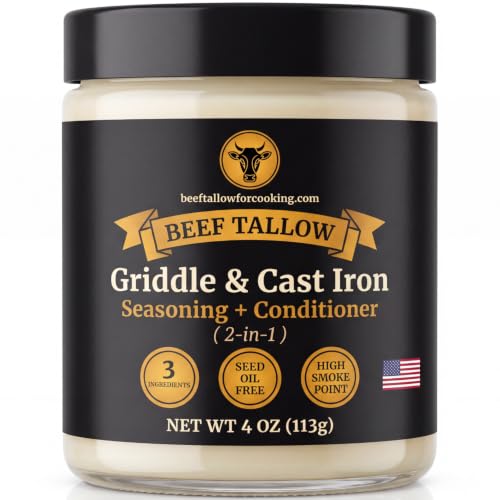
THE SEED OIL FREE FORMULA — Golden Render is the world's first seed oil free, tallow-based griddle seasoning & cast iron conditioner. While others use soy, shortening, grapeseed, sunflower or canola, we use just 3 clean ingredients: beef tallow, avocado oil & beeswax.
Identifying and Removing Rust
Despite meticulous care, cast iron skillets can develop rust when exposed to moisture or stored improperly. You’ll recognize rust characteristics by reddish-brown flaky spots, rough texture, or pitting where seasoning’s missing.
For light surface rust, you’ll scrub with steel wool for about ten minutes. You can accelerate removal by soaking the skillet in a 50/50 vinegar and hot water solution briefly before scrubbing. For heavier corrosion, you’ll consider Evapo-Rust®, which dissolves rust through soaking without scrubbing—thirty minutes for minimal rust, overnight for extensive damage. Remember to use a stiff brush to remove any remaining food debris after rust removal.
After mechanical or chemical removal, you’ll rinse thoroughly and dry completely on low stove heat to prevent flash rust. You’ll then apply cooking oil and re-season by baking at 450–500°F for one hour. Additionally, using methods like baking soda cleaning can help effectively remove stubborn rust buildup.
Consistent rust prevention requires immediate drying, dry storage, and periodic light oiling.

Cast Iron Rust Remover: The Lodge Rust Eraser is a compact, abrasive rust eraser that restores cookware and other cast iron pieces with precision rust removal

TOUGHER THAN THE TOUGHEST RUST: Easy to use spray gel that clings to iron, steel and other metals to remove rust fast

EVAPO-RUST RUST REMOVER: Evapo-Rust effortlessly removes rust from automotive parts, hardware, tools, cookware, and antiques without any scrubbing or sanding.
Common Cleaning Mistakes to Avoid
Now that you’ve restored your skillet’s surface, maintaining that restoration requires understanding which cleaning practices actively damage cast iron. You must avoid harsh detergents and steel wool, which strip seasoning and compromise the protective layer. Incorrect soaking in water causes rust formation and accelerates seasoning deterioration. Instead, wash with hot water and gentle scrubbing immediately after cooking. Never subject your skillet to dishwashers or prolonged water exposure. Dry thoroughly and store in a dry environment. Additionally, allowing the cookware to cool before cleaning helps prevent warping and damage to the seasoning. Avoid applying high heat to cold skillets, which warps metal and degrades seasoning. Implement gradual preheating and moderate cooking temperatures. Applying olive oil promptly during the care process ensures preservation of your skillet’s non-stick layer and enhances its longevity. Prompt cleaning with mild methods preserves your skillet’s integrity and extends its functional lifespan considerably.
Maintaining Your Skillet’s Seasoning Over Time
Your cast iron’s seasoning isn’t static—it’s a living layer that strengthens through proper maintenance and regular use. You’ll build seasoning buildup naturally by cooking fatty foods like bacon and searing meats at medium to medium-high heat, which encourages oil polymerization on the surface. Additionally, properly preheating your skillet can help enhance the seasoning process by ensuring an even heat distribution during cooking.
After each use, hand wash your skillet promptly with warm water and a soft brush, then dry it immediately. Apply a light oil coat while the pan’s still warm to restore its protective film. Periodically oven-season your skillet multiple times yearly using high-smoke point oils like canola or shortening, heating at 400–500°F until polymerization creates a durable, slick coating. Additionally, regular cleaning with non-abrasive tools helps maintain the skillet’s optimal seasoning over time.
This consistent maintenance prevents rust, repairs minor surface damage, and extends your skillet’s performance indefinitely.