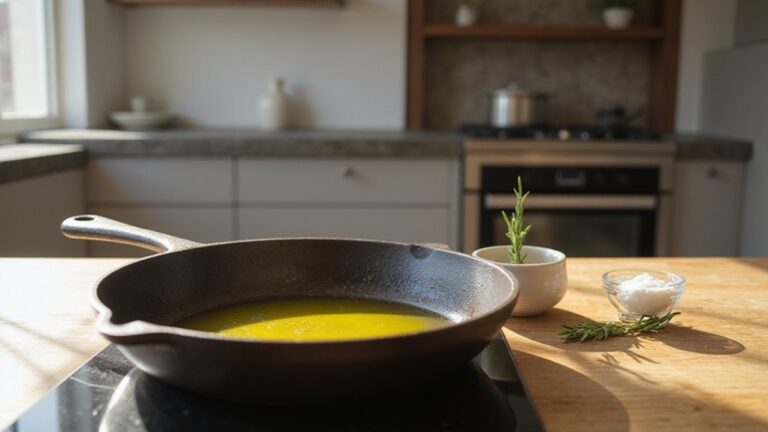
You’ll restore your cast iron skillet by mixing baking soda and water into a 3:1 paste, then applying it to affected areas with gentle circular motions using non-metallic tools. This mild alkaline abrasive cuts through rust and grime without scratching your seasoning layer. After scrubbing thoroughly, rinse and dry completely. For best results, apply a thin oil layer and heat-treat your pan at 500°F for an hour to rebuild seasoning. There’s considerably more you should know about maximizing your restoration efforts.
Why Baking Soda Works for Cast Iron Cleaning
Baking soda’s mild alkalinity is the cornerstone of its effectiveness for cast iron cleaning. You’ll find that its fine crystal structure provides gentle scrubbing action without scratching your pan’s seasoning. This dual nature enhances your cleaning efficiency remarkably.
The alkaline environment neutralizes acidic residues and loosens stubborn grime effectively. You can tackle stain removal without risk of harsh abrasiveness that stronger alkalis introduce. When combined with warm water, baking soda activates its cleaning properties further, allowing heat to soften stuck food particles for easier removal.
You’ll also benefit from baking soda’s odor neutralization capabilities, which eliminate food smells trapped in cast iron pores. Since it’s non-toxic and food-safe, you’re using an environmentally friendly option that won’t introduce harmful chemicals to your cookware or kitchen.
Understanding the Science Behind Rust Removal
Understanding rust removal requires grasping three fundamental concepts: how rust forms, why it’s chemically distinct from the underlying iron, and how baking soda’s alkalinity disrupts the oxidation process. Rust chemistry involves iron oxide formation when moisture and oxygen oxidize metal through redox reactions. The resulting iron oxide layer is less dense and structurally weaker than original iron. Additionally, understanding how seasoning cast iron protects the skillet’s surface can enhance your cleaning efforts.
Baking soda’s cleaning effectiveness stems from its weakly alkaline nature, which neutralizes acidic corrosion products and raises surface pH to prevent further oxidation. Its mild abrasive crystals dislodge rust particles while gentle scrubbing removes loosened debris. This balanced approach avoids the metal damage that harsh acidic treatments cause, making baking soda ideal for preserving cast iron’s underlying surface integrity. Furthermore, restoration methods like frequent seasoning with oil can further protect against rust formation.
Gathering Your Cleaning Supplies
Before you begin cleaning your cast iron, you’ll want to assemble the right tools and materials to secure effective, safe results. Start with baking soda, water, and non-abrasive scrubbing tools like nylon brushes or sponges. Gather additional abrasives such as kosher salt or cornmeal for stubborn residues. You’ll also need heat-resistant gloves, a drying cloth, and food-grade oil for reseasoning. For deeper cleaning, consider stubborn residue removal techniques like using a notched scraper or soaking the skillet.
Preparing your cast iron properly, just like when using it for open fire cooking, helps maintain its durability and performance over time. For supply organization, arrange these items near your workspace before cleaning. Position your stove, sink, and drying area within easy reach to streamline your cleaning techniques. Include a waste disposal container for used materials and debris. Having everything prepared eliminates interruptions and guarantees you work efficiently and safely throughout the cleaning process.

Easy Cleanup Tool: The Lodge Scrub Brush is designed to help tackle stubborn food residue and simplify cast iron cookware cleanup

EARTH FRIENDLY MATERIALS: Crafted with a bamboo handle and recycled plastic for environmentally friendly cleaning.

KEEP YOUR CAST IRON PANS HEALTHY - It is essential to properly clean and oil cast iron after use. Our cast iron scrub brush will be a lifesaver as it easily and quickly helps to remove food and grime
Preparing the Baking Soda Paste
The foundation of effective cast iron cleaning starts with creating the right paste consistency. You’ll begin by combining baking soda and water in a small bowl using a non-metallic spoon. Start with a 3:1 ratio of baking soda to water, then make ratio adjustments based on your desired thickness. Warm water dissolves the baking soda evenly and helps you achieve a smooth, spreadable texture quickly.
Your paste should be dense enough to adhere to cast iron without dripping. Stir slowly to avoid introducing air bubbles that weaken adhesion. A properly mixed paste clings to the surface during scrubbing, effectively lifting stuck-on residue. Use the paste immediately after preparation for maximum cleaning power, as baking soda’s effectiveness diminishes over time. If you must store it, keep leftover paste in an airtight container refrigerated for a few days. Additionally, using baking soda in your cleaning routine can be an effective way to combat freezer burn, which is a problem related to food preservation methods.
Mrs. Meyer's Baking Soda Cream Cleaner removes soap scum and grease build-up to make your kitchen sparkle

Mrs. Meyer's Baking Soda Cream Cleaner removes soap scum and grease build-up to make your kitchen sparkle

COMPLETE 3-PIECE DOG DENTAL KIT: Includes tartar control enzymatic toothpaste (2.5 oz), a dual-sided toothbrush, and a flexible finger brush, so you have everything needed to start brushing your dog's teeth at home.
Applying the Paste to Affected Areas
Now that you’ve prepared your baking soda paste, you’ll apply it directly to the affected areas of your cast iron, ensuring complete coverage of burnt, crusted, or rust-damaged spots. Use non-metallic tools like nylon brushes to spread the paste evenly across damaged sections. Your paste consistency should be thick enough to coat and adhere to the surface without running off.
Press the paste gently into pits and grooves using effective application techniques that avoid harsh rubbing. For larger affected areas, apply a liberal layer proportioned to cover the entire scorched bottom. If you’re treating substantial damage, consider combining baking soda paste with salt to enhance abrasive action while protecting your seasoning layer. Remember that cleaning your cast iron regularly helps to preserve the skillet’s natural non-stick properties and maintain its durability. Allow the paste to remain undisturbed for your predetermined soak time before scrubbing. Additionally, ensure that your cleaning tools are non-metallic materials to prevent scratching the surface and preserve the cast iron’s integrity.
The Scrubbing Process and Technique
Once your paste has soaked for the recommended time, you’ll move into the active scrubbing phase where you’ll physically remove the loosened debris and rust from your cast iron’s surface. Your choice of cleaning tools matters greatly—scouring pads work exceptionally well for working baking soda paste into rusted spots. Apply firm, deliberate pressure while using circular motions to guarantee thorough coverage across affected areas. These scrubbing techniques effectively lift rust without damaging your pan’s seasoning layer. Natural cleaning methods can also be beneficial in preserving the skillet’s surface. Balance intensity with care, focusing on rust concentrations while avoiding excessive force on the cooking surface. Work systematically across every angle and crevice. You’ll notice the rust gradually yielding to your efforts. Additionally, using kosher salt can aid in removing any stubborn bits and enhance the cleaning process. Continue until the surface appears clean and restored.

【PROFESSIONAL COMBO FOR TOUGH CLEANING】: Cast iron scrubber is made of 316 stainless steel + silicone. Silicone has extreme stability, can resist high temperatures. Pan scraper is made of thickened ABS plastic, non-stick and non-cracking, heat-resistant up to 275 °F

[ You Will Receied ] 1pcs steel wool scrubber and 4pcs steel cleaning pads for replacement, which are easy to scrubbing stains and grease on kitchen appliances, as well as rust on various pot bottoms, making them shiny like new. In addition, you can use it combination with stainless steel cleaner to achieve better cleaning and improve cleaning efficiency

THREE DISH SCRUBBERS: This pack of Scotch-Brite Stainless Steel Scrubbers includes 3 scrubbers
Combining Baking Soda With Other Cleaning Methods
While baking soda alone proves effective for cast iron restoration, combining it with complementary cleaning agents significantly enhances your results. Vinegar cleaning creates a powerful chemical reaction when paired with baking soda, breaking down stubborn burnt residue through fizzing action. A lye bath serves as an excellent baking soda alternative, providing additional abrasive action for removing tough, stuck-on grime without harsh chemicals. You can also employ a 50/50 vinegar-water bath before applying your baking soda paste, which loosens rust and buildup more effectively. After combining these methods, you’ll scrub with a nylon brush, then heat your pan at 400-500°F to polymerize any applied oil. This integrated approach preserves your pan’s seasoning while maximizing cleaning efficiency and restoration. It’s crucial to monitor the soak time of the vinegar solution to prevent damage to the cast iron.
Drying Your Cast Iron Thoroughly
After you’ve scrubbed your cast iron clean using baking soda, vinegar, salt, or a combination of these methods, you’ll need to remove all moisture before storage. Effective drying is critical for moisture prevention and rust protection.
Start by wiping your pan with absorbent paper towels, making multiple passes to capture trapped water in crevices. For thorough results, place your cast iron on a burner set to low-medium heat until light smoke appears—this opens the iron’s pores and eliminates remaining surface moisture in just 5-10 minutes. It’s essential to remember that seasoning your skillet requires the pan to be properly dry to adhere effectively.
Alternatively, preheat your oven to 200°F and place the pan inside for 15 minutes. This gentler method prevents thermal shock while preparing the seasoning layer. Regular use helps build and maintain your skillet’s natural nonstick seasoning, ensuring optimal cooking performance over time.
Always allow your cast iron to cool completely before storage to prevent condensation formation, ensuring your cookware remains protected and seasoning stays intact.
Heat Treatment and Seasoning Restoration
Now that you’ve thoroughly dried and cleaned your cast iron, it’s time to restore and strengthen its seasoning through controlled heat treatment. Start by applying a very thin oil layer—flaxseed or vegetable oil work well—to all surfaces, including the handle and rims. Rub the oil in thoroughly to guarantee even coverage and prevent peeling.
Preheat your oven to 500-550°F (260-290°C), then place your oiled pan inside for at least one hour. This temperature polymerizes the oil into durable seasoning layers, while higher temperatures are typically needed for melting metals like gold. Allow both the pan and oven to cool completely without opening the door, which stabilizes the coating. Remember that applying a thin coat of a high smoke-point oil helps maintain and build up the seasoning effectively.
You’ll need multiple cycles—typically three to four rounds—to rebuild robust seasoning. Use adequate ventilation throughout, as oil fumes produce smoke and odors.

Graza Frizzle Oil Made from 100% Olives: A neutral-flavored, high heat cooking oil made from 100% peak harvest olives. With a smoke point of up to 450 degrees, Frizzle is your high-heat kitchen hero. 1 bottle/750ml.

Light Buttery Flavor That Elevates Every Meal: Algae Cooking Club Chef-Grade Algae Oil enhances every dish with subtle richness. Its neutral profile makes it ideal for searing, baking, and dressings, transforming everyday meals into gourmet experiences.

Light Buttery Flavor That Elevates Every Meal: Algae Cooking Club Chef-Grade Algae Oil enhances every dish with subtle richness. Its neutral profile makes it ideal for searing, baking, and dressings, transforming everyday meals into gourmet experiences.
Long-Term Maintenance After Cleaning
Once you’ve completed your heat treatment cycles, establishing a consistent maintenance routine becomes essential to preserving your cast iron’s seasoning and preventing deterioration. Your oil application strategy directly impacts long-term durability—apply a light layer after each cleaning and drying cycle to bond with the surface and enhance the non-stick finish. For storage management, place your cookware in a cool, dry location using plastic separators to maintain airflow and prevent moisture accumulation. Avoid stacking pieces directly together, and store lids separately from pan bodies. Regular cooking sessions naturally build seasoning layers, so frequent use substantially reduces formal maintenance demands. These preventive measures prove far more effective than restoration procedures, ultimately extending your cookware’s lifespan considerably. Additionally, it’s crucial to apply a light coat of oil after cleaning to maintain the seasoning, as this helps prevent rust. It’s also advisable to tighten valve connections on tools used for cleaning to ensure they remain safe and effective during use.

YOUR NEW GO-TO SEASONING SPRAY: The Lodge Seasoning Spray is the perfect seasoning spray to maintain your cast iron cookware. It is made of 100% canola oil - no additives or propellants, to protect your cookware and enhance its finish.

Complete Care System: The Lodge Cast Iron Care Kit combines everyday cleaning and maintenance essentials into one convenient set designed to help support long-lasting cast iron care

Mild and Easy: Grapeseed Oil is at its best in stir-fries and sautés; it doesn't overwhelm other ingredients and lets fresh flavors shine. When grilling or frying, it is a must-have in the pantry.