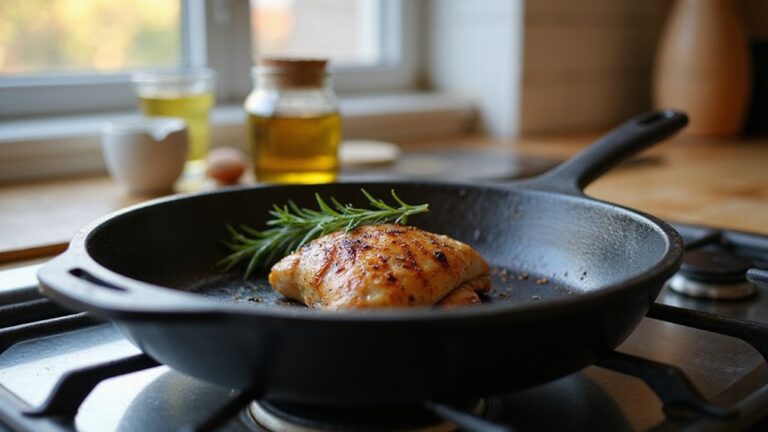
You’ll achieve superior crust development with cast iron because its thermal mass maintains consistent temperatures and minimizes heat fluctuations. The 5mm thickness provides even heat distribution, enabling uniform browning through the Maillard reaction. Cast iron’s pronounced heat retention prevents temperature drops during searing, unlike thinner alternatives. You’ll notice the steak releases freely when properly crusted—your key doneness indicator. Its versatility extends beyond stovetop searing; you can finish cooking in the oven within the same vessel. Uncover how cast iron compares to specific alternatives for your steak preparation.
Heat Distribution and Retention
When you’re searing a steak, three critical factors—heat retention, distribution efficiency, and temperature responsiveness—determine whether you’ll achieve a perfect crust or an uneven, disappointing result.
Cast iron excels at heat retention, maintaining consistent temperatures once heated. Its approximately 5mm thickness creates substantial thermal mass that sustains heat distribution across the cooking surface. You’ll experience minimal temperature fluctuations when placing your steak on the pan, ensuring even browning. Cast iron skillets also offer natural non-stick properties that improve with seasoning, enhancing your cooking experience.
However, cast iron shows moderate heat distribution efficiency, with temperature drops occurring about 4.5 inches from center. Carbon steel offers superior distribution due to its thinner profile, while multi-layered stainless steel with aluminum or copper cores minimizes hot spots most effectively. The method of using high heat for searing contributes significantly to achieving a steakhouse-quality crust.
For steak cooking, cast iron’s temperature stability outweighs its distribution limitations, providing the sustained heat necessary for ideal searing performance.
Crust Development and Searing
The Maillard reaction—the chemical process responsible for browning and flavor development—requires three essential conditions: a dry steak surface, high heat, and proper oil temperature. You’ll achieve ideal crust formation when your pan reaches the correct temperature and you extend searing time to 3-4 minutes per side.
Cast iron excels at producing uniform crust distribution across your steak’s entire surface, delivering darker, more consistent browning than stainless steel alternatives. Its superior heat retention enables even crust development regardless of thickness variations, making it particularly effective for certain cooking tasks that require high heat. You’ll notice reduced blotchiness and superior color consistency.
Stainless steel produces comparable crusts but requires more deliberate searing techniques for uniformity. Carbon steel offers an efficient middle ground, combining cast iron’s heat retention with faster cooking times and even distribution. Additionally, cooking in a cast iron skillet allows for flavorful techniques that enhance the overall dining experience.
You’ll recognize successful crust development when your steak releases freely from the pan surface, indicating completion.
Cooking Versatility and Finishing Options
Cast iron’s exceptional range extends far beyond the initial sear, enabling you to execute multiple cooking methods within a single vessel. You’ll shift seamlessly from stovetop searing to oven finishing, maintaining precise temperature control throughout. The pan’s superior heat retention guarantees consistent results whether you’re braising, sautéing, or slow-cooking. Additionally, achieving a good sear starts by patting the steak dry, which helps in forming that coveted golden crust.
For flavor enhancement, you can deglaze the pan immediately after cooking to create sophisticated pan sauces. Basting with herb-infused butter during cooking adds depth, while finishing salts elevate the final profile. You can rest your steak directly in the pan, leveraging carryover cooking for ideal doneness. Additionally, the efficiency of cast iron means you can achieve versatile results, similar to how safely refilling a butane torch ensures optimal performance in different situations.
This versatility eliminates equipment shifts and simplifies your workflow. Cast iron’s compatibility with induction, gas, electric, and outdoor grills further expands your cooking possibilities, making it an indispensable tool for steak preparation.


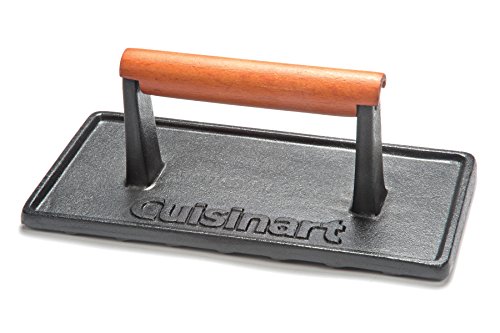
【HEAVY-DUTY CAST IRON GRILL PRESS】 :Our barbeque grill press is made of heavy duty food grade cast iron. Use the grill weight to press out unwanted grease and fat, safe to use in the oven, on the stove, on the grill, griddle, or campfire. The press can also be seasoned like cast-iron skillets to create a non-stick surface.
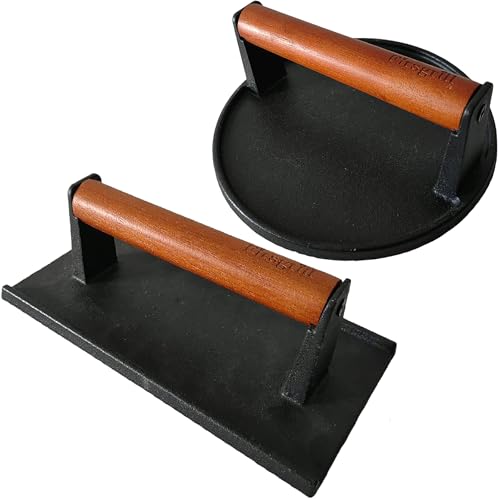
BURGERS – Perfect for smash burgers with beautiful grill marks BACON – Keeps strips flat and cooks evenly STEAKS – Helps sear and cook evenly THIN MEATS – Works great on any flat-top griddle or outdoor grill.
Cooking Indicators and Control
Successfully searing a steak demands constant attention to multiple sensory cues and temperature management strategies. You’ll rely on visual cues like crust color and the steak’s natural release from cast iron as indicators of doneness timing. Listen for pronounced sizzling—a reliable acoustic signal that heat’s transferring properly. You can monitor oil behavior; in cast iron, oil pulls toward edges, revealing heat distribution patterns. Additionally, consider using a Dutch oven’s shape to optimize your cooking approach based on the cut of steak you are preparing.
For precise temperature management, employ a meat thermometer to prevent overcooking, especially vital given cast iron’s strong heat retention. Preheat thoroughly to reach ideal searing temperatures before placing your steak. Manage heat at medium-high for superior crust formation without burning. Avoid infrared thermometers, as cast iron’s reflectivity produces inaccurate surface readings. Additionally, make sure to use a little butter or oil to enhance the non-stick properties and flavor throughout the cooking process. These techniques guarantee you maintain consistent, controlled cooking throughout the process.
Durability and Long-Term Value
Investing in a cast iron skillet means you’re acquiring a cooking tool that’ll outlast nearly every alternative on the market. With proper maintenance tips—warming, drying, and oiling after each use—your skillet can last multiple generations, whereas non-stick pans degrade as coatings chip and scratch, requiring replacement.
Cast iron’s dense construction resists warping and deformation under extreme temperatures, enhancing durability. Unlike carbon steel pans that don’t retain heat as effectively, cast iron’s superior heat retention reduces thermal stress on the material. Additionally, following proper skillet care practices will further extend its lifespan.
Lifespan estimates for well-maintained cast iron extend decades or longer. Seasoning restoration and repairs are straightforward, allowing you to rejuvenate worn surfaces. Though enameled variations offer rust-proofing advantages, traditional cast iron’s proven longevity and minimal maintenance demands deliver exceptional long-term value for searing steaks. Furthermore, cast iron cookware is generally safe and can even leach a small amount of dietary iron into food, which may help reduce iron deficiency without posing health risks.
Cast Iron vs. Non-Stick Pans
When you’re choosing between cast iron and non-stick cookware for steak, you’re fundamentally weighing superior heat performance against convenience and ease of handling. Cast iron features exceptional heat retention and even temperature distribution, enabling consistent searing and perfect crust formation. Non-stick alternatives heat quickly but conduct unevenly, creating hot spots that compromise browning quality.
Cast iron’s density absorbs and maintains high temperatures throughout cooking, while non-stick coatings degrade under the intense heat required for premium steaks. The weight disadvantage of cast iron becomes secondary when you consider performance outcomes—non-stick pans lack the thermal capacity for restaurant-quality results. Additionally, maintaining a cast iron skillet with proper cleaning and drying techniques ensures it performs optimally over time.
Moreover, non-stick surfaces deteriorate over time, whereas cast iron’s cast iron features improve with proper seasoning, offering superior long-term value and reliability for steak preparation. Furthermore, cooking with cast iron can increase iron content in your food, providing potential health benefits for those needing higher iron intake.

Steakhouse Sear At Home: The Lodge Square Cast Iron Grill Pan delivers high-heat searing and bold grill marks while channeling excess grease away

Quality Cast Iron Frying Pan: The Lodge Seasoned Cast Iron Skillet is loved for its great heat retention, incredible durability, and ability to make almost any recipe you dream up

Versatile Cooking Skillet: The Lodge Cast Iron Skillet is a multipurpose, everyday cooking pan that excels at searing, sautéing, baking, frying, and campfire meals
Cast Iron vs. Stainless Steel Pans
While both cast iron and stainless steel deliver excellent results for steak, they excel in fundamentally different ways. Cast iron’s superior heat retention creates ideal conditions for achieving restaurant-quality sears with uniform, darker crusts. You’ll benefit from its ability to maintain steady temperatures during high-heat cooking, especially if you follow proper cast iron skillet care techniques.
Stainless steel, conversely, warms rapidly and distributes heat evenly, offering precise temperature control and consistent outcomes. You’ll appreciate its lighter weight for easier maneuverability and simpler maintenance—it’s dishwasher-safe and corrosion-resistant.
From a price comparison perspective, stainless steel typically costs less upfront. However, cast iron’s durability means you’ll use it for lifetimes with proper care.
Safety considerations favor stainless steel’s non-reactivity with acidic ingredients, while cast iron requires careful seasoning maintenance to prevent rust and degradation. For those interested in enhancing their cooking technique, a vacuum sealer can help improve flavor retention and cooking results, much like choosing the right pan does.

Superior Heat Retention: The Cast Iron Skillet distributes heat evenly across the surface for perfect cooking results. Ideal for searing, sautéing, frying, baking, and more.
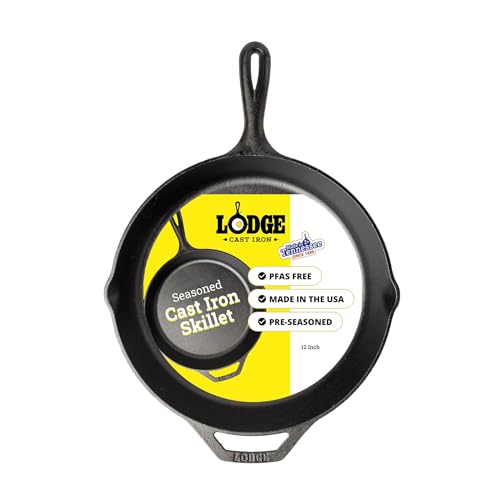
Quality Cast Iron Frying Pan: The Lodge Seasoned Cast Iron Skillet is loved for its great heat retention, incredible durability, and ability to make almost any recipe you dream up

Collectible Cast Iron Skillet: Celebrate America’s 250th Anniversary with this special skillet; featuring lyrics and imagery from "America the Beautiful," the skillet is designed for cooking, gifting, and collecting
Cast Iron vs. Air Fryers
The choice between cast iron skillets and air fryers fundamentally hinges on your preferred cooking method and desired results. Cast iron’s skillet advantages include superior surface temperatures exceeding 500°F, enabling pronounced Maillard reactions and robust crusts ideal for searing steaks. Sous vide cooking can also be utilized for precise doneness before finishing in the cast iron for a perfect sear. Air fryer benefits center on efficiency—rapid air circulation cooks steaks faster with even heat distribution and minimal smoke. You’ll appreciate air fryers’ lower oil requirements and preset programs, particularly for batch cooking multiple steaks simultaneously. However, cast iron delivers superior browning and caramelization, producing varied textures that many prefer. Air fryers excel at uniform doneness throughout, reducing charring risks. Consider cast iron for flavor-focused results and air fryers for convenience and health-conscious cooking. Your kitchen space and cleaning preferences ultimately determine the best choice. Additionally, cast iron skillets allow for a perfect crust formation, a crucial factor for steak lovers aiming for that desirable texture and flavor.
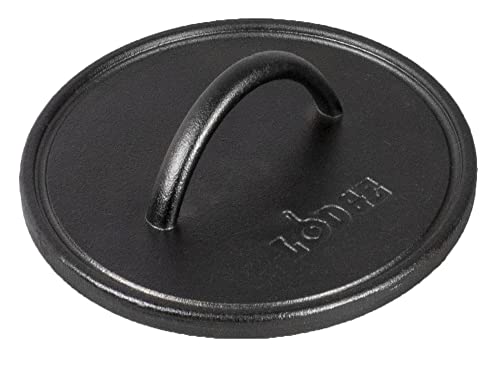
YOUR NEW GO-TO PRESS: The Lodge Cast Iron Grill Press is the perfect kitchen tool for beginners, home cooks and chefs. The sturdy piece is perfect for smash burgers or for grilling steaks or chicken. Put American cast iron to work in your home and keep authentically good food in the family.
DURABLE: Heavy-duty 2.4-pound cast iron for even heat distribution and durability.

Cast Iron vs. Outdoor Grills
Because you’re seeking the ultimate steak-cooking method, understanding how cast iron skillets and outdoor grills differ fundamentally will guide your decision.
Cast iron delivers superior heat retention and even distribution, preventing temperature fluctuations when cold meat contacts the pan’s surface. You’ll achieve a rich, buttery crust through Maillard reaction and caramelization.
Conversely, your grill comparison reveals distinct advantages: it produces distinctive char marks and smoky flavor profiles absent in cast iron preparation. However, grills create temperature zones—hot and cool spots—requiring careful steak repositioning during cooking.
Cast iron demands the reverse sear technique on outdoor grills to prevent overcooking, prolonging heating time. Meanwhile, grilling offers fool-proof visibility and easier mess containment outside your home. Regular use and proper maintenance of cast iron skillets enhances their longevity and performance.
Your cleanup considerations favor grilling’s simplicity over cast iron’s interior residue demands.

Steady Heat Distribution - This cast iron skillet locks in even heat across every inch, delivering that perfect golden sear on steaks, crispy cornbread edges and beautifully caramelized vegetables that make every home-cooked meal taste restaurant-worthy.

[Complete 7-Piece Set for Versatile Cooking] - Hisencn's 8-piece enameled cast iron cookware set includes 4.7-quart large casserole with lid, 3.5-quart large dutch pot with lid, 2.8-quart small dutch pot with lid, 10-inches skillet, 8-inches frying pan. Excellent cookware gift choice for sauteing, grilling, slow cooking, braising, braising, boiling, frying, roasting, grilling and baking! Comes with pan organizer rack and lid holder rack for easy storage.

SEASONED COOKWARE FOR IMMEDIATE USE: Pre-seasons every pan with 100% natural vegetable oil, giving it a non-stick finish without synthetic chemicals, to enhance the non-stick performance and deliver authentic flavors right out of the box. The more you use your skillet, the better the seasoning becomes for effortless cooking.