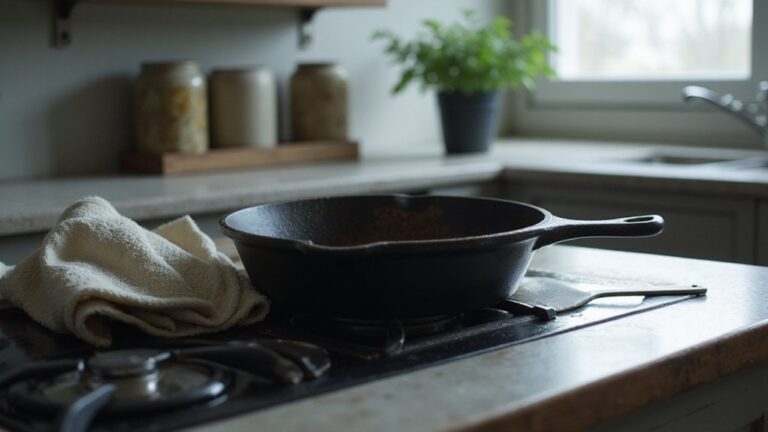
You’ll wash your Lodge skillet with warm soapy water and a stiff brush, then dry it immediately to prevent rust. Apply a barely visible oil layer after each use, using high-smoke-point oils. Preheat on medium-low heat for 3-5 minutes, avoiding thermal shock and maximum temperatures. Store it dry in a stable, moderate environment. Season deeply by baking upside-down at 450-500°F for one hour. These fundamentals protect your skillet’s seasoning and longevity, though mastering advanced techniques requires deeper exploration.
Washing and Drying Process
Proper washing is fundamental to maintaining your cast iron skillet’s seasoning and preventing rust. You’ll start with warm, soapy water and a stiff-bristled brush, using minimal soap since modern dish soap won’t strip seasoning. Your cleaning techniques should include thorough scrubbing to remove food residue and buildup. For stuck-on food, employ a pan scraper with boiling water and baking soda. It’s also important to avoid cold water on hot steel to prevent cracking, so always start with warm water. Never use your dishwasher, as it removes seasoning and causes rust.
For drying methods, you must completely dry your skillet with a paper towel or lint-free cloth immediately after rinsing with warm water. Pay particular attention to the rim, as insufficient drying creates rust deposits. Avoid air-drying on draining boards. This meticulous drying process prevents both rust formation and water spots, ensuring your skillet remains well-maintained. Additionally, be sure to season the skillet with oil after drying to protect it from rust and maintain its non-stick properties.

Easy Cleanup Tool: The Lodge Scrub Brush is designed to help tackle stubborn food residue and simplify cast iron cookware cleanup

Scrubs without soap to preserve seasoning and protect surfaces

ERGONOMIC BAMBOO HANDLE: ensures a comfortable grip for stress-free cleaning. Perfect for cast iron scrubbing, its design prevents hand fatigue, making kitchen chores effortlessly efficient
Oiling and Seasoning Maintenance
Once you’ve dried your skillet thoroughly, you’ll want to distinguish between two related but distinct processes: maintenance oiling and seasoning. Maintenance involves applying a minimal oil layer after each use to prevent rust, while seasoning requires heat to bond oil permanently to the metal surface.
For routine maintenance, apply a very thin coat of vegetable oil to the entire skillet—inside, outside, and handle. The layer should be barely visible; if it drips when tilted, you’ve applied too much. This quick step protects against ambient moisture.
For deeper seasoning techniques, heat your oven to 450-500°F. Position your skillet upside down on the center rack with foil below to catch drippings. Bake for one hour, then cool completely inside the oven. This process locks oil into the metal, creating a durable protective finish. Oils and fats with high smoke points are preferred for effective seasoning. Regularly applying a light coat of oil after cleaning helps ensure that your skillet maintains its seasoning and remains a reliable tool for generations.

Graza Frizzle Oil Made from 100% Olives: A neutral-flavored, high heat cooking oil made from 100% peak harvest olives. With a smoke point of up to 450 degrees, Frizzle is your high-heat kitchen hero. 1 bottle/750ml.

Light Buttery Flavor That Elevates Every Meal: Algae Cooking Club Chef-Grade Algae Oil enhances every dish with subtle richness. Its neutral profile makes it ideal for searing, baking, and dressings, transforming everyday meals into gourmet experiences.

Light Buttery Flavor That Elevates Every Meal: Algae Cooking Club Chef-Grade Algae Oil enhances every dish with subtle richness. Its neutral profile makes it ideal for searing, baking, and dressings, transforming everyday meals into gourmet experiences.
Rust Prevention and Detection
Despite your best maintenance efforts, cast iron can still rust if you’re not vigilant about moisture exposure. Rust formation occurs when bare iron contacts water without protective seasoning. You’ll notice reddish-brown spots, flaking textures, or dull patches on your skillet’s surface—sometimes developing within hours of improper drying.
Your maintenance habits directly prevent oxidation. Always dry your pan thoroughly with a towel or stovetop heat immediately after washing. Never soak cast iron or leave it air-drying. It is also crucial to ensure a dry environment when storing your skillet to reduce humidity.
Scratches, chips, or dishwasher use expose vulnerable iron beneath seasoning. Acidic foods also degrade protective layers. Apply thin oil coatings between uses, especially if your skillet sits unused. These disciplined practices eliminate rust risk entirely. Using a properly seasoned skillet also helps maintain its protective coating against moisture.

Cast Iron Rust Remover: The Lodge Rust Eraser is a compact, abrasive rust eraser that restores cookware and other cast iron pieces with precision rust removal

TOUGHER THAN THE TOUGHEST RUST: Easy to use spray gel that clings to iron, steel and other metals to remove rust fast

RESTORES & SEASONS | Our Cast Iron Scrub is designed to restore & remove stubborn rust spots. Helps to remove burnt & stuck on food spots that develop over time. Made with high quality coconut oil to help season & enhanced with essential oils to eliminate odors.
Heat Management During Cooking
Because cast iron’s superior heat retention fundamentally changes how you’ll cook, temperature management becomes your primary control mechanism rather than heat intensity alone. Your preheating techniques should involve 3-5 minutes on medium-low heat to prevent thermal shock and guarantee even cooking surface preparation.
During cooking, resist the urge to maximize heat settings. Most applications perform best at medium-high temperatures, not maximum. After preheating completes, you’ll need immediate temperature adjustments since cast iron continuously absorbs heat from the burner. Reduce settings accordingly to prevent food from sticking and burning.
Monitor oil behavior as your readiness indicator—shimmer signals adequate temperature for food addition. If oil smokes, briefly remove the skillet to cool. This patient, methodical approach to temperature adjustments leverages cast iron’s thermal properties, delivering superior cooking results consistently. Additionally, cooking with fats not only improves the food’s flavor but also aids in enhancing the skillet’s non-stick surface over time, as a well-seasoned cast iron pan develops a natural non-stick coating that prevents food from adhering.


HEAT RESISTANT SILICONE MATERIAL: Made from food-grade silicone, these hot handle covers withstand temperatures from -40°F to 446°F, keeping your hands safe from burns while cooking.

HEAT-RESISTANT SILICONE: Crafted from premium silicone material, these pan grips provide a reliable and heat-resistant barrier against temperature up to 500℉ (260℃), allowing you to handle hot pots, pans, and bakeware with ease and confidence.
Storage and Environmental Considerations
Your mastery of temperature control during cooking means nothing if you don’t properly store your cast iron afterward—improper storage conditions can undo all your seasoning work and invite rust formation. You’ll want to maintain a dry environment with stable, moderate temperatures. Avoid damp garages or basements without climate control, and never seal your cookware in plastic bags that trap condensation. Well-ventilated areas are essential; use silica gel packets in enclosed cabinets if needed. Before storage, verify your skillet is completely dry and apply a thin oil layer to maintain seasoning, as this helps to keep your skillet seasoned. Regular use helps build and maintain the skillet’s natural nonstick seasoning. Position your cookware in accessible locations near cooking areas to reduce handling risks. Keep frequently-used pieces front-and-center while reserving less-used items for secondary storage spots.
Special Considerations for Enameled Cast Iron
While enameled cast iron shares the durability of traditional cast iron, its protective enamel coating introduces distinct maintenance requirements that differ markedly from bare cast iron care. You’ll need specialized cleaning tools like nylon brushes and soft sponges to prevent scratching the enamel surface. Avoid metal scrapers and steel wool entirely.
For stain removal, you should use ceramic or enamel-specific cleaners rather than acidic solutions that degrade the gloss. Light stains require normal cleaning followed by a damp cloth application with specialized products. Stubborn discoloration may demand repeated applications per manufacturer instructions. Additionally, it’s important to remember that using oils with high smoke points can help preserve the enamel surface during cooking.
You must dry your cookware thoroughly after washing to prevent rust development on exposed cast iron rims. When rust appears, treat it immediately by cleaning with dish detergent, drying completely, and rubbing with cooking oil to seal the affected area. Additionally, always cook with some liquid or oil to protect the enamel surface from damage.

Crafted from durable nylon

Measures 3.25"

Keep cast iron pans spotless with this ingenious bristle brush, designed to remove cooked-on food from corners, grooves, even between grill ribs