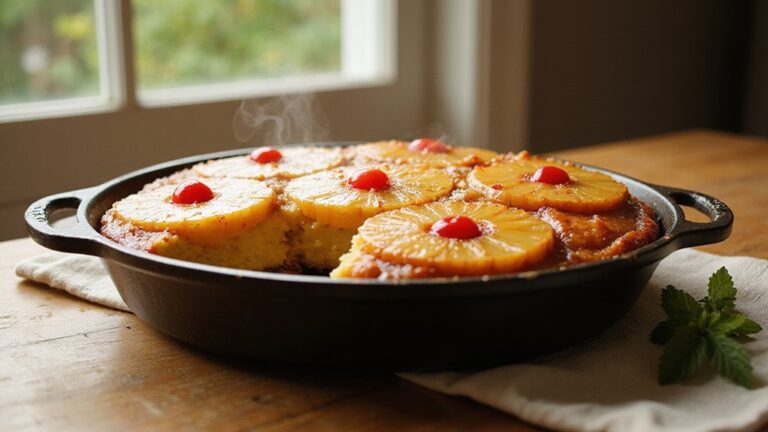
You’ll use your pre-seasoned skillet immediately—it’s factory-ready with polymerized seasoning. Start by rinsing with warm soapy water using a soft brush, then dry completely on low heat. Apply a thin oil layer with a lint-free cloth before storage. When cooking, preheat on medium for ten minutes, use wooden utensils, and maintain consistent daily cleaning with warm water and a stiff brush. Understanding these foundational steps will transform your cast iron experience dramatically.
Understanding Factory Pre-Seasoning
When you purchase a cast iron skillet from reputable manufacturers like Lodge, it’ll arrive with a factory-applied seasoning already in place, eliminating the need for immediate home treatment. This factory seasoning is created through polymerization, where oils bake onto the iron at temperatures between 450–500°F, forming a molecularly bonded, hardened layer. The process uses high-polymerization oils like flaxseed or vegetable shortening, applied in thin coats before slow cooling in the oven to guarantee complete bonding. This pre-applied surface delivers immediate cooking properties—natural release and non-stick performance that improve with use. The factory seasoning acts as your base coat; regular cooking with oil-containing foods strengthens this protective layer, while proper cleaning techniques help preserve it for generations. Understanding this foundation helps you maintain and maximize your skillet’s longevity and performance. Additionally, using a raw unseasoned cast iron skillet directly is possible, but food is more likely to stick, and the pan is more prone to rust unless properly maintained.

Exceptional Heat Retention: Enjoy perfectly cooked meals with cast iron skillets that provide even heat distribution, ideal for searing, frying, and baking in a 12 inch frying pan.

Superior Heat Retention: The Cast Iron Skillet distributes heat evenly across the surface for perfect cooking results. Ideal for searing, sautéing, frying, baking, and more.
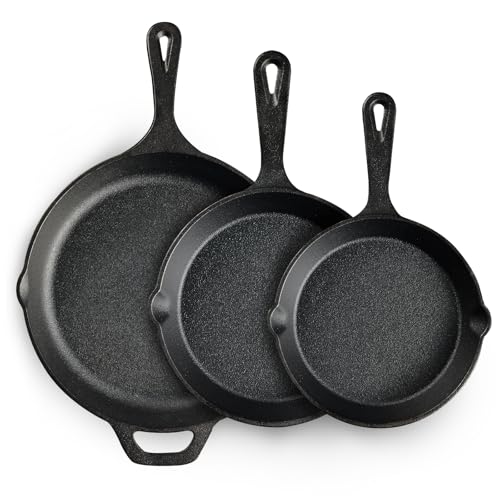
SEASONED COOKWARE FOR IMMEDIATE USE: Pre-seasons every pan with 100% natural vegetable oil, giving it a non-stick finish without synthetic chemicals, to enhance the non-stick performance and deliver authentic flavors right out of the box. The more you use your skillet, the better the seasoning becomes for effortless cooking.
Initial Cleaning and Preparation
Before you use your new cast iron skillet, you’ll need to prepare it properly through careful cleaning and drying. Start with a warm water initial rinse, using soap cautiously to eliminate factory residues. Choose non-abrasive cleaning tools like soft brushes or plastic scrapers to protect the surface. Thoroughly dry your skillet immediately with a clean towel, then heat it on low-medium heat to evaporate remaining moisture completely. Once dry, apply a thin, even oil application using a lint-free cloth across the entire cooking surface. Avoid pooling oil; you’re aiming for a light sheen. It’s essential to remember that maintaining the protective seasoning layer will help prevent rust and ensure optimal cooking performance. The process of polymerization of oils is crucial for building a durable and non-stick surface. Store your skillet in a dry location with a paper towel inside to absorb moisture. Keep it loosely covered to allow air circulation while maintaining seasoning integrity.
Basic Seasoning Techniques
Three core principles define effective cast iron seasoning: applying an ultra-thin oil layer, using high smoke-point oils, and polymerizing the coating through controlled heat. You’ll apply oil with a lint-free cloth, wiping away excess to prevent pooling. This near-invisible layer is critical—heavy coatings create sticky buildup rather than durable protection. Additionally, proper seasoning involves heating the oil to its smoke point so it bonds chemically with the cast iron.
For oil application, select avocado oil (520°F), coconut oil (450°F), or lard (370°F). Avoid low smoke-point alternatives like olive oil, which degrade under heat.
Position your skillet upside down in a preheated 450–500°F oven for one hour. Multiple seasoning cycles build superior adhesion compared to single heavy coats. Cool the skillet inside the oven to enhance bonding. Additionally, much like pre-marinating food, building a good seasoning requires patience and multiple layers to achieve optimal results. Repeat this process until you’ve achieved a black, shiny patina that resists both rust and food sticking.

Light Buttery Flavor That Elevates Every Meal: Algae Cooking Club Chef-Grade Algae Oil enhances every dish with subtle richness. Its neutral profile makes it ideal for searing, baking, and dressings, transforming everyday meals into gourmet experiences.

Mild and Easy: Grapeseed Oil is at its best in stir-fries and sautés; it doesn't overwhelm other ingredients and lets fresh flavors shine. When grilling or frying, it is a must-have in the pantry.
Selecting the Right Cooking Oils
Selecting the right oil fundamentally determines your skillet’s seasoning quality and cooking performance. You’ll want to prioritize oils with high smoke points—algae oil (~535°F) and canola oil (~428°F) excel here, allowing you to season without degradation. Grapeseed oil offers an excellent balance, reaching ~421°F while maintaining neutral flavor and affordability.
For oil selection, consider your budget and availability. Canola remains practical for beginners due to its accessibility and cost-effectiveness. Grapeseed oil bridges performance and expense, making it economical for regular use. Additionally, for proper seasoning, correct oil application is crucial, as it promotes an even coating that enhances durability.
Prioritize oils rich in unsaturated fats, particularly those containing oleic acid like algae oil. These polymerize efficiently, building durable, smooth nonstick layers that resist sticky residues. Antioxidants in avocado oil further extend seasoning durability by slowing oxidation.
Neutral-flavored oils won’t compromise your cookware’s versatility across diverse dishes. Additionally, using oils like olive oil can effectively restore the seasoning when applied to warm cast iron, enhancing its non-stick properties.

Graza Frizzle Oil Made from 100% Olives: A neutral-flavored, high heat cooking oil made from 100% peak harvest olives. With a smoke point of up to 450 degrees, Frizzle is your high-heat kitchen hero. 1 bottle/750ml.

Light Buttery Flavor That Elevates Every Meal: Algae Cooking Club Chef-Grade Algae Oil enhances every dish with subtle richness. Its neutral profile makes it ideal for searing, baking, and dressings, transforming everyday meals into gourmet experiences.

Light Buttery Flavor That Elevates Every Meal: Algae Cooking Club Chef-Grade Algae Oil enhances every dish with subtle richness. Its neutral profile makes it ideal for searing, baking, and dressings, transforming everyday meals into gourmet experiences.
Proper Preheating Methods
Proper preheating requires you to start on medium heat rather than high, allowing your cast iron’s exceptional heat retention to activate evenly across the cooking surface. This gradual temperature control prevents thermal shock and warping.
Minimum preheating takes approximately 10 minutes for uniform heat distribution. Monitor readiness using the water droplet test—beads should jump and dance before evaporating. Observe slight shimmer or smoke rising from the pan as additional indicators. Keeping the skillet well-maintained is essential for creating a natural nonstick surface.
Avoid leaving your skillet empty on high heat, which degrades seasoning and causes damage. Once preheated, lightly coat the surface with high smoke-point oil, spreading it evenly to prevent sticking and enhance crust formation. Additionally, it is advisable to use a little butter or oil to further enhance the non-stick properties and flavor of your dishes.
Your properly preheated and oiled skillet now delivers ideal searing and heat retention benefits.
Heat Management During Cooking
How do you maintain consistent heat while cooking with cast iron? Start with lower heat and increase gradually to suit your ingredients and cooking style. Cast iron’s exceptional heat retention means you’ll achieve stable temperatures once properly heated, enabling efficient searing and slow cooking without constant adjustments. Additionally, proper preheating the skillet is key to ensuring even heat distribution.
Rotate your skillet periodically during cooking to redistribute heat evenly and prevent hot spots. Avoid repeatedly switching heat on and off; instead, maintain a consistent setting to leverage cast iron’s thermal mass. Remember that the skillet cools slowly after reducing heat, so account for this lag to prevent overcooking. Additionally, be mindful of cooking with acidic foods, as they can break down the seasoning layer of your skillet if cooked for extended periods.
For delicate foods requiring precise temperature control, use moderate to low heat. On induction cooktops, lower settings suffice since induction operates efficiently and cast iron responds slowly to temperature changes.
Preventing Food From Sticking
Since cast iron’s natural seasoning creates a non-stick surface through polymerized oil buildup, you’ll prevent food from sticking by maintaining and building this layer consistently. Apply sufficient oil or fat before cooking—heat it until it shimmers before adding food. Cold oil greatly increases sticking risk. Allow food to sear adequately and release naturally before flipping; forcing movement causes sticking. Cook on moderate heat, as temperatures that’re too low promote sticking while excessive heat degrades seasoning.
For non-stick techniques, use wooden or silicone utensils exclusively to protect your seasoning layer. Different foods require varied oil amounts—eggs demand more fat than fatty meats like chicken. After cooking, maintain a light oil coat on your pan post-cleaning to preserve the non-stick surface and prevent rust deterioration.

TLC for your griddle cooktop: All you need to build a slick, easy-release surface that's protected from rust and easy to work with using Blackstone griddle seasoning and cast iron conditioner

YOUR NEW GO-TO SEASONING SPRAY: The Lodge Seasoning Spray is the perfect seasoning spray to maintain your cast iron cookware. It is made of 100% canola oil - no additives or propellants, to protect your cookware and enhance its finish.

RESTORE & PROTECT YOUR CAST IRON: Keep skillets, Dutch ovens, griddles, grill grates, and carbon steel cookware in peak condition with our premium cast iron skillets seasoning oil. Builds a durable protective layer that helps prevent rust, preserves the classic black patina, and maintains naturally nonstick cooking performance.
Daily Cleaning and Care Routine
To maintain your cast iron skillet’s seasoning and prevent rust, you’ll need to establish a consistent daily cleaning routine immediately after cooking. Wash with warm, soapy water and a stiff-bristled brush, avoiding dishwashers entirely. For stuck debris, use coarse salt as an abrasive with a soft cloth. Never soak the skillet—rinse thoroughly instead. Additionally, you should always avoid cold water on hot steel to prevent thermal shock that can lead to cracking.
Dry immediately with paper towels or lint-free cloth, then apply gentle heat on the stove for complete moisture removal. This cleaning frequency prevents rust formation and preserves protective layers. Regularly using coarse kosher salt as an abrasive helps effectively remove stubborn food particles without damaging the skillet.
After drying, apply a thin oil coating to all surfaces. Wipe away excess to avoid sticky residue. Regular oiling reinforces seasoning and maintains the nonstick surface. Store in a dry, well-ventilated area with proper spacing between pans.
Addressing Rust and Damage
Despite your best efforts with daily cleaning and proper storage, rust and damage can still develop on your cast iron skillet. Understanding rust types and damage signs helps you address problems quickly.
Surface rust appears as reddish-brown spots and responds well to treatment. You’ll remove it using steel wool, a salt paste, or a vinegar-water soak. Deep pitting, however, signals severe damage requiring immediate attention. Electrolysis tanks can also be employed for thorough rust removal if available, as they effectively reverse rust buildup by transferring oxide from the skillet to a sacrificial anode.
Damage signs include scratches, chips, and seasoning flakes. Acidic foods, abrasive cleaners, and extended water exposure cause these issues. After removing rust, you’ll re-season your skillet at 350–375°F for one hour to rebuild protection. Cooling the skillet in the oven guarantees even seasoning. Regular maintenance prevents future problems and extends your skillet’s lifespan.

Cast Iron Rust Remover: The Lodge Rust Eraser is a compact, abrasive rust eraser that restores cookware and other cast iron pieces with precision rust removal

TOUGHER THAN THE TOUGHEST RUST: Easy to use spray gel that clings to iron, steel and other metals to remove rust fast

RESTORES & SEASONS | Our Cast Iron Scrub is designed to restore & remove stubborn rust spots. Helps to remove burnt & stuck on food spots that develop over time. Made with high quality coconut oil to help season & enhanced with essential oils to eliminate odors.
Maximizing Longevity and Performance
Your cast iron skillet’s longevity depends on mastering five interconnected practices: proper cleaning, complete drying, consistent seasoning maintenance, thoughtful cooking habits, and strategic storage. You’ll build superior seasoning by cooking frequently with oils and fats while avoiding prolonged exposure to acidic foods. For ideal cooking performance, use gradual heat increases and wooden or silicone utensils exclusively. Cast iron maintenance requires thorough drying—either with towels or low stovetop heat—to prevent rust formation, and it’s important to avoid soaking the skillet or leaving it wet. You’ll strengthen your skillet’s non-stick properties through regular use rather than oven re-seasoning, which you’ll reserve for restoration only. Store your pan in dry, well-ventilated areas with separators between stacked pieces. These practices transform your skillet into a reliable cooking vessel that improves with age. Additionally, using your skillet to trap steam while baking can enhance crusty bread textures, similar to techniques employed in sourdough baking.