Ever wonder how to keep your enameled cast iron skillet looking and functioning its best? Proper care can extend its life, prevent damage, and keep it beautiful for years.
By understanding a few simple habits, you can enjoy perfectly cooked meals and a well-maintained skillet for the long haul.
Keep reading to learn the key tips that will help you care for your favorite kitchen tool.
Don’T Plunge a Hot Skillet Into Cold Water
Never plunge a hot skillet into cold water. Instead, let it cool gradually by placing it on a trivet or heat-proof surface. After a few minutes, add tepid water—never cold—to help speed up the process without risking damage. For stubborn residue, soak the skillet with warm water for 15 to 20 minutes or boil a baking soda solution to loosen grime. Rushing the cooling process can cause thermal shock, which is irreversible and may crack the enamel, rendering the skillet unusable and necessitating replacement. For candy making, relying on surface temperature readings can be inaccurate, so a digital probe thermometer is recommended for precise internal temperature measurements. If the enamel is chipped and the underlying cast iron develops rust, you can use a vinegar spray solution to remove it, but limit exposure to 30 minutes to avoid pitting.
Never Stack Other Pans on Your Enameled Cast Iron Skillet
Never pile other pans on your enameled cast iron skillet. Once it has cooled, stacking another pan directly on top can cause damage. Hard bottoms or sharp handles can scratch, chip, or dent the enamel, ruining its smooth surface and reducing its lifespan. To protect your skillet, always use a barrier such as felt, silicone, or cloth placed between each pan. Even a soft towel or paper towel can serve as a quick cushion to absorb friction and prevent impact. Never stack when the skillet is warm, as trapped heat can stress the enamel bond and cause damage. For long-term storage, hanging your skillet eliminates contact risks altogether. If stacking is unavoidable, always include a protective layer with each pan to prevent irreversible damage. This is because the enamel is a glass-like glaze that can chip or crack under pressure. For best results, always pat the meat dry before cooking to achieve a perfect crust.
Use the Right Utensils to Protect Your Enameled Skillet
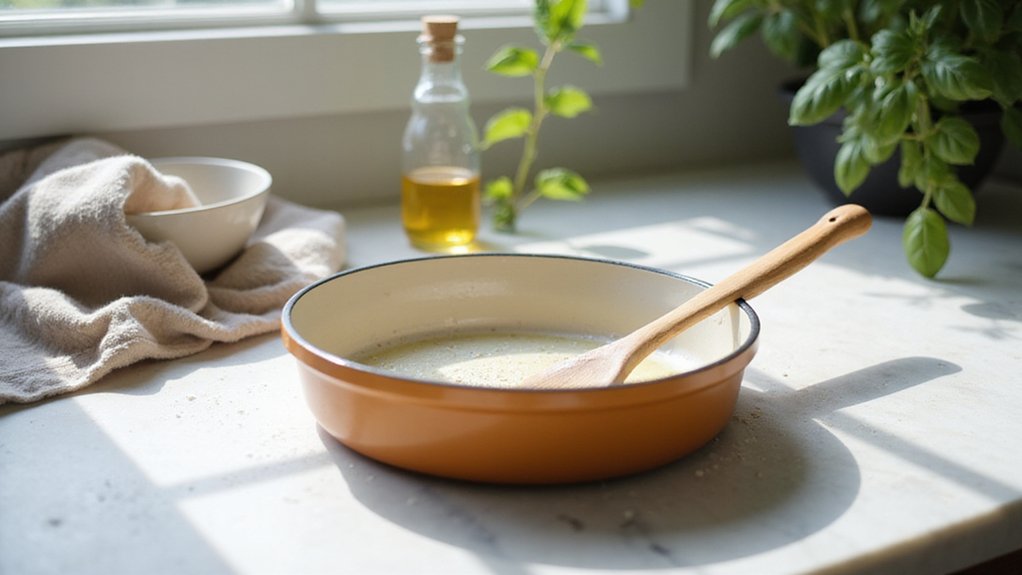
Proper handling is key to protecting your enameled skillet. Always lift food instead of pressing down hard or dragging utensils across the surface, which can cause scratches. When removing excess food from the pan, shake it off over the interior rather than the rim; this prevents chipping along the edges. Use both hands to control large tools like spatulas or spoons, reducing the risk of accidental impacts that can damage the enamel. Opt for flexible, gentle tools such as silicone or wooden spoons, especially those with a slotted design or a fish spatula. These reduce force and help preserve the smooth, glossy finish of your skillet for years to come. Avoid using metal spatulas or spoons, as metal contact can chip the porcelain coating and expose the cast iron to rust.

HIGH QUALITY NATURAL Acacia WOODEN HANDLE: Each spatulas with durable hardwood, which is durable than ordinary wooden handle can last up to 40 years under the proper care. ATTENTION: because of the natural acacia wooden handle, Please do not soak in water for a long timeand or use the dishwasher, Do not use a sharp dishwashing brush to clean the wooden handle. It is recommended to hand clean the wooden handle with clean water or wipe it with a soft cloth. It needs to be dried before storage.

FOOD GRADE SILICONE: Made of food-grade silicone, BPA-free, can use in any type of food. And it will probably last longer than the other plastic kitchen utensils. This silicone cooking utensils does not react with food or beverages, you don’t have to worry about the health of your families will not retain odors or colors, Before the first use, the original smell will disappear after the silicone soaking in water and exposed it to the air for about 3 hours

Premium 100% Food Grade Silicone: The silicone spatula set is made of healthy and friendly material, resistant to high temperatures up to 600 °F. No more melting, cracking and worrying
Master Heat Settings for Your Enameled Cast Iron Skillet
Mastering heat settings for your enameled cast iron skillet ensures its durability. Use low or medium heat for most frying, searing, and everyday cooking—high heat is rarely needed. Preheat the skillet gradually over 5 to 10 minutes to prevent thermal shock. To check if it’s at the right temperature, perform a water test: if droplets dance on the surface, it’s ready. If they sizzle immediately and sputter, the pan is too hot. Like a Dutch oven, this skillet’s heat retention allows for superior cooking results once properly preheated.
The skillet’s excellent heat distribution allows most dishes to be cooked on lower settings once it’s warm. Use high heat only for boiling water or reducing sauces, and never preheat on high. Cooling the skillet slowly before cleaning helps prevent damage from thermal shock. Always match the burner size to your skillet’s diameter to ensure even heating and consistent cooking results. For precise control similar to sous vide cooking, you can achieve specific textures by adjusting the skillet’s temperature and timing.

Total Diameter: 11.5" | Cooking Surface Area: 8.75" | Height (w/ Handle): 2.63" | Depth: 2" | Total Length with handle: 17.5"

Casserole cast iron skillet in white with loop side handles for easy transport

Cast iron contraction retains heat well. Interior does not alter flavors or absorb odors.
Hand-Wash Your Enameled Skillet the Right Way
To clean an enameled cast iron skillet without damaging its glossy finish, start by letting it cool completely to room temperature. Never shock a hot pan with cold water, as this can cause thermal stress cracks in the enamel. Use warm water and a mild dish soap with a soft sponge or nylon brush for regular cleaning. Avoid metal scrapers or steel wool, which can scratch the surface.
For stuck-on food debris, soak the skillet in warm, soapy water for 15 to 20 minutes to loosen residues. You can also boil a solution of two tablespoons of baking soda in four cups of water—this gentle chemical reaction lifts stubborn bits. While boiling, gently scrape the residue with a wooden spoon to avoid scratching. Infrared thermometers offer a similar non-contact benefit for monitoring surface temperatures in industrial and kitchen settings to detect hot spots.
Enameled cast iron does not require seasoning, so skip oiling or re-seasoning methods used for bare cast iron. Instead, stick to mild cleaning and careful handling to maintain the glossy finish. After washing, dry your skillet thoroughly with a towel immediately to prevent water spots. Never put enameled cast iron in the dishwasher, as the detergents and high heat can wear down the enamel over time. Keep your cleaning routine simple, and your skillet’s finish will stay flawless. Proper refilling technique for gas appliances emphasizes purging internal pressure and using creative seals to ensure a secure connection.
How to Remove Stains From Your Enameled Cast Iron Skillet
To remove stains from your enameled cast iron skillet, start with a baking soda paste mixed with dish soap. For light stains, apply the paste with a damp cloth and gently rub the area. For tougher marks, spread a liquid baking soda paste over the stain, let it sit for 15 to 20 minutes, then softly scrub with a nylon pad to lift the residue. Hard water stains often require an overnight soaking, so fill the skillet with warm water and add two tablespoons of baking soda. Let it sit for several hours or overnight to loosen mineral deposits. To banish burnt residue, bring two cups of water to a boil in the skillet with four tablespoons of baking soda, simmer for a few minutes, then use a pan scraper to lift the charred bits. If stains persist, you can use a bleach solution—mix one part bleach with three parts water—and soak the skillet for a few hours. Afterward, rinse thoroughly and wash with hot, soapy water to remove any bleach residue.

TARTAR CONTROL ENZYMATIC FORMULA: Toothpaste uses enzyme activity and baking soda to help loosen plaque and slow tartar buildup on tooth surfaces during brushing, supporting healthier teeth and gums with routine 2-3 times weekly use.

COMPLETE 3-PIECE DOG DENTAL KIT: Includes tartar control enzymatic toothpaste (2.5 oz), a dual-sided toothbrush, and a flexible finger brush, so you have everything needed to start brushing your dog's teeth at home.

ENZYMATIC DOG TOOTHPASTE: Enzymatic toothpaste with a baking soda enhanced formula gives effervescent cleaning action, and healthy enzymes help fight odor causing bacteria that lead to bad breath in dogs.
Season Your Skillet’s Exposed Edges: Not the Interior
The exposed cast iron rim of your skillet should be seasoned to prevent rust, while the enameled interior does not need it. Start by washing and thoroughly drying the skillet, placing special focus on the rim. Apply a very thin layer of high-smoke-point oil such as canola or grapeseed to only the bare metal edge. Use a paper towel to rub the oil evenly onto the rim, then wipe away all excess so the metal feels nearly dry. Avoid oiling the enamel interior or the colored exterior, as these surfaces do not require seasoning. This method focuses on the rim because seasoning creates a polymerized coating that seals the iron, preventing moisture contact and oxidation that could lead to rust. This technique is similar to how recipes often layer potatoes, bacon, onions, and cheese together for a hearty Dutch oven dish, relying on proper heat management to avoid burnt spots.
Once the seasoning layer is applied, place the skillet upside down in an oven preheated to 350°F. Bake it for 45 minutes to one hour. After baking, let the skillet cool completely inside the oven before handling. This process creates a polymerized coating that seals the iron, preventing moisture contact and oxidation that could lead to rust. Repeating this seasoning step periodically will help maintain your skillet’s rust-resistant edge.
Store Your Skillet to Prevent Rust and Damage
To prevent rust and damage, store your skillet in a cool, dry location away from sinks, dishwashers, and stoves to avoid excess moisture. After cleaning, heat-dry the pan on low for 2 to 3 minutes, then apply a thin layer of oil to both the interior and exterior surfaces. Allow the skillet to cool completely before storing to prevent condensation buildup.
Avoid wrapping the skillet in plastic, as this can trap moisture. Instead, use a cotton cloth or butcher paper to cover the pan. If you’re stacking multiple pans, place paper towels or felt pads between each one to keep surfaces separated and reduce scratching. Open shelving or ventilated cabinets are preferable over airtight containers to ensure proper air circulation. Periodically check your stored skillet, at least every few months, and re-apply a light coat of oil if the surface appears dry. Never store your skillet in the oven if it has recently undergone a self-cleaning cycle, as the high temperatures can cause damage.
Daily Care Tips for Your Enameled Cast Iron Skillet
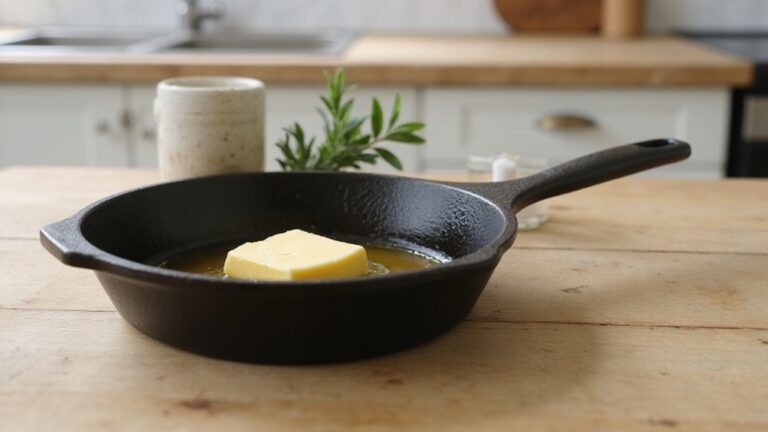
Always use the right utensils—wooden, nylon, or silicone—when caring for your enameled cast iron skillet to prevent scratches and chips. Avoid cutting food directly in the pan and do not stack other cookware on its surface. Manage heat by keeping the burner on low to medium settings, and always add oil, butter, or liquid before turning on the heat. Dry cooking and excessive use of cooking sprays should be avoided, as they can damage the enamel. When cooking with herbs, their oils can stain the surface, so rinse the pan promptly after use. Allow the skillet to cool completely before washing to prevent thermal shock, and dry it immediately with a soft towel to avoid rust on exposed edges. For storage, hang the skillet or place a paper towel between stacked pans to protect the enamel, and never let it soak in water for a long time. Similar to how silicone bags like Stasher bags require careful management to prevent leakage during sous vide, your enameled skillet needs proper heat and utensil choices to avoid chipping or warping.

DURABLE: Made from BPA-free matte black silicone

【COMPLETE 10-PIECE COOKING UTENSILS】This silicone cooking utensils set includes Spatula, Whisk, Turner, Slotted Turner, Spoonula, Skimmer, Pasta Server, Ladle, Tong, and Brush, Whether you need flipping eggs, whisking sauce, serving pasta, basting meat, or stirring soups, this 10-piece non-stick kitchen utensil set makes every cooking task from breakfast to dinner effortless and efficient

Includes: tongs, turner, spatula, skimmer, and slotted spoon
Which Cleaners and Sponges Are Safe for Your Enameled Skillet
Choose mild, pH-neutral dish soap like Ecover Zero or Branch Basics Concentrate for cleaning your enameled skillet. These eco-friendly detergents won’t dull the glossy surface. Use warm water and a non-abrasive sponge such as a Dobie or a silicone sponge for gentle, circular scrubbing during routine cleaning. Avoid citrus-based cleaners, steel wool, and any harsh abrasives because they can damage the enamel. For stubborn stains, make a baking soda paste or simmer water with baking soda to loosen burnt-on food. Bar Keepers Friend slurry can be effective for grease but only if diluted properly. Always soak your skillet in warm, soapy water for 15 to 20 minutes before scrubbing to help preserve the finish.

Heavy Duty Scouring Power - Our dish washing sponge is made using premium quality polyurethane and polyester material for extreme scrubbing action. This intense dishwashing scrubber with a long-lasting span takes on the toughest messes around the home

CLEAN SMARTER - NOT HARDER: We all know the pain of scrubbing away dirty or burnt food on pots with a soft cloths, and the hassle of a dish cloth and scrubber taking up space on the sink. Why not get the best of both worlds with our brand designed scourer/microfiber cloth combo sponge.
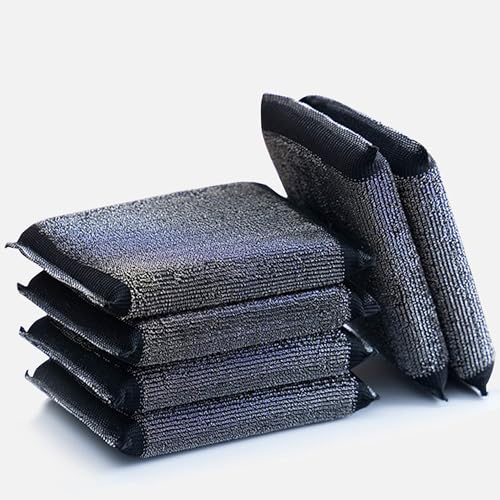
Steel wool scrubber: Our kitchen scrubbers sponges are made of high-quality stainless steel wire and thick sponges, which enriches the foam and provides a powerful scrub, it does not leave a scratch on the surface.