You’ll find carbon steel, stainless steel, hard anodized aluminum, and ceramic-coated pans offer lighter weight and easier maintenance than cast iron while delivering comparable cooking performance. Carbon steel responds quickly to temperature changes, stainless steel provides precise heat control, and non-stick options like ceramic eliminate seasoning requirements. Each material excels in specific applications—from high-heat cooking to versatile everyday use. The best choice depends on your cooking style, maintenance preferences, and health priorities, with each option presenting distinct advantages worth exploring further.
Carbon Steel Pans as Cast Iron Substitutes
If you’re seeking a cast iron alternative, carbon steel pans offer a compelling choice—they’re composed of roughly 99% iron and 1% carbon, making them lighter and more flexible than their cast iron counterparts. A 12-inch carbon steel pan weighs approximately 4.8 pounds compared to cast iron’s 6.6 pounds, enhancing maneuverability for demanding cooking techniques.
Carbon steel advantages include superior heat responsiveness; you’ll experience faster heating and cooling that enable precise temperature control. The thinner construction and smoother surface reduce sticking without compromising non-stick performance when properly seasoned. Additionally, cooking with carbon steel can also help boost iron intake, similar to cast iron, making it beneficial for individuals looking to improve their nutritional levels.
You’ll find carbon steel particularly suited for sautéing, stir-frying, and tossing movements. Its sloped sides facilitate quick hand movements that cast iron’s heavier, thicker design restricts. Both materials develop natural non-stick properties through seasoning, though carbon steel’s smoother finish delivers slightly better initial performance for dynamic cooking techniques. Additionally, like cast iron, carbon steel can provide small amounts of dietary iron, benefiting your nutritional intake while you cook.
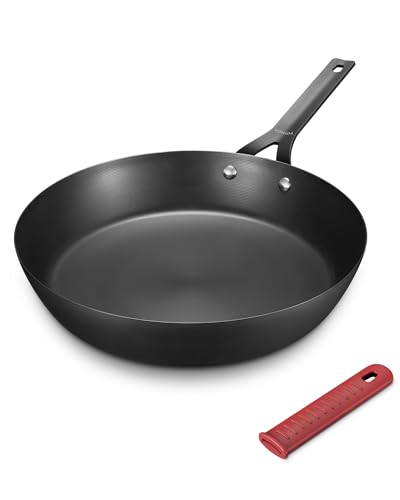
【Pre-Seasoned & Ready to Use】This carbon steel pan arrives pre-seasoned with 100% natural oil, forming an inherent easy-release surface that enhances with each use. As a nonstick foundation free of synthetic coatings, it is designed to deliver and build lasting non-stick performance for a lifetime of cooking.

【Pre-Seasoned & Ready to Use】This carbon steel pan arrives pre-seasoned with 100% natural oil, forming an inherent easy-release surface that enhances with each use. As a nonstick foundation free of synthetic coatings, it is designed to deliver and build lasting non-stick performance for a lifetime of cooking.

Natural Oil-Seasoning Technology-----The skillet's textured surface naturally bonds with cooking oils during use, developing a durable, chemical-free non-stick layer that enhances performance over time. Requires less seasoning oil than traditional pans for optimal results while maintaining effortless maintenance—the more you cook, the better it performs.
Stainless Steel Pans
Stainless steel pans represent a versatile cast iron alternative that prioritizes ease of maintenance and cooking flexibility over heat retention. You’ll appreciate their rapid heat-up time and quick response to temperature adjustments, enabling precise cooking control. While they don’t retain heat as effectively as cast iron, triply-clad construction with aluminum or copper cores greatly improves heat distribution and minimizes hot spots.
Your cooking versatility expands greatly—you can sear, sauté, poach, and caramelize across all stovetop types, including induction. Unlike cast iron, they’re dishwasher-safe and handle acidic ingredients without concern. You’ll find them oven-safe up to 500–600°F. Additionally, consider that some manufacturers recommend avoiding cast iron altogether due to the risk of scratches or overheating the cooktop. Using fats during cooking helps to maintain a non-stick surface over time, similar to how pre-seasoned cast iron performs.
The lightweight design reduces fatigue during extended cooking sessions, making them ideal if you frequently transfer pans between stovetop and oven. Their non-reactive surface preserves food flavors while requiring minimal maintenance.

CONFIDENCE IN EVERYDAY COOKING — Cuisinart stainless steel delivers dependable performance for everyday cooking. This 10-inch, mid-sized Cuisinart skillet is built to last with a lifetime warranty, ensuring your only worry in the kitchen is what to cook next.

Tri-Ply Clad Construction: Ensures precise and even heat distribution across the entire pan for superior cooking results on any stovetop.
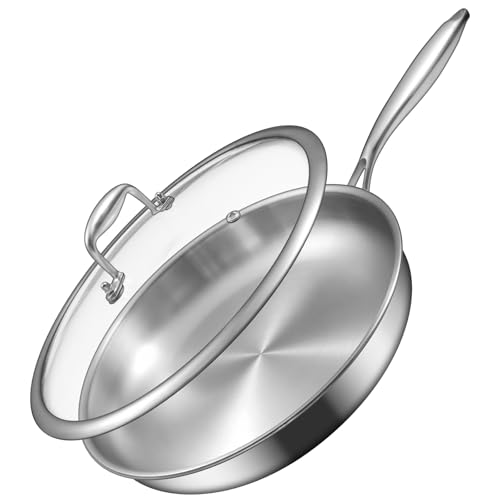
MULTIPLY CLAD STURDY CONSTRUCTION: Multiply cladding technology produces the highest-quality 3 ply stainless steel cookware set in your kitchen. 304 stainless steel interior for safe, easy-clean cooking; a thick aluminum core for even heating; 430 stainless steel exterior for use on all cooktops. Allows heat to pass through the entire pan, bottom to sidewall, with quick & even heat.
Hard Anodized Aluminum Pans
While cast iron excels at heat retention, hard-anodized aluminum pans prioritize rapid heating and superior heat distribution through aluminum’s natural thermal conductivity. You’ll experience notably improved cooking efficiency since hard-anodized surfaces reach higher temperatures quickly, making them ideal for recipes demanding high heat.
The anodization process renders aluminum twice as hard as stainless steel, creating a nonreactive cooking surface that resists peeling, scratching, and chipping. You can safely prepare acidic foods like tomatoes without concerning yourself with metal reactivity or flavor alterations.
You’ll appreciate the lightweight construction, which greatly reduces strain compared to cast iron during extended cooking sessions. Unlike bare cast iron, hard-anodized pans require minimal maintenance—no seasoning protocols necessary. While they don’t last indefinitely like properly maintained cast iron, they remarkably outlast standard nonstick cookware.
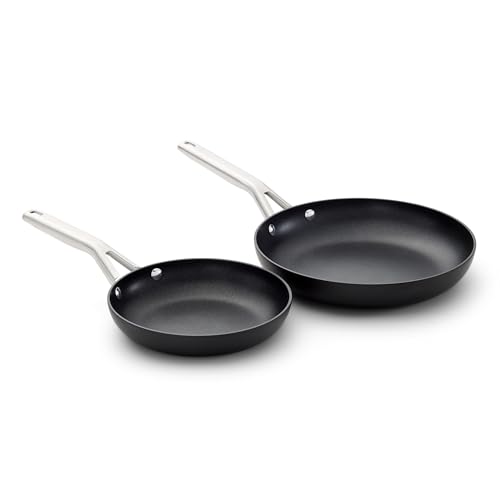
Kitchen Tested Over 100,000 Times: Superior cooking performance backed by rigorous durability testing.

EVEN, CONSISTENT HEAT: Thick, forged base on this induction frying pan is designed to heat evenly for experimenting with new recipes and getting beautifully browned results on any stovetop, including induction

Kitchen Tested Over 100,000 Times: Superior cooking performance backed by rigorous durability testing.
Ceramic Non-Stick Pans
Ceramic non-stick pans offer a fundamentally different approach to cookware design, prioritizing health and ease of maintenance over the heat performance that hard-anodized aluminum delivers. You’ll appreciate that ceramic finishes contain no PTFE or PFAS synthetic coatings, eliminating toxic fume risks during overheating. These pans heat evenly at moderate temperatures but lack cast iron’s superior heat retention, making them better suited for low to medium cooking techniques rather than high-heat searing. You’ll benefit from effortless cleaning—no seasoning required—and dishwasher compatibility. However, ceramic’s brittleness demands careful handling; you must avoid metal utensils and thermal shock. They’re California Prop 65 compliant and non-reactive with acidic foods, making them a practical choice for cooking acidic ingredients. While less durable than cast iron, proper gentle use yields decades of reliable service. It’s important to note that ceramic pans do not leach harmful chemicals, making them a safe alternative to cast iron cookware.

HEALTHY CERAMIC SKILLET - Made of natural ceramic coating, free of intentionally added PFOA, PTFE, PFAS, lead and cadmium, safe and healthy. No toxic substances will be produced even overheated. No coating to come off into your food.

HEALTHY CERAMIC NONSTICK: Our healthy and easy-to-clean ceramic nonstick coating is derived from sand and delivers effortless release with quick cleanup

【Healthy Ceramic Skillet 】- Crafted with a non-toxic ceramic coating, our ceramic frying pan offers high-level non-stick performance, elevating your cooking experience. Our ceramic skillet with lid is free from harmful chemicals such as PFOA, PFAS, PTFE, lead, and cadmium, healthy, and non-toxic.
Granite-Coated Pans
If you’re seeking a cast iron alternative that combines modern non-stick convenience with superior heat distribution, granite-coated pans deliver exceptional performance through their aluminum or stainless steel cores. You’ll experience rapid heat-up times and consistent temperature maintenance, ideal for frying and simmering without hot spots.
The durability comparison favors granite-coated pans over ceramic alternatives—their hard, dense surfaces resist scratches better while withstanding daily cooking rigors. Most brands eliminate PFOA and PTFE, ensuring safe operation within recommended temperatures. Additionally, unlike traditional raw cast iron skillets that require seasoning to develop a nonstick surface, granite-coated pans are ready to use straight out of the box.
For cooking efficiency, the non-stick surface minimizes oil requirements and reduces cleaning time. However, expect limited lifespan compared to cast iron; coatings typically degrade after several years of regular use. Hand washing extends durability, though most remain dishwasher safe. Avoid abrasive cleaners and extreme temperature fluctuations to preserve performance. Cooking with granite-coated pans can also offer ease of use similar to the benefits of cast iron, making them a practical choice in many kitchens.

Eco-friendly Classic Granite: Non-stick Granite Material, PFOS,PFOA free, our cookware ensures your daily cooking is always safer and healthier.

【Superior Nonstick Performance】 - Carote deep non stick frying pan with lid is made with natural granite materials, providing superior nonstick performance with 100% PFOA-free and non-toxic properties. Enjoy healthier cooking with less oil intake. Advanced technology ensures a long-lasting and naturally nonstick surface that effortlessly releases food.

Eco-friendly Classic Granite – Non-stick Granite Material, PFOS,PFOA free, our cookware ensures your daily cooking is always safer and healthier.
Cast Aluminum Pans
Cast aluminum pans excel as cast iron alternatives through superior heat conductivity and lighter weight. You’ll appreciate their even heat distribution, which minimizes hot spots and promotes uniform cooking across the surface. They heat up faster than cast iron, reducing preheat time—ideal for searing, frying, and sautéing. While their heat retention isn’t quite as impressive as cast iron’s, you’ll find their rapid cooling offers better temperature control for precise cooking techniques.
You’ll benefit from their rust resistance and minimal maintenance requirements. Most cast aluminum pans are dishwasher safe and resist chipping under normal use. However, they’re limited to approximately 335°F in ovens and aren’t induction-compatible unless specifically designed. Their lightweight construction reduces physical strain, making them easier to handle and store than heavier cast iron alternatives.