Wondering if a cast iron skillet is really the best choice for your kitchen? The quick answer is yes for many cooks, thanks to its durability, exceptional heat retention, and natural nonstick surface that develops over time.
In this introduction, you’ll see why this classic pan can often outperform pricier options and how it fits into everyday cooking.
Keep reading to find out how a simple skillet can transform your kitchen routine.
Does Cast Iron Really Outlast Every Other Pan?
Cast iron definitely outlasts every other pan when properly maintained. While a typical nonstick skillet lasts only three to five years, a well-cared-for cast iron pan can last for generations. This remarkable longevity comes from its dense, heavy construction that resists warping and damage over time. Unlike nonstick pans, which degrade with use and require replacement, cast iron’s seasoning actually improves with proper care. You can even restore a dull or rusty pan with steel wool, bringing it back to life. For a more thorough restoration, using a vinegar spray solution helps loosen rust without causing pitting if left on for no longer than 30 minutes. Maintenance is straightforward: avoid dishwashers, and re-season when the surface starts looking dull. This simple routine ensures your cast iron can withstand high temperatures above 500 degrees and resist cracking. Although stainless steel and aluminum are good conductors of heat, cast iron excels at heat retention, reducing thermal stress and uneven cooking. For searing tasks, a butane blow torch with a wider flame provides superior results compared to general-purpose torches designed for soldering. For precise temperature control in other cooking tasks, digital probe thermometers are more reliable than infrared models for measuring internal liquid temperatures. Investing in a cast iron pan means choosing a kitchen tool designed to last a lifetime and beyond. For those who prefer minimal maintenance, enamel-coated cast iron offers a rust-proof and non-reactive surface that requires no seasoning, making it ideal for acidic foods like tomato sauces.

Exceptional Heat Retention: Enjoy perfectly cooked meals with cast iron skillets that provide even heat distribution, ideal for searing, frying, and baking in a 12 inch frying pan.

Versatile Cooking Skillet: The Lodge Cast Iron Skillet is a multipurpose, everyday cooking pan that excels at searing, sautéing, baking, frying, and campfire meals

Superior Heat Retention: The Cast Iron Skillet distributes heat evenly across the surface for perfect cooking results. Ideal for searing, sautéing, frying, baking, and more.
How a $20 Skillet Can Outperform a $300 One
A $20 cast iron skillet can outperform a $300 one in many cooking tasks. Both handle searing at high heat equally well, creating a perfect crust on steaks and other meats. The rough surface of a new inexpensive skillet smooths out quickly with seasoning, ensuring consistent heat transfer over time. Safety concerns are similar—both pans do not require dishwashing or soap, which helps preserve their seasoning layer. The main difference is weight; a heavier skillet stays stable on your burner and heats more evenly, but that doesn’t mean you need a costly pan to get great results. In fact, a budget skillet can provide all the performance you need without the unnecessary expense. For example, the Lodge offers a larger cooking surface than the Finex despite similar external dimensions, making it more practical for everyday cooking.

Durable Cast Iron Construction: Made from cast iron for long-lasting use and even heat distribution.

5.5-inch square skillet for grilled cheese or ham & cheese sandwiches

What Makes Cast Iron Nonstick Without Toxic Coatings
Cast iron becomes nonstick without toxic coatings through a process called polymerization, which involves bonding oil to the metal surface. To do this, you heat fat or oil to about 450°F to 500°F for roughly an hour. During this high-temperature process, the oil oxidizes and forms a durable, impermeable layer on the cookware. Repeating this seasoning process two to three times builds up a firm barrier that prevents food from sticking, eliminating the need for synthetic coatings like PTFE or PFAS. A Dutch oven’s cast iron construction and tight-fitting lid similarly rely on this seasoned surface for even heat distribution and moisture retention. After baking, letting the skillet cool inside the oven helps the seasoning cure fully for a more durable finish. For an even harder and slicker finish, using flaxseed oil requires multiple seasoning cycles over several hours. The choice of oil plays a significant role in the quality of your seasoned surface. High-polyunsaturated oils such as flaxseed or soybean oil create a firmer, more resilient layer. Alternatively, traditional animal fats like lard or tallow can produce a hard finish that enhances nonstick properties. Remember to apply only a very thin layer of oil; using too much can create a sticky residue instead of a smooth, nonstick surface. Properly seasoned cast iron provides an excellent non-stick surface that can outperform Teflon without any synthetic chemicals.
How Much Maintenance Does Cast Iron Actually Need?
Cast iron requires minimal daily maintenance to keep it in good condition. You should rinse the skillet with hot water and a soap-free sponge, avoiding any soaking. For stuck-on bits, a chain scrubber or kosher salt used as a gentle abrasive will do the trick—it’s simple and effective. Lodge’s heat-treated cast iron lines are more rust-resistant but still benefit from regular oiling after use. After cleaning, dry the pan thoroughly on a burner, then apply a dime-sized amount of unsaturated oil like grapeseed. Wipe off any excess so only a thin, transparent layer remains. This routine of quick oiling and heating helps prevent rust and maintains the skillet’s non-stick surface. Always dry completely before storing to avoid moisture buildup, and use the skillet often to keep maintenance minimal. Consistency is key to long-lasting, low-effort care. Routine maintenance ensures the skillet remains in ready-to-use condition by preserving the seasoning layer. Just as vacuum sealers offer sealing modes for different food types to reduce waste, frequent use of the skillet reinforces its seasoning and prevents deterioration. Small Dutch ovens can also be used for baking, roasting, and slow cooking, demonstrating their versatility beyond just skillet-style frying.
The Real Reason Cast Iron Delivers Perfect Steak
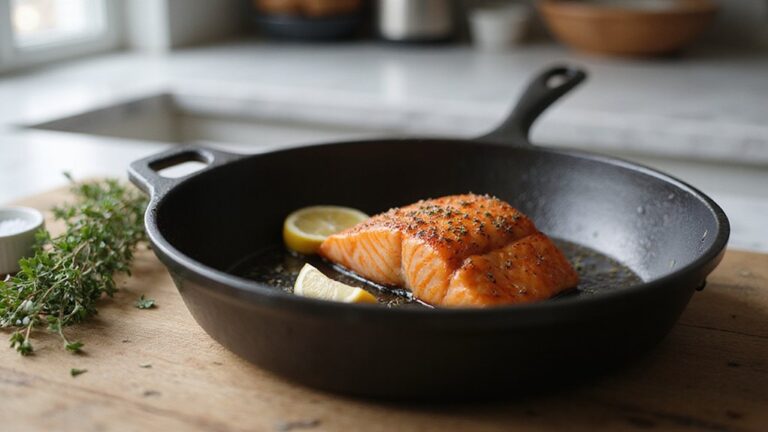
Cast iron’s ability to deliver a perfect sear comes down to its exceptional heat retention. Unlike stainless steel, which can reach high temperatures but cools quickly when a cold steak is added, cast iron maintains its heat much longer. Preheating the pan to around 500°F ensures it is hot enough to trigger the Maillard reaction immediately when the steak touches the surface. This results in a deep, golden-brown crust without overcooking the interior. Proper seasoning is also crucial; a polymerized layer of oil creates a natural non-stick surface that promotes even browning. To build and maintain this layer, you should season the skillet by baking it with a thin coat of oil at high temperatures, which also helps prevent rust. Pat your steak bone-dry before placing it in the hot pan, avoid moving it for at least three minutes, then flip it every two minutes and baste with butter and thyme. This method guarantees a restaurant-quality crust paired with a tender, evenly cooked inside. The rich marbling of fat in a ribeye cut enhances juiciness and flavor when cooked this way. For equally precise control over egg doneness, you can use sous vide cooking to achieve textures ranging from runny yolks to easy-to-peel hard boiled eggs.

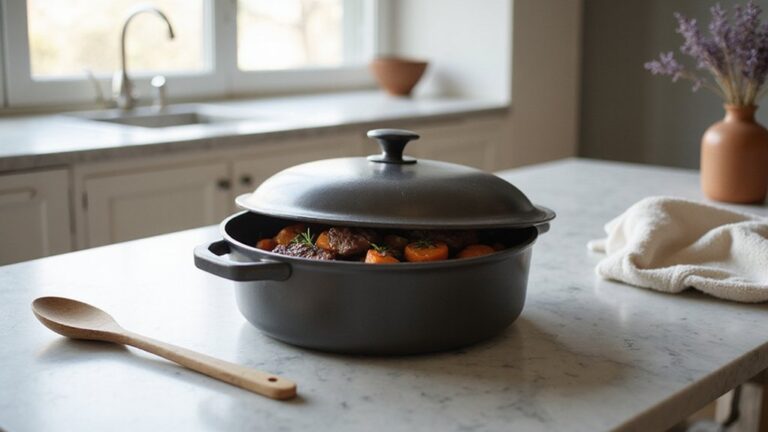
Moisture-Locking Lid: The Lodge Essential Enamel Braiser features a moisture-locking design ideal for broiling, braising, baking, or roasting

【All-in-One 4-Piece Cookware Set for Versatile Cooking】This complete enameled cast iron cookware set includes a 10.25" skillet, 2QT saucepan with lid, 2.8QT small Dutch oven, and 4.8QT large Dutch oven with lids. Perfect for everyday tasks from frying eggs and making sauces to slow-cooking roasts, soups, and baking bread. Whether you’re preparing quick weeknight meals or weekend feasts, this set covers all your cooking needs

COMPLETE KITCHEN ESSENTIALS: This 7-piece cookware set includes two Dutch ovens, one saucepan, one skillet and three lids for everything from quick weeknight meals to weekend entertaining.
Is Cast Iron Too Heavy for Everyday Cooking?
Weight can be a significant drawback of cast iron cookware for everyday use. An 8-inch skillet typically weighs around 3-4 pounds, making it manageable to handle during regular cooking. However, as the size increases, so does the weight: a 10-inch skillet can weigh between 5 and 6.5 pounds, and a 12-inch model can reach up to 8.5 pounds. This added weight can quickly become cumbersome, especially when the skillet is filled with food or hot oil. Infrared thermometers are ideal for non-contact temperature measurement of skillets during cooking, just as they monitor equipment in industrial settings. For applications requiring extended cooking times, a Dutch oven offers similar low-and-slow benefits with a more manageable weight distribution. For accurate readings, the skillet’s surface emissivity matters greatly, since matte surfaces provide better results than shiny ones. Handling heavy skillets over 5 pounds can pose challenges, such as wrist strain or difficulty flipping and sautéing food comfortably. For daily cooking, choosing a skillet between 8 and 10 inches—generally weighing 3 to 4 pounds—strikes a good balance between heat retention and manageability. Anything larger or heavier is better suited for special occasions or large meal preparations, where the weight is less of a concern.
Why Cast Iron Beats Nonstick for High-Heat and Broiler Cooking
Cast iron outperforms nonstick for high-heat and broiler cooking because it can withstand temperatures up to 1500°F, whereas nonstick coatings start to degrade above 400°F. Nonstick surfaces may flake or release toxic fumes if heated too much, limiting you to medium or low heat. In contrast, cast iron’s durability allows you to sear at high temperatures and even use it under a broiler—a task impossible for nonstick pans, which would have their coating destroyed by the extreme heat. For safe rust removal on cast iron, Evapo-Rust is safe because it is water-based, non-toxic, and leaves no residue, though extended soaking beyond two days can dull the surface.
Cast iron also excels in heat conduction and retention. Its thick, dense body stores and evenly distributes thermal energy, resulting in a perfect sear on meats and deep, uniform browning of vegetables. Nonstick pans, typically thinner, conduct heat poorly, creating hot spots and uneven coloring. This prevents getting that desirable golden crust. Additionally, while nonstick surfaces can warp under thermal stress, cast iron remains flat and stable for decades, making it a reliable choice for high-heat and broiler use. A machined surface cast iron skillet, with its smooth, polished cooking surface, provides a near non-stick experience from the start due to pre-seasoning with grape seed oil, further enhancing its high-heat performance. However, unlike enameled cast iron, traditional cast iron reacts with acidic foods such as tomato sauce, which can affect flavor and damage the seasoning.

Reliable Heat Resistance: Designed for skillets 9 inches and larger, the Lodge Silicone Hot Handle Holder delivers a secure grip on hot cookware with heat resistance up to 500°F
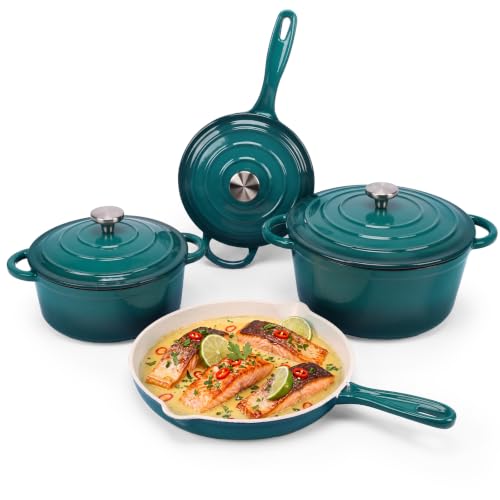
[Complete 7-Piece Set for Versatile Cooking] - This enameled cast iron cookware set includes a 4.8-quart large Dutch oven with lid, 2.8-quart small Dutch oven with lid, 2-quart sauce pan, and a 10.25-inch skillet. Perfect for a range of cooking techniques, from sautéing and grilling to slow cooking, roasting, and baking—an ideal gift choice for home chefs!

High Heat Resistance: Our Silicone Hot Handle Holder set are made of high-quality, durable and heat-resistant silicone. High heat resistance silicone protects hands up to 400 Degrees F/200 Degrees ℃. Which has good hot insulation and flexibility, easy to clean and be cool, dishwasher safe, protecting hands avoid high temperature burns.
Should You Buy Enameled Cast Iron Instead of Bare Black Iron?
Enameled cast iron is a better choice if you want a maintenance-free surface that resists rust and doesn’t require seasoning. It features a glass coating that creates a non-reactive barrier, making it ideal for cooking acidic foods like tomatoes or wine without imparting a metallic taste. This coating also simplifies cleaning—soap and water are enough, and soaking won’t harm it. However, the enamel layer is fragile and can chip or crack if subjected to impact, so careful handling is essential. Bare black iron is more durable, capable of lasting a lifetime without the risk of coating failure. While it requires regular seasoning to maintain its natural non-stick properties, it provides a rugged, versatile base that can handle high heat and abrasive cleaning. If you prefer cookware that needs less upkeep and is easier to clean, enameled cast iron is a practical choice. But if durability and longevity with minimal fuss matter most, bare black iron may be better suited for your needs.

Cast iron contraction retains heat well. Interior does not alter flavors or absorb odors.

【3 Sizes for Everyday Cooking】Hisencn 3-piece Non-Stick enameled cast iron skillet set includes 8-inch, 9.5-inch, and 11.5-inch skillets to handle everything from quick breakfasts to family-size meals. The 8-inch skillet is ideal for eggs, omelets, and small portions; the 9.5-inch pan is great for everyday frying, searing, and sautéing; while the spacious 11.5-inch deep skillet offers extra room for larger meals. One versatile set covers a wide range of everyday cooking needs.

Enhanced Cooking Experience: Carote enameled cast iron braiser boasts excellent heat conduction & retention. Its thick cast iron body and lid condensation lock food flavor. Ideal for searing, roasting and braising.
Is Cast Iron the Best Skillet for Your Cooking Style?
Cast iron is best suited for high-heat cooking techniques such as searing, frying, and slow braising. Its excellent heat retention creates a crispy crust on steaks and tender interiors in baked goods like cornbread. This durable material is ideal for rustic, flavor-intensive dishes that benefit from even, sustained heat. However, it requires regular seasoning to maintain its non-stick surface and careful drying after washing to prevent rust. For quick stir-fries or acidic tomato sauces, cast iron is less effective because it heats slowly and responds less rapidly to temperature changes. Despite this, its rugged durability and attractive black finish add a timeless charm to your kitchen. Overall, cast iron is a reliable companion for hearty, slow-cooked meals and oven-to-table versatility. Additionally, cooking with cast iron can contribute small amounts of dietary iron to your meals. To protect the cooking surface, wooden or silicone utensils should be used instead of metal tools. Unlike cast iron, a regular vacuum cleaner cannot create the strong, consistent vacuum needed to safely extend the storage life of food and prevent bacterial growth.