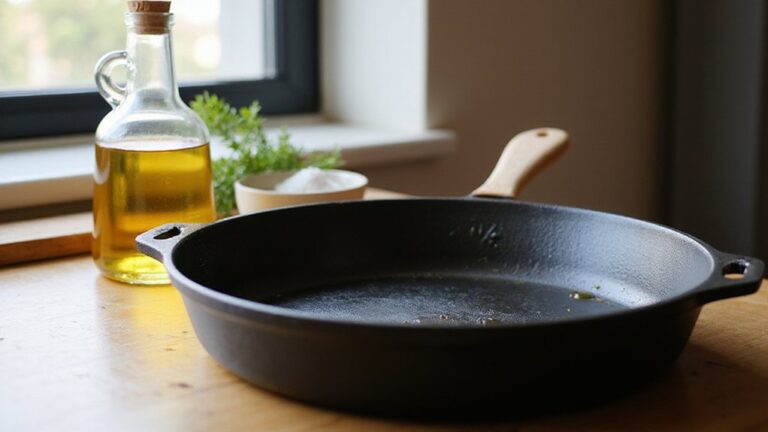
You can achieve restaurant-quality filet mignon using five proven methods without cast iron. Try grilling with indirect heat at 350°F, sous vide cooking in a temperature-controlled water bath, oven roasting at 400°F, stainless steel pan searing with high smoke point oil, or broiling at 500°F. Each technique requires monitoring internal temperature—remove your steak 5°F below target doneness, then rest it 5-10 minutes for ideal results. Proper seasoning with kosher salt and fresh herbs elevates your preparation considerably.
Grilling With Indirect Heat
You’ll create the foundation for perfectly cooked filet mignon by establishing a two-zone fire: heat one side of your grill to high temperature while keeping the other side at low or no heat. For gas grills, turn half the burners on; for charcoal, bank coals to one side.
Your grill setup requires preheating to approximately 350°F. Clean and oil your grates to prevent sticking, as cast iron requires adequate oil to maintain its non-stick properties. Bring steaks to room temperature for 30-45 minutes before cooking.
Place steaks on the indirect heat side, close the lid, and cook for 35-40 minutes, flipping halfway through. Monitor internal temperature with a meat thermometer, cooking until steaks reach 10°F below your target doneness. This cooking zones approach guarantees even heat distribution and precise temperature control throughout the process. Achieving a good sear is essential for flavor, so make sure to follow proper cooking techniques when the steaks are ready to sear.

Instant Read Food Thermometer | Our instant read thermometer features a temperature probe and advanced, highly accurate technology with 1-2 seconds response time; Instructions, meat temperature chart, comes pre-calibrated for your convenience, and recalibrating feature if needed.

【Ultra-Fast & Precision Accurate】This meat thermometer digital delivers accurate readings within ±1°F/±1°C in just 1–2 seconds, with a wide temperature range of -58°F to 572°F (-50°C to 300°C). No more waiting over the heat - know your food's exact temperature instantly.

Fast & Accurate: Get precise readings in just 1 second with ±0.9°F accuracy. NSF Certified for trusted food safety, this digital food thermometer features a 4.3 inches food-grade stainless steel meat probe, perfect for grilling, frying, baking, making candy and more
Sous Vide Cooking Method
Because precision and consistency define sous vide cooking, you’ll want to start by selecting your target doneness level and setting your immersion circulator to the corresponding water temperature—rare filet mignon cooks at 120°F to 128°F, medium-rare at 129°F to 134°F, medium at 135°F to 144°F, medium-well at 145°F to 155°F, and well-done at 156°F and higher. Season your steaks liberally with kosher salt, pepper, crushed garlic, and fresh rosemary before vacuum sealing them in ziplock bags using the water displacement method. While a vacuum sealer is not essential, it can enhance your cooking results by ensuring even cooking and better flavor retention. It is important to ensure that the bags used are food-safe plastic bags free from harmful additives to maintain safety during cooking. Submerge your sealed steaks in the temperature-controlled water bath for one to four hours depending on thickness. After cooking, pat your steaks dry and sear them quickly in a hot skillet with butter and garlic for a flavorful crust before serving.
Oven Roasting Technique
For ideal results with oven roasting, start by removing your filet mignon from the refrigerator 30–60 minutes before cooking to allow it to reach room temperature, which promotes even cooking throughout. Pat the steaks dry and season liberally with salt and pepper.
For oven preparation, preheat to 400°F for individual steaks. Using searing methods, heat an oven-safe stainless steel skillet over medium-high heat with high smoke point oil. Sear your steaks 2–3 minutes per side until golden brown, then transfer the pan directly to the preheated oven.
During this process, it’s critical to use a high-quality seasoning oil to enhance flavor and prevent sticking. Cook individual filets 4–10 minutes depending on thickness. Remove steaks 5°F below your target temperature—rare (120°F), medium-rare (130°F), or medium (140°F)—accounting for carryover cooking. Be sure to use oven-safe probe thermometers to monitor the internal temperature accurately. Rest for 5–10 minutes loosely covered with foil before serving.

【TRI-PLY STAINLESS STEEL】Tri-Ply Stainless Steel Pan Combines Ergonomic kitchenware Design and superior features for better cooking performance. Stainless steel surface doesn't react with food or alter flavors.

MULTIPLY CLAD STURDY CONSTRUCTION: Multiply cladding technology produces the highest-quality 3 ply stainless steel cookware set in your kitchen. 304 stainless steel interior for safe, easy-clean cooking; a thick aluminum core for even heating; 430 stainless steel exterior for use on all cooktops. Allows heat to pass through the entire pan, bottom to sidewall, with quick & even heat.
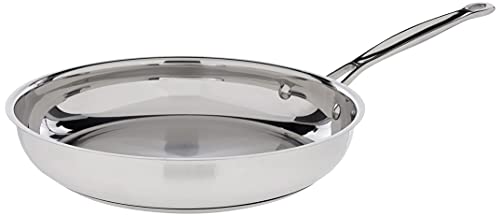
EXCEPTIONAL DESIGN: enjoy mirror finish, classic look and professional performance. Aluminum encapsulated base heats quickly and spreads heat evenly– eliminating hot spots
Pan Searing With Stainless Steel
While oven roasting delivers consistent results, pan searing on the stovetop gives you direct control over crust development and browning. You’ll want a high-quality stainless steel pan with a metal handle for oven-safe finishing.
Begin with proper pan preheating techniques—heat your stainless steel skillet for 3-4 minutes on medium-high until it reaches prime searing temperature. This preparation guarantees immediate crust formation when you introduce the steak, which mimics the strong sear achieved with a cast iron skillet.
For oil selection guidelines, choose high smoke point oils like grapeseed oil, ghee, or duck fat to prevent burning. You can combine olive oil with butter for added flavor while minimizing butter’s burning tendency. Apply a small coating to the hot pan just before placing your filet mignon, creating an even heat transfer foundation that maximizes browning effectiveness. Additionally, a cast iron skillet’s unique ability to retain heat can lead to superior searing, but stainless steel can certainly provide excellent results as well.
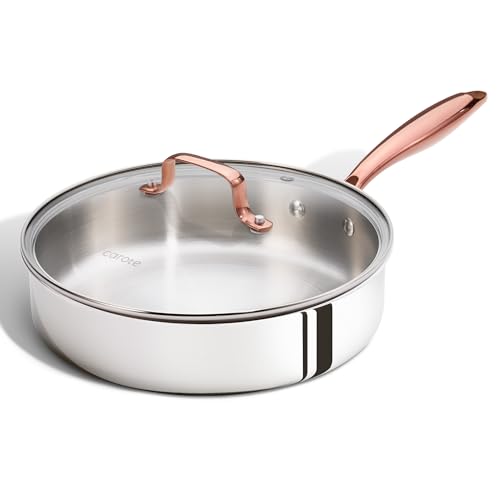
Fast & Even Heating — 3-PLY fully bonded from base to rim for consistent performance and durability; the stainless surface sears beautifully and is ideal for deg-lazing to make pan sauces.

EXCEPTIONAL DESIGN: The 5.5-Quart Saute Pan with Helper Handle and Flavor Lock Lid has straight high sides and a flat cooking surface to maximise capacity. Measurement markings provide you with ease of use every time with Drip-Free pouring

Fast & Even Heating: 3-PLY fully bonded from base to rim for consistent performance and durability; the stainless surface sears beautifully and is suitable for deg-lazing to make pan sauces
Oven-Only Preparation
If you’re cooking filet mignon without a cast iron skillet or stovetop searing, you’ll achieve excellent results using oven-only preparation. Remove your steak from the refrigerator 30-60 minutes before cooking to guarantee even heat distribution. Pat it dry, season generously with salt and black pepper, then lightly oil the surface for moisture retention during roasting.
Preheat your oven to 400°F—the ideal temperature for most filet thicknesses. Arrange your steak on a preheated baking tray or oven-safe wire rack, spacing it properly for air circulation. Place it on the middle rack and flip halfway through cooking. Monitor internal temperature using an instant-read thermometer, removing the steak when it reaches 5°F below your target doneness. Remember, if you want to experiment with sous vide preparation, consider using Stasher bags which can provide an eco-friendly way to seal your steak during cooking. Rest for five minutes before serving, allowing carryover cooking and juice redistribution for peak tenderness.
Electric and Indoor Grills
Electric griddles and indoor grills offer a convenient alternative when you’re unable to use traditional stovetop-to-oven methods, and they’ll produce equally impressive results when you follow proper technique. Preheat your electric grill to 375-400°F or indoor grill to 450°F for 5-10 minutes, testing readiness with the water droplet method.
Place your filet mignon on the hot surface without moving it for 3-5 minutes to develop a proper crust. Flip carefully using tongs, avoiding any piercing that’d release juices. Cook the second side another 3-5 minutes until your meat reaches 130-135°F for medium-rare.
These electric grill techniques and indoor grilling tips guarantee even cooking and ideal crust formation. Furthermore, the principle of even heat distribution found in techniques like those used with a Dutch oven enhances the cooking process by promoting uniform cooking of the meat. Rest your steak 5-10 minutes under foil before serving, allowing juices to redistribute throughout.

COOKS A VARIETY OF FOOD QUICKLY: Grill steaks, burgers, chicken breasts, fish fillets, pork chops, vegetables and more indoors without leaving your kitchen. This indoor electric grill is great for low-carb food plans like keto or paleo.

THE SMARTEST GRILL EVER: precision technology that calculates ingredient thickness and adjusts cooking automatically. This is not just an indoor electric grill—it's also a panini press, griddle, and sandwich maker, offering endless meal options.

DON’T LET RAIN RUIN YOUR BARBECUES ANYMORE! – Enjoy all the fun of an outdoor BBQ in the comfort of your home with our premium indoor electric grill and prepare the most mouth-watering meals for your family!
Broiler Cooking Option
Broiling offers another excellent high-heat method for achieving that coveted crust on your filet mignon when you don’t have access to a traditional grill. Position your oven rack five inches from the broiler heat source for ideal searing. Preheat your broiler with the pan inside, then season your room-temperature filets with salt and pepper. Lightly oil both filets and pan to prevent sticking. Place filets on the preheated pan and broil 4-6 minutes per side at 500°F, flipping only once.
For broiler setup tips, use a broiler pan that drains fat to minimize smoke and flare-ups. Monitoring continuously is crucial, as meat thermometers can help ensure your filet mignon achieves the perfect doneness, as this eliminates guesswork and ensures the steak reaches the desired level of doneness safely and consistently.
Regarding broiling safety precautions, keep your oven door slightly ajar if your manufacturer recommends it, and turn off the broiler immediately after cooking to prevent overcooking from residual heat.
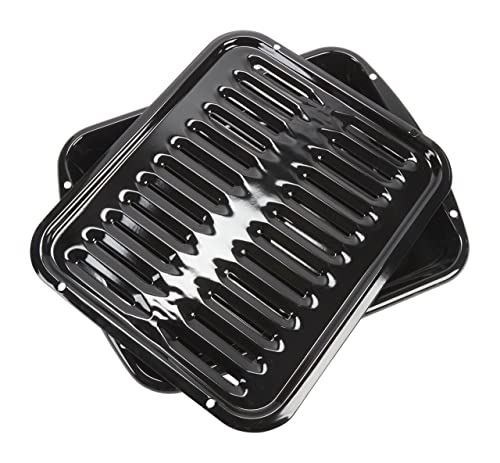
GENUINE OEM QUALITY: Whirlpool Genuine OEM broiler pan is designed for compatible ranges and ovens to help support proper fit, dependable performance, and the quality standards your appliance was built for

DURABLE: Broiler baking pan set is made from durable steel that is heavy-weight while being warp resistant; long-lasting nonstick protects against scratches and staining

Temperature Monitoring and Doneness Levels
How do you know when your filet mignon has reached the perfect doneness? Use an instant-read meat thermometer inserted into the thickest part for accurate readings. Remove your steak about 5°F below your target temperature to account for carryover cooking during resting. This method of monitoring temperature is similar to ensuring a proper vacuum seal when canning, as both require precision and attention to detail.
Doneness definitions guide your approach: rare hits 120-125°F with a bright red center, while medium rare reaches 130-135°F with a warm red interior—the chef’s preference for ideal flavor and texture. Medium reaches 140-145°F with a hot pink center.
For temperature safety, the USDA recommends 145°F minimum. However, filet mignon’s tenderness allows lower temperatures when properly sourced. Rest your steak 5-10 minutes covered loosely, allowing residual heat to finish cooking while redistributing juices for enhanced tenderness and flavor. Additionally, ensure to use a meat thermometer correctly to obtain accurate internal temperature readings.
Resting Your Steak for Optimal Results
Once you’ve removed your filet mignon from heat, resist the urge to slice immediately—resting is when the real magic happens. Employ resting techniques with a loose foil tent to maintain ideal timing without trapping steam that’d dry your meat. For filet mignon, rest 5–7 minutes under foil on a warm plate. This allows muscle fibers to relax, redistributing juices evenly throughout the steak. Internal temperature stabilizes during this period, with slight carryover cooking occurring, so remove your meat a few degrees before target doneness. Small cuts typically rise 3-6°F during the resting phase as latent heat travels through the meat. Additionally, resting your steak helps to reduce oxidation and bacterial growth, ensuring that it retains its flavorful qualities. Properly seasoning your cast iron skillet can also enhance the flavor of your filet mignon. Use a probe thermometer after resting to confirm doneness without cutting and releasing juices. Never exceed two hours at room temperature—food safety demands it. Your patience yields a moist, flavorful steak that retains every precious drop.
Seasoning and Flavor Enhancement
With your filet mignon properly rested and ready to serve, seasoning transforms this tender cut from good to exceptional. You’ll want to apply coarse kosher salt and freshly cracked black pepper generously—about 1/4 teaspoon salt per steak—pressing them directly into the meat to create a concentrated crust. Build complex flavor profiles by combining garlic, thyme, and marjoram into your seasoning mixtures. For maximum impact without overpowering the lean beef, incorporate fresh herbs into herb-infused butters that you’ll baste onto the steak during cooking. Consider finishing touches like tarragon compound butter or a red wine reduction that complements rather than masks the filet’s natural tenderness. These methodical, ingredient-focused approaches guarantee bold yet balanced seasoning that highlights your steak’s inherent quality. Additionally, seasoning the steak right before cooking can enhance the flavorful crust created during the searing process.