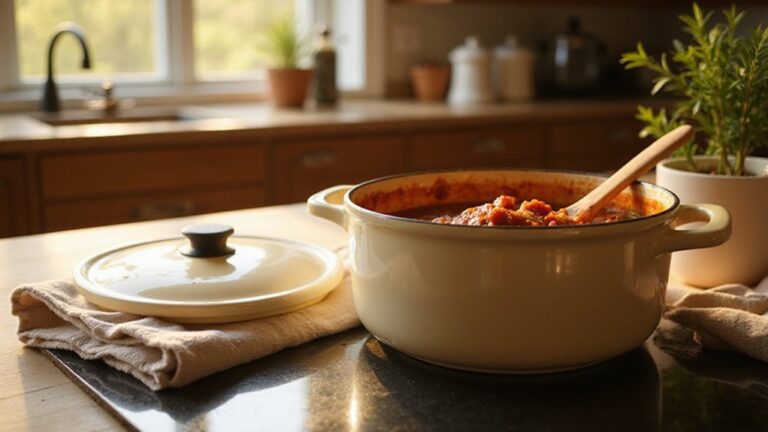
You’ll create a crowd-pleasing dessert by layering sliced Granny Smith apples with brown sugar and spices in a greased Dutch oven, then sprinkling cake mix on top without stirring. Pour lemon-lime soda over everything for moisture and sweetness. Using 10-13 briquettes below and 12-20 on the lid, you’ll rotate every 10 minutes until the cobbler bubbles and turns golden around 30 minutes. Serve warm with vanilla ice cream or whipped cream for the ultimate outdoor treat—though there’s much more to master.
Ingredients for Dutch Oven Apple Cobbler With Cake Mix
Because you’re working with a straightforward dump cake method, you won’t need many ingredients—just a box of yellow or vanilla cake mix, four to five tart baking apples (Granny Smith works best), a 12-ounce can of lemon-lime soda, butter, and sugar.
For your apple varieties, Granny Smith apples are ideal because their tartness balances the sweetness of your cake mix. You’ll peel, core, and slice them into quarter-inch pieces. A squeeze of lemon juice prevents browning while enhancing flavor.
Your cake mix serves as the topping, creating a simple cobbler crust. Combine it with melted butter and brown sugar for depth. The lemon-lime soda provides both sweetness and moisture, eliminating extra liquid additions. Optional spices like cinnamon and nutmeg elevate the dish, though they’re not essential. To ensure a golden brown crust, bake the cobbler until it’s bubbling and fully set.

One 15.25 oz. box of Duncan Hines Dolly Parton's Favorite Yellow Cake Mix

BETTY CROCKER CAKE MIX: With Betty Crocker, it's easy to bake a lemon artificially flavored cake for dessert, a birthday cake, and more; It's America's #1 Cake Mix brand (based on 52 weeks of Nielsen sales data for dry cake mixes ending 4/05/25)

We've created a gluten-free cake mix that makes the best ever yellow cake, every time you bake. Turn it into a tender, golden layer cake or make a batch of moist, finely-crumbed cupcakes. You pick the frostings and fillings (sprinkles highly recommended)
Preparation and Assembly Techniques
Before you start assembling your cobbler, you’ll want to prep your Dutch oven and ingredients with care—proper preparation makes the difference between a masterpiece and a mess. Grease your Dutch oven thoroughly with butter or non-stick spray to prevent sticking and simplify cleanup.
For apple preparation, peel and slice your apples into uniform pieces, then toss them with lemon juice to prevent browning. Mix in brown sugar, cinnamon, nutmeg, and salt for even flavor distribution, just as you would use canned peaches in a peach cobbler recipe for that classic taste.
Layer your apples at the bottom, then sprinkle cake mix evenly over them without stirring. Finally, apply your butter techniques by drizzling melted butter or placing cold slices across the top. The butter moistens the cake mix and creates that golden crust you’re after. Additionally, consider using quality, food-grade bags to vacuum seal any leftover cobbler for optimal freshness if you have any extras.
Cooking Method and Heat Management
Once you’ve assembled your cobbler and nestled it into the greased Dutch oven, managing heat becomes your primary concern. Your coal arrangement determines cooking success—place approximately 10-13 briquettes beneath the Dutch oven and 12-20 on the lid for balanced heat distribution. This setup creates an enclosed oven environment that prevents hot spots and guarantees uniform baking. Remember that the Dutch oven’s design, much like that used for Dutch Oven Pot Roast, allows for efficient heat retention and distribution. Additionally, this versatile cookware is perfect for classic recipes that highlight its capabilities.
Rotate both the base and lid every 10 minutes to maintain consistent temperatures. Replace blackened coals every 30 minutes with warm, active briquettes, as they lose heat over time. This diligent heat management requires attention but assures thorough, even cooking. Check your cobbler around 20 minutes, watching for golden browning and bubbling fruit around the edges—visual indicators that your dessert’s nearly ready.
Recipe Variations
While the classic apple cobbler delivers reliable comfort, you’ll find that swapping cake mix flavors and fruit fillings transforms this Dutch oven dessert into something entirely new. Spice cake mix intensifies warm fall notes, while butter pecan adds nutty richness. For unique flavor combinations, pair chocolate cake mix with strawberry filling or experiment with peach and blueberry variations.
To further enhance the flavor, consider the importance of seasoning techniques for the dish being prepared alongside, as it can positively influence the overall taste of everything cooked in your Dutch oven. Alternative toppings elevate your cobbler further. Drizzle caramel sauce over the fruit layer for added depth, or sprinkle brown sugar between fruit and cake mix to enhance caramelization. Adjust cinnamon from half to three teaspoons based on your spice preference, and brighten apple flavor with lemon juice. It’s also beneficial to keep in mind the emissivity of materials, as it can influence how effectively your cooking equipment distributes heat while preparing this delicious dessert.
These variations keep your Dutch oven cobbler exciting while maintaining the simple, campfire-friendly cooking method you’ve perfected.

Bring the heart of Southern cooking into your kitchen with our Peach Cobbler Mix—designed specifically to highlight the sweet, juicy flavor of peaches. Just add canned or fresh peaches, milk, and butter to create a homemade dessert that’s full of comfort and tradition. It’s a foolproof way to enjoy peach cobbler any time of year.


BETTY CROCKER CAKE MIX: French vanilla naturally and artificially flavored cake mix with pudding in the mix, from Betty Crocker; It's America's #1 Cake Mix brand (based on 52 weeks of Nielsen sales data for dry cake mixes ending 4/05/25)
Ingredient Roles and Interactions
Each component in your Dutch oven cobbler serves a specific purpose, and understanding how they work together guarantees you’ll achieve the perfect balance of flavors and textures.
Your apple selection determines structural integrity—tart Granny Smiths maintain firmness while sweeter varieties add depth. Combined sugars create balanced sweetness without cloyingness, with brown sugar contributing caramel notes and white sugar thickening the filling. It’s essential to understand the distance-to-spot (D:S) ratio when using an infrared thermometer for checking baking temperatures accurately.
Spices like cinnamon and nutmeg interact with apple acids, developing complex flavor layers. The cake mix topping absorbs butter and apple juices, transforming into a moist, crumbly crust. Melted butter binds everything together, distributing richness while helping the topping brown and crisp. This moisture interaction between butter, cake mix, and fruit creates the signature cobbler texture—tender filling beneath a golden, cake-like topping. Additionally, using a Dutch oven allows for even heat distribution which ensures an evenly baked cobbler that enhances the overall flavor.
Key Practical Tips and Considerations
Successful Dutch oven cobbler relies as much on technique and heat management as it does on your ingredient choices. When cooking outdoors, you’ll want approximately 30 warm coals distributed evenly across the lid and beneath your Dutch oven for balanced, consistent heat. Rotate your oven occasionally to prevent hot spots and guarantee even browning. For ingredient storage while camping, keep everything in airtight containers to maintain freshness and prevent spoilage. Use a tight-fitting lid on your Dutch oven to lock in moisture and heat. Additionally, the Lodge Dutch oven’s versatility allows you to create a variety of delicious meals, enhancing your outdoor cooking experience. Monitoring your cobbler’s progress—it’s ready when the topping turns golden brown and the filling bubbles at the edges. Additionally, utilizing a Dutch oven’s steam-trapping capability can enhance the moisture content of your cobbler’s filling for an even more delicious result. Allow it to cool slightly before serving so the layers set properly.

DURABLE CAST IRON CONSTRUCTION - Our cast iron dutch oven with lid is made to last. Crafted with high-quality cast iron, this dutch oven can withstand high heat and is perfect for cooking a variety of dishes.


Moisture-Locking Lid: The Lodge Essential Enamel Cast Iron Dutch Oven features a moisture-locking design ideal for roasting, braising, and slow cooking pot meals
Serving Suggestions and Flavor Enhancements
Once you’ve mastered the heat management and timing that’ll get your cobbler golden and bubbling, the real magic happens when you serve it. Pair your warm Dutch oven creation with classic pairings like vanilla ice cream or whipped cream to balance the sweetness beautifully. Consider complementary beverages—hot coffee or spiced tea echo the cobbler’s warm spices, while cold apple cider provides invigorating contrast.
Transform your presentation with thoughtful garnish ideas. Dust the top with cinnamon or drizzle caramel sauce for added depth. Fresh apple slices or mint sprigs add visual appeal to individual servings. For texture variety, sprinkle coarse sugar before baking or mix pecans into your topping. Broil briefly at the end for extra crispiness. These enhancements elevate your cobbler from simple to spectacular. Additionally, vacuum sealing can help maintain your cobbler’s freshness for longer storage periods, locking in food quality that will delight in every serving. Be sure to keep an eye on cracked or worn O-rings, as they can lead to unintentional leaks in your cooking process.

One 48 fluid ounce box of Vanilla Bean Ice Cream

DELICIOUS FLAVOR - Vanilla: Seen as “boring.” “Safe.” Or “if beige could yawn it would be vanilla.” Well, no more. We’re bringing out vanilla’s more non-vanilla-ey traits by using Tahitian vanilla beans, cold-ground whole. Don’t screw it up from here, vanilla.

The perfect frozen treat for your carb-light lifestyle: Breyers CarbSmart Vanilla. So tasty, it's hard to believe there are 4g net carbs and 4g of sugar per serving