You’ll achieve accurate infrared thermometer readings only when you match emissivity settings to your cookware material. Cast iron and rough steel perform reliably at 0.77–0.96, while polished aluminum and copper drop below 0.10, causing dramatic measurement errors. Stainless steel varies considerably: polished surfaces sit at 0.075 versus oxidized surfaces above 0.85. You can boost accuracy on reflective cookware by applying oil or cooking spray, which increases emissivity coefficients. Adjustable models ranging from 0.1 to 1.0 accommodate diverse materials, though fixed 0.95 settings work well for organic foods. Understanding these material-specific values transforms your cooking precision.
What Emissivity Means and Why It Matters for Cooking
When you point an infrared thermometer at your food, it’s measuring emissivity—a material’s ability to emit infrared energy on a scale from 0.00 to 1.00. A perfect emitter, called a black body, rates 1.00 and emits maximum infrared radiation at any given temperature.
Understanding emissivity significance directly impacts your cooking accuracy. Most organic foods—meats, vegetables, baked goods—have emissivity values near 0.95, making them ideal for standard infrared thermometer settings. However, shiny surfaces like polished aluminum possess emissivity below 0.10, requiring adjusted settings for accurate readings. Additionally, some modern smart meat thermometers have features that enhance temperature tracking in cooking environments.
Infrared applications depend critically on proper emissivity configuration. Incorrect settings yield inaccurate temperature measurements, compromising food safety. Your thermometer assumes a default emissivity of 0.95 unless adjusted. For reliable kitchen measurements, match your thermometer’s emissivity setting to your surface’s actual value, ensuring precision during cooking. Additionally, consider that surface temperature readings can be affected by factors such as distance and calibration of the thermometer.
Fixed Emissivity Settings vs. Adjustable Options for Kitchen Use
Now that you understand how emissivity affects your temperature readings, you’ll need to decide which thermometer type suits your cooking needs.
Fixed settings at 0.95 or 0.97 work well for organic materials—meats, sauces, vegetables—eliminating calibration hassles for typical home cooking. However, they’ll fail dramatically on polished stainless steel cookware, potentially showing 100°F instead of 212°F on boiling water, as they are less reliable for measuring the internal temperature of liquids.
Adjustable accuracy becomes essential when you’re working with diverse modern cookware: cast iron, non-stick surfaces, and polished metals. Models offering 0.1 to 1.0 emissivity ranges let you compensate for reflective surfaces and coated cookware, maintaining precision across different materials.
Choose fixed settings for straightforward home cooking focused on food temperatures. Invest in adjustable options if you’re using varied cookware types or require consistent validation across multiple surface treatments. Additionally, considering alternatives like eco-friendly bag options can further enhance the sustainability of your kitchen practices.

【Highly Accurate & Adjusts to Any Surface】Designed with the latest thermopile sensor technology, the infrared laser thermometer gun is accurate to +/-1.5%; Improve this pizza oven thermometer gun measurements by adjusting the emissivity from 0.1–1.0 to match the surface material being measured

𝐕𝐞𝐫𝐬𝐚𝐭𝐢𝐥𝐞 𝐓𝐨𝐨𝐥𝐬: Infrared technology allows you to measure various objects at home and outdoors; Use it for 𝒎𝒆𝒂𝒕, 𝑫𝑰𝒀 𝒄𝒂𝒏𝒅𝒚, 𝒐𝒗𝒆𝒏𝒔, 𝒈𝒓𝒊𝒍𝒍𝒊𝒏𝒈, 𝒇𝒐𝒐𝒅, 𝒄𝒐𝒐𝒌𝒊𝒏𝒈, 𝒂𝒖𝒕𝒐𝒎𝒐𝒕𝒊𝒗𝒆 𝒖𝒔𝒆, 𝑨/𝑪, 𝒓𝒆𝒇𝒓𝒊𝒈𝒆𝒓𝒂𝒕𝒐𝒓𝒔, etc.

►【HIGH ACCURACY】Combining the latest temperature sensor technology and advanced Fresnel lens, this instrument reads values of high accuracy up to ±2% in only 0.5s thanks to adjustable emissivity. The distance to spot ratio is 12:1, which means you can measure the target at a longer distance.
Emissivity Values for Common Cookware Materials
Because you’re selecting an infrared thermometer for kitchen use, you’ll need to understand how different cookware materials behave under infrared measurement. Cookware materials exhibit dramatically different emissivity effects that directly impact your temperature readings.
Polished aluminum and copper present your greatest challenges, with emissivity values below 0.10—they’ll register temperatures considerably lower than actual surface conditions. Blanching your vegetables before cooking can help preserve texture, ensuring that you achieve the desired results. Cast iron and rough steel perform effectively, reaching 0.77–0.96 emissivity, providing reliable measurements without adjustment.
Stainless steel varies considerably based on surface condition: polished variants measure only 0.075, while oxidized surfaces jump to 0.85+. Oxidation and surface treatment dramatically improve measurement accuracy across all materials. Understanding how to optimize heat retention and moisture-trapping can further enhance cooking efficiency and accuracy in temperature readings.
You’ll achieve the most precise readings using cookware with naturally higher emissivity or by selecting materials that oxidize during cooking, creating more favorable infrared measurement conditions.

Superior Nonstick Performance: Featuring a reinforced coating, our pots and pans set offers exceptional durability and effortless food release, making cleanup easier.

NONSTICK - Create the dishes you love without the frustrations. You'll cook, boil, stir fry, fry eggs, and sauté with minimal effort and minimal oil. The cleanup is quick and easy as well. We make cookware that make your life easier and food taste better.

Ceramic coating with durability of perfection is free of PFOA, PFOS, and the other harmful chemicals. You can enjoy your cooking on carote cookware safely & easily.
Using Oil and Cooking Spray to Improve Thermometer Readings
If you’re struggling with inconsistent infrared readings on polished cookware, applying oil or cooking spray provides an immediate solution. You’ll achieve superior accuracy by targeting the oil layer rather than bare metal surfaces, since oils and fats exhibit higher emissivity coefficients that optimize thermal radiation detection.
When you measure cooking surface temperatures, you’re bypassing the reflective properties inherent to stainless steel and polished metals. Oil viscosity directly influences measurement consistency—thicker oils maintain more stable thermal patterns than thin sprays. Position your thermometer at a slight angle across the fat layer, taking multiple readings while stirring continuously to capture accurate temperature variations.
This approach eliminates ambient infrared interference and delivers reliable data for smoke point detection and precise temperature control during sautéing and stir-frying operations. Additionally, ensuring the use of higher emissivity materials can further enhance the accuracy of your temperature measurements.
How to Determine the Correct Emissivity Setting for Your Cookware
What’s the foundation of accurate infrared thermometry in your kitchen? Proper emissivity calibration. You’ll start by identifying your cookware’s surface material—polished metals require low settings (0.07–0.10), while oxidized or coated surfaces need higher values (0.90–0.97).
To calibrate, use a contact temperature probe as your reference standard. Aim your IR thermometer at the identical spot and adjust the emissivity setting until both readings match. This eliminates guesswork.
For reflective surfaces, apply black electrical tape (emissivity ~0.97) as a temporary reference point. Disable reflected energy compensation during calibration to guarantee accuracy.
Account for environmental stability—allow thermal equilibrium between your thermometer and cookware. Minimize atmospheric interference by avoiding dusty or smoky conditions. Maintain proper measurement distance per your device’s specifications to prevent reading averaging errors.
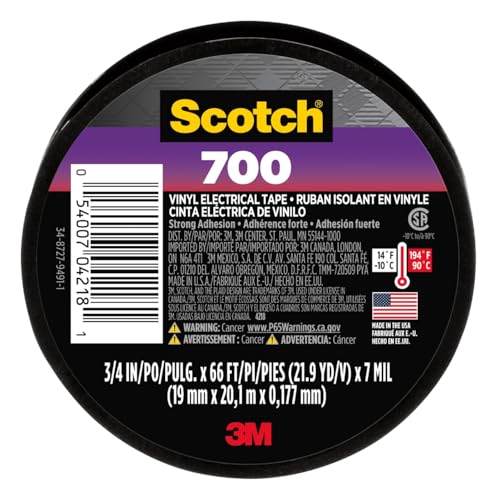
PRIMARY ELECTRICAL INSULATION for all wire and cable splices rated up to 600 volts

FLAME-RETARDENT: Withstands a temperature range of 0 to 221F (-18 to 105C)
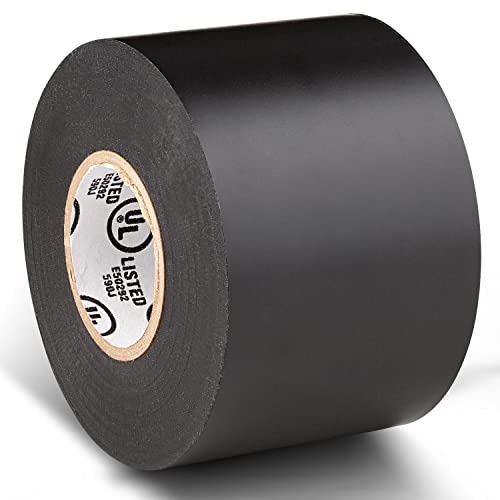
PROFESSIONAL GRADE PERFORMANCE – Heavy duty wide electrical tape designed for demanding jobs. This 7 mil thick black electrical tape delivers strong adhesion and long-lasting durability for contractors, electricians, and DIY users.
Emissivity Table Reference Guide for Kitchen Surfaces
Now that you’ve calibrated your IR thermometer, you’ll need a reliable reference to match specific kitchen materials with their emissivity values. This guide streamlines your workflow by organizing materials by category.
When comparing material emissivity, you’ll notice significant variations. Ceramic and glass surfaces rank highest at 0.92–0.95, requiring minimal adjustment. Most foods cluster around 0.90–0.97, simplifying food temperature readings. Stainless steel presents challenges: polished surfaces measure 0.59–0.65, while plates drop to 0.34–0.39. Cast iron ranges widely from 0.60–0.90 based on oxidation. Aluminum demands attention—polished versions barely emit at 0.039–0.09, whereas oxidized surfaces reach 0.18–0.27. Understanding the importance of emissivity can enhance your ability to measure temperatures accurately across different surfaces, as infrared thermometers can vary in performance due to environmental factors.
Your kitchen surface emissivity reference becomes invaluable for accurate measurements. Cross-reference your specific cookware against these material categories before each measurement, ensuring your IR thermometer delivers reliable temperature data across diverse kitchen applications.
Surface Probe Comparison Method for Accurate Measurements
Once you’ve established your emissivity reference values, validating your IR thermometer’s accuracy requires a systematic comparison with contact thermocouple probes—the gold standard for temperature measurement. You’ll heat your target object to steady-state temperature, ensuring substantial differential from ambient conditions. Simultaneously measure identical surface locations with both devices, recording results at matching time intervals. Adjust your infrared thermometer’s emissivity setting until readings align with contact probe values. This accuracy validation process yields correlation coefficients of 0.97 for skin surfaces and 0.78 for forearm measurements, establishing measurement reliability. Once calibrated, you’ll proceed confidently with subsequent infrared-only measurements, gaining practical utility for food safety compliance without introducing external heat into measured objects.
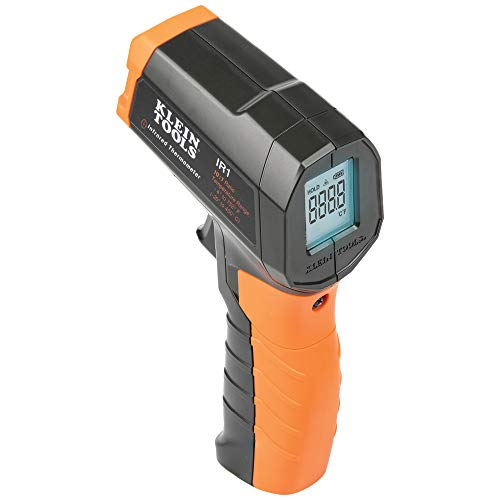
PRECISE TEMPERATURE MEASUREMENT: Optical resolution (distance-to-spot) of 10:1 ensures accurate temperature readings from a distance

🎁【High Accuracy】 DESOMIYE laser thermometer gun adopts the latest high-sensitivity temperature sensor, which can measure the temperature range of -50°C~600°C (-58°F~1112°F) in only 0.5 seconds. For best results, the reader should be 14 inches away from the object.

✅ 3-in-1 Non-Contact Infrared Thermometer (2-Pack Value): Two versatile thermometers measure body, milk, food, and room temps. Share one in the nursery and kitchen – backlit LCD works day or night
Temperature Measurement Techniques for Grills and Pizza Ovens
Because high-temperature cooking environments demand precise thermal monitoring, you’ll rely on infrared thermometers capable of reading up to 1000°F to accurately assess pizza oven and grill conditions. Point your thermometer at the oven floor rather than the fire or dome to obtain dependable readings, then add approximately 100°F to estimate actual air temperature. This temperature calibration method guarantees you maintain suitable cooking ranges between 575°F and 800°F for pizzas and flatbreads. You’ll identify distinct heat zones—hot (700°F to 900°F), medium, and cool areas—enabling precise food placement and preventing overcooking. Regular temperature checks during cooking allow you to rotate pizzas or adjust fuel accordingly. Preheating pizza stones to 570°F to 600°F assures proper crust crispness before placing dough, establishing ideal oven conditions for consistent results.

【2-in-1 Infrared & Probe Thermometer】Perfect for home chefs, grilling enthusiasts and DIY hobbyists who demand professional control; Use the IR sensor for safely checking pan, oven, or grill surface temps, and the meat probe for perfectly cooked meats, candy, or frying oil

NOT for HUMAN: THIS IS NOT A MEDICAL THERMOMETER,DO NOT USE TO TAKE TEMPERATURE OF BODY OR FOREHEAD. The NEWEST model of infrared thermometer measures a wider range from -58℉ to 1022℉(-50℃ to 550℃), supports switch ℉/ ℃. Tips: for better results, the IR thermometer should be 14 inches away from the object.

Safe Measurement: The infrared thermometer gun boasts a distance-to-spot ratio of 12:1, enabling you to obtain highly precise readings from a safe distance of 14.17 inches (36 cm), eliminating the need to approach hot objects directly. (Please note: The actual measurement position is taken 2 cm below the indicated laser spot)
Best Practices for Using Infrared Thermometers While Cooking
Mastering infrared thermometer technique requires understanding the critical relationship between distance, positioning, and accuracy. You’ll achieve peak infrared accuracy by maintaining 1–5 inches from your target surface while aiming directly at its center. Before measuring, preheat cooking surfaces like frying pans to approximately 375°F for proper searing results.
When applying cooking techniques, you must adjust emissivity settings for reflective surfaces like aluminum and apply thin oil coatings to cast iron and sauté pans. This guarantees reliable readings without distortion. Additionally, be aware that infrared thermometer readings can be affected by environmental factors like dust and moisture, so allow your thermometer to acclimate to these conditions before measuring. Remember the importance of proper emissivity settings to ensure the accuracy of your temperature measurements.
Remember you’re measuring surface temperature only—not internal food doneness. Never point the device at flames or through glass, as these conditions produce inaccurate readings.