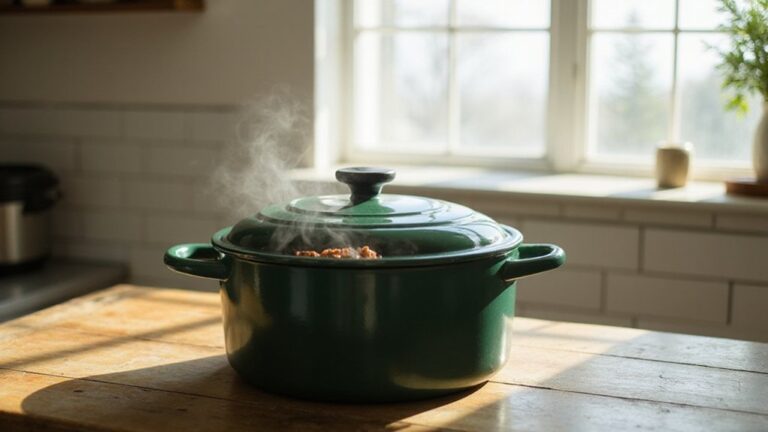
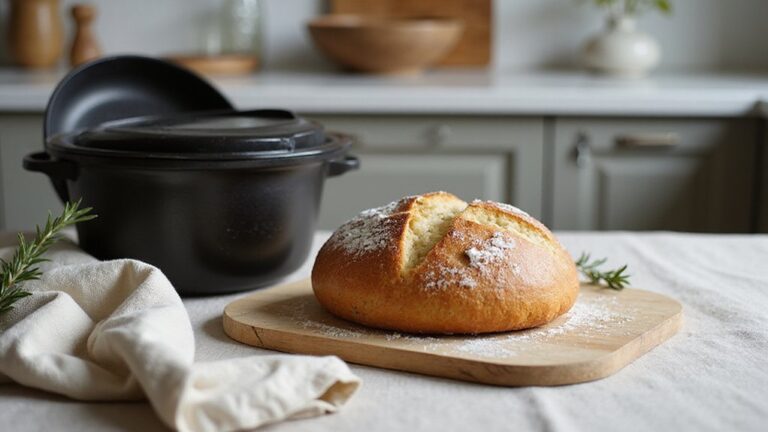
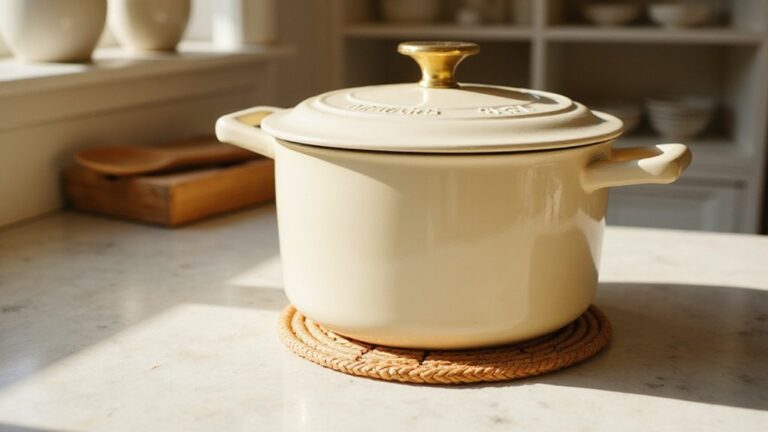
You’ll transform your camping meals by mastering Dutch oven chicken over campfire coals or in your kitchen oven. Start with a whole chicken, pat it dry, and brown it first for better texture. Layer root vegetables like potatoes, carrots, and onions. Add your liquid base—chicken stock or broth—with seasonings and fresh herbs. Manage coals evenly, rotating your Dutch oven every 10-15 minutes for consistent results. The enclosed cooking environment creates tender, flavorful chicken and savory cooking liquid. Uncover how to customize recipes, handle equipment safely, and explore countless variation possibilities.
Essential Ingredients and Preparation
You’ll want to start by selecting a whole chicken that weighs between 2 to 6 pounds, depending on how many people you’re serving and your Dutch oven’s capacity. Your ingredient selection should include root vegetables like potatoes, carrots, onions, and celery—these form your flavor foundation. Pat your chicken dry before cooking to improve browning and texture. Consider brining chicken pieces ahead of time for enhanced flavor and moisture retention.
Gather your liquid base, choosing between chicken stock, turkey broth, or water. Add seasoning salt, lemon pepper, or poultry seasoning to customize your flavor profile. Fresh herbs like thyme and rosemary infuse aromatic depth. Prepare 2.5-3 pounds of potatoes cut into 2-inch pieces, approximately 1 pound of carrots, and one to two large onions. These preparation techniques guarantee even cooking and balanced flavors throughout your camping meal. Incorporating ingredients like bone-in, skin-on chicken thighs enhances the overall texture and flavor of your dish.

Pre-seasoned 2-in-1 cast iron dutch oven: The 2-In-1 cast iron dutch oven pot with skillet lid has been burned with vegetable oil,(no synthetic coatings or chemicals). The shallow skillet that can be used as a lid

YOUR GO-TO DUTCH OVEN: A flawless pairing of form and function that doesn't quit. The Lodge Dutch Oven not only makes your kitchen look good but is an enameled cast iron classic great for preparing and serving memorable meals. Broil, braise, bake or roast your favorite meals in the oven up to 500 Degree F.

Even Heat Distribution Retention: This Umite Chef Dutch oven Made with heavy-duty enameled cast iron, ensures even heat distribution for perfect searing and slow cooking, locking in flavors. thickened walls lock in heat for slow braising, searing, and baking. Unlike thin pots that scorch food, this professional-grade Enameled cast iron potSuperior heat retention after preheating (allow 5-7 mins for even distribution). CRITICAL: Always cool naturally for 45+ mins before cleaning. Thermal shock (hot-to-cold contact) cracks enamel. USE TIP: Preheat 2-3 mins on medium-low only
Campfire Cooking Method and Techniques
Three essential elements—proper setup, consistent heat, and careful technique—transform your Dutch oven into a reliable campfire cooking vessel. Start by positioning your Dutch oven on a stable surface within a fire ring, using a trivet if needed for elevation. Additionally, the excellent heat retention of cast iron ensures your chicken cooks evenly and stays juicy.
Master coal management by arranging briquettes in a ring pattern beneath your oven, leaving the center clear. For 350°F cooking, double your oven’s diameter in total coals, distributing half underneath and half on the lid for even campfire heat distribution.
Rotate your Dutch oven and lid every 10-15 minutes to prevent hot spots. Add fresh coals midway through extended cooking times to maintain steady temperatures. Avoid direct flames; rely solely on glowing coals for gentle, controlled heat that guarantees perfectly cooked chicken every time. Using proper heat distribution ensures that your meal cooks evenly and thoroughly.
Oven Dutch Oven Cooking Method
While campfire cooking relies on coal management and outdoor elements, oven Dutch oven cooking offers superior temperature control and consistency through your home kitchen. You’ll appreciate how traditional Dutch oven history translates seamlessly to modern home cooking, eliminating weather variables and coal preparation hassles. The versatility of Dutch ovens allows for a wide range of recipes, ensuring that you can experiment without limitation.
In your oven, you’ll maintain precise temperatures without monitoring briquette placement or rotation schedules. You’ll simply preheat to your desired setting, then utilize various cooking styles—braising, searing, baking, and simmering—with predictable results every time. The savory cooking liquid created during this process enhances the flavor of your dish significantly.
You’ll benefit from even heat distribution without repositioning lids or managing hot spots. Your Dutch oven performs excellently for chicken recipes, whether you’re slow-braising bone-in pieces or baking a whole bird. The enclosed environment traps moisture effectively, yielding tender, flavorful results that campfire cooking requires meticulous attention to achieve.

Even Heat Distribution Retention: This Umite Chef Dutch oven Made with heavy-duty enameled cast iron, ensures even heat distribution for perfect searing and slow cooking, locking in flavors. thickened walls lock in heat for slow braising, searing, and baking. Unlike thin pots that scorch food, this professional-grade Enameled cast iron potSuperior heat retention after preheating (allow 5-7 mins for even distribution). CRITICAL: Always cool naturally for 45+ mins before cleaning. Thermal shock (hot-to-cold contact) cracks enamel. USE TIP: Preheat 2-3 mins on medium-low only

SUPERIOR HEAT RETENTION & EVEN COOKING – Heavy-duty cast iron construction delivers exceptional heat retention and even heat distribution for consistent cooking results, from slow-simmered stews to perfectly roasted meals.

Recipe Variations and Customization Options
Since Dutch oven chicken recipes can be adapted to suit your preferences and pantry staples, mastering customization techniques will expand your cooking repertoire considerably. You’ll realize that protein substitutions like turkey or pork offer distinct flavor profiles while maintaining the same cooking methods. Additionally, Le Creuset Dutch Ovens are known for their ability to infuse rich flavors and tenderize the meat through gentle, even heat. Experiment with vegetable pairings by combining root vegetables with leafy greens, adjusting cooking times accordingly. Customize your liquid base using broth, wine, or cream-based soups to create varied sauce textures. Layer bacon for smokiness, incorporate rice for heartiness, or add cheese for richness. Adjust seasonings with fresh herbs, spice blends, or umami-rich sauces. These strategic modifications transform a single recipe into countless variations, allowing you to create personalized meals that match your available ingredients and taste preferences perfectly. Cooking with sous vide techniques ensures consistent results, enhancing your overall culinary experience.


【2-in-1 Design】No extra cookware needed—one pot handles all your stewing and searing, while saving space and making camping lighter. The tight-fitting domed lid locks in moisture and flavor, and flips over to double as a shallow skillet perfect for searing steaks. The deep pot is ideal for slow cooking and can prepare meals for up to 4 people.
Safety Tips and Best Practices
When you’re cooking Dutch oven chicken outdoors, you’ll need to prioritize safety at every stage—from preparation through cleanup. Start by establishing separate prep zones for raw poultry to prevent foodborne illness prevention risks. Always wear heavy-duty gloves when handling your cooking equipment safety apparatus, and use a lid lifter or claw hammer to remove lids—never touch Dutch ovens bare-handed due to extreme heat hazards.
Position your oven on flat, stable ground away from high-traffic areas. Distribute charcoal evenly, placing half on the lid’s edge in a circle. Rotate both the oven bottom and lid during cooking to guarantee even heat distribution and proper chicken doneness. Additionally, remember to season your skillet properly to achieve a natural non-stick surface that enhances cooking.
During cleanup, use soft brushes and nonmetallic pads with warm water only—never soap or dishwashers, as these damage cast iron seasoning that protects against rust and contamination. Additionally, ensure you thoroughly dry your Dutch oven after cleaning to prevent moisture buildup and rusting.