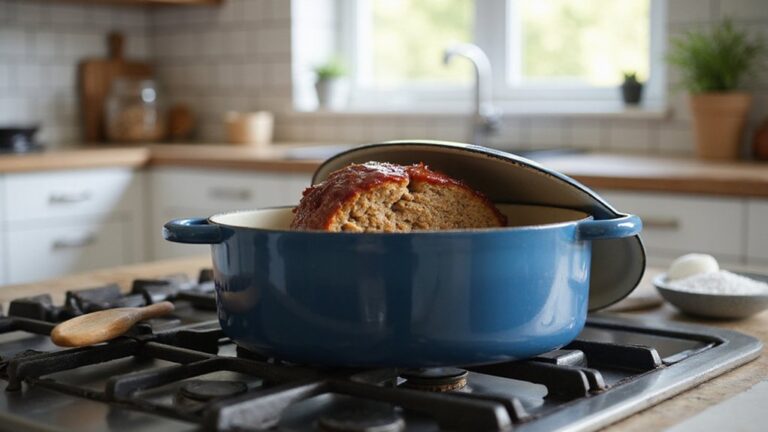
You can definitely use an oval Dutch oven for baking bread, and it’s particularly effective for elongated loaves like bâtards and baguettes. Preheat it to 450°F–500°F, transfer your dough using parchment paper, then bake covered for 15–35 minutes to trap steam. Remove the lid for an additional 5–25 minutes until your loaf reaches 208°F–212°F internally. Oval designs offer superior size options and better heat distribution than round models, though specific techniques maximize results.
Compatibility With Bread Types
When you’re selecting a Dutch oven for bread baking, the shape fundamentally determines which loaves you can accommodate effectively. Oval Dutch ovens excel with elongated baking styles, handling bâtards and baguettes without crowding your dough. You’ll find they accommodate longer, stretched dough shapes that would otherwise restrict expansion in round vessels. This unique shape complements the steam retention capability that is vital for achieving the perfect crust.
Round Dutch ovens work best for boules and circular loaf shapes, where symmetrical expansion matters. You should note that round ovens may constrain elongated doughs, causing uneven baking results. Both oval and round ovens perform admirably with standard sourdough and artisan bread recipes. However, your specific loaf shapes determine which design optimizes your baking outcomes. Consider your preferred bread types before committing to either option. A Dutch oven’s ability to retain and distribute heat significantly enhances the baking process and results in deliciously crispy crusts.
Shaping and Proofing Techniques
Proper shaping and proofing techniques are critical to developing an oval loaf that’ll hold its form and achieve ideal oven spring in your Dutch oven. Your shaping techniques should build surface tension through sequential folding and tucking movements, which align gluten strands and preserve internal air pockets. Select your method based on dough strength—slack doughs require more structural support during shaping, while stronger doughs need a lighter hand. Incorporating proper ingredient preparation is essential for achieving a successful bake.
Your proofing strategies involve placing the shaped dough seam-side up in a floured banneton, maintaining adequate tension throughout. Pinch the ends to emphasize the oval form before proofing begins. Cover the dough appropriately to prevent surface drying without introducing excess moisture. Proper seam sealing prevents lateral spreading, ensuring your loaf maintains its elongated profile during proofing and baking. Additionally, understanding proper temperature control is vital for achieving the perfect crust and crumb structure in your bread.
Baking Process and Temperature
Once you’ve shaped and proofed your oval loaf, the baking process demands precise temperature management and strategic timing to achieve both robust oven spring and a well-developed crust. You’ll preheat your oval Dutch oven at 450°F to 500°F for 30 minutes to 1 hour, ensuring temperature consistency throughout the vessel. To ensure your oven maintains the correct temperature, consider checking your oven’s true temperature before baking. Transfer your scored dough quickly using parchment paper to minimize heat loss. Bake covered for 15 to 35 minutes—extending time if your dough came from the refrigerator—to trap steam and promote oven spring. Remove the lid and continue baking 5 to 25 minutes until your crust achieves golden-brown color and your loaf’s internal temperature reaches 208°F to 212°F. Baking time adjustments depend on loaf size and your oval Dutch oven’s capacity. Additionally, using an oval shape can provide more space for larger loaves, enhancing the baking process even further.
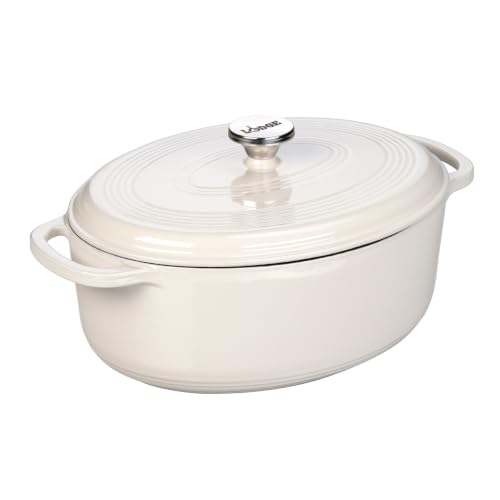
Spacious Oval Design: Create hearty family meals with the Lodge Oval Dutch Oven, featuring a roomy oval design ideal for braising, roasting & baking Heat & Moisture...
Crust and Texture Outcomes
Your baking technique‘s success ultimately manifests in the crust and crumb structure you’ll achieve. Oval Dutch ovens produce crust variations along the loaf’s length, with ends typically darker than the center due to uneven steam distribution. You’ll develop a more open crumb structure through consistent heat retention, though denser ends may occur if you don’t shape your dough evenly. Additionally, the tight-fitting lid of the Dutch oven aids in trapping steam, which can enhance the crust and moisture retention during baking.
The texture differences you experience depend on hydration levels and scoring precision. High-hydration doughs benefit from the steamy environment, yielding chewy yet tender crumbs. Conversely, over-flouring creates thick, tough bottom crusts. Proper scoring controls expansion, preventing dense textures. Reaching an internal temperature of at least 205°F guarantees full crust development without gumminess, while your 20-minute covered, 25–35-minute uncovered baking schedule optimizes both color and crispness. Additionally, using a Dutch oven creates a moisture-sealed environment that enhances the bread’s quality by promoting starch gelatinization for a superior crust.
Equipment and Safety Considerations
Since you’re working with high temperatures and heavy cookware, understanding your Dutch oven’s material composition and heat limits is critical before you begin baking. Material selection determines safe operating temperatures—metal or cast iron knobs withstand higher heat than phenolic alternatives, which typically max at 450-500°F. Enameled Dutch ovens with plastic knobs risk melting or toxin release above 500°F. Additionally, many Le Creuset knobs are interchangeable, allowing you to replace phenolic knobs with metal alternatives for safer high-temperature use.
Regarding oven placement, position your Dutch oven higher on the rack to reduce bottom heat intensity and prevent crust burning. Avoid placing it directly on baking stones, which concentrate excessive heat; instead, insulate with a baking sheet. Ascertain adequate air circulation to prevent uneven cooking and heat accumulation. Always use high-temperature oven mitts when handling hot cookware, and never subject your Dutch oven to sudden temperature changes that risk cracking.

【Extreme Heat Resistance】Our barbecue gloves & oven mitts, are designed to withstand temperatures up to 1472°F(Test max temperature tolerance), providing perfect protection for your hands from high temperatures whether you're grilling, baking, or cooking.

GET A BETTER GRIP: the best oven mitt pair; constructed of durable silicone, mitts are naturally slip resistant, helping you to get the best grip while you cook; unique textured honeycomb pattern helps you hold tight to pans, pots and baking sheets without hindering your natural grip

The Only BBQ Gloves You Need - Multipurpose, double protection oven gloves protect you from extreme heat up to 1,472°F. Perfect for cooking, frying, grilling, camping and firepit. 5-finger mobility ensures a superior job of gripping your BBQ or kitchen utensils.
User Experiences and Tips
Bakers who’ve adopted oval Dutch ovens for bread production consistently report that the cookware delivers results comparable to traditional round models, with the primary adjustment being dough shaping rather than recipe modification. User feedback indicates that proofing dough in oval bannetons maintains shape consistency while baking times remain standard. Regarding baking techniques, you’ll achieve best results by using parchment paper as a transfer sling, reducing handling stress with sticky dough. Preheating to 450-500°F guarantees even heat distribution and crust development. You should bake with the lid on initially to trap steam, then remove it during the final 5-10 minutes for enhanced browning. These methodical adjustments yield evenly-baked loaves with caramelized crusts matching round Dutch oven performance. Additionally, a well-seasoned Dutch oven is crucial for preventing sticking and ensuring optimal baking results, similar to maintaining the protective seasoning layer of a cast iron skillet. Using an oval Dutch oven allows bakers to adjust recipe sizes in a manner similar to when using a smaller 3-quart Dutch oven, ensuring delicious outcomes.
Advantages Over Round Dutch Ovens
While round Dutch ovens remain the traditional choice for bread baking, oval models offer distinct advantages that extend beyond aesthetic preference. You’ll find considerably greater size options in oval designs, ranging from 2¾ to 15½ quarts compared to round models maxing out at 13¼ quarts. This expanded capacity enables enhanced baking efficiency for larger loaves, which is similar to the way Dutch ovens can be used for soups, stews, grains, and even desserts.
You’ll also benefit from increased bottom surface area, which improves browning capabilities and steam retention during critical early baking phases. The elongated configuration accommodates batard-shaped breads more effectively than round counterparts, allowing you to fit larger loaves with multiple equal-size slices.
Additionally, you can reduce or eliminate loaf rotation requirements, as the wider cooking surface distributes heat more evenly. This combination of practical advantages makes oval Dutch ovens a compelling alternative for your bread baking endeavors. Furthermore, it’s important to remember that gradual heating is crucial to prevent damaging the pot while baking at higher temperatures.
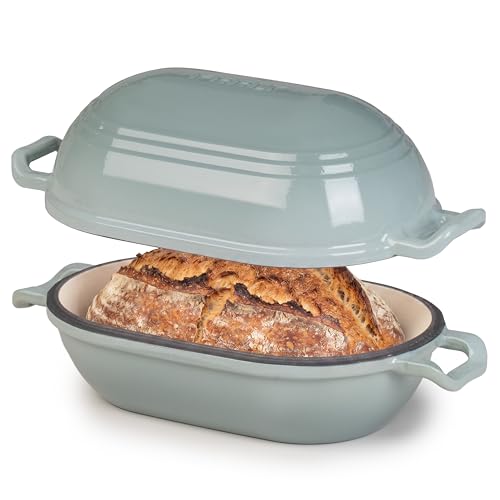
【Premium Enameled Cast Iron】 Crafted with high-quality enamel-coated cast iron, this bread baking pan delivers superior heat retention and even baking for perfect golden crusts. The smooth ceramic glaze prevents rust and adds a stylish finish to your kitchen.

【CRISPIER CRUST & BETTER RISE】 This dutch oven for bread baking keeps steam around the dough during the covered stage, helping sourdough rise before the crust sets. Uncover near the end for deeper browning and a crisp golden crust.
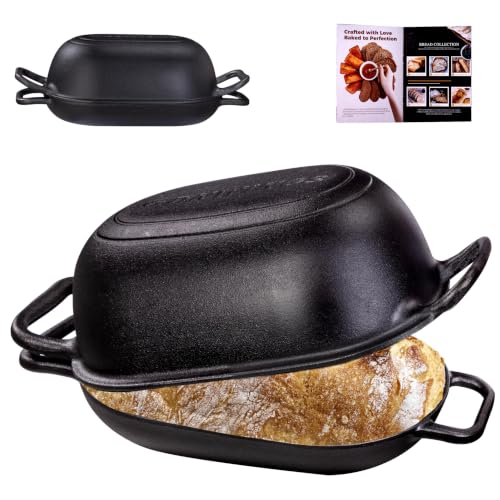
Elevate your sourdough bread baking with a 5QT 12 x 8 inch oval Dutch oven designed to recreate the conditions of a professional bakery. The oval shape promotes even heat circulation and excellent steam retention, helping you create rustic artisan loaves with a crisp, golden crust and beautifully developed crumb.
Common Mistakes to Avoid
Even with an oval Dutch oven’s advantages, you’ll encounter specific pitfalls that can compromise your bread’s quality if you’re not careful. Don’t open your oven door frequently during the first 20 minutes—this disrupts oven spring and releases critical steam. Avoid placing your Dutch oven on a baking stone simultaneously, as combined heat scorches bottom crusts. Consider your yeast selection and dough hydration carefully; over-proofed dough produces flat results regardless of equipment. Test proofing readiness by pressing your finger into dough; indentations should bounce back slowly. Never exceed your Dutch oven’s temperature rating—hard plastic knobs smoke above 450°F. Reduce preheat temperatures if burning occurs, or insulate the bottom with cornmeal or aluminum foil to create a protective barrier. Additionally, using bone-in, skin-on chicken thighs is essential in achieving optimal texture when cooking with Dutch ovens, making it beneficial to understand their versatility for various recipes. Savory Dutch oven chicken recipes can also highlight the convenience and flavor achieved through proper techniques.
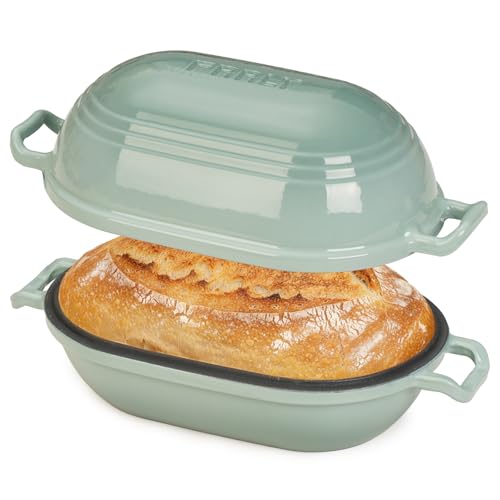
【Premium Enameled Cast Iron】 Crafted with high-quality enamel-coated cast iron, this bread baking pan delivers superior heat retention and even baking for perfect golden crusts. The smooth ceramic glaze prevents rust and adds a stylish finish to your kitchen.

【Designed for Sourdough Perfection】: Crafted professional dutch oven for bread baking, the 5 Qt oval shape ensures even heat circulation and steam retention, helping your sourdough loaves rise tall with a crisp, golden crust.

The Ultimate 9-in-1 Pro Bread Baking Kit – From Beginner to Artisan. This complete set is engineered for perfect homemade bread, covering the entire workflow: a 5QT Enameled Cast Iron Sourdough Bread Oven (with lid), 10inch Rattan Proofing Banneton, Stainless Steel Dough Scraper, Bread Sling, Dough Whisk, Bread Scoring Lame, Cleaning Brush, and Heat-Resistant Gloves. No need for extra purchases. Ideal for sourdough, no-knead, rustic bread, and even meatloaf.