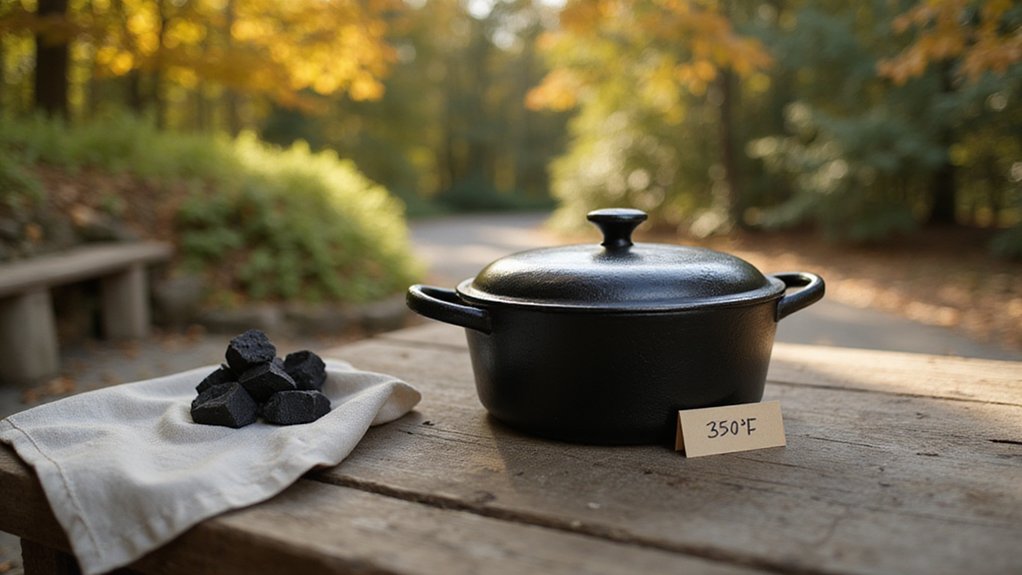
Wondering how many coals you need to reach 350°F in your Dutch oven? The key is a 3-to-1 lid-to-bottom coal ratio, which ensures even heating.
For a 12-inch oven, that means using about 25 briquettes—17 on top and 8 underneath—with simple arrangements to control the temperature.
Keep reading to see the exact counts for different oven sizes.
The Simple Formula for 350°F in Any Dutch Oven
To achieve 350°F in any Dutch oven, use twice the oven’s diameter in total briquettes. Place two-thirds of the briquettes on the lid and one-third underneath the oven. This 2:1 ratio ensures even heat distribution by preventing hot spots, which is essential for consistent baking. Different fuel types impact temperature; lump charcoal burns hotter, so you may need to adjust the number of briquettes accordingly. Briquettes provide reliable, steady heat that is ideal for maintaining precise oven temperatures. For a particularly juicy result, this method pairs well with a Dutch Oven Pork Tenderloin recipe that uses herbs like thyme and rosemary. A vinegar spray solution can also be used to clean rust from a cast iron skillet, but it should not sit longer than 30 minutes to avoid damage. Unlike infrared thermometers, which can be influenced by steam or reflective surfaces, digital probe thermometers are generally recommended for the most accurate results in measuring internal temperatures. To raise the temperature by about 25°F, add two more hot coals to the existing setup. On cold or windy days, you’ll need to increase your coals to about 27 to 30 instead of the standard amount to maintain a steady 350°F. This rule applies well across 10-inch, 12-inch, and 14-inch Dutch ovens, making it a versatile guideline for consistent baking results.
Coal Counts for 8, 10, 12, and 14-Inch Ovens
For an 8-inch Dutch oven, you’ll need 16 briquettes—11 on top and 5 underneath. For a 10-inch oven, use about 21 to 22 coals, with a common split of 14 on top and 7 on the bottom, following the 3:1 top-to-bottom ratio. A 12-inch oven requires 25 briquettes—17 on top and 8 below. For the largest, a 14-inch oven, 32 coals work best—21 on top and 11 underneath. Maintaining the proper stacking pattern ensures even heat distribution, with the consistent 3:1 top-to-bottom ratio across sizes. Remember, adding or removing just two coals can shift the temperature by roughly 25°F. As the oven size increases, you typically need about 4 additional coals per 2-inch increment in diameter, keeping your baking environment predictable and steady.

PROVEN RESULTS - Quickly determine the number of charcoal briquettes needed and the perfect briquette placement for cooking any dutch oven meal. The placements on this guide have been tried and tested for the best results

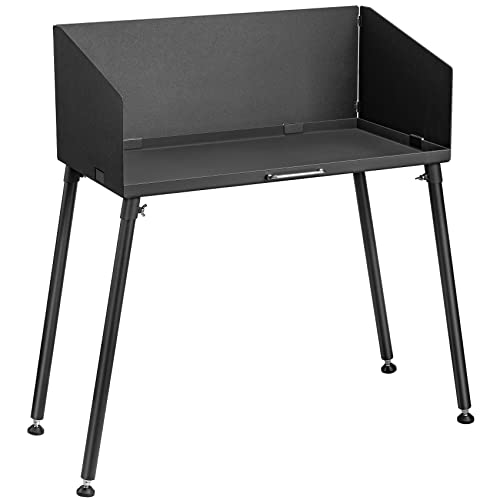
Made of heavy duty steel with heat-resistant coating, the camping cooking table will last for years and show no signs of damage from the hot coals;
How to Arrange Coals on the Lid and Under the Oven
To arrange coals for baking at 350°F, use a 3:1 ratio with three briquettes on the lid for every one underneath. This setup prioritizes top heat for more even cooking. On the lid, place coals in a checkerboard pattern and form a ring around the outer edge. Adding 2 to 4 coals near the center handle helps control the temperature. Underneath, position bottom coals in a circular pattern at least half an inch inside the oven’s rim. Avoid bunching coals together, as this creates hot spots that can burn your food or damage the oven. When lifting the lid, do so carefully to prevent ash from falling into your meal. To maintain an even temperature, rotate the entire oven one-quarter turn clockwise every 10 to 15 minutes and turn the lid one-quarter turn counter-clockwise simultaneously. This technique distributes heat uniformly without losing your target temperature. For a different cooking method, precise temperature control similar to sous vide cooking can achieve customized egg textures from runny yolks to hard-boiled. For best accuracy in checking the oven’s internal heat, compare your lid temperature reading with a known-good contact thermometer rather than relying solely on non-contact methods. Resting the steak after cooking, as done in the cast iron pan-searing method, is essential for allowing juices to redistribute and ensure a tender, moist interior.

2-in-1 Versatile Cookware Design: The Lodge Cast Iron Double Dutch Oven is a Dutch oven and dual-handle skillet in one smart design, expanding your options for searing, baking, frying, and more

2-in-1 Versatile Cookware Design: The Lodge Cast Iron Double Dutch Oven is a Dutch oven and dual-handle skillet in one smart design, expanding your options for searing, baking, frying, and more

Original Dutch oven theme design that combines the lid of the cast iron fire pot with lid lifter and funny name Cast Iron Expert. The result is a motif that impressively highlights the alternative to the classic grill.
How to Add or Remove Coals to Change Temperature by 25°F
To adjust your Dutch oven’s temperature by 25°F, you need to add or remove two briquettes. To raise the temperature, place one coal on top of the lid and one on the base. For lowering the heat, remove coals from the lid first since the top coals have more influence on baking power. Maintaining even heat requires using fresh, ash-free coals; burnt coals won’t heat efficiently. Check the oven every 20 to 30 minutes, rotating it a quarter turn each time to distribute the heat evenly. This adjustment method works because the lid size multiplied by 2 provides the baseline coal count for any Dutch oven. Place added coals in gaps around white-hot briquettes—this ensures consistent temperature control and keeps fluctuations within 25°F. For best results, ensure your Dutch oven has a durable seasoning layer like that achieved by baking multiple coats of oil in a cast iron skillet.

Heavy-Duty Camping Cookware: Designed for campfire coals, the Lodge Seasoned Cast Iron Camp Dutch Oven uses a flanged lid to distribute heat above and below for even cooking

Heavy-Duty Camping Cookware: Designed for campfire coals, the Lodge Seasoned Cast Iron Camp Dutch Oven uses a flanged lid to distribute heat above and below for even cooking

Fix a Too-Hot or Too-Cold Oven
To adjust your Dutch oven when it’s too hot or too cold, follow these practical steps:
If the oven temperature exceeds 350°F, you can quickly reduce it by removing two coals from the lid, which lowers the heat by approximately 25°F. For a 12-inch oven set at 400°F, shift 2–3 coals from the top ring to the bottom or remove them completely. This approach decreases upper heat intensity and prevents overheating. Brushing away excess white ash and replacing it with fewer fresh coals not only maintains efficiency but also helps prevent the oven from becoming too hot. Proper seasoning builds a resilient non-stick layer that protects against rust and improves with use. For an even faster method of infusing flavor, a vacuum sealer can force marinade deep into meat in just 30 minutes.
Conversely, if the oven temperature falls below 350°F, you can raise it by adding two hot coals to the lid, increasing the heat by about 25°F. For a 12-inch oven initially at 350°F, increase the number of top coals from 14 to 16 and bottom coals from 7 to 8. If you need to reach higher temperatures, adding a second ring of coals on the lid can push heat toward 400°F. Ensuring proper lid placement and even spacing prevents cold spots, and replacing coals before the 30-minute mark keeps the heat stable while conserving fuel.

Set Includes: 1 PC Charcoal Grill Stove(7.87"L×5.71"D×2.56"H) + 1 PC Dutch Oven(5.71"D×2.95"H) + 1 PC Multipurpose Lid(6.3"D×0.59"H) + 2 PCS Pot Holders(7.87"L×7.87"W) + 1 PC Bamboo Tray(7.4"D)

Quality Enameled Dutch Oven: The Lodge Essential Enamel Cast Iron Dutch Oven gives you all the benefits of cast iron cooking, great heat retention and durability, without fear of rust; it's also PFAS free

A BOX INCLUDES: One 2.65-quart enameled cast iron Dutch oven with lid
Why the 3-to-1 Coal Ratio Is Best for Baking
The 3-to-1 coal ratio is best because it creates steady, even heat from above, mimicking your home oven’s top-down cooking. This setup involves placing three coals on the lid for every one underneath. For a 12-inch Dutch oven at 350°F, you’ll use 17 coals on top and 8 underneath. The heavier placement of coals on the lid acts as a heat reflector, preventing the bottoms from burning while allowing baked goods like bread or cakes to rise evenly.
Arranging the lid coals in a checkerboard pattern and forming a circular ring of the bottom coals helps eliminate hot spots. This top-heavy coal distribution also makes the heat more consistent, acting as a reliable substitute heat source even in windy conditions. Additionally, the lid-driven heat promotes moisture retention inside the Dutch oven, trapping steam and resulting in a tender, moist crumb—something that typical roasting or frying heat ratios do not provide.

Used Book in Good Condition

AWARD-WINNING DESIGN: CampMaid's innovative design features seven pieces that will transform your camping kitchen, keeping cast iron lids off the ground, maximizing heat usage, and adding overall convenience to your outdoor cooking system.