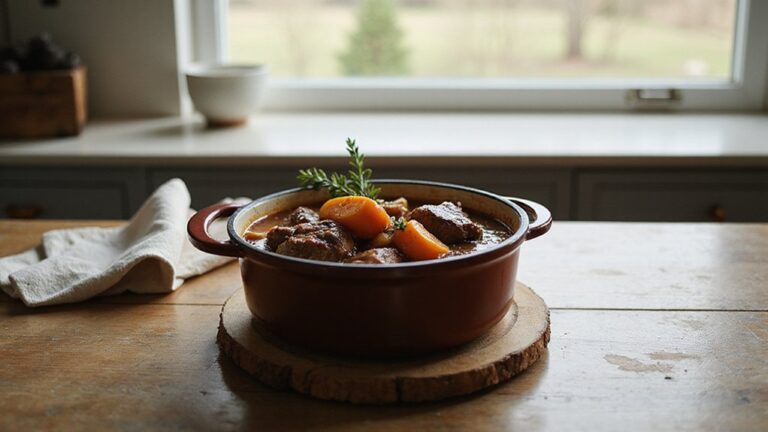
You’ll sear your seasoned pork tenderloin in a preheated Dutch oven at medium-high heat for 2–4 minutes per side, then nestle it among russet potatoes, carrots, onions, and celery. Roast at 375°F for 25–35 minutes until the internal temperature reaches 145°F. Rest it loosely covered for 10–15 minutes while carryover cooking raises the temperature 5–10°F, redistributing juices throughout. A single pot delivers restaurant-quality results with minimal cleanup and maximum flavor—discover how strategic glazing and seasoning techniques elevate your meal further.
Preparation and Seasoning Techniques
You’ll want to start by removing the silver skin—that tough, translucent membrane—from your pork tenderloin using a sharp knife held at a slight angle, which’ll improve tenderness and allow seasonings to penetrate more effectively. Using your Le Creuset Dutch Oven can help maintain optimal cooking temperatures for this dish, especially when searing the meat.
Next, pat the meat dry and prepare your seasoning blend using precise ratios: combine 2 tablespoons salt, 1 tablespoon black pepper, 1 tablespoon garlic powder, 1 tablespoon smoked paprika, and 1 teaspoon each of thyme and rosemary. Mix these with 2 tablespoons brown sugar for balance.
Brush a thin mustard layer across the tenderloin, then rub your seasoning mixture thoroughly into all surfaces, including ends and crevices. For enhanced flavor, consider marinade options by whisking your dry rub with olive oil and allowing 30 minutes of contact time before cooking. Maintaining optimal thermostat settings can also contribute to a more comfortable cooking environment while enhancing your dish’s flavors.

A delicious and juicy meal -- with easy cleanup! Cooking bag included.

One boneless pork tenderloin weighing between 1 and 1.75 pounds

Durable HT150 Alloy Construction: Built with superior heat-retaining HT150 cast iron, ensuring even cooking performance and long-lasting durability.
Searing and Browning Process
Now that your pork tenderloin’s seasoned and ready, the searing stage is critical for developing the Maillard reaction—that complex flavor enhancement that distinguishes a properly cooked tenderloin from a merely roasted one. Heat your Dutch oven to medium-high with a high smoke point oil like avocado or grapeseed until shimmering. Sear each side 2–4 minutes until a golden-brown crust forms. Use tongs to turn; avoid frequent movement that prevents browning. These browning benefits include enhanced flavor, improved texture, and retained juices for a juicier product. Common searing mistakes—using low heat, overcrowding, or inadequate drying—compromise results. Dry your pork thoroughly beforehand. Once all sides brown, remove the tenderloin and deglaze the pan with stock or wine to incorporate fond into your sauce. Cooking with a Dutch oven can also achieve superior heat retention, allowing for more effective browning and flavor development during the searing process. Additionally, high smoke point oils help prevent burning while ensuring a perfect sear.
Cooking Temperatures and Times
Once your seared pork tenderloin’s resting in the Dutch oven, precise temperature control becomes essential for achieving the ideal balance between safety, juiciness, and doneness. You’ll want to set your oven between 350°F and 375°F, depending on your preferred cooking speed. At 350°F, expect cooking times of 20–25 minutes to reach the USDA-recommended internal temperature of 145°F. If you’re using 375°F, extend your cooking times to 25–35 minutes. Always verify doneness with a meat thermometer rather than relying on visual cues. After cooking, rest your tenderloin for 10–15 minutes loosely covered with foil. This resting period allows carryover cooking to raise the internal temperature by 5–10°F while redistributing juices throughout the meat, ensuring ideal texture and moisture retention. Additionally, achieving the right temperature is crucial for successful Dutch oven cooking and can greatly impact your meal’s outcome. A proper internal temperature is essential for tender and flavorful meat.
Vegetables Included and Preparation
Building a flavorful vegetable foundation transforms your Dutch oven pork tenderloin into a complete one-pot meal. You’ll select from essential vegetable varieties: russet potatoes (1-2 inch chunks), carrots (sliced rounds), yellow onions (wedged), and celery (½ inch pieces). These core vegetables provide aromatic depth and even cooking. Adding Dutch oven desserts like a sweet campfire treat can harmonize with the savory flavors of your meal.
Your layering techniques matter considerably. Arrange root vegetables—potatoes and carrots—as your base layer. Position onions and celery above or interspersed throughout. Season this foundation with salt, pepper, Italian seasoning, and garlic powder. Add sweet peppers on top if desired.
Before introducing pork, stir vegetables to distribute seasoning evenly. This preparation guarantees consistent flavor distribution and ideal texture development during the 45-minute cooking process at 375°F, similar to how browning the meat enhances the overall flavor in a Dutch oven recipe.

Knorr Recipe Mix Vegetable (1.4oz) can be enjoyed as a soup, dip or seasoning mix to add flavor to many of your family's favorite recipes and simple meals


Flavor Enhancements and Glazes
While your seasoned vegetables establish the foundation, thoughtfully constructed glazes elevate your Dutch oven pork tenderloin from simple to sophisticated. You’ll explore diverse glaze variations—honey garlic combining soy sauce, apple cider vinegar, and Worcestershire for balanced sweet-savory-tang profiles, or balsamic glazes delivering rich, sweet-tart notes. Citrus-ginger options provide brightness with subtle spice, while maple Dijon sauces offer tangy depth.
You’ll whisk ingredients thoroughly before application, ensuring even flavor distribution. Brush glazes generously on all sides, then baste intermittently during cooking to lock moisture and layer flavors. Sear your pork first in oil—this enhances glaze adherence and caramelizes exteriors.
Apply glazes strategically, timing application carefully to prevent sugar burning. You’ll achieve excellent results by resting your pork post-cooking, allowing glaze flavors to settle while juices redistribute evenly throughout the meat.

Brush on meat at the end of cooks to add color and flavor

Made with real honey, bourbon, garlic and spices like clove & chipotle pepper

Aged Garlic Infused Raw Honey: Bold, savory-sweet aged garlic flavor.
Equipment and One-Pot Meal Benefits
Your Dutch oven serves as the centerpiece for executing these glazed pork preparations efficiently. This equipment overview highlights the 5-7 quart capacity vessel’s thick walls and tight-fitting lid, which distribute heat evenly while trapping moisture essential for tenderloin juiciness. You’ll need oven mitts, a wooden spoon, meat thermometer, and prep tools to complete your setup. Additionally, the Dutch oven’s ability to seamlessly transition from stovetop to oven makes it an ideal choice for various cooking techniques.
The meal benefits justify this single-vessel approach. You’ll reduce cleanup considerably while allowing glaze components and pork flavors to meld thoroughly. The oven-safe construction enables seamless stovetop-to-oven shifts, maintaining consistent temperatures throughout cooking. Heat retention properties minimize reheating requirements, preserving water-soluble vitamins. This method accommodates batch cooking for multiple servings, streamlining meal preparation while supporting healthier ingredient choices through controlled, moist cooking techniques that reduce harmful compound formation. Additionally, using the Dutch oven allows for various cooking techniques like braising and simmering, enhancing the dish’s flavors and textures while ensuring tenderness.

Even Heat Distribution Retention: This Dutch oven Made with heavy-duty enameled cast iron, ensures even heat distribution for perfect searing and slow cooking, locking in flavors. thickened walls lock in heat for slow braising, searing, and baking. Unlike thin pots that scorch food, this professional-grade Enameled cast iron pot maintains steady temperatures

Quality Enameled Dutch Oven: The Lodge Essential Enamel Cast Iron Dutch Oven gives you all the benefits of cast iron cooking, great heat retention and durability, without fear of rust; it's also PFAS free

IDEAL FOR FAMILY MEALS - Perfectly sized for families of 3–5 people, this 5.5QT Dutch oven handles everything from hearty soups and stews to one-pot dinners, pasta dishes, and Sunday pot roasts. Spacious enough for a whole chicken yet practical for everyday cooking, it delivers the ideal balance between daily family meals and weekend entertaining. Also well-sized for artisan bread bakers who want one pot for both family dinners and sourdough baking.