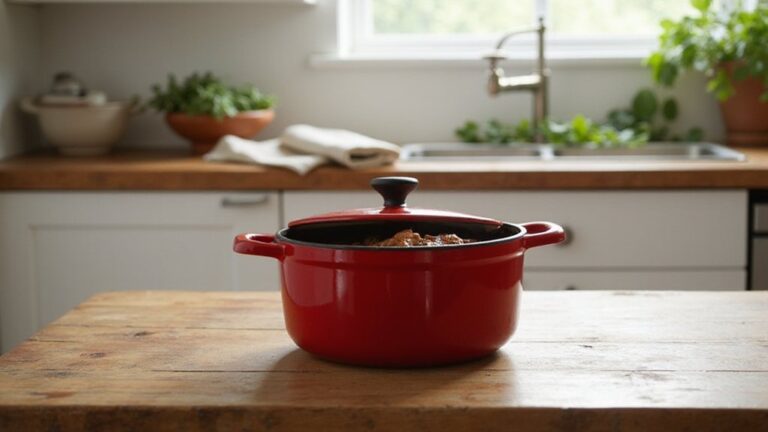
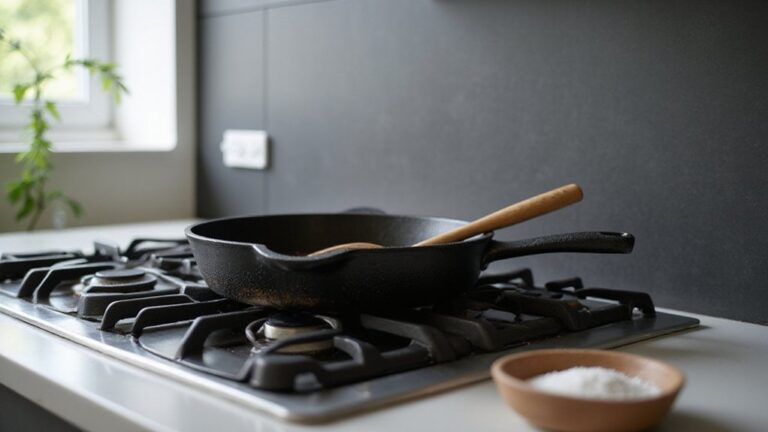
You’ll find bare cast iron excels at high-heat searing and frying while requiring regular seasoning and oil maintenance. Enameled versions offer convenience with minimal upkeep, ideal for braising and acidic foods, though they’re limited to 500°F and vulnerable to chipping. Both retain heat effectively with 4+ mm thickness, but your choice hinges on cooking priorities: maximum versatility demands bare iron, while low-maintenance convenience favors enamel. The full comparison reveals nuanced factors affecting long-term value and performance.
Material Composition and Construction
How do cast iron and enameled Dutch ovens differ at their foundation?
You’ll find that bare cast iron uses a proprietary blend of molten pig iron, steel, and other ingredients, while enameled versions feature an identical cast iron core topped with a hand-applied glass particle coating. This enamel layer fuses under intense heat, creating a nonreactive surface. Cooking safely with cast iron is generally achievable when proper seasoning is maintained.
Both utilize sand molding as their primary construction method. The Disamatic molding machine produces 350-400 molds hourly by pressing sand, water, and clay against patterns. Metal mixtures heat in electric induction furnaces exceeding 2,000 degrees Fahrenheit for approximately 45 minutes.
The material benefits differ greatly: bare cast iron requires seasoning maintenance but offers affordability, while enameled variants provide superior durability and rust protection without seasoning requirements. Additionally, proper care tips for enameled cookware help preserve its appearance and usability. Wall thickness and overall weight determine structural longevity for both construction methods.
Heat Retention and Distribution Properties
While the construction methods and material composition establish the foundation of cast iron and enameled Dutch ovens, their thermal performance determines their practical cooking capabilities. Both variants excel at heat retention due to their 4+ mm thickness, which stores thermal energy effectively during cooking. You’ll experience minimal hot spots with either option, as cast iron distributes heat evenly across the bottom and walls. The enamel coating adds negligible thermal resistance, so your cooking temperature remains stable whether you choose bare or enameled cast iron. However, you should expect slower heat-up times with both—a trade-off for superior thermal efficiency during extended braising and slow-cooking applications. This thermal mass advantage makes cast iron Dutch ovens ideal for sustained, consistent heat delivery rather than rapid temperature adjustments. Additionally, cooking with cast iron cookware can provide health benefits by increasing the iron content of your food, especially for those needing higher iron intake. Interestingly, some methods for restoring cast iron, like using oven cleaner to strip built-up residue, can enhance its heat retention properties after proper maintenance.
Cooking Versatility and Performance
Temperature constraints fundamentally shape how you’ll deploy each Dutch oven across your culinary repertoire. Cast iron skillets excel at high-heat searing and open-fire cooking applications without temperature limitations, making them ideal for extreme-heat techniques. Enameled Dutch ovens, however, max out at 500°F, restricting their heat sensitivity and certain cooking applications.
Your cooking applications determine which performs better. Cast iron dominates frying and searing scenarios requiring sustained high temperatures. Enameled options excel at braising, stewing, and simmering—particularly with acidic foods like tomatoes. The enamel coating prevents reactivity, allowing extended cooking without flavor compromise or seasoning degradation. Additionally, understanding charcoal briquette placement is essential for outdoor cooking to achieve optimal results. It’s important to note that using products like Evapo-Rust can safely help maintain rust-free cookware while ensuring you avoid harmful residues.
Both handle diverse meal preparations effectively, yet each excels distinctly. Choose cast iron for high-heat versatility and outdoor cooking. Select enameled Dutch ovens for controlled, moisture-intensive applications and acidic ingredients requiring prolonged cooking times.

Even Heat Distribution Retention: This Umite Chef Dutch oven Made with heavy-duty enameled cast iron, ensures even heat distribution for perfect searing and slow cooking, locking in flavors. thickened walls lock in heat for slow braising, searing, and baking. Unlike thin pots that scorch food, this professional-grade Enameled cast iron potSuperior heat retention after preheating (allow 5-7 mins for even distribution). CRITICAL: Always cool naturally for 45+ mins before cleaning. Thermal shock (hot-to-cold contact) cracks enamel. USE TIP: Preheat 2-3 mins on medium-low only

Even Heat Distribution Retention: This Dutch oven Made with heavy-duty enameled cast iron, ensures even heat distribution for perfect searing and slow cooking, locking in flavors. thickened walls lock in heat for slow braising, searing, and baking. Unlike thin pots that scorch food, this professional-grade Enameled cast iron pot maintains steady temperatures

Moisture-Locking Lid: The Lodge Essential Enamel Cast Iron Dutch Oven features a moisture-locking design ideal for roasting, braising, and slow cooking pot meals
Maintenance Requirements and Care
Maintenance demands diverge greatly between these two cookware types, fundamentally affecting their long-term usability and performance. Enameled Dutch ovens require minimal upkeep: you’ll wash them with warm soapy water using gentle cleaning techniques, avoiding abrasive scrubbers that scratch the protective coating. They don’t need seasoning since the enamel provides built-in protection.
Unenameled cast iron demands considerably more attention. You must dry it immediately after washing and apply oil regularly for rust prevention. Unlike enameled versions, you’ll need to season unenameled cast iron periodically to maintain its nonstick surface and prevent oxidation. Regular maintenance, including proper cleaning techniques, is essential to ensure the longevity of your cast iron skillet, as thoroughly drying the skillet after washing is crucial.
Both types benefit from slow preheating and careful handling. Store enameled pieces completely dry to protect exposed metal edges, while unenameled iron requires a light oil coating during storage. These maintenance differences greatly influence which option suits your lifestyle.

Easy Cleanup Tool: The Lodge Scrub Brush is designed to help tackle stubborn food residue and simplify cast iron cookware cleanup
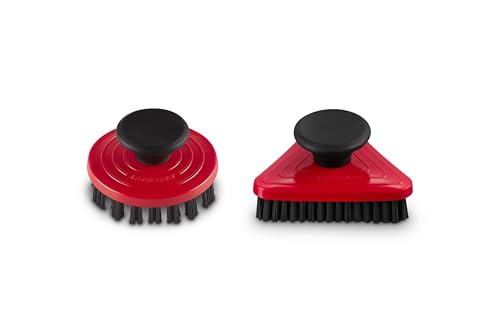
Crafted from durable nylon
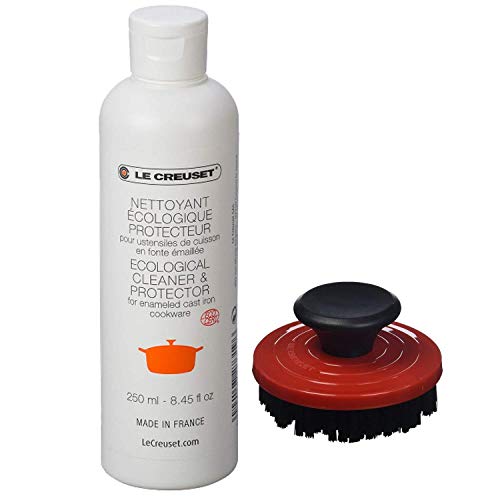
2-piece set includes: 3.25" Nylon Brush Kitchen Product, Cerise with Enameled Cast Iron 8.45 fl. oz. Cookware Cleaner
Durability and Longevity Comparison
Beyond the daily care routines that distinguish these cookware types, their structural resilience and lifespan tell dramatically different stories. Bare cast iron’s wear resistance proves nearly unmatched—it withstands decades of use, drops, and rough handling while actually improving with seasoning over generations. Additionally, the smooth bottom of cast iron grill pans makes them suitable for various cooktops, but caution is needed to prevent scratching. Enameled cast iron, conversely, offers excellent heat retention and surface durability against acidic foods, yet its vitreous enamel coating remains vulnerable to chipping and crazing from thermal shock or impact. While lifetime warranties on premium enameled Dutch ovens demonstrate manufacturer confidence, the enamel surface doesn’t develop seasoning and may discolor over time. Proper care of cast iron skillets is essential for ensuring durability, which further emphasizes the difference in maintenance needs between these two cookware types. Your choice hinges on priorities: choose bare cast iron for maximum impact resistance and indefinite longevity, or select enameled versions for acid-resistant cooking despite their inherent fragility.

Quality Enameled Dutch Oven: The Lodge Essential Enamel Cast Iron Dutch Oven gives you all the benefits of cast iron cooking, great heat retention and durability, without fear of rust; it's also PFAS free
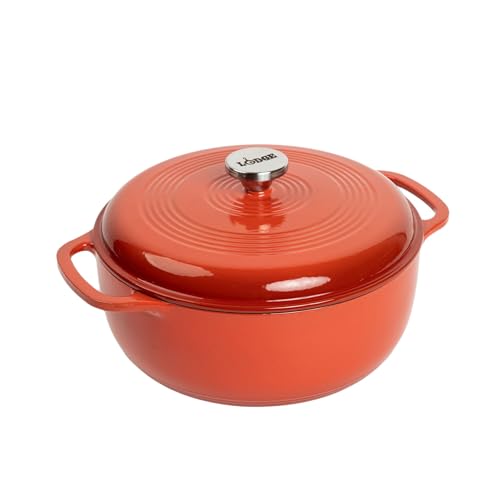
Quality Enameled Dutch Oven: The Lodge Essential Enamel Cast Iron Dutch Oven gives you all the benefits of cast iron cooking, great heat retention and durability, without fear of rust; it's also PFAS free

PREMIUM ENAMELED CAST IRON DUTCH OVEN WITH LID - Made from heavy-duty enameled cast iron, this Dutch oven with lid delivers even heat distribution and excellent heat retention for reliably cooking meals evenly and keeping them warm for longer. Use for soups, braising meats, roasting, simmering, and slow cooking without hot spots or scorching.
Visual Appeal and Design Options
While bare cast iron’s durability makes it a workhorse in the kitchen, enameled Dutch ovens distinguish themselves through visual versatility that transforms cookware into design elements. You’ll find enameled options available in numerous colors and finishes, enabling color psychology principles to influence your kitchen aesthetic. This contrasts sharply with bare cast iron’s limited black and dark gray palette.
Hand-enameled production guarantees consistent quality through multiple inspection points, creating refined surfaces that complement various design styles. You can coordinate matching cookware sets and display pieces on open shelving, merging aesthetic function with practicality. Premium manufacturers maintain visual standards through artisan methods that produce polished finishes.
While enamel coating can experience crazing over time, enameled surfaces maintain visual consistency without the darkening that bare cast iron develops through seasoning buildup. This sustained appearance supports your long-term kitchen design coordination.
Cost and Value Considerations
Your initial investment in a Dutch oven varies dramatically based on construction type and brand positioning. Enameled options range from $45 to $500+, while traditional cast iron starts around $50. When evaluating price comparison, consider durability: seasoned cast iron lasts indefinitely with proper maintenance, whereas enameled Dutch ovens risk enamel chipping, potentially reducing lifespan. Premium brands like Le Creuset justify higher costs through thicker, chip-resistant coatings. Budget enameled products deteriorate faster with thinner finishes, affecting long-term value. However, resale value favors high-end brands—Le Creuset and Staub maintain strong collector demand despite initial premiums. Generic enameled Dutch ovens depreciate considerably. Cast iron offers exceptional lifetime value with minimal maintenance costs compared to potential enamel replacement expenses, making it ideal for budget-conscious buyers prioritizing durability. Additionally, proper maintenance for cast iron can make it last indefinitely, while enameled options may deteriorate more quickly. As with cast iron skillets, adding a little oil or fat after preheating to your Dutch oven can help prevent sticking and enhance the cooking experience.
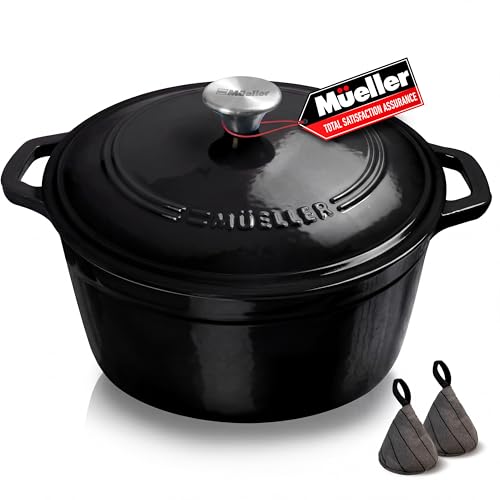
ORIGINAL KITCHEN MULTITASKER – The DuraCast 6Qt Enameled Cast Iron Dutch Oven is the ultimate cookware piece to enhance any meal from gourmet macaroni and cheese to healthy sourdough bread. The natural heat retention of the cast iron pot combined with the enamel finish allows you to fry and sauté, sear, slow cook, stew, braise, boil, deep fry, roast, broil & bake up to 500°F! Compatible with all cooktops, including induction and oven.

Even Heat Distribution Retention: This Umite Chef Dutch oven Made with heavy-duty enameled cast iron, ensures even heat distribution for perfect searing and slow cooking, locking in flavors. thickened walls lock in heat for slow braising, searing, and baking. Unlike thin pots that scorch food, this professional-grade Enameled cast iron potSuperior heat retention after preheating (allow 5-7 mins for even distribution). CRITICAL: Always cool naturally for 45+ mins before cleaning. Thermal shock (hot-to-cold contact) cracks enamel. USE TIP: Preheat 2-3 mins on medium-low only

IDEAL FOR FAMILY MEALS - Perfectly sized for families of 3–5 people, this 5.5QT Dutch oven handles everything from hearty soups and stews to one-pot dinners, pasta dishes, and Sunday pot roasts. Spacious enough for a whole chicken yet practical for everyday cooking, it delivers the ideal balance between daily family meals and weekend entertaining. Also well-sized for artisan bread bakers who want one pot for both family dinners and sourdough baking.
Choosing the Right Dutch Oven for Your Needs
How do you determine which Dutch oven type best serves your cooking style and budget constraints? Consider your cooking priorities. If you frequently simmer acidic ingredients like tomatoes, enameled cast iron‘s non-reactive surface prevents seasoning deterioration. Traditional cast iron demands rigorous seasoning techniques and immediate drying after cleaning methods to prevent rust—ideal only if you’re committed to ongoing maintenance.
Choose enameled cast iron for minimal upkeep and versatile cooking applications including braises, roasts, and stews. Its ready-to-use design eliminates pre-seasoning requirements. However, evaluate enamel quality carefully since durability varies greatly between manufacturers. If you prioritize high-heat cooking and accept maintenance responsibilities, traditional cast iron delivers superior performance. Additionally, its excellent heat retention and moisture-trapping properties make it suitable for slow cooking methods. Your decision ultimately hinges on whether convenience or heat capacity matters more to your culinary needs. Furthermore, consider the lid design to enhance cooking performance and moisture retention while using your Dutch oven.

BREAD BAKER'S DUTCH OVEN, 500°F OVEN-SAFE, SOURDOUGH-READY – one of the highest ratings in its class – delivering the sustained heat that sourdough, artisan bread, and pizza dough demand. Thick cast-iron walls trap and circulate heat like a brick oven, producing bakery-quality crusts at home. The tight-sealing lid features raised self-basting nodes that continuously recirculate steam: a perfect moisture chamber, every single bake.

【Airtight Lid Locks In Freshness & Flavor】Experience the magic of this Dutch oven with lid, precision-engineered to create a tight seal. It locks in moisture and essential nutrients, delivering richer flavor and incredibly tender, juicy results in every dish—from slow-braised meats to hearty soups. Achieve a perfect, crispy crust on your artisan loaves—it's the ultimate Dutch oven for bread baking. The interior self-basting dots continuously redistribute condensation, ensuring your food stays perfectly moist, never dry or mushy

【Airtight Lid Locks In Freshness & Flavor】Experience the magic of this Dutch oven with lid, precision-engineered to create a tight seal. It locks in moisture and essential nutrients, delivering richer flavor and incredibly tender, juicy results in every dish—from slow-braised meats to hearty soups. Achieve a perfect, crispy crust on your artisan loaves—it's the ultimate Dutch oven for bread baking. The interior self-basting dots continuously redistribute condensation, ensuring your food stays perfectly moist, never dry or mushy