

To fill your Scorch torch, you’ll need triple-refined butane, a screwdriver, and protective gloves. First, cool the lighter in your freezer for 20-30 minutes to achieve temperature equilibrium. Next, purge the valve by holding it upside down and pressing until hissing stops completely. Adjust the flame setting to its lowest position before refilling. Once you’ve injected the butane carefully, allow the torch to stabilize before testing. For thorough guidance on executing each step perfectly, the details below offer essential precision.
Gathering Your Supplies and Materials
Before you fill your Scorch torch, you’ll need to gather the right supplies and materials to guarantee a safe, effective refill. Start with triple-refined butane—your fuel selection tips should emphasize quality over cost, as standard butane contains impurities that clog jets and reduce performance. You’ll also need a small screwdriver for flame adjustments and a pointed object like a paperclip for valve purging.
Regarding safety precautions, wear protective gloves to maintain grip and prevent fuel contact with skin. Have a cleaning cloth and cotton swabs ready to keep the refill area debris-free. Consider optional supplies like a refill adapter, compressed air duster, and wire for jet clearing. Purchase all materials from reputable sources only—this protects your warranty and guarantees safety. Check your Scorch torch’s manufacturer guidelines for specific requirements before beginning.
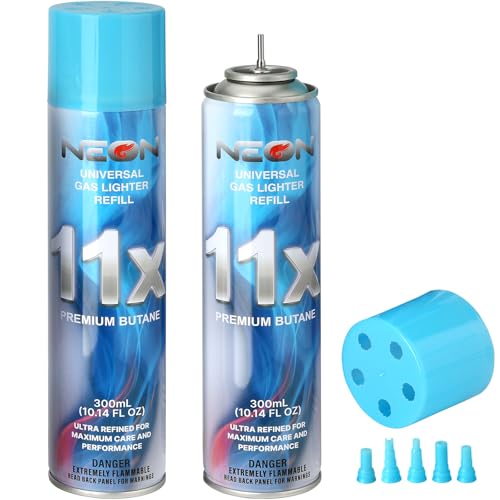
【11X Ultra-Refined Purity】 Filtered 11 times nanoscale stages for 99.9997% purity, NEON butane fuel delivers a cleaner, hotter, and more efficient burn. No odor, no residue, just consistent high performance that protects your cigars, culinary delights, bartending masterpieces, and your experience.

Volume: 300 ml (10.144 fl oz)

SUPERIOR PERFORMANCE: XIKAR Purofine Premium Butane Fuel is meticulously crafted to deliver unparalleled performance. Specially formulated for jet flame lighters, it ensures a consistent and powerful flame, making it ideal for lighting cigars.
Preparing Your Work Environment
To refill your Scorch torch safely and effectively, you’ll need to establish a dedicated workspace that minimizes risks and supports precise handling. Select a flat, stable surface free of clutter to maintain balance during the refilling process. Workspace safety depends on proper ventilation importance—ensure the area’s well-ventilated to disperse butane fumes and reduce inhalation hazards. It’s crucial to use torches that include automatic ignition systems to enhance safety during operation.
Position your station away from open flames, heat sources, and sparks that could ignite butane vapors. Eliminate ignition sources like cigarettes and electrical devices. Arrange all necessary tools, supplies, and a fire extinguisher within arm’s reach before starting. Maintain adequate lighting to clearly see the refill valve and controls. Clear flammable materials from the space to reduce accident potential, allowing you to work with focus and precision throughout the refilling procedure. Additionally, be aware that butane torches are prohibited in both carry-on and checked baggage when traveling by air.
Cooling Down Your Lighter
Since internal air pressure and moisture buildup can prevent efficient fuel injection, you’ll need to chill your Scorch torch before refilling. Place your lighter in the freezer for ideal chilling between 20 to 30 minutes. This duration allows residual air and moisture inside the fuel tank to condense completely, maximizing available capacity for new butane. If you’re short on time, refrigerator cooling works as a faster alternative, requiring just 3 to 5 minutes. The goal is reaching ice temperature similar to your butane refill canister itself. Temperature equilibrium between your lighter and the refill canister guarantees efficient fuel transfer and prevents counter-pressure from blocking liquid butane injection. Extended freezer time guarantees internal air has sufficient opportunity to condense fully.
Purging the Lighter Valve
After you’ve cooled your lighter, you’ll need to purge the fuel valve to remove residual butane and air that could contaminate fresh fuel or cause malfunctions during refilling. Locate the refill valve at the lighter’s bottom and hold it upside down. Use a small screwdriver or paperclip to press and hold the valve firmly until you hear a hissing sound indicating gas escape. Continue until the hissing stops completely.
Implement proper safety measures throughout this process. Work in a well-ventilated area away from open flames and heat sources. Avoid inhaling released butane, and don’t over-press the valve to prevent damage. These purging techniques guarantee successful valve clearing. You’ll know purging succeeded when resistance disappears and no sputtering occurs during subsequent ignition.

STOP LIGHTER MISFIRES IN SECONDS Quickly purge trapped air from your butane lighter to restore a strong, consistent flame. No more sputtering, weak ignition, or wasted fuel.

Efficient Air Removal: Designed to efficiently bleed trapped air from refillable lighters, this patented tool ensures consistent operation and extends lighter lifespan. A practical solution for maintaining functionality while avoiding the hassle of makeshift tools or unreliable methods.

【Professional flame regulation and exhaust function】Achieve the perfect flame every time! This versatile lighter tool allows you to easily adjust flame size and release gas from your butane lighter. It's the essential air bleed key for purging air pockets after refill, ensuring optimal performance for your torch and cigar lighters.
Adjusting the Flame Setting
Flame adjustment on your scorch torch lighter involves locating and manipulating a small screw or dial mechanism positioned at the lighter’s bottom. Before refilling, turn the adjustment to its lowest setting to prevent fuel leakage. Additionally, it’s crucial to purge excess air from the torch’s fuel tank before refilling to ensure optimal ignition.
After refilling, gradually rotate the adjustment counter-clockwise in quarter-turn increments, testing the flame after each adjustment. This methodical approach to flame control prevents mechanical damage and excessive flame height. Don’t force the adjuster beyond its preset maximum.
Your adjustment mechanisms respond best after the butane warms to room temperature. If the flame doesn’t respond adequately, low fuel pressure may be the culprit. Purge the tank and refill properly to allow the butane to stabilize, enabling more consistent flame adjustment and reliable lighter performance.


▶【Design Purpose】Many lighters on the market lack built-in flame adjustment valves, especially when the flame adjustment position of some lighters is deep, adjusting with a screwdriver can easily damage the lighter. To address this pain point, we have specially designed two lighter adjustment tools that cover 7 different sizes of adjustments (1.1mm/2mm/4mm, 5mm, 6mm/8mm/10mm), suitable for over 99% of lighters!

CREATE WITH FIRE: Precision torch equips you with the power of an adjustable flame and accommodates a higher heat intensity than most propane torch heads when used with Bernzomatic Map-Pro fuel. Precision flame and high heat temperature enable users with a versatile tool for creating truly unique projects.
Executing the Refill Process
Once you’ve prepared both your lighter and butane fuel, you’re ready to begin the refill process. Hold the lighter and butane canister in the same hand, maintaining the upside-down position throughout. Press down on the butane can for approximately 5-10 seconds, following the fuel canister’s specific instructions. Listen for the hissing sound, which confirms fuel’s entering your lighter correctly. Watch carefully for butane overflow from the refill valve, indicating your tank’s reaching capacity. Stop the fuel transfer immediately when gas begins escaping, preventing overfilling that could compromise lighter performance. Remove the nozzle cleanly without forcing the disconnection. Verify no fuel leaks occur during removal, then position your lighter right-side up and allow excess fuel to evaporate naturally before testing ignition.
Allowing for Rest and Stabilization
Your lighter now requires a stabilization period before you can safely use it. You should allow 5 to 30 minutes for the butane to reach room temperature and internal pressure to equalize. This rest period guarantees fuel stability by letting excess butane evaporate and preventing cold fuel expansion that causes misfires or sputtering.
During this time, position your torch upright on a flat, stable surface in a well-ventilated area away from heat sources and ignition risks. Avoid shaking or adjusting the torch while it settles. Use this interval to inspect the nozzle for debris and verify there are no leaks.
Proper stabilization directly improves ignition consistency and flame quality while protecting your torch’s internal mechanisms from pressure-related damage. Never attempt ignition before completing the full rest period.
Testing Your Torch Lighter
After completing the stabilization period, you’ll need to thoroughly test your torch lighter to guarantee it’s functioning properly before regular use. Start with a spark check by holding the lighter at eye level in a dark room and pressing the ignition button. You should observe a visible spark; if none appears, you’ve got a faulty piezo igniter requiring replacement.
Next, perform a flame inspection by igniting the lighter and observing the output for consistency and strength. A weak or flickering flame suggests low fuel pressure or internal clogs. Adjust the flame dial to see if performance improves. If the flame remains weak or unstable after adjustment, internal damage may be present, warranting professional inspection or replacement. Additionally, ensure your torch is filled with the right butane fuel type to enhance its performance and longevity. Keep in mind that many kitchen torches are sold without butane included for safety and shipping reasons, so you may need to buy it separately.

2-Pack Total. Zippo Butane Fuel 75 ml each can. Made in USA

🔥【Great Value 5-Pack】5 Pack Colored Torch Lighters Versatile and multi-purpose, each lighter has a blue jet flame that can reach temperatures up to 2800°F, and the flame adjustment slider makes it easy to control flame size. It can easily maintain the continuous output of the flame. It is easy to understand, easy to operate and very practical.

⚠️Attention---The lighters don't contain gas! !
Making Fine-Tuning Adjustments
Now that you’ve confirmed your torch lighter is operating properly, you’ll want to fine-tune its performance for your specific needs. Locate the flame adjustment dial or screw, typically positioned at the lighter’s bottom or side. Turn it clockwise to decrease flame size or counterclockwise to increase it. Make adjustments incrementally, testing ignition after each small turn to achieve ideal flame stability.
For precision tasks like jewelry making or cigar lighting, careful calibration is essential. Lock your adjustment settings once you’ve reached your desired flame height to prevent accidental changes during use. Avoid over-tightening the adjustment screw, which can damage internal components. Fine-tuning guarantees your Scorch Torch delivers consistent, reliable performance tailored to your specific applications.

【RTTOOA'S PROPANE TORCH HEAD IS DISTINCTIVE】While other brands were still using traditional techniques, RTTOOA has completed three upgrades. 1. An ergonomic handle was adopted with a non-slip matte finish coating. This provides a more comfortable user experience. 2. The ignition system was improved, increasing the maximum power output from 8,000BTU to 10,000BTU. 3. An pressure regulator was built-in to ensure a 100% ignition success rate, and increase the stability of the flame. This significantly extends the product's lifespan

【Easy to use]】Trigger start auto ignition, instantly light up or extinguish the flame with one key, improve fuel efficiency, easy to use.

PENCIL-SHAPED FLAME - perfect for pinpoint heating; widely used for soldering, metal works, plumbing, woodworking, heat treating, and brazing; also used as a fire starter, charcoal/fire pit lighting, searing meat, and many more


