You can calibrate your infrared thermometer using two simple DIY methods. For ice water calibration, position your thermometer 5–8 cm above a crushed ice and distilled water mixture, setting emissivity to 0.97–0.98; you’ll want readings between −1°C and 1°C. Alternatively, use boiling water at 100°C, accounting for altitude corrections. If you need greater accuracy verification, professional calibration services provide NIST-traceable standards and detailed performance reports across wider temperature ranges. Establishing regular calibration intervals guarantees your measurements remain reliable for consistent results.
Understanding Infrared Thermometer Calibration
To guarantee your infrared thermometer delivers reliable measurements, you’ll need to understand the fundamental principles behind calibration. Calibration verifies your device’s accuracy by comparing readings against fixed temperature references or controlled radiation sources. You’ll encounter two primary methods: blackbody calibration, which uses precision sources traceable to ITS-90 standards, and contact transfer calibration, which compares your IR reading simultaneously with a contact probe measurement. Additionally, understanding how to maintain rotation while taking measurements helps ensure consistent results.
Critical to both methods is understanding emissivity adjustments. Your thermometer’s emissivity settings must match your calibration source’s emissivity, or you’ll need to apply mathematical corrections. Some devices lack adjustable emissivity features, requiring alternative compensations in calculations.
Calibration accuracy depends on maintaining consistent distance between your thermometer and the source, controlling ambient conditions, and covering your thermometer’s operational temperature range during testing. Additionally, infrared thermometers can also find practical applications beyond cooking similar to versatile meat thermometers used in baking.
Ice Water Calibration Method
One of the most accessible and reliable calibration methods relies on a simple ice water bath, which provides a stable 0°C (32°F) reference point traceable to international standards. You’ll fill a sturdy container with crushed ice, then add distilled water until the ice is fully covered. Stir the mixture thoroughly to guarantee uniform temperature distribution throughout.
For proper ice bath preparation, you must allow the mixture to equilibrate for 1–2 minutes before beginning measurements. Temperature stability requires waiting at least 5 minutes before use, guaranteeing the bath maintains consistent thermal conditions.
Position your infrared thermometer 5–8 cm directly above the water surface with emissivity set to 0.97–0.98. You’ll aim at the open water surface and record readings once the thermometer stabilizes. Accept measurements between −1°C and 1°C.

❄️ Chill Out in Style: This sleek, waterproof cold plunge thermometer accurately monitors your ice bath temperature for maximum cryotherapy benefits. No more guessing!

❄️ Chill Out in Style: This sleek, waterproof cold plunge thermometer accurately monitors your ice bath temperature for maximum cryotherapy benefits. No more guessing!

【Automatic Water Bath Thermometer】The floating ice bath thermometer automatically activates the digital display when it comes into contact with water, it continues to read the temperature of the water for 15 minutes while in the water, and then automatically turns off when it leaves the water
Boiling Water Calibration Technique
While the ice water method establishes a reliable baseline at 0°C, you’ll find the boiling water calibration technique invaluable for verifying thermometer accuracy across higher temperature ranges. Heat distilled water to a vigorous rolling boil in a wide container, then aim your infrared thermometer at the water surface without touching it. Maintain proper distance and angle to avoid steam interference, which produces variable readings. It’s important to note that infrared thermometers can be influenced by environmental factors, so ensure you are in a controlled setting. Compare your thermometer’s display to the known boiling point of 212°F (100°C) at sea level. Account for altitude corrections if necessary—the boiling point decreases approximately 1°F per 500 feet elevation. It is crucial to understand your device’s distance-to-spot ratio to ensure accurate readings. Record your readings and adjust thermometer settings if discrepancies exceed manufacturer tolerance limits.
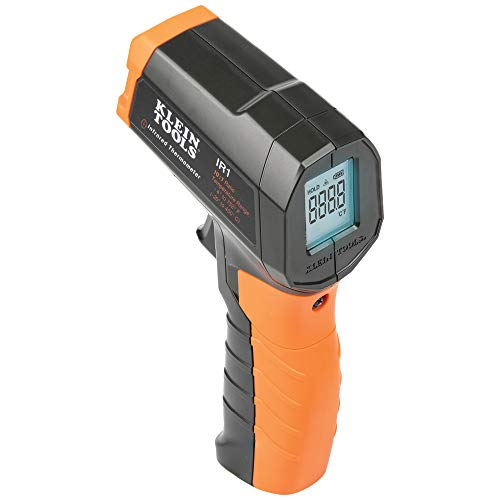
PRECISE TEMPERATURE MEASUREMENT: Optical resolution (distance-to-spot) of 10:1 ensures accurate temperature readings from a distance

Wide Temperature Range: Measures temperatures from -58℉ to 1112℉ (-50℃ to 600℃), making it perfect for a variety of applications, including cooking, pool maintenance, oven temperature checks, and candy making

TG54-2 Measures Temperatures ranging from -30°C to 850°C (-22°F to 1562°F) from safe distance using infrared technology with a 20:1 laser spot ratio
Professional Calibration Equipment Options
Professional calibration equipment and services provide the accuracy verification you’ll need when DIY methods like ice water and boiling point tests don’t suffice. You’ll access portable calibrators featuring blackbody sources that simulate ideal thermal radiation across wide temperature ranges, typically -30°C to 500°C. These devices enable on-site calibration without transporting equipment to labs.
You’ll also benefit from NIST-traceable calibration standards ensuring your results meet ISO/IEC 17025:2017 requirements. Specialist labs maintain controlled environments at approximately 68°F and 30-55% relative humidity, testing your thermometer across multiple temperature points. You’ll receive detailed performance reports documenting pre- and post-calibration data, adjustments, and traceability certificates. Many providers offer customized services with rapid turnaround times, accommodating your specific operational requirements and scheduling needs.

𝐕𝐞𝐫𝐬𝐚𝐭𝐢𝐥𝐞 𝐓𝐨𝐨𝐥𝐬: Infrared technology allows you to measure various objects at home and outdoors; Use it for 𝒎𝒆𝒂𝒕, 𝑫𝑰𝒀 𝒄𝒂𝒏𝒅𝒚, 𝒐𝒗𝒆𝒏𝒔, 𝒈𝒓𝒊𝒍𝒍𝒊𝒏𝒈, 𝒇𝒐𝒐𝒅, 𝒄𝒐𝒐𝒌𝒊𝒏𝒈, 𝒂𝒖𝒕𝒐𝒎𝒐𝒕𝒊𝒗𝒆 𝒖𝒔𝒆, 𝑨/𝑪, 𝒓𝒆𝒇𝒓𝒊𝒈𝒆𝒓𝒂𝒕𝒐𝒓𝒔, etc.

Temperature measurement range:-50℃-500℃ (-58℉-932℉)Display resolution: 0.1 ℃ or 0.1 ℉

【Highly Accurate & Adjusts to Any Surface】Designed with the latest thermopile sensor technology, the infrared laser thermometer gun is accurate to +/-1.5%; Improve this pizza oven thermometer gun measurements by adjusting the emissivity from 0.1–1.0 to match the surface material being measured
Environmental Setup and Preparation
Achieving reliable infrared thermometer calibration hinges on creating a controlled environment that minimizes measurement uncertainty. You’ll maintain your laboratory at 23°C (±5°C) and monitor temperature continuously with a calibrated thermometer to detect fluctuations that compromise accuracy.
Position your thermometer perpendicular to the calibration source, securing it with a mounting device to prevent alignment shifts. You must guarantee proper distance-to-spot ratios and keep the optical path clear of interference from background surfaces.
For temperature stability, allow your blackbody source to reach thermal equilibrium before measurements begin. You’ll establish multiple calibration points across your intended range and document ambient humidity levels, as high moisture affects sensor performance.
Critically, you’ll match your emissivity adjustment precisely to the calibration source surface, using clean, dry surfaces with known emissivity characteristics for reliable reference standards.
Best Practices for Accurate Measurements
The foundation of reliable calibration rests on executing precise measurement procedures that account for thermal dynamics and optical alignment. You’ll achieve ideal results by allowing your thermometer to acclimate for at least 15 minutes before calibration, preventing thermal shock that skews readings. Hold the measurement trigger longer than your device’s response time to capture stable values. Temperature stability is critical—ensure your reference source maintains consistent conditions throughout measurement. Clean your lens carefully per manufacturer specifications to eliminate optical interference. Establish calibration frequency based on your application’s demands; frequent use warrants more regular calibration intervals. Perform measurements at multiple calibration points spanning your thermometer’s operational range, capturing minimum, mid-range, and maximum temperatures to detect potential drift across the entire spectrum. Remember, maintaining accuracy with infrared thermometers is essential due to their limitations with surface temperature readings.

PRECISION MEASUREMENTS FOR COOKING: Know how hot your cooking surfaces are before you start cooking. Good for pizza ovens, griddles, ovens, pans and more. The digital infrared thermometer gun for cooking offers an emissivity range from 0.1 to 1.0, ensuring precise temperature readings across diverse surfaces and conditions. For optimal accuracy, maintain a 14-inch distance from the target object with the temperature thermal gun.

𝐖𝐢𝐝𝐞 𝐓𝐞𝐦𝐩𝐞𝐫𝐚𝐭𝐮𝐫𝐞 𝐑𝐚𝐧𝐠𝐞: Measure a temperature range from -58°–1130°𝙁 / -50°–610°𝘾 𝙖𝙣𝙙 𝙜𝙚𝙩 𝙮𝙤𝙪𝙧 𝙧𝙚𝙨𝙪𝙡𝙩 𝙞𝙣 0.5 𝙨𝙚𝙘𝙤𝙣𝙙𝙨; The display will also show the max temperature of the surface you’re measuring. Perfect heat gun for measuring.
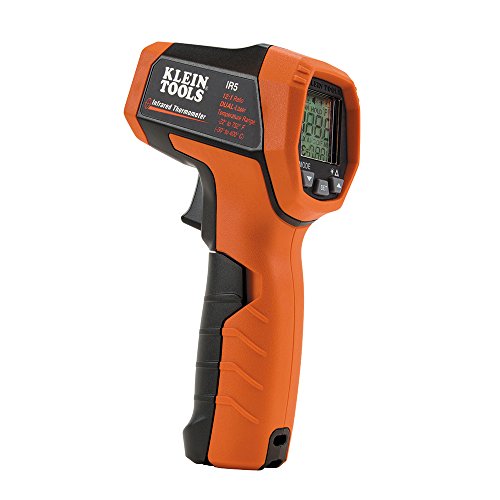
PRECISE TEMPERATURE MEASUREMENT: Optical Resolution (Distance-to-spot) of 12:1 ensures accurate temperature readings from a distance