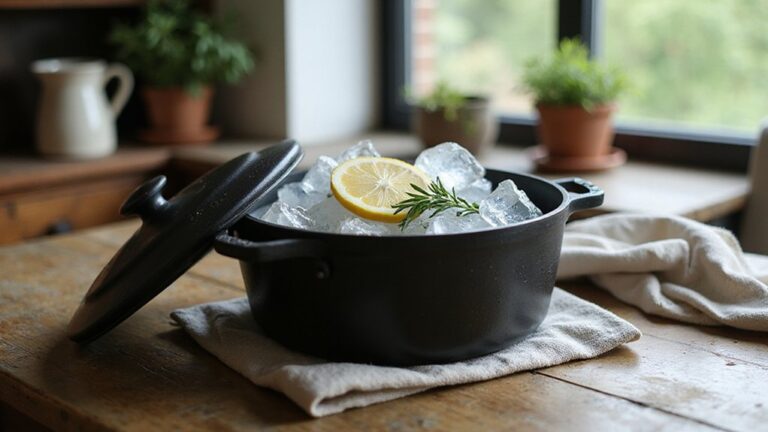
You’ll establish a stable 120°F water bath using a heat source or sous vide circulator as your reference point. Immerse your thermometer and note the reading difference from the actual temperature. For dial thermometers, you’ll adjust the calibration nut to correct the offset. Digital thermometers require calculating and inputting the variance. Document this adjustment carefully. Verify your calibration through ice bath and boiling water tests to validate accuracy across multiple temperature ranges and strengthen your long-term maintenance foundation.
Understanding Thermometer Calibration Basics
Accuracy in food preparation hinges on calibration—the process of verifying your meat thermometer‘s readings against known reference temperatures. You’ll realize that calibration compensates for manufacturing variances and drift caused by wear, drops, or temperature extremes. Different thermometer types—analog, digital, and infrared—require specific calibration approaches, though all follow established calibration standards.
You must understand that proper calibration extends your thermometer’s reliability and directly impacts food safety. The two primary reference points you’ll use are the ice point (32°F/0°C) and boiling point (212°F/100°C at sea level). Before using your meat thermometer for critical temperature measurements, you should verify it reads accurately within ±2°F (±1°C) of these known values. This foundational knowledge guarantees you’re making trustworthy temperature measurements throughout your food preparation process. Regular testing and maintenance of thermometers helps track any drift in accuracy over time.

Instant Read Meat Thermometer | Our instant read thermometer features a temperature probe and advanced, highly accurate technology with a 1-2 second response time. Our instant read food thermometer comes pre-calibrated with instructions and a meat temperature chart, plus a recalibration feature if needed.

【8X Faster + 4X More Precise】: Upgraded with an industrial-leading professional thermocouple sensor, Themomonster meat thermometer digital with NIST certified ±0.5℉ precision provides you the accurate temperature of your food in just 0.5 Seconds.

【Fast & Accurate】Our meat thermometer digital delivers accurate readings within ±1°F in just 1–2 seconds, with a wide temperature range of -58°F to 572°F (-50°C to 300°C). No more waiting over the heat - know your food's exact temperature instantly.
Why 120°F Calibration Matters for Meat Thermometers
Three critical factors make 120°F calibration vital for your meat thermometer: it represents the temperature threshold for rare doneness across most meats, it sits within the range where analog thermometers commonly drift, and it’s where you’ll encounter the greatest consequences from miscalibration.
A thermometer reading just 5°F low at this point risks serving undercooked meat harboring foodborne pathogens, potentially causing serious illness. Conversely, overestimating by even a few degrees pushes meat into higher doneness levels, compromising texture and flavor through unnecessary overcooking. Additionally, check for accurate temperature readings during the stabilization period to ensure proper cooking.
You’ll rely on precise 120°F calibration to achieve consistent doneness levels your recipes demand. Since no natural calibration point exists at this temperature, unlike freezing or boiling water, you must master offset adjustment methods to guarantee your thermometer performs reliably across its entire range. Additionally, advanced wireless smart meat thermometers often include ambient temperature sensors to enhance cooking accuracy, which can further support your calibration efforts.
Gathering Your Calibration Equipment and Tools
Now that you understand why 120°F calibration matters, you’ll need the right equipment to perform the adjustment accurately. Your specific calibration tools depend on which thermometer types you’re using.
For digital thermometers, gather the device itself, a calibration button or adjustment feature, and a power source. Analog models require a calibration nut, wrench or pliers, and potentially a reset button.
Regardless of thermometer type, you’ll need water and temperature control equipment: a pot with six-inch minimum depth, a heat source, a thermometer well or sleeve, and a stirring utensil. Include a pot lid to maintain boiling conditions.
Additional essentials include crushed ice for ice point reference, a probe cover for contamination prevention, a measurement scale for proper immersion depth, adequate lighting for accurate readings, and a documentation sheet for recording calibration notes.
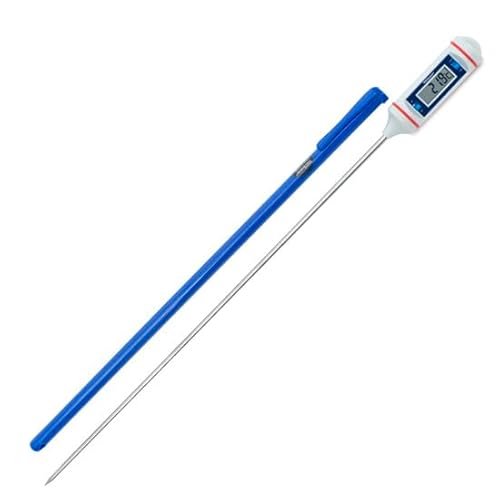
Product Type: digital indicator

Versatile & Accurate pH Measurement: This pH meter quickly and reliably reads pH values for a wide range of liquids, including soil, pool water, plants, food, water, and more. It covers applications in gardening, agriculture, cooking, food processing, and industrial fields, accurately assessing soil fertility, maintaining plant ecological balance, and ensuring food safety
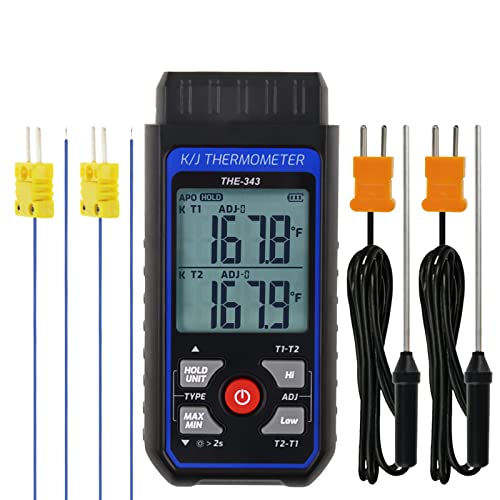
✅ 【Wide Measurement Range】The main unit measuring range is: -328~2501℉(-200~1372℃); Range of K type thermocouple(Stainless Steel):-58~1292℉(-50~700°C); Bead-type thermocouple(blue):-4~392℉(-20~200°C)
Preparing Your Reference Point at 120°F
Because your thermometer’s reliability depends on establishing a stable, known reference point, you’ll need to create a controlled 120°F environment using either an oven or water bath system. Set your oven to precisely 120°F and verify the temperature independently with a calibrated reference thermometer. Alternatively, use a sous vide immersion circulator to maintain a water bath at exactly 120°F. Guarantee thorough circulation to eliminate hot or cold spots throughout the bath. Submerge your thermometer probe without contacting the container’s sides or bottom, which could skew readings. Allow several minutes for temperature stabilization before recording your measurement. This calibration technique establishes your reference temperature under actual cooking conditions rather than extreme points, guaranteeing accuracy when measuring meat doneness during food preparation.

EASY READING: you can see the actual temperature that your oven is registering with the digital LCD display, then make adjustments to ensure that you cook or roast at the proper temperature.

Reliably precise oven temperature in one handy little tool

Unique feature: rotating clip/Stand adjusts to fit on most oven racks, adjustable for best reading angles.
Step-by-Step Calibration Process
Successful thermometer calibration requires you to gather specific materials and follow a methodical approach that guarantees reliable accuracy. You’ll need an ice water bath, a tall container, and pliers for adjustment if necessary.
Begin by immersing your thermometer stem at least 2.5 inches into the stabilized ice bath, confirming it doesn’t touch the container’s sides or bottom. Different thermometer types demand varying stabilization times—dial thermometers require 1-2 minutes, while digital models stabilize within seconds to one minute.
Once stable, you’ll record the reading. The thermometer should display 32°F (0°C). Note any deviation, which indicates calibration error. For dial or bi-metal thermometers, you’ll adjust the calibration nut using pliers. Repeat immersion to verify accuracy restoration. These calibration techniques guarantee your meat thermometer maintains food safety standards, which is especially important for temperature-sensitive cooking.
Adjusting Your Thermometer Reading
Once you’ve identified your thermometer’s calibration error, you’ll need to adjust the reading based on your device type. For dial thermometers, you’ll use a small wrench or pliers to turn the calibration nut located beneath or behind the dial head. Rotate it until the needle aligns precisely with your reference temperature. Hold the nut firmly while adjusting to prevent shifting. It’s important to remember that oven-safe probe thermometers are designed to remain in the meat throughout the cooking process for accurate readings.
Digital thermometers require different calibration techniques since they lack mechanical adjustment nuts. You’ll calculate the offset by comparing your thermometer’s reading to a known temperature point at 120°F. Record this variance, then apply the correction factor to all subsequent readings. If your digital thermometer features a calibration button, attempt automatic recalibration. Document offsets exceeding ±2°F and consider replacement if readings prove inconsistent across multiple temperature points. Additionally, ensure you’re using a thermometer that maintains accuracy, such as the Typhur Gold, which boasts an exceptional accuracy of ±0.5°F.
Verifying Accuracy After Calibration
Your calibration work isn’t complete until you’ve verified the thermometer’s accuracy through systematic testing. You’ll employ two primary verification methods: the ice bath and boiling water tests. For the ice bath, immerse your thermometer stem two inches into crushed ice and water, expecting a 32°F reading after 30 seconds. With boiling water, place your probe in rolling boil, adjusting for elevation to anticipate the correct boiling point. Properly checking the thermal center helps ensure that your thermometer readings are reliable when measuring the internal temperatures of meats. Using a quick preservation method like vacuum sealing without blanching can help understand thermal retention better in cooking.
Temperature stability proves critical during verification. Use freshly prepared ice baths and guarantee stable boiling conditions before testing. Avoid probe contact with container surfaces, which causes false readings. Document your results to track performance trends. Test at multiple temperature points relevant to meat cooking, particularly near your initial 120°F calibration point plus additional reference temperatures for thorough range verification.
Maintaining Your Meat Thermometer Long-Term
Calibration doesn’t end with verification—it’s the foundation for a long-term maintenance program that keeps your meat thermometer reliable. You’ll establish a regular maintenance schedule by calibrating daily before use, which prevents accuracy drift over time. Your calibration frequency depends on how often you use the thermometer and the conditions it endures. High-quality instant-read thermometers should be recalibrated regularly to ensure consistent performance. Frequently used thermometers or those that’ve been dropped require more frequent calibration checks. Document every calibration adjustment in a thermometer log to track performance patterns and identify potential issues early. For dial thermometers, recheck readings after making adjustments to confirm accuracy. Digital thermometers demand consistent monitoring since you can’t mechanically adjust them. By committing to this disciplined approach, you’ll guarantee your meat thermometer remains accurate and trustworthy throughout its service life. Additionally, ensure you use a thermometer that is deemed oven-safe to prevent any risk of damage during cooking.