You can confidently use a Thermapen to measure cooking oil temperature. Its IP67 waterproof construction, slim probe tip, and fast readings make it perfect for frying applications. The Classic model delivers readings in 1-2 seconds with ±0.7°F accuracy, while the ONE model achieves sub-second precision. You’ll maintain ideal frying temperatures between 350-375°F, protecting your oil and ensuring consistent results. However, proper safety techniques and maintenance practices are essential for reliable performance in high-heat environments.
Design Features That Make Thermapen Suitable for Oil
Five critical design features make the Thermapen an ideal choice for monitoring cooking oil temperature. Its IP67 waterproof construction shields the device from oil splashes and frequent cleaning without compromising accuracy. The slim, robust probe tip resists damage when inserted into dense hot oil, while the foldable design protects your sensor between uses. User ergonomics benefit from the thermapen’s intuitive grip design, preventing slips during measurements in busy kitchens. The auto-rotating display guarantees you’ll read temperatures clearly regardless of handling angle, and intelligent backlighting adapts to varying kitchen lighting conditions. Motion-sensing sleep mode conserves battery power while maintaining immediate responsiveness. These durability and usability elements combine to deliver reliable, safe oil temperature monitoring that professionals and home cooks can trust.

【Backlit 90° Rotating Display】The large 90-degree rotating screen enables effortless angle adjustment for optimal visibility, while the backlight ensures precise food temperature readings even in dimly lit environment

【High Accuracy & Fast Reading】Digital candy thermometer get precise temperature readings in just 1 second with accuracy ±0.9°F, making it a smart choice for candy making and deep frying

Completely Waterproof: IPX6 waterproof rating means you can wash this cooking thermometer under running water without fear. This food thermometer for cooking ensures cleanup is ultra-fast
Temperature Range and Accuracy in Cooking Oil
Because cooking oils break down at different temperatures depending on their composition, you’ll need a thermometer that covers the full range of frying conditions—from roughly 300°F to 400°F and beyond. The Thermapen’s range meets this requirement precisely.
What makes accuracy critical is that minor deviations of just 5-10°F greatly affect your frying outcomes and oil degradation rates. When you exceed an oil’s smoke point, free fatty acids and harmful compounds form rapidly, compromising both flavor and safety. The Thermapen delivers the precision you need to maintain the ideal 350-375°F frying window, preventing both greasy undercooked food and premature oil breakdown.
Its fast-reading capability lets you monitor temperature changes quickly, enabling timely heat adjustments that extend oil usable life and protect against temperature-related damage.
Speed of Temperature Readings at High Heat
When you’re monitoring hot cooking oil, the Thermapen’s speed becomes your critical advantage—the Classic model delivers readings in 1-2 seconds with ±0.7°F accuracy, while the ONE achieves sub-second response times with ±0.5°F precision. However, you’ll notice that extremely high liquid temperatures can slow probe response due to heat saturation effects. The probe’s thermal mass requires stabilization time, and continuous exposure to frying oil may trigger auto-off safety features that interrupt measurement. Your insertion technique directly impacts reading speed; consistent, rapid positioning minimizes lag and guarantees you capture true temperature before conditions shift. Despite these challenges, Thermapen devices greatly outperform standard instant-read thermometers, which often require 15-20 seconds. This speed, combined with probe durability and measurement precision, makes Thermapens invaluable for reliable oil temperature monitoring. Additionally, like Staub cookware, proper care also involves maintaining the temperature stability of your thermometer to ensure accurate readings over time. Always ensure you’re aware of the proper thermometer type to use during cooking, as this can affect safety and accuracy.
Professional and Home Cook Applications
The speed and accuracy you’ve gained from understanding probe response times now translate directly into practical kitchen advantages, whether you’re managing a commercial fryer or perfecting oil temperature at home. Professional cooking environments demand consistent batch results, and your Thermapen guarantees oil temperatures remain within the critical 325°F to 375°F range. Home cooking benefits equally—you’ll verify frying conditions without extensive splashing or cleanup complications. Both settings leverage the thermocouple’s micro-design, requiring only minimal probe immersion for reliable readings. In fact, as deep fry thermometers are specialized tools designed for measuring oil temperatures, your Thermapen serves as a versatile alternative in both professional and home kitchens. Commercial kitchens appreciate the durability and calibration services that maintain precision across intensive daily use. Home cooks value the straightforward operation and versatility. In both scenarios, oven-safe thermometers are essential for ensuring optimal cooking results. Whether you’re preparing thousands of portions or family dinners, your Thermapen delivers the accuracy professional and home cooking applications necessitate.

ACCURATE FAST READINGS (No More Burned Candy) --- Our candy deep fry thermometer provides instant and accurate temperature readings within seconds. Its advanced technology ensures precise measurements, allowing you to monitor the temperature of your food with confidence.
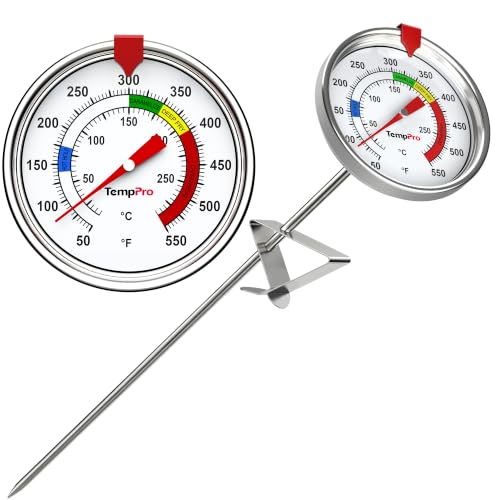
【9" Long Probe with Pot Clip】The frying thermometer for oil comes with a 9-inch probe and a secure pot clip, allowing it to be safely attached to cooking pots of different sizes, effectively protecting you from hot oil splatter

Temperature Range: 100° to 500°F /40° to 260°C. Probe Length: 5.5-inches Dial Diameter: 2.5-inches
Safety Considerations When Measuring Hot Oil
Working with hot cooking oil demands careful attention to burn hazards and equipment protection. You’ll need burn prevention strategies, including wearing long-handled protective gloves or mitts to shield your hands from radiant heat and accidental contact with the probe.
For splash protection, insert and remove your Thermapen quickly to minimize exposure. Avoid measuring oil when food is actively frying, as this increases splashing risk considerably.
Never expose your Thermapen to temperatures exceeding 572°F, as this causes permanent internal damage. Always wipe the probe immediately after measurement using a dry cloth—oil residue can cause burns and degrade sealing components.
Keep your Thermapen away from direct flames and hot surfaces. Confirm adequate lighting and stable footing throughout the process to prevent accidents when handling both hot oil and equipment simultaneously. Additionally, ensure you understand accurate temperature measurement to avoid any mishaps that can occur during cooking.
Comparison With Alternative Oil Temperature Tools
Several thermometer types can measure cooking oil temperature, each with distinct advantages and limitations. You’ll find that dedicated oil thermometers feature longer probes and clip-on designs for continuous monitoring, unlike Thermapen’s instant-read capability. Infrared thermometers offer non-contact measurement techniques, enhancing safety, but they’re less accurate with reflective surfaces like oil. Thermapen delivers superior precision for reliable data critical to controlled frying conditions, similar to how lard creates a durable seasoning layer that ensures effective cooking when used in cast iron. Additionally, it is essential to ensure that cooking oil reaches the proper temperature before adding food, similar to how chicken should reach its recommended internal temperature for safety. Leave-in digital thermometers provide alerts and remote monitoring, though they sacrifice response speed compared to Thermapen. You should consider your specific needs: if you require quick, accurate spot-checks of oil temperature, Thermapen excels. For extended, hands-free monitoring during prolonged frying sessions, alternative thermometers may better suit your measurement techniques and workflow requirements.

Pot Clip Design for Safer Operation: This candy thermometer digital with clip can be fixed to the pot so you can free your hands to focus on the cooking, and protect your hands from the hot

11" Long Probe & IPX6 Waterproof - Extra-long 11-inch food-grade probe keeps your hands safely away from hot oil and heat. IPX6 waterproof design lets you rinse it directly under running water for easy cleaning.
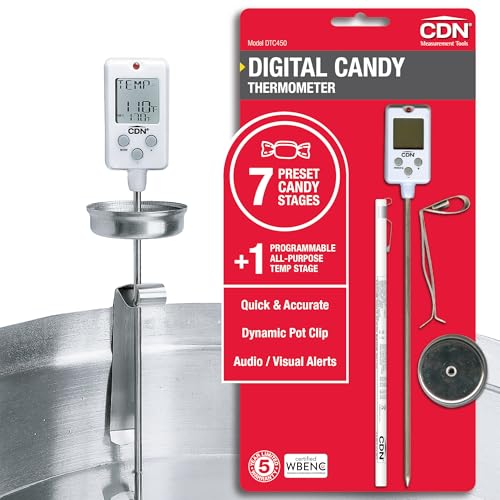
PRESET & PROGRAMMABLE. With our 7 preset candy stages and 1 programmable all-purpose temperature stage you'll get not only the perfect candy, but anything else you'll want to cook.
Proper Maintenance After Oil Temperature Checks
While Thermapen’s speed and accuracy make it ideal for oil temperature checks, maintaining that performance requires proper care after each use. Your cleaning techniques should include wiping the probe immediately with a soft, damp cloth to remove oil residue before it hardens. This is particularly important when dealing with savory fillings that can leave stubborn deposits. Avoid submerging the device or using abrasive cleaners that damage internal components. Dry the probe thoroughly to prevent moisture from corroding electrical parts. For probe protection, allow the thermometer to cool briefly before handling—residual heat poses burn risks. Store your Thermapen in its protective case away from heat sources with the probe folded closed. If you’re storing it long-term, remove batteries to prevent leakage. These practices preserve accuracy and extend your device’s operational life considerably. Additionally, using a thermometer with ambient temperature sensors can enhance your overall cooking experience by helping you monitor your cooking environment.
Battery Performance and Longevity for Oil Measurements
Understanding your Thermapen’s battery specifications guarantees reliable oil temperature monitoring without unexpected power interruptions. The ONE model utilizes a single AAA battery delivering 2,000 hours of operation—approximately 500 hours more than the Classic’s dual CR2032 lithium coin cells. These battery types provide distinct longevity benefits suited to different usage patterns.
You’ll achieve roughly 4.5 to 5 years of battery life with one hour daily operation. The intelligent backlight auto-senses ambient conditions, reducing power drain during daytime oil checks. Motion-sensing sleep mode further maximizes retention by automatically powering down when idle.
A low battery indicator alerts you before complete depletion occurs, and your Thermapen maintains measurement accuracy even with depleted batteries. Both ONE and Classic models offer straightforward replacement procedures backed by manufacturer warranties—five years for ONE, two years for Classic. Additionally, vacuum sealing your food before cooking can help lock in flavors and ensure that your ingredients are fresh for optimal temperature readings.