You shouldn’t use a meat thermometer for measuring oil temperature because its design optimizes for penetrating solids, not liquids. Meat thermometers lack the clip mechanism that keeps deep fry thermometers at consistent depths in oil, leading to inaccurate readings that compromise food safety. You’ll need an oil-specific thermometer with stainless steel construction, ±0.5°F accuracy, and a temperature range extending to at least 350–400°F. Understanding the critical differences between these instruments reveals why proper thermometer selection matters for reliable frying results.
Basic Compatibility and Thermometer Types
While meat thermometers and oil thermometers serve the same fundamental purpose—measuring temperature during cooking—they’re engineered with distinctly different specifications that affect their compatibility with various applications. Your meat thermometer features a probe design optimized for penetrating solid foods like poultry and ham, relying on direct contact for measurement accuracy. Cooking meat with a thermometer inside can be safe if you use the right type, such as an oven-safe probe thermometer, which is designed for this purpose. Oil thermometers, conversely, employ specialized clips that suspend the probe within liquid cooking mediums at precise depths. The thermometer design differences extend beyond attachment mechanisms. Meat thermometers aren’t rated for direct liquid oil immersion, while oil thermometers include easy-to-read dials displaying safe frying temperature ranges between 350°F and 375°F. In contrast, deep fry thermometers are specifically engineered to measure oil temperatures. Understanding these distinctions guarantees you select the appropriate tool, maintaining measurement accuracy and safety across different cooking applications.
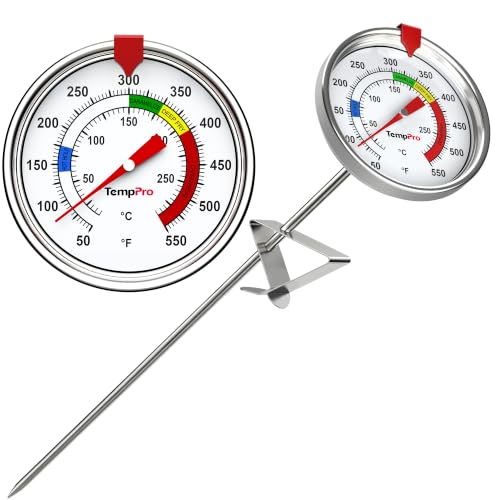
【9" Long Probe with Pot Clip】The frying thermometer for oil comes with a 9-inch probe and a secure pot clip, allowing it to be safely attached to cooking pots of different sizes, effectively protecting you from hot oil splatter

Temperature Range: 100° to 500°F /40° to 260°C. Probe Length: 5.5-inches Dial Diameter: 2.5-inches

【High Accuracy & Fast Reading】Digital candy thermometer get precise temperature readings in just 1 second with accuracy ±0.9°F, making it a smart choice for candy making and deep frying
Temperature Requirements for Oil Measurement
Because oil’s thermal properties directly influence viscosity, combustion efficiency, and equipment longevity, you’ll need to understand the stringent accuracy standards governing oil temperature measurement. Oil temperature standards require glass thermometers to maintain ±0.5°F accuracy with 1.0°F minimum graduations, while electronic thermometers must record to the nearest 0.1°F. Industrial applications demand even tighter tolerances—RTDs and thermocouples achieve ±0.025°F accuracy for critical operations. You must ascertain thermometer calibration aligns with your specific oil gravity range before testing. Per API 7 and API 7.3 standards, you’ll record temperature readings before, during, or after sampling, always allowing 30 minutes for tank isolation. Your thermometer must remain clean and free of fluid separation to guarantee reliable measurements.
Step-by-Step Measurement Process
To achieve reliable oil temperature readings, you’ll need to insert your thermometer probe directly into the center of the oil while maintaining consistent depth and avoiding contact with the vessel’s bottom or sides. Position the probe away from surface bubbles or foam that distort readings. Allow several seconds for the display to stabilize completely before recording measurements. It’s essential to ensure that even regular thermometers are checked for accuracy as they can be off by a few degrees. Monitor for temperature fluctuations during this stabilization period. Repeat measurements at different oil locations to verify consistent temperature distribution across the cooking vessel. If using alternative thermometer types beyond specialized deep-fry models, verify your measurement techniques account for design differences in probe sensitivity and response time. Remember to ensure both the thermometer and the oil are at a consistent ambient temperature for accurate readings. Record readings only after the digital screen stops changing, guaranteeing accuracy for safe cooking operations.

【Backlit 90° Rotating Display】The large 90-degree rotating screen enables effortless angle adjustment for optimal visibility, while the backlight ensures precise food temperature readings even in dimly lit environment

Pot Clip Design for Safer Operation: This candy thermometer digital with clip can be fixed to the pot so you can free your hands to focus on the cooking, and protect your hands from the hot

PROGRAMMABLE TEMPERATURE ALERT: Set your target temperature and a green light illuminates the moment your oil or sugar syrup hits the mark; eliminates guesswork so candy stages and fried foods come out right every time
Essential Thermometer Features for Deep Frying
Selecting the right meat thermometer for oil temperature monitoring requires understanding five critical performance characteristics that directly impact your frying success.
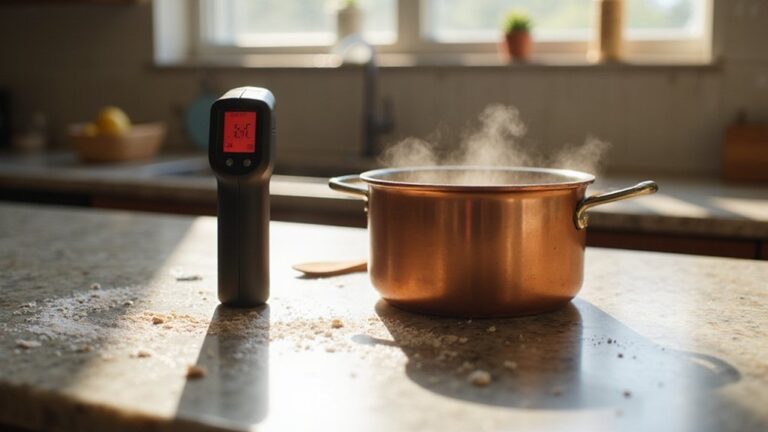
You’ll need a thermometer with a temperature range extending to at least 350-400°F, ideally reaching 482°F or higher. Your device demands sensor precision within ±0.5°F to guarantee accurate oil readings and consistent food quality. Infrared thermometers are particularly useful for checking surface temperature of the oil, ensuring optimal frying conditions.
Probe durability matters considerably—you need stainless steel construction with zirconia ceramic bands that resist corrosion in hot oil environments. Look for waterproof, dishwasher-safe designs that withstand repeated immersion without compromising internal electronics.
Response time should deliver readings within seconds, maintaining consistent temperatures during frying operations. Finally, verify wireless Bluetooth connectivity enables remote monitoring from safe distances, allowing you to track your oil temperature without constant manual checking. Additionally, it is essential to consider the specific design features of thermometers that ensure they can perform reliably in high-temperature scenarios.
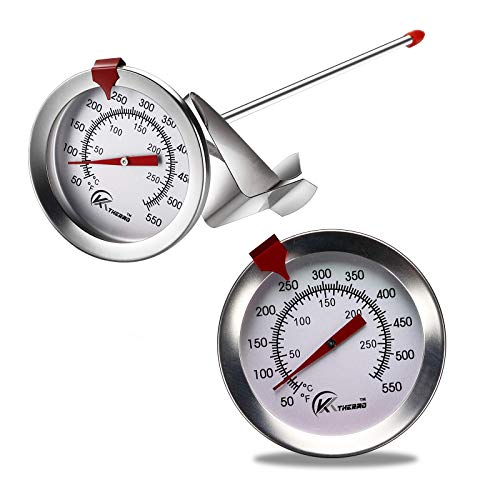
MULTI-PURPOSE: Mechanical induction, can be directly and accurately measure the oil pan, frying, barbecue temperature control.

ADJUSTABLE PAN CLIP FOR ANY SIZE POT: The built-in clip secures to pots and pans of all sizes, keeping the thermometer stable and hands-free so you can monitor candy stages or frying oil without constant attention.

ACCURATE FAST READINGS (No More Burned Candy) --- Our candy deep fry thermometer provides instant and accurate temperature readings within seconds. Its advanced technology ensures precise measurements, allowing you to monitor the temperature of your food with confidence.
Performance Standards and Safety Considerations
While identifying the right thermometer features sets you up for success, you’ll also need to understand the performance standards and safety protocols that govern oil temperature monitoring.
You must select thermometers explicitly labeled as oil-safe to prevent material degradation and chemical leaching. Verify that your thermometer withstands continuous high-temperature exposure without compromising design durability. Position the probe fully inside the oil, avoiding contact with pan surfaces that skew readings. It’s also important to note that infrared thermometers excel at checking surface temperatures but are not suitable for measuring liquids accurately.
The calibration process requires regular verification using reference standards like ice water (0°C) or boiling water (100°C). Digital thermometers experience accuracy drift over time due to prolonged heat exposure, necessitating recalibration or replacement. Never leave non-oven-safe thermometers unattended in hot oil, as battery damage and equipment failure create fire hazards. Inspect your thermometer regularly for cracks or discoloration indicating degradation from repeated use. Additionally, keep in mind that monitoring oil temperature is crucial for achieving optimal frying temperatures, ensuring your food cooks evenly and safely.