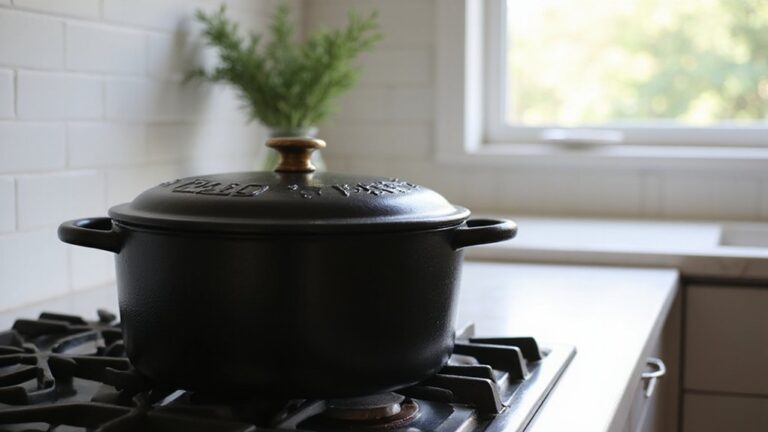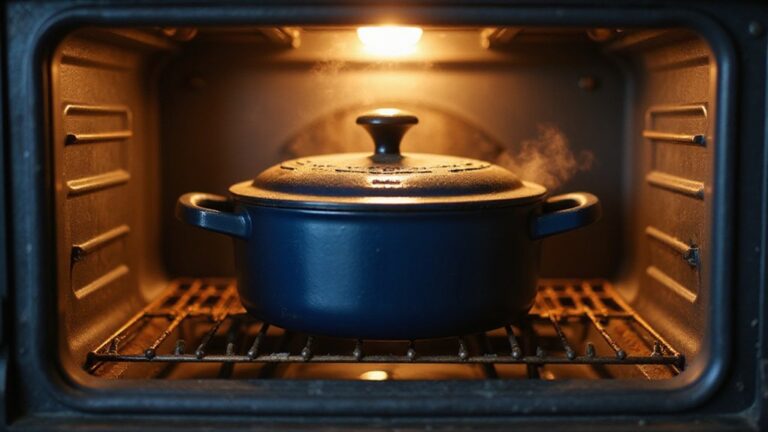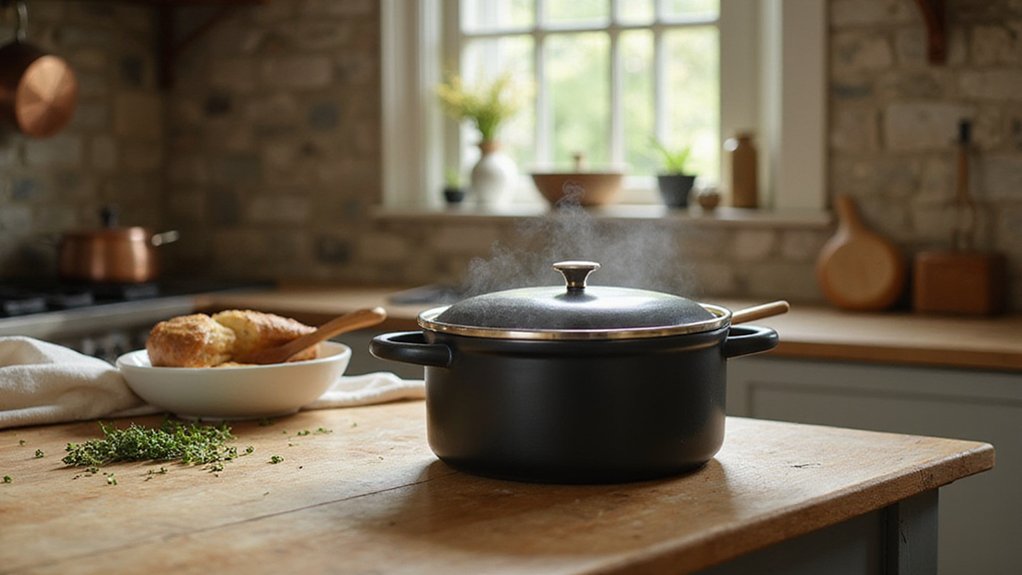
Ever wonder why these heavy cooking pots are called Dutch ovens? It’s not as straightforward as it sounds. Several stories try to explain the name, each with a bit of truth but no clear-cut answer.
Keep reading to uncover the history and the fascinating theories behind the name.
Why Is It Called a Dutch Oven? The Four Main Theories
There are four main theories about why it’s called a Dutch oven, though none can be confirmed definitively. The first theory centers on a manufacturing innovation: Abraham Darby adapted Dutch sand-casting techniques in the early 18th century, which allowed for the production of smoother, more durable iron pots in large quantities. This technological leap made such cookware more accessible and possibly led to the association with the term “Dutch.” This process is similar to seasoning a cast iron skillet, which involves applying a high smoke point oil and baking it to create a durable, non-stick surface. A comparable approach can be used to treat rust on similar iron cookware, using a vinegar spray solution to safely loosen corrosion without causing pitting.
The second theory points to Dutch traders who introduced these cast iron pots to American colonists. Their role in commerce and the widespread sale of these pots could have helped entrench the “Dutch” label in everyday language.
The third theory attributes the name to Dutch settlers in Pennsylvania, who brought their own cast iron kettles with them. Their usage of these pots in local cooking may have popularized the association, especially in regions heavily influenced by Dutch culture.
Finally, an etymological explanation suggests that “Dutch” was once used to describe something makeshift or temporary. In this context, a Dutch oven might have been a portable, substitute oven rather than a specific type of oven from the Netherlands. While all these theories are intriguing, none have been conclusively proven, leaving the true origin of the name a matter of speculation.

Even Heat Distribution Retention: This Umite Chef Dutch oven Made with heavy-duty enameled cast iron, ensures even heat distribution for perfect searing and slow cooking, locking in flavors. thickened walls lock in heat for slow braising, searing, and baking. Unlike thin pots that scorch food, this professional-grade Enameled cast iron potSuperior heat retention after preheating (allow 5-7 mins for even distribution). CRITICAL: Always cool naturally for 45+ mins before cleaning. Thermal shock (hot-to-cold contact) cracks enamel. USE TIP: Preheat 2-3 mins on medium-low only

PFAS-FREE & NON-TOXIC COOKWARE: ATTENTION: If your manual mentions "enamel" or "low-medium heat only", it is incorrect. This is 100% pure cast iron cookware! Not Enamel-Coated: Safe for High-Heat Cooking! Metal utensils OK (avoid sharp edges) Every Umite Chef cast iron pot has been burned with 100% natural, food-grade vegetable oils—absolutely zero PFAS, PFOA, PTFE, synthetic coatings, or toxic chemicals. Our seasoning naturally builds with use, developing a superior non-stick surface over time while ensuring oven-to-table safety

BREAD BAKER'S DUTCH OVEN, 500°F OVEN-SAFE, SOURDOUGH-READY – one of the highest ratings in its class – delivering the sustained heat that sourdough, artisan bread, and pizza dough demand. Thick cast-iron walls trap and circulate heat like a brick oven, producing bakery-quality crusts at home. The tight-sealing lid features raised self-basting nodes that continuously recirculate steam: a perfect moisture chamber, every single bake.
The Dutch Casting Secret Abraham Darby Stole in 1704
The Dutch craftsmanship directly inspired Darby’s creation of the cast-iron pots. He shipped these pots globally, including to the American colonies, where they became known as the “Dutch oven.” This name and the widespread use trace back to 1704, when Darby cleverly capitalized on Holland’s advanced casting techniques. The secret to their superior quality lay in the Dutch mastery of casting thin, durable walls—making these pots dependable for cooking over open flames and lasting for generations. Thanks to this espionage-inspired innovation, every cast-iron pot you own can be linked back to that pivotal moment in history. American industrialist Paul Revere is credited with perfecting the modern Dutch oven design.
Did Dutch Traders Name the Dutch Oven?
The name “Dutch Oven” actually originates from Dutch traders, not the place where the pots were made. These merchants marketed cast iron “ovens” to colonial markets, and the label was a way to identify their goods. The term reflected the traders’ nationality, serving as a marketing tactic rather than a description of the cookware’s origins. While Dutch casting technology influenced the production process, the name itself was used to leverage the reputation of Dutch craftsmanship and to distinguish their high-quality products in trade routes. Similarly, oven cleaners containing lye can be used to strip and restore cast iron cookware by dissolving built-up organic solids. Essentially, the name stuck because it was associated with the traders who sold the cookware, not because of where the pots were manufactured. Just as sous vide cooking offers precise temperature control to achieve specific egg textures, the Dutch oven’s name was carefully chosen to evoke a specific reputation for quality. A preheated cast iron skillet under the broiler achieves a similar high-heat crust on steak.

𝐃𝐨𝐦𝐞 𝐃𝐞𝐬𝐢𝐠𝐧: Perfect for Crusty Sourdough The AHJ pre-seasoned Dutch oven is ideal for sourdough baking. When used with the lid in the oven, it locks in steam—ensuring condensation drips down the lid walls without soggying the bread—for an ultra-crisp crust and soft, fluffy interior. The 5-quart large capacity easily accommodates big sourdough loaves, perfect for sharing with the whole family.

【10QT CAMPING DUTCH OVEN】 The Velaze 10 Quart camping dutch oven is made of cast iron with a high-quality design and excellent thermal conductivity and heat retention. The flanged lid holds hot coals and inverts for use as a griddle. The extra stand support allows the oven to sit perfectly over the table.

【ALL YOU NEED】Complete set includes 5QT bread oven cast iron with frying pan lid,bread proofing basket, bread sling, stainless steel scraper, cleaning brush, bowl scraper, wooden-handled dough whisk, bread lame, silicone oil brush,silicone spatula. Sourdough starter kit with pre-seasoned cast iron dutch oven is ready to use out of the box!
Why Dutch Settlers in Pennsylvania Named the Pot
Dutch settlers in Pennsylvania named these durable cooking vessels “Dutch ovens” because they brought the pots with them from Europe and used them daily in their kitchens. These cast iron pots became essential tools for baking bread, roasting meats, and simmering stews. The name reflects the settlers’ direct connection to their heritage, as they identified these practical items with their Dutch roots. Their frequent use helped popularize the term locally, making the “Dutch oven” a familiar part of household life. Beyond mere utility, the name also served as a cultural marker, showcasing how immigrant traditions influenced American cooking. When you hear “Dutch oven,” it’s a nod to the settlers who carried their culinary customs across the Atlantic and made them a lasting part of Pennsylvania’s history. Modern Dutch ovens, often made of enameled cast iron, require careful handling to preserve their enamel finish, as harsh abrasives can cause scratching. These pots are still ideal for slow cooking recipes like pot roast with vegetables and gravy.

【Airtight Lid Locks In Freshness & Flavor】Experience the magic of this Dutch oven with lid, precision-engineered to create a tight seal. It locks in moisture and essential nutrients, delivering richer flavor and incredibly tender, juicy results in every dish—from slow-braised meats to hearty soups. Achieve a perfect, crispy crust on your artisan loaves—it's the ultimate Dutch oven for bread baking. The interior self-basting dots continuously redistribute condensation, ensuring your food stays perfectly moist, never dry or mushy

【Airtight Lid Locks In Freshness & Flavor】Experience the magic of this Dutch oven with lid, precision-engineered to create a tight seal. It locks in moisture and essential nutrients, delivering richer flavor and incredibly tender, juicy results in every dish—from slow-braised meats to hearty soups. Achieve a perfect, crispy crust on your artisan loaves—it's the ultimate Dutch oven for bread baking. The interior self-basting dots continuously redistribute condensation, ensuring your food stays perfectly moist, never dry or mushy

Quality Enameled Dutch Oven: The Lodge Essential Enamel Cast Iron Dutch Oven gives you all the benefits of cast iron cooking, great heat retention and durability, without fear of rust; it's also PFAS free
When “Dutch” Meant “Makeshift Oven” (Not a Country)
The term “Dutch oven” originally did not refer to the Netherlands but instead described a makeshift or substitute oven. In early English usage, “Dutch” was an obsolete adjective meaning “makeshift” or “temporary.” These early Dutch ovens were portable metal containers with internal shelves, designed to be placed before an open fire. They served as a quick, improvised solution for roasting or baking when proper kitchen equipment was unavailable or impractical. This usage reflects a practical approach to cooking rather than any cultural association with the Dutch people.
Over time, the term’s meaning shifted, and today it’s often linked to Dutch casting techniques or regional baking traditions. However, etymologists confirm that the original sense of “Dutch” in this context was about a fallback or makeshift oven. When early colonists used the phrase “Dutch oven,” they were emphasizing the device’s practicality and portability, not its nationality. This historical root explains why the name persists, even though modern understanding often conflates it with Dutch culture or craftsmanship.
The First Printed “Dutch Oven” (1710–1769)
The first printed record of a “Dutch oven” as a specific cast-iron cooking vessel appears in 1769, when Virginia court records legally documented it for the first time. Its creation was influenced by cultural exchanges, particularly Englishman Abraham Darby’s visit to Holland in 1704. Darby patented a dry sand casting process in 1707, inspired by Dutch metalworkers, which allowed iron to replace more expensive brass. Cast iron’s exceptional heat retention makes these pots ideal for slow cooking and baking. This innovation made durable, affordable cookware available to a wider audience. The manufacturing technique carried a Dutch legacy, which is why the term “Dutch oven” stuck, even though the pots themselves were not originally from the Netherlands. By the mid-18th century, Darby’s Dutch-inspired cast-iron pots were being shipped to American Colonies, transforming home cooking practices across the Atlantic. For modern precision cooking, such as candy making, digital probe thermometers are preferred for accurate internal temperature measurements.
What the Rest of the World Calls a Dutch Oven
The Rest of the World Calls a Dutch Oven a Casserole Dish or Casserole in many regions, particularly in the United Kingdom. In France, it’s known as a cocotte, while in the Netherlands, it’s called a braadpan, emphasizing its traditional use for roasting meat. Germans often refer to a similar vessel as a Gräpen, which predates modern pots. When camping, people might call it a Black Pot or Camp Oven. The names also vary based on material: ceramic Dutch ovens, enameled pots, or cast aluminum ovens all have different labels. The design, such as a three-legged pot used over coals or a flat-bottom pot suited for stoves, influences how it’s named. Overall, these variations reflect different culinary traditions and practical uses across countries.
Which Dutch Oven Origin Story Is Correct?
The origin story of the “Dutch oven” is uncertain because no single theory can be definitively proven. The Abraham Darby story claims he introduced a Dutch casting method to England, and that the pot was named after this technique. However, the term “Dutch oven” did not appear in print until 1769, which is decades after Darby’s time. This timing gap calls into question the connection.
Cultural exchanges and language shifts further complicate the history. Dutch traders sold these pots in America, and Pennsylvania settlers often brought their own from Europe. Neither of these stories is universally accepted. Some historians suggest that the word “Dutch” may have originally meant “makeshift,” adding another layer of ambiguity. Ultimately, each theory captures a part of history but none can be fully confirmed as the true origin.