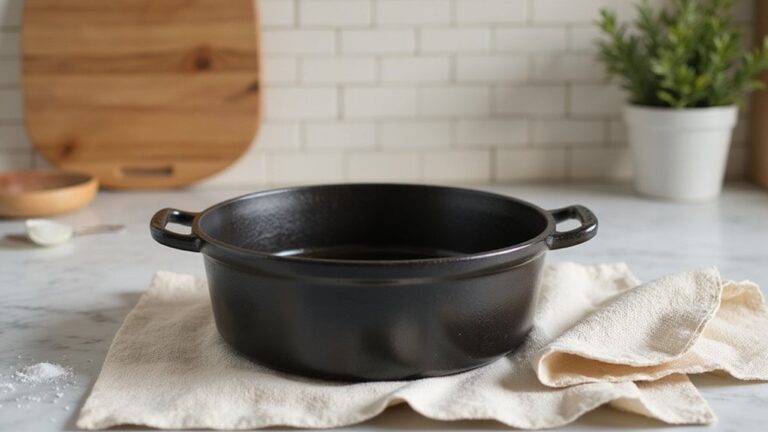
You should preheat your Dutch oven with the lid on to achieve superior bread quality. Keeping the lid on traps steam, maximizes oven spring, and creates a thinner, crispier crust with better browning. It also guarantees even heat distribution throughout your cookware. While lid-off preheating reaches target temperatures faster, the lid-on method delivers professional results and consistent baking performance. Understanding the nuances of timing and temperature will help you master this technique.
The Case for Preheating With the Lid On
Most bakers who’ve mastered artisan bread know that preheating your Dutch oven with the lid on is essential for achieving professional results. When you preheat with the lid on, you’re trapping steam that the dough releases during baking, which delivers significant preheat benefits. This steam keeps your dough’s surface moist, delaying crust formation and allowing maximum oven spring for greater loaf volume.
The moisture environment you create directly enhances crust quality by producing a thinner, crispier exterior compared to dry oven baking. Steam also promotes starch gelatinization, contributing to superior crust browning and color development that rivals commercial steam-injected ovens. You’ll notice your loaves rise higher with more open crumb structure. By placing your dough into a preheated Dutch oven with the lid on, you’re ensuring immediate exposure to ideal heat and steam conditions, minimizing temperature drop and achieving bakery-quality sourdough consistently.

【Airtight Lid Locks In Freshness & Flavor】Experience the magic of this Dutch oven with lid, precision-engineered to create a tight seal. It locks in moisture and essential nutrients, delivering richer flavor and incredibly tender, juicy results in every dish—from slow-braised meats to hearty soups. Achieve a perfect, crispy crust on your artisan loaves—it's the ultimate Dutch oven for bread baking. The interior self-basting dots continuously redistribute condensation, ensuring your food stays perfectly moist, never dry or mushy

Even Heat Distribution Retention: This Umite Chef Dutch oven Made with heavy-duty enameled cast iron, ensures even heat distribution for perfect searing and slow cooking, locking in flavors. thickened walls lock in heat for slow braising, searing, and baking. Unlike thin pots that scorch food, this professional-grade Enameled cast iron potSuperior heat retention after preheating (allow 5-7 mins for even distribution). CRITICAL: Always cool naturally for 45+ mins before cleaning. Thermal shock (hot-to-cold contact) cracks enamel. USE TIP: Preheat 2-3 mins on medium-low only
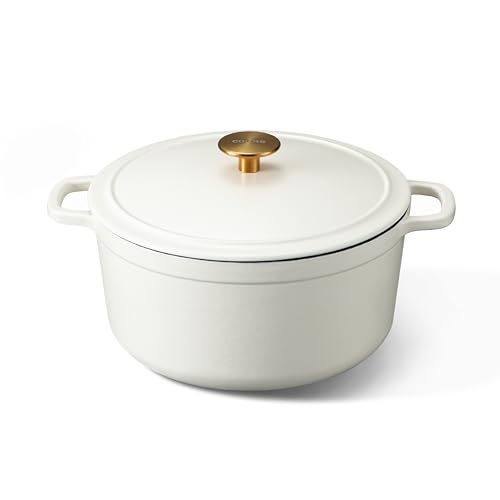
Superior Even Heat Control: One-piece thick cast iron delivers uniform heat with zero hot spots and excellent heat retention, ideal for searing, braising and crusty bread baking. Preheat on medium-low heat; cool naturally before washing to prevent enamel cracking.
Heat Distribution and Even Baking Results
While preheating your Dutch oven with the lid on delivers superior steam benefits, you’ll find that removing the lid during preheat offers distinct advantages for heat distribution. Without the lid, you reduce humidity levels inside the pot, which influences crust texture and browning patterns. This approach promotes crisper crusts earlier in baking since moisture escapes rather than concentrating. Additionally, maintaining some pressurized gas in your cooking process can enhance heat retention, just as it does in lighter refilling.
However, lid-off preheating can result in slightly lower internal temperatures during early bake stages, potentially affecting crumb development. You’ll need more careful timing when placing your dough to prevent temperature drops that compromise baking consistency. Separating the lid allows you to heat it independently on a lower rack, ensuring thermal equilibrium across your entire Dutch oven system while maintaining even cooking results throughout your bake. Additionally, consider that the entire Dutch oven, including the lid, can be placed in the oven to optimize heat retention, making it versatile for various cooking methods.

Superior Cast Iron Craftsmanship, Designed for Dutch Oven for Bread Baking This 6-quart dome-shaped cast iron bread pot ensures even heat distribution, perfectly suited for dutch oven for bread baking, allowing you to effortlessly bake bread with a crispy exterior and soft interior
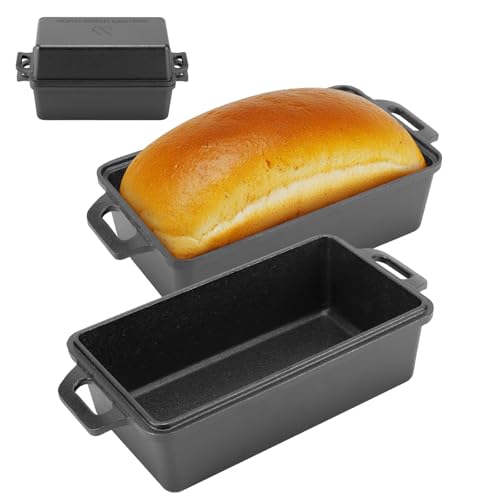
【BASIC CAST IRON BREAD PANS】: Northriver Casting bread loaf pan set is fully made of high grade cast iron, can delivers the proper heat to bake a perfect homemade sourdough bread、sandwich or meatloaf. This loaf pans for baking bread 9 x 5 is suitable for all kitchen cooktops, oven, electric stove, blackstone, induction cooktops or campfire.

2-in-1 Versatile Cookware Design: The Lodge Cast Iron Double Dutch Oven is a Dutch oven and dual-handle skillet in one smart design, expanding your options for searing, baking, frying, and more
Steam Trapping and Crust Development
Because steam trapped inside your preheated Dutch oven directly influences how your loaf expands and browns, you’ll want to keep the lid on during the initial bake phase. The sealed environment maximizes steam retention, preventing the crust from setting too early and allowing your dough to fully expand before developing its final structure. This method is similar to how a Dutch oven pot roast develops flavor through a savory cooking liquid that enhances the overall dish.
This trapped moisture gelatinizes surface starches, creating the glossy, crackly crust texture that defines artisan bread. Without adequate steam retention, your crust forms quickly, restricting expansion and resulting in a denser loaf. Additionally, understanding the proper cooking techniques is essential for achieving the best results with your Dutch oven.
After 20-30 minutes of baking with the lid on, remove it to allow excess moisture to escape. This timing lets your crust dry and crisp up while maintaining the thin, professional appearance that steam develops. Following this approach consistently delivers superior crust texture every time.
Thermal Shock Prevention and Enamel Protection
Your Dutch oven’s enamel coating is vulnerable to thermal shock—rapid temperature changes that can crack the surface and compromise the pot’s longevity. To protect your investment, avoid placing a cold Dutch oven directly into a preheated oven. Instead, allow it to reach room temperature first, then preheat gradually with the lid on. This approach distributes heat evenly across both the pot and lid, minimizing uneven expansion that creates stress points. Gradual temperature increases and lower preheat settings considerably reduce enamel damage risk. Additionally, using a lid helps prevent evaporation, which is crucial in maintaining consistent cooking conditions. By following these practices, you’ll maintain enamel durability for years. Moreover, using mild dish soap during regular cleaning will help preserve the enamel and prevent future damage. Most manufacturers recommend this method specifically because it prevents the micro-cracks that worsen over time, preserving both functionality and appearance.
Safety Concerns With Plastic Knobs and Heat Limits
Protecting your enamel from thermal shock sets the foundation for safe Dutch oven use, but you’ll also need to safeguard the components attached to your pot—specifically plastic knobs and handles that won’t tolerate the same temperatures as cast iron. Most plastic knobs max out at 390–480 degrees Fahrenheit, far below bread-baking temperatures of 500 degrees. Exceeding these limits causes permanent damage: cracking, warping, and melting that render your lid unusable. Enameled cast iron, with its durable glass-like coating, provides additional protection against thermal shock compared to traditional cast iron. To ensure your cookware remains in optimal condition, it is crucial to practice proper care techniques when using your Dutch oven. Develop heat threshold awareness by consulting your manufacturer’s guidelines before preheating. Le Creuset color-codes knobs to indicate safe temperatures. If your recipe demands high heat, remove the lid during preheating and keep it on the countertop. This simple adjustment protects plastic knob durability while ensuring successful cooking results.

✔ WIDE APPLICATION - Compatible with Le Creuset, Aldi, Lodge, and heavy dutch oven. In addition,our knob is suitable for all lids with 6 mm screw holes.

Package Included: 4 x Pot Lid Knob Replacement for Dutch Oven, 4 x Screw, 4 x Rubber Gasket, 4 x Metal Gasket.

Reliable material: the replacement pot lid handle is made of stainless steel material, durable and sturdy, anti-rust and can serve for a long time, heat resistant and safe for most of the oven temperature, dishwasher safe
Handling and Burn Prevention Strategies
When you’re working with a preheated Dutch oven, handling it safely demands your full attention and the right protective gear. Wear heat resistant gloves or thick, dry oven mitts when removing the pot from the oven—never touch bare surfaces, as cast iron and enamel retain extreme heat. Master lid lifter techniques by using specialized tools or tongs to lift the lid safely, keeping your face and arms away from released steam. When transferring dough, slide it in quickly using parchment paper and a pizza peel, maintaining distance from hot surfaces. Moreover, proper care and maintenance of your Dutch oven not only improves safety but also enhances its longevity. Work swiftly but deliberately to minimize burn risk. Always place the Dutch oven on a heat-safe trivet immediately after removal, never on cold or wet surfaces. Additionally, maintaining proper care and light oil coating on your Dutch oven can enhance its longevity and performance in the kitchen.
Performance Comparison: Lid On vs. Lid Off Preheating
Should you preheat your Dutch oven with the lid on or off? The answer depends on your performance metrics and priorities.
Lid-on preheating delivers superior preheating benefits: uniform heat distribution, maximum oven spring, and consistent crust development. You’ll achieve higher, rounder loaves with professional appearance in 45-60 minutes, as the distance-to-spot ratio can significantly affect heat retention during baking.
Lid-off preheating reaches target temperature faster—20-30 minutes—but sacrifices some performance gains. Your base gets hotter, though the lid remains cooler initially, potentially reducing oven spring and crust quality.
Both methods retain heat effectively once sealed during baking. However, lid-on preheating produces the most reliable results for bread quality and consistency. If you choose lid-off, separately preheat your lid to minimize temperature loss during dough transfer. Additionally, using a Dutch oven for cooking chicken with vegetables provides a convenient way to enjoy hearty meals while camping.

BREAD BAKER'S DUTCH OVEN, 500°F OVEN-SAFE, SOURDOUGH-READY – one of the highest ratings in its class – delivering the sustained heat that sourdough, artisan bread, and pizza dough demand. Thick cast-iron walls trap and circulate heat like a brick oven, producing bakery-quality crusts at home. The tight-sealing lid features raised self-basting nodes that continuously recirculate steam: a perfect moisture chamber, every single bake.

PFAS-FREE & NON-TOXIC COOKWARE: ATTENTION: If your manual mentions "enamel" or "low-medium heat only", it is incorrect. This is 100% pure cast iron cookware! Not Enamel-Coated: Safe for High-Heat Cooking! Metal utensils OK (avoid sharp edges) Every Umite Chef cast iron pot has been burned with 100% natural, food-grade vegetable oils—absolutely zero PFAS, PFOA, PTFE, synthetic coatings, or toxic chemicals. Our seasoning naturally builds with use, developing a superior non-stick surface over time while ensuring oven-to-table safety

【10QT CAMPING DUTCH OVEN】 The Velaze 10 Quart camping dutch oven is made of cast iron with a high-quality design and excellent thermal conductivity and heat retention. The flanged lid holds hot coals and inverts for use as a griddle. The extra stand support allows the oven to sit perfectly over the table.
Temperature Guidelines and Timing Recommendations
Getting your Dutch oven to the right temperature for the right duration is fundamental to achieving consistent bread-baking results. You’ll want to preheat your enamel-coated Dutch oven at 450°F for 45 minutes maximum to preserve the enamel’s integrity. If you’re using cast iron, aim for 500°F with approximately one hour of preheating time for ideal thermal saturation. Dark cast iron requires slightly lower temperatures around 425°F due to its aggressive heat retention properties. To achieve perfect results, it’s crucial to remember that preheating with the tight-fitting lid allows steam retention for moist bread. Recommended durations directly correlate with even heat distribution and proper steam formation. Remember that Dutch oven walls typically register 100°F cooler than your oven’s thermostat during preheating, so use an infrared thermometer to verify adequate heat saturation before loading your dough. Utilizing a Dutch oven allows for even heat distribution and enhances overall cooking efficacy, making it a favored choice for various recipes.
Practical Tips for Safe and Effective Preheating
Now that you’ve determined the ideal temperature and duration for your Dutch oven, you’ll want to focus on how you’re actually executing the preheating process to guarantee both safety and maximum cooking results.
Place both the Dutch oven and lid together on a stable oven rack to prevent tilting during removal. Verify that your lid specifications include oven-safe materials rated for your target temperature. Use heatproof gloves when handling the preheated vessel, as surfaces reach extreme temperatures. When removing, handle with care to avoid burns from escaping steam.
Your preheating techniques should prioritize gradual heating to prevent thermal shock. Avoid stacking cookware on top, which compromises even heating. Consider lids with handles designed for secure grabbing with thick mitts, enhancing safety during this critical step. Additionally, using a lid that can withstand high temperatures ensures better cooking results without the risk of damage. It’s also wise to ensure that your cookware has a smooth bottom to further protect your cooking surface from potential scratches.

PRE-SEASONED CAST IRON: 7-quart heavy-duty dutch oven pot with lid and dual side handles for easy lifting and maneuvering

Moisture-Locking Lid: The Lodge Essential Enamel Cast Iron Dutch Oven features a moisture-locking design ideal for roasting, braising, and slow cooking pot meals

Moisture-Locking Lid: The Lodge Essential Enamel Cast Iron Dutch Oven features a moisture-locking design ideal for roasting, braising, and slow cooking pot meals