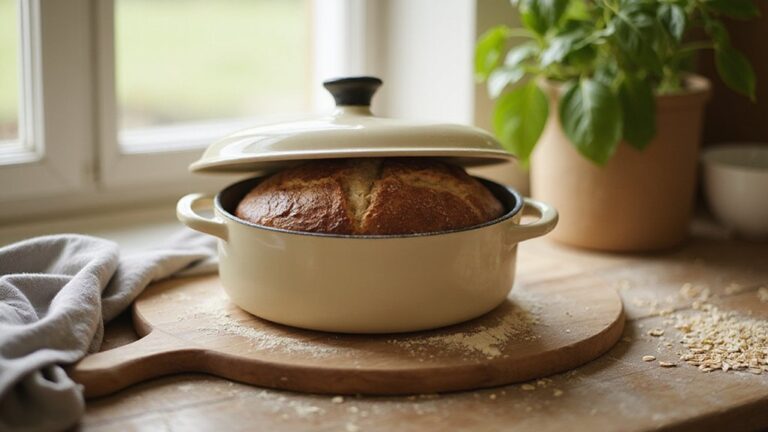
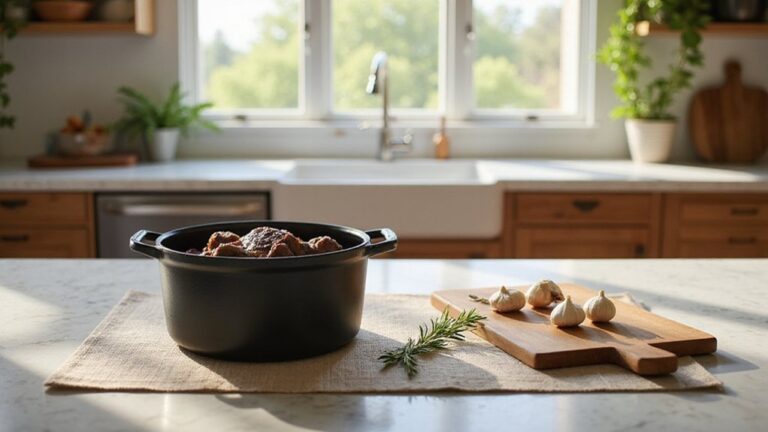
You’ll sear your seasoned chuck roast until it’s golden and caramelized, then nestle it into a rich braising liquid made with beef broth, red wine, and onion soup mix. The aromatics—garlic, thyme, and bay leaves—mingle with tomato paste for deep, complex flavors. After ninety minutes, you’ll add celery, carrots, and potatoes in strategic layers, each absorbing the savory essence. The result? Fork-tender meat and vegetables swimming in silky gravy that’ll have everyone asking for seconds.
Dutch Oven Preparation and Setup
Before you even touch your roast, you’ll want to select the right vessel—a heavy-duty Dutch oven or cast iron skillet that’ll distribute heat evenly and develop that essential golden crust. Look for a 6-7 quart capacity with a tight-fitting lid that locks in moisture during the long braise. Remember to avoid using reflective surfaces for cooking as they may distort readings when measuring temperatures.
Next, position your Dutch oven on the stovetop and begin your preheating techniques by setting it to medium-high heat. Drizzle 2 tablespoons of extra virgin olive oil across the bottom, allowing it 2-3 minutes to shimmer and smoke slightly. This oil preparation guarantees even distribution across the entire cooking surface, creating the perfect foundation for searing your roast. The heated metal and shimmering oil work together, ready to transform your ingredients into something truly spectacular. Remember, preheating also helps to optimize heat retention for an even cook throughout the process.
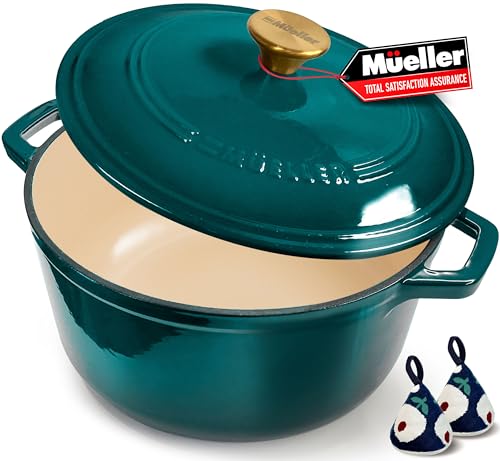
BREAD BAKER'S DUTCH OVEN, 500°F OVEN-SAFE, SOURDOUGH-READY – one of the highest ratings in its class – delivering the sustained heat that sourdough, artisan bread, and pizza dough demand. Thick cast-iron walls trap and circulate heat like a brick oven, producing bakery-quality crusts at home. The tight-sealing lid features raised self-basting nodes that continuously recirculate steam: a perfect moisture chamber, every single bake.

【Airtight Lid Locks In Freshness & Flavor】Experience the magic of this Dutch oven with lid, precision-engineered to create a tight seal. It locks in moisture and essential nutrients, delivering richer flavor and incredibly tender, juicy results in every dish—from slow-braised meats to hearty soups. Achieve a perfect, crispy crust on your artisan loaves—it's the ultimate Dutch oven for bread baking. The interior self-basting dots continuously redistribute condensation, ensuring your food stays perfectly moist, never dry or mushy

【Airtight Lid Locks In Freshness & Flavor】Experience the magic of this Dutch oven with lid, precision-engineered to create a tight seal. It locks in moisture and essential nutrients, delivering richer flavor and incredibly tender, juicy results in every dish—from slow-braised meats to hearty soups. Achieve a perfect, crispy crust on your artisan loaves—it's the ultimate Dutch oven for bread baking. The interior self-basting dots continuously redistribute condensation, ensuring your food stays perfectly moist, never dry or mushy
Roast Selection and Seasoning
Since your Dutch oven‘s now prepped and shimmering with heat, you’ll want to select a roast that’ll reward that patience with tenderness and deep, savory flavor. Chuck roast stands as your prime choice—its abundant marbling melts during slow cooking, creating silky richness. Brisket point offers similar benefits with generous fat content, while bottom round provides an economical alternative. Packing efficiently for trips often prompts parents to consider vacuum sealing diapers, which can maximize luggage space.
For seasoning, onion soup mix forms your flavor foundation, delivering dehydrated onions and complementary spices. Enhance it with garlic powder, thyme, and bay leaves. The roast types you choose determine seasoning strategy: heavily marbled cuts absorb bold flavors beautifully, while leaner roasts types benefit from salt adjustments to prevent dryness. Balance your seasoning tips carefully, accounting for the soup mix’s sodium content. Additionally, using bone-in chicken for some dishes can enhance the depth of flavor through slow cooking techniques.

One 1 ounce packet of Onion Soup & Dip Seasoning Mix
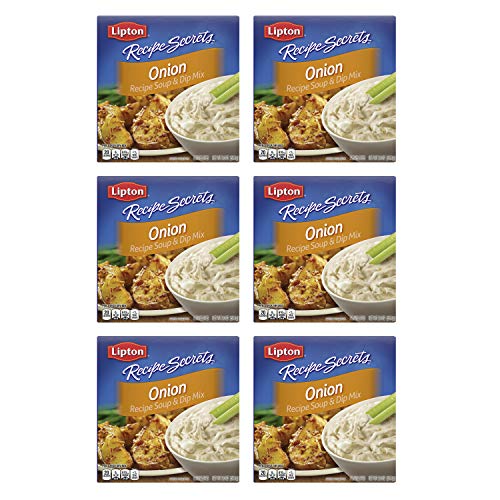
Lipton Recipe Secrets Onion Soup and Dip Mix has a tasty onion broth flavor

Item Package Length: 3.4cm
Searing and Browning Technique
Your roast’s success hinges on developing a deeply caramelized crust that’ll lock in juices and build the flavor foundation for your entire dish. Place your seasoned roast into a shimmering-hot Dutch oven and resist the urge to move it—let it sear undisturbed for 3-4 minutes per side. This cooking technique creates the Maillard reaction, transforming the surface into a mahogany-brown masterpiece while trapping moisture inside for meat tenderization. Use tongs to turn it, searing all edges and sides until golden. The caramelized exterior does more than look stunning; it enriches your pan with flavorful fond that’ll deepen your sauce. Once seared, transfer the roast to a plate. This essential step guarantees your pot roast emerges incredibly tender and bursting with concentrated flavor. Additionally, ensuring your roast is patting the meat dry before searing maximizes the crust’s quality and caramelization. A well-seasoned cast iron skillet further enhances the browning process, creating that perfect crust you crave.

Even Heat Distribution Retention: This Umite Chef Dutch oven Made with heavy-duty enameled cast iron, ensures even heat distribution for perfect searing and slow cooking, locking in flavors. thickened walls lock in heat for slow braising, searing, and baking. Unlike thin pots that scorch food, this professional-grade Enameled cast iron potSuperior heat retention after preheating (allow 5-7 mins for even distribution). CRITICAL: Always cool naturally for 45+ mins before cleaning. Thermal shock (hot-to-cold contact) cracks enamel. USE TIP: Preheat 2-3 mins on medium-low only

Pre-seasoned 2-in-1 cast iron dutch oven: The 2-In-1 cast iron dutch oven pot with skillet lid has been burned with vegetable oil,(no synthetic coatings or chemicals). The shallow skillet that can be used as a lid

FEAST & BATCH COOKING - Designed for large families, holiday gatherings, and weekend meal prep, this 7QT Dutch oven comfortably serves 5–8 people. Its generous capacity easily handles family-size soups, large-batch stews, pot roasts, and whole chickens without overcrowding ingredients. Perfect for Thanksgiving recipes, holiday entertaining, and batch cooking with fewer rounds in the kitchen.
Braising Liquid and Flavor Components
With your roast seared to mahogany perfection, it’s time to build the braising liquid that’ll transform tough cuts into fork-tender succulence. Pour beef broth into your Dutch oven, scraping up those caramelized fond bits clinging to the bottom. Add red wine—its acidity and tannins break down muscle fibers while deepening complexity. Stir in tomato paste for umami richness, then nestle in aromatics: garlic cloves, onions, and fresh herbs like thyme and rosemary. These flavor enhancements work together, creating layers of savory depth. The braising liquid becomes your secret weapon, infusing every fiber with concentrated taste. Additionally, ensure even cooking by cooking vegetables before adding the roast, enhancing the overall flavor and texture. Searing the meat helps develop a rich crust that enhances the texture and flavor profile. Season generously with salt and pepper. Your pot roast will emerge impossibly tender, bathed in glossy, restaurant-quality sauce.

IDEAL FOR FAMILY MEALS - Perfectly sized for families of 3–5 people, this 5.5QT Dutch oven handles everything from hearty soups and stews to one-pot dinners, pasta dishes, and Sunday pot roasts. Spacious enough for a whole chicken yet practical for everyday cooking, it delivers the ideal balance between daily family meals and weekend entertaining. Also well-sized for artisan bread bakers who want one pot for both family dinners and sourdough baking.

Even Heat Distribution Retention: This Dutch oven Made with heavy-duty enameled cast iron, ensures even heat distribution for perfect searing and slow cooking, locking in flavors. thickened walls lock in heat for slow braising, searing, and baking. Unlike thin pots that scorch food, this professional-grade Enameled cast iron pot maintains steady temperatures

Vegetable Arrangement and Timing
Once your braising liquid simmers and the meat begins its slow transformation, it’s time to contemplate your vegetables—though not quite yet. After about ninety minutes, you’ll introduce your vegetable layering strategy. Start by nestling celery into the simmering liquid first, allowing it to soften and infuse the braising liquid with aromatic depth. This method of layering vegetable timing helps to develop complex flavors in the dish. Next, arrange carrots atop the meat, positioning them where steam can work its magic. Finally, crown the arrangement with potatoes, keeping them slightly above the liquid to prevent sogginess. This cooking timing approach—staggered additions over the final hour—ensures each vegetable reaches tender perfection simultaneously. The steam circulating inside your Dutch oven transforms these humble roots into silken, flavorful components that’ll enrich your final gravy. Additionally, using vacuum sealing techniques for any leftover vegetables can help preserve their freshness and avoid waste.

PREMIUM ENAMELED CAST IRON DUTCH OVEN WITH LID - Made from heavy-duty enameled cast iron, this Dutch oven with lid delivers even heat distribution and excellent heat retention for reliably cooking meals evenly and keeping them warm for longer. Use for soups, braising meats, roasting, simmering, and slow cooking without hot spots or scorching.

【DIMENSIONS:Dia φ6.7" x H 0.8" / Dia φ17 x H 2cm; WEIGHT:4.83oz / 137g.】This cooking grid's outer diameter is φ6.7 inches.

5 QT FAMILY SIZE – PERFECT FOR ONE POT MEALS: Spacious 5 quart dutch oven ideal for soups, stews, pasta, casseroles and pot roast. Wide base for better browning and deep sides for family dinners. Perfect cast iron pot for meal prep and everyday cooking.
Final Results and Gravy Preparation
As the final hour of cooking draws to a close, you’ll know your pot roast has reached perfection when the meat surrenders easily to a fork, shredding without resistance—a telltale sign that collagen’s transformed into gelatin and fibers have softened completely. Let it rest, covered, for twenty minutes while juices redistribute throughout the meat, deepening tenderness and flavor. The Dutch oven excels at braising, ensuring the flavors meld beautifully during this process.
Now prepare your gravy. Remove the meat and vegetables, then whisk a cornstarch slurry into the simmering cooking liquid. The onion soup mix you’ve incorporated throughout braising now shines, infusing rich, savory depth into every spoonful. Simmer for four to five minutes, whisking continuously to achieve your desired gravy thickness. Taste, adjust seasonings, then drizzle this glossy, smooth sauce over your perfectly tender pot roast for an impressive presentation. A well-cooked Dutch Oven Pot Roast not only delivers robust flavors but also elevates the entire dining experience.